
In smart manufacturing plants, a single fiber outage can pause a production line, not just a network segment. This guide helps operations, network, and OT integration teams deploy optical networking solutions with fewer surprises by covering transceiver selection, link budget thinking, switch compatibility, and measurable ROI. You will get a step-by-step implementation plan plus field-tested troubleshooting for the most common failure points.
Prerequisites: align OT requirements, plant constraints, and optical design
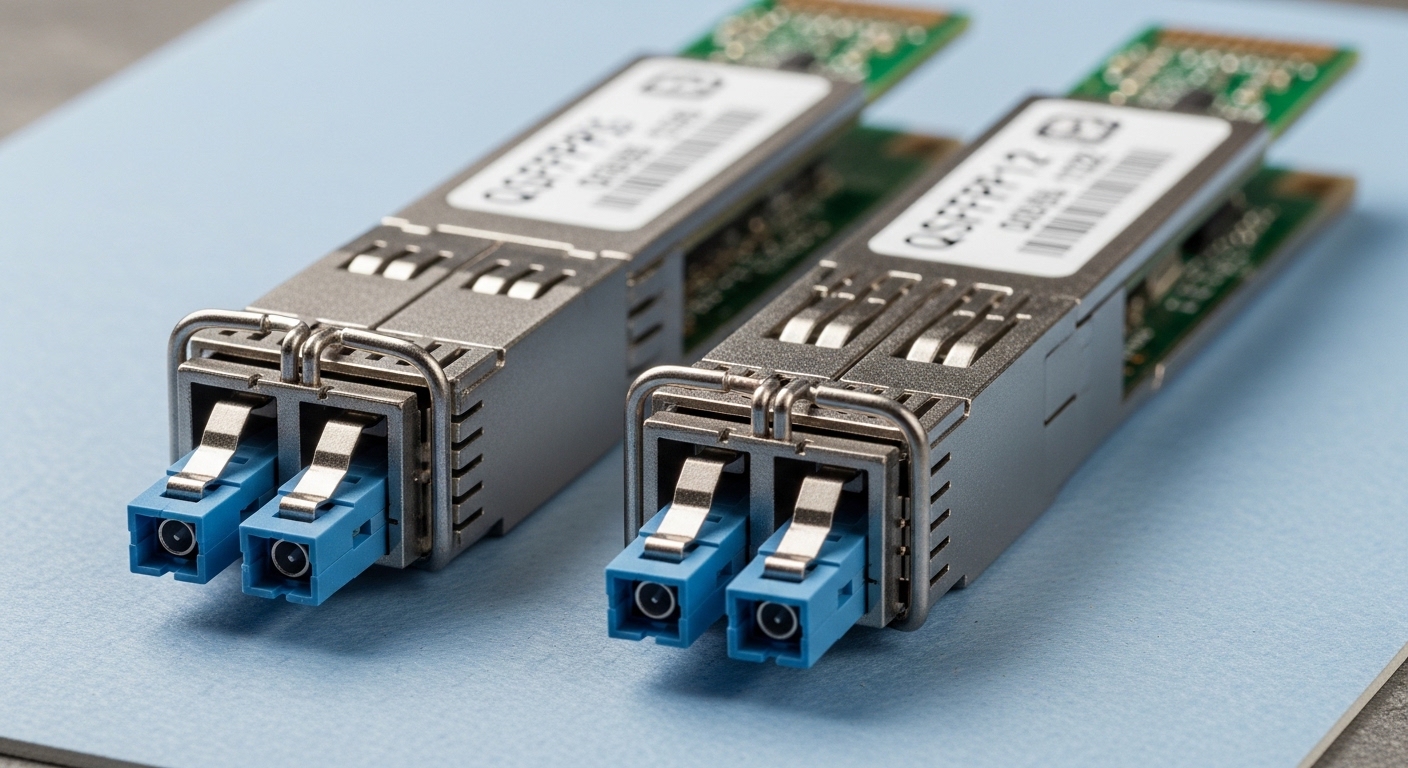
Before buying any transceivers or patch panels, lock down the non-negotiables: latency expectations for control traffic, redundancy level, fiber topology, and the environmental envelope in the machine room. In one deployment I supported, we had 48-port 10G aggregation switches in an industrial cabinet with ambient temperatures ranging from 5 C to 55 C, while nearby conveyors created vibration and frequent maintenance openings. That combination strongly influenced the choice of transceivers with guaranteed temperature ranges and robust DOM handling.
Inventory network endpoints and required data rates
List every OT and IT endpoint group that will traverse the optical layer: PLC/SCADA uplinks, historian ingestion, vision systems, and admin access. Translate application needs into link targets such as 1G, 10G, or 25G per port. Then confirm whether the switch ports are fixed or modular and which transceiver form factors are supported (for example SFP+, SFP28, SFP56, QSFP28, QSFP56).
Expected outcome: A port-by-port worksheet with required speed, duplex behavior, and redundancy assumptions (single path vs dual-homed).
Verify fiber plant topology and measure real distances
Do not rely on cable labels for reach planning. Use an OTDR or at minimum certified attenuation testing to find the actual fiber length and worst-case loss. For example, if your design assumes 300 m but measured worst-case is 380 m with additional patch loss, you may need a different optical reach class or cleaner connectors.
Expected outcome: A per-link table of fiber type, measured length, connector count, and worst-case attenuation.
Define environmental and safety constraints
Smart manufacturing often places optics in cabinets with dust, vibration, and fluctuating temperature. Check the transceiver datasheet temperature range and whether the switch vendor qualifies it for your operating conditions. Also confirm compliance expectations for laser safety and any local electrical standards.
Expected outcome: A constraints list that filters transceivers early (temperature, connector type, and qualification status).
Optical link design for smart manufacturing: reach, wavelengths, and power budgeting
Optical networking reliability comes from controlling the physical layer: wavelength choice, reach class, optical power levels, and connector cleanliness. Most field issues trace back to link budget errors or marginal transceiver behavior under temperature drift. Treat your link like an engineered system, not a plug-and-play accessory.
Choose the right transceiver family by distance and fiber type
In many plants, you will use multimode fiber (MMF) for short-reach links and singlemode fiber (SMF) for longer runs. Typical choices include 10G SR optics over MMF, 25G SR over MMF, and long-reach variants over SMF. Example parts you may see in data center and industrial aggregation include Cisco SFP-10G-SR and third-party optics such as Finisar FTLX8571D3BCL or FS.com SFP-10GSR-85 (exact compatibility depends on switch qualification and firmware behavior).
Use link budget logic (not marketing reach) and validate with measured loss
For short-reach MMF, reach depends on mode conditioning, fiber bandwidth, and patch cord quality. For SMF, chromatic dispersion and attenuation matter, but practical failures still often come from connector contamination and insufficient cleaning. Tie your calculations to measured attenuation and connector loss, then sanity-check against the transceiver’s specified optical power and receiver sensitivity.
Confirm standards expectations and verify DOM telemetry
Most modern optics support Digital Optical Monitoring (DOM) so you can poll laser bias current, received optical power, and temperature. Align your monitoring strategy with your network management approach and alert thresholds. For Ethernet PHY behavior, ensure your switch supports the optics at the target rate and that the optics are compliant with the relevant IEEE Ethernet specifications (for example IEEE 802.3 families for Ethernet over fiber).
Expected outcome: A set of optics that match your fiber type and a monitoring plan that detects degradation before link failure.
Transceiver comparison and compatibility: what actually matters during plant rollout
During commissioning, you need more than “it should work.” Switches vary in how they handle optics, DOM, and error recovery. The safest approach is to select optics that are explicitly supported by the switch vendor or at least widely validated for your model and firmware version. When third-party optics are used, validate with a pilot and track failure rates by lot.
| Spec | 10G MMF SR (SFP+) | 25G MMF SR (SFP28/QSFP28) | 10G SMF LR (SFP+) |
|---|---|---|---|
| Typical wavelength | 850 nm | 850 nm | 1310 nm |
| Typical reach class | Up to ~300 m on OM3 / ~400 m on OM4 (depends on spec) | Up to ~100 m on OM3 / higher on OM4 (datasheet dependent) | ~10 km class (datasheet dependent) |
| Fiber type | Multimode (OM3/OM4) | Multimode (OM3/OM4) | Singlemode |
| Connector | LC | LC | LC |
| DOM support | Common (laser temp, bias, RX power) | Common (same telemetry concept) | Common (same telemetry concept) |
| Operating temperature | Often industrial ranges available; verify datasheet | Verify industrial range; many are 0 to 70 C class | Verify industrial range; many are -5 to 70 C class |
| Where it fits best | Leaf-to-aggregation in machine rooms | Higher-density vision and edge analytics uplinks | Campus links between buildings or long intra-campus runs |
Expected outcome: A clear mapping from application distance and fiber type to transceiver class, plus a compatibility approach to reduce commissioning risk.
Pro Tip: In smart manufacturing, the fastest path to stability is not “buy higher reach optics,” but to instrument DOM and alert on received optical power trend. I have seen links that looked fine at install time drift by several dB over months due to connector micro-damage or repeated cabinet door openings; early alerts let you re-clean and re-terminate before a hard outage.
Step-by-step rollout plan: from staging to acceptance testing
This section turns optical design into execution. The key is staging, repeatable testing, and a rollback strategy so production downtime stays near zero.
Stage and burn-in optics before field install
Where downtime is expensive, stage optics in a controlled environment and run basic link verification. Use your switch management interface to confirm DOM values and link stability at the target speed. For example, confirm the negotiated line rate and watch for rising CRC or FEC-related errors (depending on the PHY and platform).
Expected outcome: A batch-level pass/fail list so you do not troubleshoot optics and fiber simultaneously in the field.
Install using connector best practices (cleaning is part of the spec)
Before insertion, clean LC connectors with lint-free wipes and inspection-grade cleaning tools. Ensure correct fiber polarity, especially for duplex LC configurations. During one rollout, we reduced intermittent link drops by enforcing a “clean and inspect every reconnect” rule and capturing inspection images for each port pair.
Expected outcome: Lower error rates after reconnects and fewer “it works for a day” incidents.
Configure monitoring and alert thresholds
Enable telemetry collection for interface counters and optical DOM where available. Set conservative thresholds for received power and temperature. Correlate with physical events such as cabinet door cycles, HVAC changes, or seasonal temperature shifts.
Expected outcome: Alerts that predict degradation, not just detect total link loss.
Acceptance testing with measurable targets
Define acceptance criteria: link up time after power cycle, sustained throughput under load testing, and error counter stability. For OT-heavy environments, also validate traffic classes and ensure no unexpected buffer drops at peak production. Document results per link so future replacements match the same quality bar.
Expected outcome: A signed acceptance record per site area.
Cost and ROI considerations: budgeting beyond the transceiver sticker price
Optics pricing varies by speed, reach class, and whether you use OEM parts or third-party modules. In many deployments, OEM optics cost more per unit but can reduce commissioning time through better switch qualification and fewer compatibility surprises. Third-party optics can cut purchase cost, but you must budget for pilot validation and spares management, especially when you rely on DOM interpretation and threshold tuning.
As a practical range, short-reach 10G SR optics often come in at a lower cost band than 25G and long-reach SMF optics, but exact pricing depends on vendor, warranty, and industrial temperature grade. TCO should include: installation labor, downtime risk, cleaning supplies, spare inventory, and RMA handling time. If you operate multiple lines, preventing even a single unplanned outage can dominate the ROI math.
Selection criteria checklist: how engineers choose optics for smart manufacturing
Use this ordered checklist during procurement and engineering review:
- Distance and fiber type: measured length, MMF vs SMF, OM3 vs OM4, connector counts.
- Budget and risk tolerance: OEM qualification vs third-party cost savings with pilot validation.
- Switch compatibility: confirm supported transceiver lists and firmware behavior.
- DOM support and monitoring: verify telemetry availability and how your monitoring stack reads it.
- Operating temperature: match industrial environment; verify datasheet and derating guidance.
- Vendor lock-in risk: plan spares strategy and ensure you can source replacements over time.
- Connector and cleaning requirements: standardize on LC, inspection tools, and cleaning SOPs.
Common mistakes and troubleshooting tips in the field
Even strong designs fail in real plants due to operational details. Below are the top failure modes I have seen repeatedly, with root causes and fixes.
Failure point 1: Link flaps after installation, especially after cabinet access
Root cause: connector contamination or micro-bend strain from re-cabling during maintenance, leading to intermittent RX power drops. Solution: inspect connectors with magnification, re-clean with the correct method, enforce strain relief, and verify received power via DOM after each maintenance event.
Failure point 2: “No link” or constant errors when using third-party optics
Root cause: switch compatibility quirks, unsupported DOM behavior, or optics that do not meet the platform’s expected electrical parameters at your configured speed. Solution: validate with a pilot using the exact switch model and firmware; if needed, switch to an explicitly qualified part number such as OEM equivalents or a third-party module listed by the switch vendor.
Failure point 3: Works in the lab but fails in warm machine rooms
Root cause: operating temperature mismatch or insufficient derating margin causing transmitter power or receiver sensitivity to fall below thresholds. Solution: select optics with an industrial temperature grade matching the cabinet environment; confirm airflow and heat dissipation; re-test under worst-case ambient conditions.
FAQ
What transceiver type is most common for smart manufacturing machine-room uplinks?
For short distances within a building, 10G or 25G short-reach over multimode fiber is common because it is cost-effective and easy to deploy. For longer runs between buildings or high-loss spans, engineers typically switch to singlemode long-reach optics. Always base the decision on measured fiber loss and connector quality, not only on nominal reach.
How do I confirm switch compatibility before ordering optics?
Start with the switch vendor’s transceiver compatibility list and confirm the exact switch model and firmware version. Then run a pilot installation in a representative cabinet environment and verify DOM telemetry plus interface error counters under load. This reduces the chance of “works at boot, fails under traffic” behavior.
Does DOM actually help operationally, or is it optional?
DOM is operationally valuable because it exposes received optical power, temperature, and laser bias current trends. In smart manufacturing, where maintenance cycles happen frequently, trend-based alerts can catch degradation caused by connector wear or contamination. If your monitoring stack cannot read DOM reliably, you may need alternate health indicators.
What standards should I reference when planning Ethernet over fiber links?
Use IEEE 802.3 Ethernet over fiber families relevant to your target data rate and interface type, and align with vendor datasheets for optical specifications. For physical layer behavior, the vendor’s transceiver and switch documentation is the most actionable source. For broader infrastructure guidance, also consult ANSI/TIA cabling standards for fiber installation practices. IEEE 802.3 standards ANSI/TIA standards portal
Should I prioritize OEM optics or third-party modules for ROI?
OEM optics often reduce commissioning time and compatibility risk, which can improve ROI when downtime is costly. Third-party optics can cut acquisition cost, but you must fund validation, spares testing, and potential RMA handling. A pragmatic approach is to standardize on one or two vetted vendors after a pilot and lock the firmware and configuration baseline.
What is the fastest troubleshooting path during an outage?
First verify the optical link status and interface counters, then check DOM for received power and temperature. Next inspect and clean connectors, confirm polarity, and verify fiber strain relief. If the problem persists, swap optics with a known-good pair and isolate whether the fault is in the transceiver, the fiber path, or the switch port.
Author bio: I design and deploy optical networking for industrial and data center environments, focusing on measurable reliability and operational telemetry. My work emphasizes field validation, compatibility testing, and ROI-driven architecture decisions for smart manufacturing.
Next step: Review smart manufacturing for a broader OT network planning checklist that connects optical design choices to production uptime goals.
