
In many Open RAN rollouts, budgets evaporate quietly: spare parts, fiber transceivers, power draw, site permitting, and “compatibility surprises” between vendors. This article gives operators and field engineers a step-by-step ROI method to maximize cost efficiency across the radio access network lifecycle. You will leave with measurable inputs, a module selection approach, and troubleshooting paths that match what breaks in the field. The focus is practical deployment math, not theory.
Prerequisites for an ROI that survives the site walk
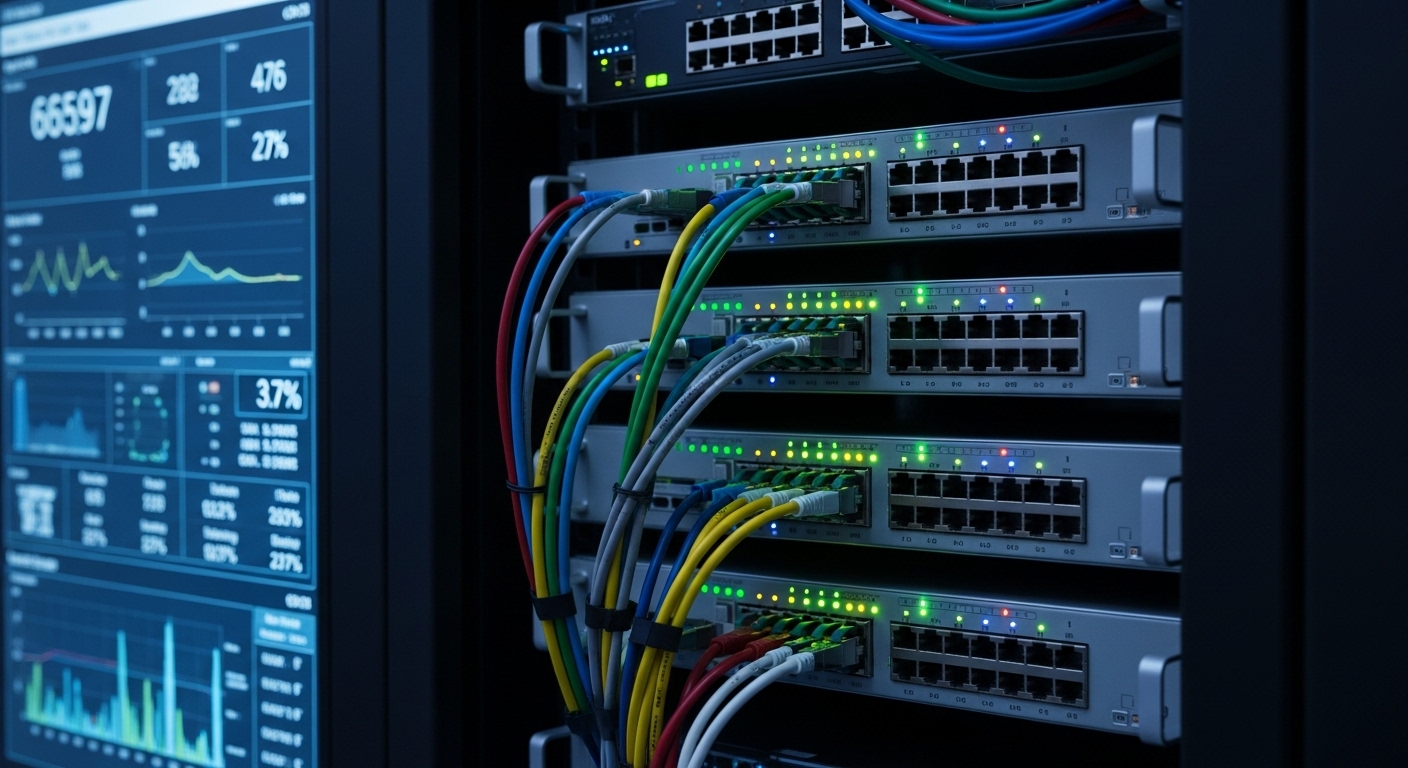
Before you model returns, gather the artifacts that procurement and engineering will actually sign off on. I have seen ROI spreadsheets collapse when they ignore optics lead time, transceiver power, and optics reach mismatches between leaf and aggregation. Treat this as a measurement plan: define the network boundary, then instrument the relevant links.
What you need on day one
- Network scope: define which segments you include (RU to DU transport, DU to CU, aggregation, and data center interconnect if applicable).
- Traffic and timing: average and peak throughput per sector, plus latency targets. For Open RAN, include functional split assumptions (commonly split options like 7-2x or 8, depending on your design).
- Power model: vendor power for RU, DU, and any transport gear; include optics power if you can obtain it from datasheets.
- Fiber and transceiver inventory: count links by reach and connector type (LC, MPO/MTP), and note whether you will use pluggable optics.
- Operating constraints: site temperature range, dust and vibration profile, and any uptime targets that drive spares.
- Procurement realities: lead times, warranty terms, and whether you can use third-party optics under your vendor support policy.
Expected outcome: you can compute a first-pass ROI with defensible assumptions and a list of variables you must validate before procurement locks.
Step-by-step ROI workflow for Open RAN cost efficiency
To maximize cost efficiency, you need an ROI model that converts engineering choices into dollars: CapEx, OpEx, and risk. In the field, the biggest losses come from replacing parts mid-rollout and from transport overbuild that was purchased “just to be safe.” The workflow below prevents both.
Build a link budget and optics reach map
Start with a reach map that ties each RU-to-DU or DU-to-CU segment to a specific optical budget and transceiver class. Use fiber type and loss assumptions: core attenuation (often around 0.35 dB/km at 850 nm for OM3, ~0.25 dB/km for OM4), plus connector and splice losses. IEEE 802.3 specifications define optical link classes for Ethernet, but your actual deployment still depends on installed plant and safety margins. Use vendor datasheets for transmitter power and receiver sensitivity when possible.
Expected outcome: a table of required wavelengths and reach classes that prevents “wrong optics, wrong distance” failures.
Quantify CapEx levers with pluggable optics strategy
In Open RAN, transport is frequently Ethernet-based, and pluggable optics drive modularity. You can reduce CapEx by standardizing on a few optics families (for example, 10G SR on short-reach segments and 25G SR or 100G SR4 when density demands it) instead of customizing per site. But cost efficiency depends on operational support: some radio and switch vendors enforce optics compatibility rules, and bypassing them can void support.
Expected outcome: a shortlist of optics SKUs aligned to link distances and vendor compatibility constraints.
Quantify OpEx levers with power and density
Power is a quieter line item than optics price. A field engineer might swap a module thinking only about price, then later discover the new module draws more power at 25G or 100G line rates, increasing annual energy cost. Use vendor power figures from datasheets and multiply by expected utilization. If your network runs at partial load, model a realistic utilization curve rather than assuming 100% line rate.
Expected outcome: a yearly OpEx comparison between competing optics and transport designs.
Add risk cost for lead time and interoperability
Interoperability risk can be costlier than the module itself. If a specific optics family is delayed, you may pay for expedited shipping or idle equipment. If compatibility tests fail, you may incur rework: re-terminating fiber, swapping optics, or reconfiguring transceivers. Include a contingency factor for integration testing time and spare parts stocking.
Expected outcome: a risk-adjusted ROI that reflects what actually happens when you scale beyond pilot sites.
Compute ROI and define “buy decision gates”
Compute ROI with a clear boundary: savings over the equipment lifecycle minus integration costs. Then set gates: for example, “do not approve procurement for a transceiver family until we pass DOM validation, link verification, and thermal tests across two representative sites.” This prevents cost efficiency from turning into cost regret.
Expected outcome: an approval process that aligns engineering verification with procurement timelines.
Reference anchors for standards and verification include IEEE 802.3 for Ethernet PHY behavior and optics compliance, plus vendor datasheets for DOM, power, and reach. See [Source: IEEE 802.3] IEEE 802.3 overview and vendor documentation such as [Source: Cisco SFP/SFP+ transceiver documentation] Cisco product documentation portal.
Pro Tip: In many Open RAN deployments, the most cost-efficient design is not the cheapest optics SKU; it is the one with the fewest unique SKUs across regions. Fewer SKUs reduce spare inventory, simplify acceptance testing, and shrink the “compatibility matrix” your teams must maintain during scaling.
Optics and transport choices that materially move cost efficiency
Open RAN transport often uses Ethernet links from RU to DU and from DU to aggregation. The optics choice determines reach, power, and the number of fiber segments you must light. Your goal is to match the optics class to the physical plant without overbuying.
Common optics families engineers compare
For short reach, engineers frequently consider SR variants like 10G SR and 25G SR over multimode fiber. For longer reach or when multimode is absent, LR or ER optics over single-mode fiber may be needed. In high-density data center segments, 100G solutions might use SR4 or LR4 depending on the fiber plant and distance.
Technical specification comparison (example classes)
The table below compares representative, commonly deployed optics classes. Always verify exact reach and power from the specific vendor datasheet and your switch vendor compatibility list.
| Optics example | Wavelength | Target data rate | Typical reach | Connector | Power (typ.) | Operating temperature |
|---|---|---|---|---|---|---|
| Cisco SFP-10G-SR | 850 nm | 10G | ~300 m over OM3, ~400 m over OM4 | LC | Low single-digit watts (check datasheet) | Commercial/industrial ranges (check datasheet) |
| Finisar FTLX8571D3BCL (10G SR class) | 850 nm | 10G | ~300 m OM3, ~400 m OM4 | LC | Low single-digit watts (check datasheet) | Industrial range (check datasheet) |
| FS.com SFP-10GSR-85 (10G SR class) | 850 nm | 10G | ~300 m OM3, ~400 m OM4 | LC | Low single-digit watts (check datasheet) | Industrial range (check datasheet) |
Expected outcome: you can map each link segment to an optics class and prevent “reach mismatch” rework.
Where cost efficiency often hides
Cost efficiency improves when you reduce fiber pulls and reduce optics SKU count. In a typical urban rollout, the difference between a 300 m and a 400 m OM4-capable SR module can eliminate a splice-and-repatch cycle. Conversely, selecting a third-party optics family without validating DOM behavior can create intermittent link flaps, which then dominate labor cost.
Selection criteria checklist engineers use under budget pressure
When procurement asks for “the cheapest optics,” the engineer’s job is to translate cheapest into cost efficiency with constraints. Use the checklist below in order; stop when you hit a hard compatibility or plant constraint.
- Distance and fiber type: verify installed plant (OM3 vs OM4 vs OS2), connector cleanliness, and end-to-end loss budget.
- Switch and radio compatibility: confirm the vendor compatibility list for the exact switch model and optics type (SFP, SFP+, QSFP28, QSFP56).
- DOM support and monitoring: ensure the module exposes diagnostics you can poll (temperature, bias current, received power) and that the host accepts it.
- Operating temperature: match module temperature range to cabinet or site conditions; include derating for hot spots.
- Budget vs lifecycle: compare total cost over spares and replacements, not just unit price.
- Operating power and thermal impact: use datasheet power and estimate energy cost; also check whether higher power stresses airflow.
- Vendor lock-in risk: decide whether third-party optics are allowed under your support contract; quantify risk cost of support escalation.
- Lead time and warranty: include delivery schedule and warranty terms; delayed optics can stall commissioning.
Expected outcome: a procurement-ready decision that balances optics cost with interoperability and uptime risk.
Real-world deployment scenario: where the ROI becomes tangible
Consider a 3-tier data center leaf-spine topology supporting Open RAN transport. You have 48-port 10G ToR switches feeding 12-port 100G spine uplinks, with RU traffic aggregated toward DUs. Over 30 sites, each site terminates roughly 24 RU-to-DU short-reach links using multimode fiber in indoor cabinets, totaling 720 optics for the initial phase. The original plan used a mixed set of optics SKUs (10G SR variants from multiple suppliers) and assumed “enough margin” on reach without verifying installed losses. During acceptance, several links showed marginal received power due to higher-than-expected splice loss and older fiber patch cords.
By standardizing on a single SR class verified for your plant and validating DOM thresholds during commissioning, the team reduced repeat visits and avoided a second fiber rework wave. The ROI improved not because the optics unit cost dropped dramatically, but because the integration test time fell and spare inventory shrank. In cost accounting terms, the cost efficiency gain came from fewer field truck rolls, reduced downtime penalties, and lower spare diversification.
Expected outcome: you can connect selection choices to measurable commissioning time and reduced rework.
Common mistakes and troubleshooting tips that protect cost efficiency
Failure modes in optics and transport rarely announce themselves politely. Below are three common pitfalls I have seen during Open RAN rollout scaling, with root causes and practical solutions.
Reach mismatch that passes in the lab but fails in the field
Root cause: the installed fiber has higher attenuation than assumed, or patch cords and splices add extra loss. Dirty connectors and imperfect end faces can also reduce received power.
Solution: measure loss using an OTDR or certified attenuation testing, then set a received power margin based on the module datasheet. Clean connectors with proper tools before swapping optics; verify with a light source and power meter.
Intermittent link flaps after optics swap
Root cause: DOM or threshold behavior differs across module vendors, and the host switch or transceiver management logic may treat diagnostics differently. In some cases, the optics is not within the expected parameter range for the host.
Solution: confirm DOM compatibility, check transceiver logs, and compare measured optical power readings against expected thresholds. If the host enforces vendor compatibility, restrict to modules listed by the switch vendor.
Thermal throttling or high error rates in hot cabinets
Root cause: the module’s temperature range is exceeded, or airflow design forces hot spots near pluggables. Higher power optics can raise module temperature under partial load.
Solution: instrument cabinet temperatures near the optics cage and verify module thermal headroom. Improve airflow paths and avoid running modules at maximum rated power where the design permits a lower-power class.
Expected outcome: you reduce costly truck rolls and accelerate commissioning by addressing the real causes quickly.
Cost and ROI note: what you should expect to pay
Pricing varies by region, volume, and whether you require OEM-branded optics. In many markets, 10G SR optics unit prices can range from roughly $20 to $80 depending on supplier and spec, while 25G and 100G optics typically cost more and vary widely by reach class and connector complexity. The cost efficiency win often comes from lifecycle TCO: lower rework, fewer spare types, and reduced downtime risk rather than a single-digit percent unit price change.
When comparing OEM versus third-party optics, include: acceptance testing labor, warranty handling, lead time, and the probability of support escalation. If your support contract is strict, third-party optics may still be “cheaper” on paper but can increase total cost when failures require vendor involvement.
FAQ
How does cost efficiency differ from simply buying the lowest priced optics?
Lowest price ignores commissioning time, spare inventory complexity, and the probability of link flaps due to interoperability. In Open RAN, the “hidden” costs often come from field rework and downtime penalties, not the optics bill of materials alone.
Can we use third-party optics in Open RAN deployments?
Sometimes yes, but only after validating switch and radio compatibility, DOM behavior, and thermal performance. Confirm whether your support contract allows third-party optics; otherwise, you risk higher total cost when issues escalate.
What measurements should we take before finalizing an optics reach choice?
Measure installed fiber loss (OTDR or certified attenuation testing) and verify connector cleanliness. Then compare your measured received power and margins against the specific module datasheet and host receiver sensitivity.
Why do we see higher power draw after upgrading to denser links?
Higher data rates can increase optical module transmit power and host power usage. Use vendor power figures and model realistic utilization; also confirm airflow design so thermal headroom remains safe.
What is DOM, and why does it matter for cost efficiency?
DOM provides digital optical monitoring (temperature, bias current, transmit power, and receive power). When DOM readings integrate cleanly with your host and monitoring system, you reduce troubleshooting time and prevent silent degradation from becoming an outage.
How do we structure spares to improve cost efficiency?
Standardize optics families across sites and regions to minimize SKU count. Stock spares based on link criticality and failure history, and validate that spares are electrically and diagnostically compatible with your exact host models.
If you want the next step, read Open RAN transport ROI. It connects optics and transport design choices to commissioning timelines, acceptance test gates, and measurable lifecycle savings.
Author bio: I am a field-focused network reporter who has supported optical transport rollouts and acceptance testing across multi-vendor environments. My work emphasizes measured outcomes, vendor datasheets, and operational details that survive real commissioning schedules.
