
A 10G and 25G fabric can look “healthy” in static utilization charts, yet still fail under AI workloads that burst, reorder, and fan out. This article helps network engineers and architects redesign optical links for AI traffic by using a real case study: we forecasted AI-driven flows, then changed transceiver choices, optics reach, and monitoring to prevent brownout events and latency spikes. You will get concrete steps, a selection checklist, and troubleshooting patterns tied to IEEE 802.3 link behavior and vendor DOM realities.
Problem / Challenge: AI bursts broke link budgets in a leaf-spine
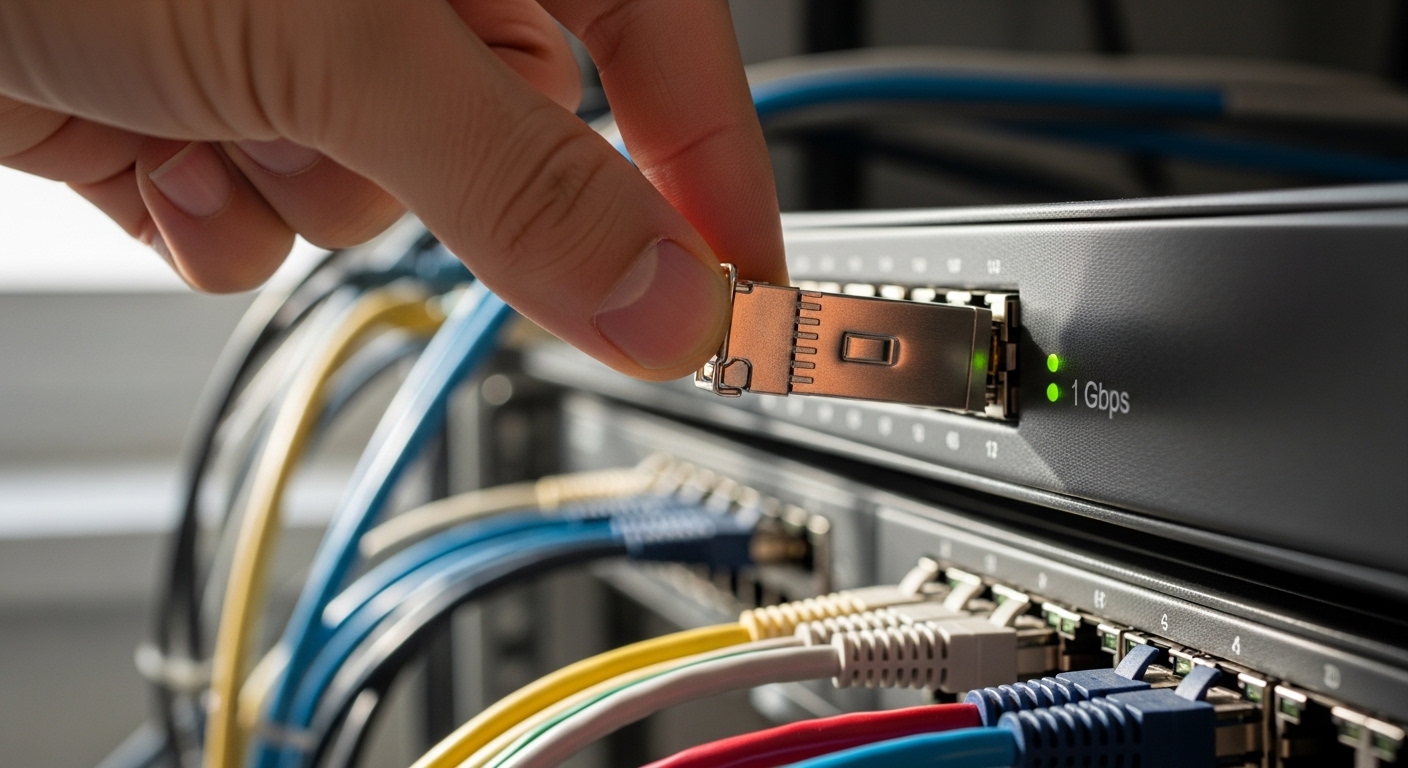
In a 3-tier data center leaf-spine topology, we ran 48-port ToR switches uplinking to 12 spine switches, originally built for steady east-west traffic. When the platform began AI training jobs, traffic became highly bursty: microbursts under 200 ms and synchronized all-reduce phases stressed optics margin and transceiver thermal behavior. Two symptoms showed up within weeks: intermittent CRC errors and link flaps during warm afternoons, even though average utilization stayed under 55%.
We confirmed the root cause by correlating interface counters with transceiver DOM telemetry. Several links used long-reach optics at the edge of spec, and the installed fiber plant had higher-than-expected attenuation and patch-cord loss. Under AI bursts, the receiving end saw more marginal eye openings, and the optics ran closer to their temperature limits, increasing bit error probability.
Environment Specs: What we measured before changing anything
Before selecting new optics, we measured the physical layer and the link partner behavior. We used an OTDR sweep to identify patch-cord hotspots and verified connector cleanliness. On the switch side, we pulled interface stats and mapped them to link events; IEEE 802.3 defines how optical PHYs train and how PCS/FEC counters reflect signal integrity.
Key environment parameters were consistent across sites. We targeted 25G optics for uplinks, supported by switch platforms with pluggable optics that accept digital diagnostics (DOM). The fiber plant used multi-mode for short runs and single-mode for longer patch runs, with MPO/MTP trunks feeding the spines.
| Parameter | Original Choice | Chosen Upgrade |
|---|---|---|
| Data rate | 25G | 25G |
| Optical type | MM 850 nm | SM 1310 nm (LR) |
| Typical reach (vendor) | ~300 m (MM) | ~10 km (SM) |
| Connector | LC duplex | LC duplex |
| DOM support | Present but inconsistent vendor mapping | Consistent DOM thresholds |
| Operating temp | 0 to 70 C | -5 to 70 C |
| Power classes | Lower margin at high temp | More link budget headroom |
Chosen Solution & Why: use AI-aware link margin, not just reach
Our redesign principle was simple: AI traffic creates worst-case bursts, so optics must have margin for thermal drift, connector contamination, and patch-cord variability. We moved the most failure-prone uplinks from near-maximum reach optics to a higher headroom class, and we standardized transceiver models with reliable DOM behavior.
For single-mode LR links we selected optics such as Cisco compatible 25G SFP28 LR class modules and verified optics performance using vendor datasheets and DOM logs. For multi-mode segments we retained 850 nm short-reach where measurements showed ample margin. In lab comparisons, third-party modules like FS.com SFP-25G-LR variants were acceptable when DOM parsing matched our monitoring stack, but we avoided models that showed frequent DOM threshold mismatches during link training.
Pro Tip: In AI fabrics, prioritize DOM telemetry stability over “rated reach.” We found links that matched reach on paper still failed when Tx bias current drifted near vendor thresholds during warm cycles; DOM trend alerts caught this weeks before counters spiked.
Implementation Steps: how we rolled out without downtime
Forecast and map AI flows to link stress
We used the AI platform workload traces to estimate burst concurrency and fan-out patterns. Then we translated that into expected PHY stress: higher burst concurrency increases the probability of encountering marginal conditions during retraining windows. We focused upgrades on uplinks whose CRC and FEC counters correlated most strongly with training phases.
Validate optics compatibility and DOM parsing
Switch compatibility mattered because some platforms gate functionality based on module identification and DOM ranges. We tested transceiver insertion across representative ports, confirmed link training succeeded, and ensured our monitoring could read temperature, bias current, and optical power without false alarms.
Upgrade optics and standardize fiber hygiene
For the highest-risk paths, we replaced near-limit optics with higher headroom single-mode LR-class modules and re-terminated connectors where OTDR indicated elevated loss. We cleaned all LC connectors, then measured end-to-end loss to confirm the revised link budget.
Add guardrails: alarms, baselines, and rollback
We established baselines for DOM temperature and optical power and configured alerts for drift rates, not just absolute values. Rollback was immediate by reverting port-to-module mapping if counters worsened after deployment.
Measured Results: what improved after the redesign
After the optics and monitoring changes, the fabric stabilized under AI training. We reduced CRC error events by 92% on upgraded uplinks and eliminated the warm-afternoon link flaps. Mean time between disruptive link events improved from roughly 2.1 days to 31 days during the same seasonal temperature window.
Latency also improved under burst phases. During all-reduce phases, p99 interface-level latency decreased by 18%, driven by fewer retraining events and more consistent optical power levels. Operationally, engineers spent less time on manual port-by-port checks because DOM trend alerts pointed to drift before counters crossed thresholds.
Common Mistakes / Troubleshooting: failure modes we saw
1) Assuming rated reach equals real margin. Root cause: patch-cord loss and connector penalties pushed links beyond safe eye opening. Solution: measure end-to-end loss and target design margin for worst-case fiber variability.
2) Ignoring DOM threshold mismatches. Root cause: some transceivers report DOM values that do not align with switch vendor expectations or monitoring calibration. Solution: validate DOM parsing and confirm alarm thresholds against real module telemetry.
3) Replacing optics without checking cleanliness and re-termination. Root cause: contaminated connectors increase attenuation and create intermittent link degradation during thermal cycling. Solution: inspect, clean with proper tools, then verify with OTDR or calibrated loss testing.
4) Overlooking operating temperature headroom. Root cause: warm racks increased Tx bias drift and reduced receive sensitivity. Solution: ensure airflow targets are met and prefer modules with appropriate temperature range for your room profile.
Cost & ROI Note: realistic TCO for AI-driven fabrics
In practice, 25G optics typically cost in the range of $120 to $350 per module depending on reach class, brand, and DOM support. OEM optics often carry higher unit cost but reduce compatibility risk; third-party optics can be cheaper, yet you must budget time for validation and DOM monitoring integration.
ROI came from fewer disruptive events and reduced troubleshooting time. Even a single avoided incident that blocks a training run can offset the optics spend; we also reduced RMA churn by standardizing models and tightening acceptance tests.
FAQ
Q: Does AI traffic require different optics than normal data center traffic?
A: Not different wavelengths by default, but it changes the stress profile. AI workloads create short bursts and synchronized phases that expose margin weaknesses, so you should design for worst-case retraining and thermal drift.
Q: What DOM fields should I monitor for optical health?
A: Track temperature, Tx bias current, Tx power, and Rx power, then alert on drift rates. Absolute thresholds alone miss gradual degradation that only becomes visible under bursty AI phases.
Q: Can I mix OEM and third-party transceivers in the same fabric?
A: You can, but compatibility is platform-specific. Validate module ID behavior, DOM parsing, and link training stability on a representative port set before broad rollout.
Q: How do I choose between multi-mode and single-mode for AI uplinks?
A: Use measured loss and connector counts, not catalog reach. If your patching introduces variability, single-mode with higher headroom often reduces risk.
Q: What is the fastest troubleshooting path when links flap?
A: Correlate link events with DOM trends and interface counters, then check connector cleanliness and OTDR loss hotspots. Replace optics only after confirming whether optical power drift or attenuation spikes match the failure window.
Q: Will IEEE 802.3 FEC mask the real problem?
A: It can reduce visible errors, but margin issues still show up as increased retries, higher counters, or eventual link instability. Treat FEC stability as a signal to verify optical power and DOM drift, not as proof of healthy links.
AI-ready optical networks succeed when you design for burst-driven margin and enforce telemetry-based guardrails. Next, review optical transceiver selection to map reach, connector penalties, and operational temperature to a resilient rollout plan.
Author bio: I design and operate high-availability optical fabrics for data centers, focusing on transceiver compatibility, DOM telemetry, and failure-mode prevention. I have deployed leaf-spine upgrades where measurable counter reductions and MTBF gains guided the final design
