
You are deploying edge infrastructure where links are short but operational consequences are not: a bad optical budget, a mismatched DOM, or a thermal surprise can take down a site. This article helps field engineers and network leads choose SFP modules that match real distance, power, and switch compatibility needs. You will get a practical top-8 shortlist, a specification comparison table, and a troubleshooting playbook grounded in how SFPs behave in the wild.
Top 8 SFP module choices for edge infrastructure
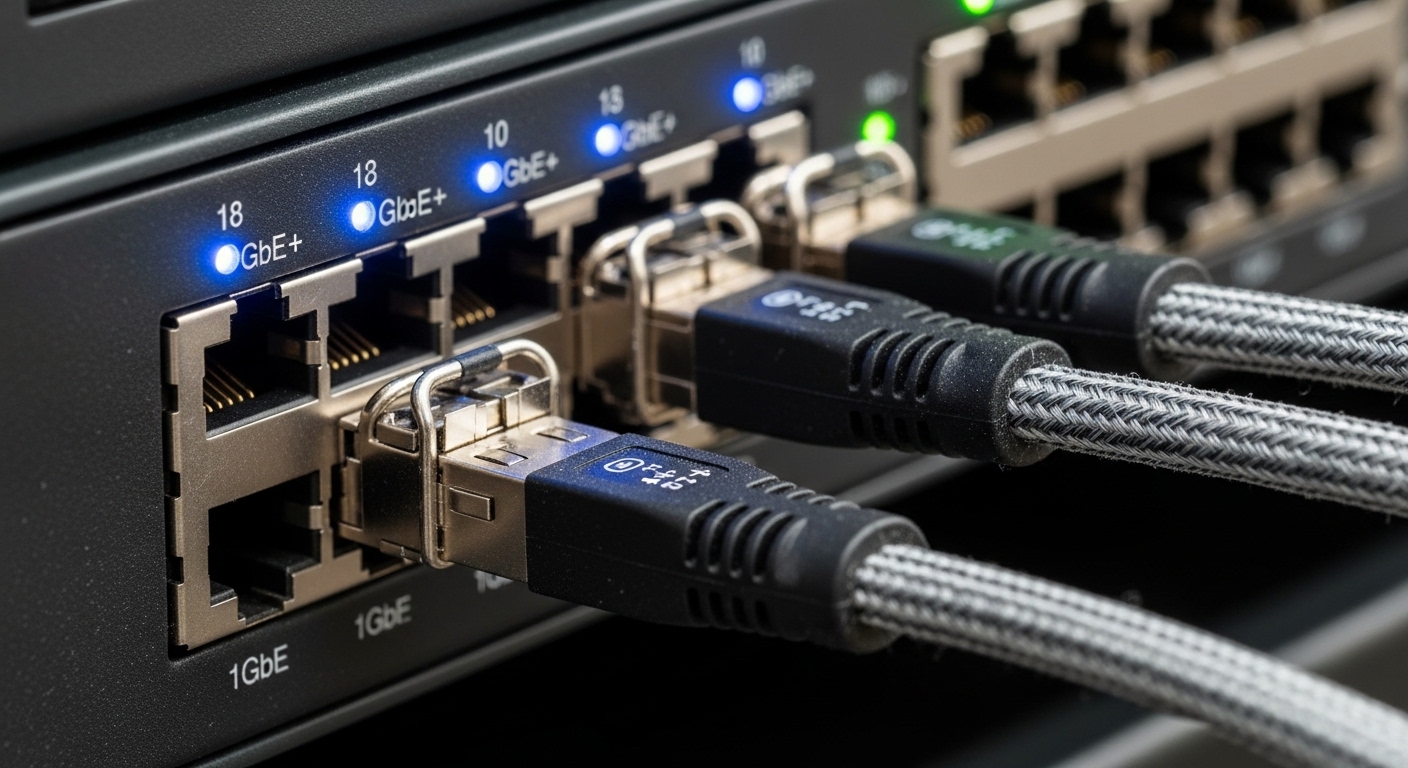
Edge sites often mix fiber runs, vary by vendor, and run in tighter power and temperature envelopes than your data center core. The “right” SFP is not the one with the highest advertised reach; it is the one that fits your optical budget, your switch transceiver requirements, and your operating temperature. Below are eight SFP options engineers commonly standardize on, with best-fit scenarios and practical pros/cons.
10G SFP+ SR (850 nm) for short-reach fiber runs
When edge infrastructure connects nearby aggregation points, 10GBase-SR at 850 nm is a common default because it pairs well with OM3/OM4 multimode fiber. Many deployments use 10G SR to reach from a ruggedized edge switch to a nearby media converter, patch panel, or small aggregation rack. In practice, the module’s behavior is heavily influenced by fiber type, connector cleanliness, and patch loss.
Key specs and best-fit scenario
- Data rate: 10.3125 Gb/s (10G Ethernet)
- Wavelength: 850 nm
- Typical reach: up to 300 m on OM3, up to 400 m on OM4 (implementation and vendor dependent)
- Connector: LC duplex
- DOM: widely available (digital optical monitoring)
- Temperature: often commercial (0 to 70 C) or industrial (-40 to 85 C)
Best fit: A manufacturing edge pod where a ToR switch needs 10G uplinks to a nearby aggregation shelf across 120 m of OM4 with pre-terminated LC trunks. If your site uses clean factory-fiber and controlled patching, SR is usually cost-effective and easy to standardize.
Pros: Low cost per port, broad compatibility, LC duplex ecosystem, strong vendor availability.
Cons: Limited by multimode budget, sensitive to bad patch loss, and not ideal for long-haul.
10G SFP+ LR (1310 nm) for longer single-mode reaches
For edge infrastructure that spans a campus, a utility corridor, or a remote building, 10GBase-LR at 1310 nm is often the most straightforward upgrade path. LR modules use single-mode fiber (SMF) and tolerate longer distances with a much larger optical budget than SR. Engineers like LR because it reduces the number of intermediate active devices.
Key specs and best-fit scenario
- Data rate: 10G Ethernet
- Wavelength: 1310 nm
- Typical reach: up to 10 km (vendor dependent)
- Connector: LC duplex
- Fiber: SMF (commonly OS2)
- DOM: common
- Typical power: module TX output varies by vendor and regulatory class
Best fit: A regional edge deployment with uplinks from a fenced perimeter switch to a central hut across 4.5 km of OS2 SMF. With good splicing and connector hygiene, LR keeps latency stable and avoids additional media converters.
Pros: Long reach, lower multimode complexity, strong optics ecosystem.
Cons: Higher per-module cost than SR, and requires SMF planning (spares, splicing, and testing).
10G SFP+ ER (1550 nm) for edge links where budget is tight
When distance climbs or plant loss is unpredictable, 10GBase-ER at 1550 nm can be a lifesaver. ER uses single-mode fiber and targets longer reaches by leveraging lower attenuation at the 1550 nm window. In edge infrastructure, this matters when you cannot easily re-run fiber or when the link must survive seasonal temperature shifts.
Key specs and best-fit scenario
- Data rate: 10G Ethernet
- Wavelength: 1550 nm
- Typical reach: up to 40 km (vendor dependent)
- Connector: LC duplex
- Fiber: SMF (OS2)
- DOM: often available
Best fit: A smart grid edge node where the fiber route is 18 km with several patch points and controlled splices. ER can help close the budget without changing the entire fiber route design.
Pros: Better reach headroom, fewer intermediate devices.
Cons: Module cost and procurement lead times can be higher; still requires careful link budget math.
25G SFP28 SR for higher throughput on OM4 multimode
As edge infrastructure pushes more video analytics and sensor aggregation, 25G SFP28 SR at 850 nm is a practical step up from 10G. It keeps the multimode approach but doubles the line rate, which can reduce oversubscription at the edge aggregation layer. Engineers choose 25G SR when they already have OM4 or can deploy OM4 economically.
Key specs and best-fit scenario
- Data rate: 25.78125 Gb/s (25G Ethernet)
- Wavelength: 850 nm
- Typical reach: up to 100 m on OM3, up to 150 m on OM4 (vendor dependent)
- Connector: LC duplex
- DOM: common
- Temperature: choose industrial (-40 to 85 C) for outdoor or cabinet edge
Best fit: A logistics yard edge where a camera hub switch uplinks to a compute rack across 90 m of OM4 trunking. 25G SR improves headroom without jumping to expensive long-reach optics.
Pros: Higher bandwidth on existing multimode plants, strong ecosystem support.
Cons: Distance is shorter than 10G SR; OM3 may force redesign or shorter patching.
25G SFP28 LR for edge aggregation across moderate distances
For edge infrastructure that needs more reach than SR while staying in SFP28 form factor, 25G SFP28 LR at 1310 nm is a common compromise. LR supports single-mode fiber and is well-suited to edge aggregation across a campus or between buildings. It also simplifies operational consistency when you want fewer fiber types across sites.
Key specs and best-fit scenario
- Data rate: 25G Ethernet
- Wavelength: 1310 nm
- Typical reach: often up to 10 km (vendor dependent)
- Connector: LC duplex
- Fiber: SMF (OS2)
Best fit: A retail edge rollout where an access switch uplinks to a regional aggregation switch across 6 km of OS2. LR helps avoid installing additional repeaters while keeping cost manageable versus ER.
Pros: Good reach, single-mode standardization, better scalability for higher throughput.
Cons: Requires SMF and careful budget; some switches are picky about optics vendor and DOM behavior.
40G QSFP+ SR4 for dense 10G-to-40G aggregation
Some edge infrastructure designs compress uplinks by aggregating multiple 10G feeds into 40G. In that case, 40G QSFP+ SR4 at 850 nm can be effective when you have multimode fiber and want to reduce switch port count. Although this article focuses on SFP modules, many edge teams treat “pluggable optics strategy” as a portfolio decision across SFP, SFP+, and QSFP+.
Key specs and best-fit scenario
- Data rate: 40G Ethernet (4 lanes)
- Wavelength: 850 nm (multilane SR)
- Connector: MPO-12 (often)
- Typical reach: up to ~100 m on OM3/OM4 depending on module and fiber grade
- DOM: common
Best fit: A small edge data hall with limited cabinet space where you need to aggregate four 10G uplinks into a single 40G connection to a spine switch. SR4 reduces port count and wiring complexity.
Pros: High density, efficient for aggregation, strong multimode ecosystem.
Cons: MPO handling and polarity management are common failure points; QSFP+ is not interchangeable with SFP/SFP+ ports.
100G QSFP28 SR4 for bandwidth-heavy edge compute clusters
When edge infrastructure includes GPU inference, high-rate telemetry, or short-burst replication, 100G optics can be justified. 100G QSFP28 SR4 at 850 nm is the common multimode choice for short datacenter-like distances inside an edge facility. It can reduce the number of uplink switches needed for a given compute footprint.
Key specs and best-fit scenario
- Data rate: 100G Ethernet (4 lanes)
- Wavelength: 850 nm
- Connector: MPO-12 or MPO-16 depending on implementation
- Typical reach: often up to ~100 m on OM4 (vendor dependent)
- DOM: common
- Temperature: choose industrial if the edge environment is harsh
Best fit: A containerized compute edge where you need 100G downlinks from a top-of-rack switch to a storage or compute aggregation switch across 60 to 80 m of OM4. SR4 keeps installation simple if you already have MPO trunks.
Pros: Large bandwidth, efficient port utilization.
Cons: MPO polarity and cleaning discipline are mandatory; not a drop-in for SFP-only designs.
Industrial temperature SFP modules with strict DOM behavior
In the real world, edge infrastructure is defined by environment: vibration, sunlight, dust, and temperature swings. Many failures are not optical budget failures; they are thermal or monitoring mismatches. Engineers increasingly standardize on industrial temperature pluggables with consistent DOM support so monitoring and alarms behave predictably across sites.
Key specs and best-fit scenario
- Operating temperature: commonly -40 to 85 C for industrial grades
- DOM: TX power, RX power, temperature, and sometimes bias current
- Compatibility: switch vendor optics qualification and DOM thresholds
- Optical performance: still must meet the IEEE-compliant transceiver requirements for your link type
Best fit: A solar-powered edge site where the outdoor cabinet can cycle from -20 C to 70 C. Industrial-grade optics reduce the risk of intermittent link drops caused by marginal thermal performance.
Pros: Better reliability in harsh conditions, more predictable monitoring, fewer “mystery” alarms.
Cons: Higher unit cost; you must still validate link budget and connector cleanliness.
Specification comparison: pick the right wavelength and reach
Engineers often compare only reach. For edge infrastructure, you should compare wavelength, fiber type, connector, DOM behavior, and operating temperature. The IEEE Ethernet PHY requirements are defined in standards such as IEEE 802.3 for 10G/25G/40G/100G families, and vendor datasheets specify the practical limits.
| Module type | Typical wavelength | Fiber type | Connector | Typical reach | Operating temperature (example) | DOM |
|---|---|---|---|---|---|---|
| 10G SFP+ SR | 850 nm | OM3/OM4 multimode | LC duplex | Up to ~300 m (OM3) / ~400 m (OM4) | 0 to 70 C or -40 to 85 C (select grade) | Common |
| 10G SFP+ LR | 1310 nm | OS2 single-mode | LC duplex | Up to ~10 km | -40 to 85 C available | Common |
| 10G SFP+ ER | 1550 nm | OS2 single-mode | LC duplex | Up to ~40 km | -40 to 85 C available | Common |
| 25G SFP28 SR | 850 nm | OM3/OM4 multimode | LC duplex | Up to ~100 m (OM3) / ~150 m (OM4) | -40 to 85 C available | Common |
| 25G SFP28 LR | 1310 nm | OS2 single-mode | LC duplex | Up to ~10 km | -40 to 85 C available | Common |
Reference points: IEEE 802.3 specifies Ethernet PHY families and link requirements; vendor datasheets specify actual reach under test conditions. See IEEE Standards and vendor module datasheets such as Cisco-compatible optics and third-party offerings.
Pro Tip: In edge infrastructure deployments, measure and document your fiber plant loss with an OTDR or certified loss test, then leave a margin for connectors and temperature. Even when a module is “rated” for X meters, a single high-loss connector can push RX power below the switch’s receiver sensitivity, causing link flaps that look like power issues.
Selection criteria checklist for edge infrastructure
Use this ordered checklist when standardizing SFP modules across multiple edge sites. It is designed to catch the most expensive failures: wrong optics type, wrong fiber assumptions, and compatibility surprises.
- Distance vs. link budget: Calculate budget using fiber attenuation, splice loss, connector loss, and patch cord loss. Confirm module TX power and RX sensitivity from the datasheet.
- Fiber type and grade: SR requires OM3/OM4; LR/ER require OS2 SMF. Do not assume “multimode cable” is OM4 without testing.
- Switch compatibility: Verify the exact transceiver type supported by your switch model and software release. Some platforms are strict about optic type or lane mapping.
- DOM support and thresholds: Confirm your monitoring system expects standard DOM fields. Some third-party optics report values differently or trigger alert thresholds.
- Operating temperature: Choose industrial (-40 to 85 C) if the cabinet is outdoors or near HVAC failure points. Validate airflow and enclosure heat soak.
- Vendor lock-in risk: Evaluate OEM-only procurement vs third-party options. Test one batch in a staging site before mass rollout.
- Connector cleanliness process: Standardize lint-free wipes and inspection. Put fiber inspection steps into your work order.
Common mistakes and troubleshooting for SFP optics at the edge
These are frequent edge infrastructure failure modes that field teams encounter. Each includes a root cause and a practical fix.
-
Mistake: Assuming SR reach from a datasheet without fiber test results
Root cause: Patch loss, damaged connectors, or OM3 vs OM4 mismatch reduces optical budget. RX power falls below sensitivity, causing link flaps.
Solution: Run certified loss testing end-to-end, clean and re-seat connectors, and replace the worst patch cords. Re-validate with a known-good pair of optics. -
Mistake: Using an “equivalent” third-party module that reports DOM values differently
Root cause: Monitoring thresholds in the switch or NMS may interpret DOM readings as faults, even when the link is electrically fine.
Solution: Compare DOM fields and alarms in staging. If needed, tune thresholds or standardize on a tested optics vendor for that switch family. -
Mistake: Installing commercial temperature optics in an outdoor or poorly ventilated edge cabinet
Root cause: Temperature excursions shift laser bias and receiver margins, leading to intermittent errors under heat soak or sunlight.
Solution: Upgrade to industrial-grade optics and verify enclosure temperature with a sensor. Add airflow or adjust cabinet placement where feasible. -
Mistake: Ignoring fiber polarity and MPO handling for multi-lane optics (QSFP types)
Root cause: Incorrect polarity yields “no link” or severe BER despite correct wavelength.
Solution: Follow the polarity method required by your MPO patching (A or B). Inspect the MPO keying and use polarity testers where available.
Cost and ROI note: what it really costs to standardize optics
In edge infrastructure, optics TCO is not just unit price; it includes truck rolls, downtime, and spares logistics. OEM SFPs can cost roughly $80 to $250 per module depending on speed and reach, while reputable third-party options often land around $25 to $120 per module, with wide variance by availability and temperature grade. If an optics-related outage causes even a few hours of downtime at a critical site, the ROI typically favors standardization plus staging validation over chasing the lowest unit cost.
Also account for power and cooling indirectly: higher-speed optics may increase switch thermal load, which can raise enclosure operating temperature and reduce reliability. A pragmatic approach is to stock a limited set of “known-good” SKUs by fiber type (SR on OM4, LR on OS2, and industrial temperature options) and keep testing logs for each switch model.
FAQ
Which SFP type is most common for edge infrastructure uplinks?
For short runs within a site, 10G SFP+ SR on OM3/OM4 is widely used because it is cost-effective and uses LC duplex connectivity. For longer runs between buildings or cabinets, 10G SFP+ LR on OS2 is often the simplest reliable choice.
Do I need DOM support, or is it optional?
DOM is strongly recommended for edge infrastructure because it enables proactive monitoring of TX power, temperature, and receiver behavior. Many NMS and switch dashboards rely on DOM fields for threshold alerts, and missing or nonstandard DOM can reduce observability.
Can I mix third-party optics with OEM switches?
Sometimes, yes, but compatibility depends on the exact switch model, software version, and optics qualification. Validate in a staging rack first, and watch for DOM alarm mismatches and link stability under temperature swings.
How do I calculate optical budget for SR or LR?
Use
