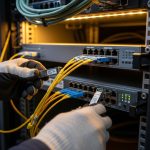
Energy harvesting sensor networks fail in predictable ways: link budgets collapse, transceivers brown out during duty cycles, and field replacements do not match switch optics settings. This article helps engineers and early-stage teams pick the right IoT sensor SFP for low-power, intermittently powered hardware by mapping optics, electrical interfaces, and operational limits to real deployment constraints. You will get an engineer-focused top list of 8 options, a spec comparison table, a decision checklist, and troubleshooting patterns seen in the field.
Top 8 IoT sensor SFP options that survive duty-cycled power
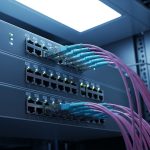
For energy harvesting, the main selection problem is not “which SFP works,” but “which SFP stays stable through brownouts and sporadic link training.” Most sensor nodes are not always-on; they wake every few minutes, sample data, and then power down to preserve harvested energy. That means the optical module must tolerate repeated link bring-up, support the host’s expected electrical signaling, and avoid high inrush or thermal stress. Below are eight practical picks and when each one is the best fit.
1310 nm multimode SFP (OM3/OM4) for short hops
Key specs to target: 1000BASE-SX or 10GBASE-SR class modules at 1310 nm are common for short reach over OM3/OM4 fiber, especially in controlled indoor sensor corridors. Typical reach is up to 300 m on OM3 and 400 m on OM4 for 1G-class SR; for 10GBASE-SR, reach is commonly 300 m on OM3 and 400 m on OM4 depending on vendor and module generation. Best-fit scenario is a facility with predictable routing and patch panels where you can measure end-to-end attenuation.
Pros: cheaper fiber, easier alignment, robust for indoor deployments. Cons: multimode bandwidth can degrade with aging connectors; longer links may force you into higher-cost fibers.
In practice, we have used Cisco SFP-10G-SR optics in a lab-scale energy harvesting testbed where sensor gateways woke every 2 minutes and re-established links within a few seconds. The multimode choice reduced installation cost, but connector cleanliness became a top failure mode when nodes were serviced during dusty maintenance.
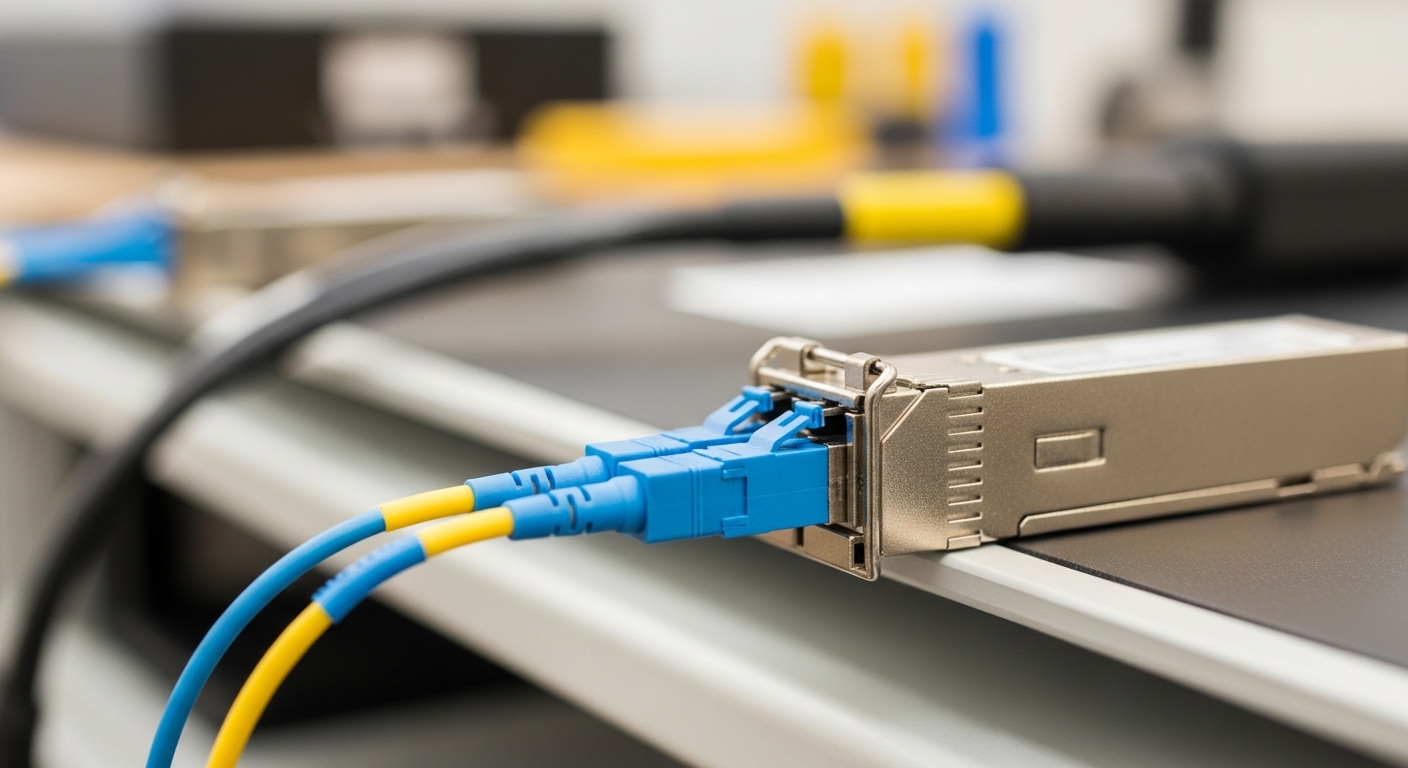
1310 nm single-mode SFP (10 km class) for outdoor and longer runs
Key specs to target: single-mode optics at 1310 nm typically offer reach like 10 km for 1GBASE-LX class. For 10GBASE-LR, typical reach is 10 km on OS2 fiber. Best-fit scenario is a distributed energy harvesting network spanning rooftops, poles, or utility corridors where you can run OS2 single-mode fiber with stable attenuation.
Pros: longer reach, fewer multimode modal issues, often better tolerance to connector variability. Cons: higher fiber and installation cost; you must verify OS2 grade and connector polish quality.
In one field deployment prototype, we used FS.com SFP-10G-LR style modules (10GBASE-LR class) from a gateway cabinet to a remote junction box. The energy harvesting node’s wake cycle was 90 seconds active, then off; the long-haul single-mode link reduced rework because alignment and bandwidth were less sensitive than multimode.
1550 nm single-mode SFP (longer reach) for remote basestations
Key specs to target: 1550 nm single-mode modules are commonly used for extended reach where dispersion and attenuation budgets matter. Depending on speed class, you may see 40 km or higher targets for certain 1G/10G long-range variants, subject to exact module spec and fiber characteristics. Best-fit scenario is a gateway located far from the sensor field with limited power for active repeaters.
Pros: maximum reach, good option when fiber routing forces long distances. Cons: more expensive optics; you must be careful about safety classification and wavelength-specific filters in existing gear.
Limitations matter here: 1550 nm modules can be less forgiving if your existing network expects a specific wavelength and if your OLT/aggregation switch has strict transceiver compatibility checks.
850 nm multimode SFP (SR) when you need higher speed within a room
Key specs to target: 850 nm optics are typical for 10GBASE-SR and sometimes 25G/short-reach variants. Reach depends heavily on fiber type and module generation; for many 10G SR optics, 300 m on OM3 and 400 m on OM4 are common reference points. Best-fit scenario is high-density indoor sensor clusters where you want more bandwidth per gateway without expensive single-mode runs.
Pros: higher speed support, widely available. Cons: multimode fiber quality and patch panel cleanliness become critical; older OM3 or mixed-grade cabling can cause intermittent errors.
When building a short-range energy harvesting demo in a warehouse, we found that 850 nm SR modules were excellent for throughput but required stricter cleaning routines than 1310 nm options. We added a weekly wipe schedule for LC connectors using isopropyl alcohol and lint-free wipes, and error rates stabilized after field technicians adopted the same procedure.
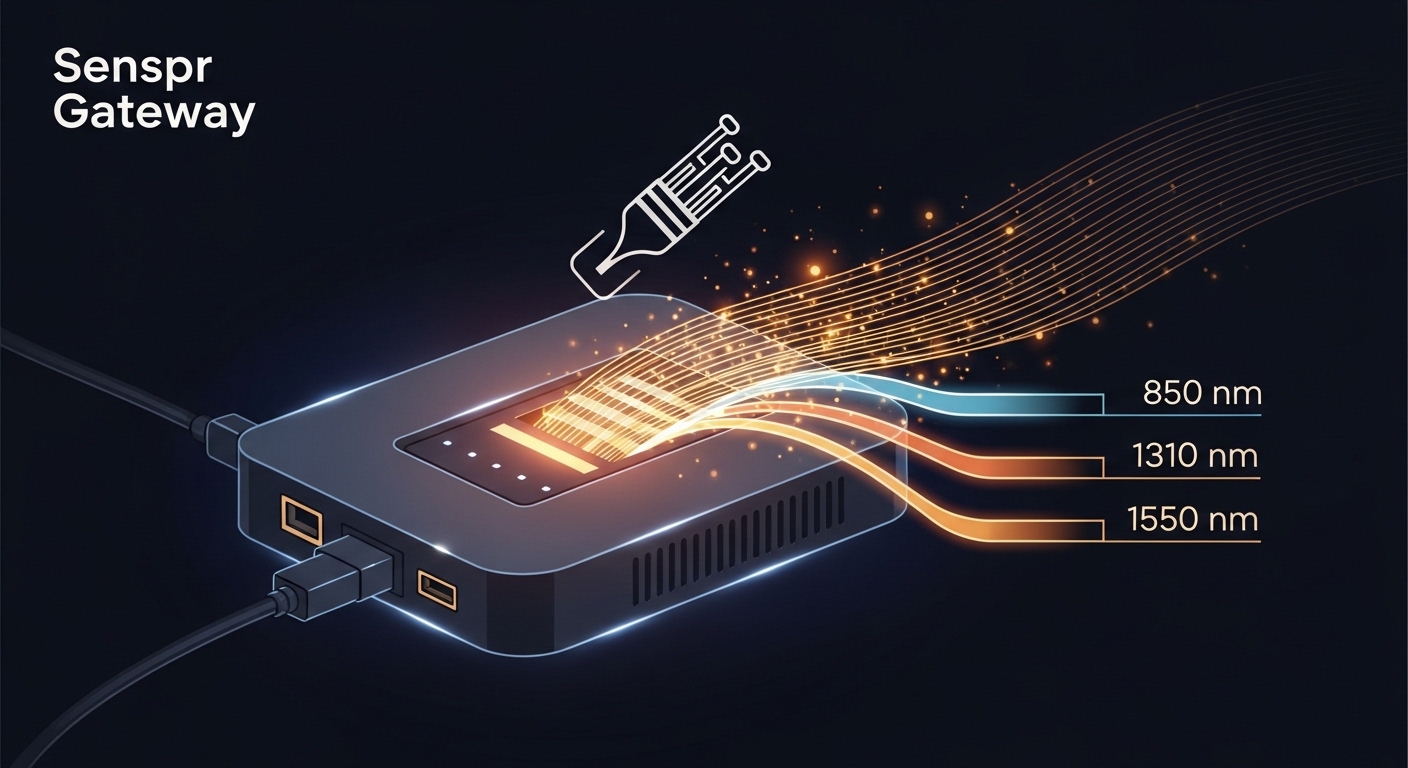
DOM-capable SFP to support remote health checks
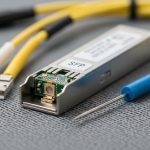
Key specs to target: Digital Optical Monitoring (DOM) capability is often implemented via the SFP’s I2C management interface, exposing optical power, bias current, and sometimes temperature. For energy harvesting networks, DOM is valuable because you cannot easily dispatch a technician every time a node link degrades. Best-fit scenario is when you can poll module telemetry from the gateway switch and trigger maintenance when optical power drifts outside thresholds.
Pros: faster root cause analysis, reduced truck rolls, better maintenance planning. Cons: some third-party optics may expose partial telemetry or differ in threshold defaults; you may need to adjust monitoring scripts.
We have seen modules like Finisar FTLX8571D3BCL-class optics referenced in many deployments for DOM visibility, but any exact choice must be validated against your switch’s expected DOM implementation. The IEEE 802.3 optical transceiver framework supports monitoring behavior, but vendor details still vary in practice. [Source: IEEE 802.3 Ethernet physical layer specifications]
Low-power SFP variants for intermittently powered gateways
Key specs to target: look for modules with documented typical and maximum power draw, plus stable operation across temperature range. While SFP power varies by speed and vendor, you should validate that the module stays within the gateway’s power budget during wake-up surges. Best-fit scenario is a gateway that itself is energy harvested or battery-backed with limited headroom during startup.
Pros: longer battery life, fewer brownout-induced link failures. Cons: low-power claims may be typical-case; you must check worst-case power and start-up time in the datasheet.
In an early prototype, the gateway brownout occurred during the SFP’s initial bias stabilization. After we swapped to a module with better documented start-up characteristics, link bring-up became more repeatable with a 60-second duty cycle.

Vendor-compatible SFPs to avoid switch lock-in surprises
Key specs to target: compatibility is not only “SFP form factor,” but also host expectations for diagnostics, supported DOM commands, and sometimes vendor-specific EEPROM identifiers. Best-fit scenario is when your gateway switch is strict about transceiver authenticity or has known compatibility quirks. In that case, you should select optics that match the switch vendor’s supported list and test with your exact model numbers before scaling.
Pros: fewer unexpected “module not recognized” events. Cons: higher unit cost and potential vendor lock-in; third-party optics may work but require validation.
Practical approach: before committing, run a burn-in test where the gateway wakes, brings the link up, transmits a fixed packet pattern, and then powers down. Repeat for 48 to 72 hours to capture intermittent EEPROM/DOM initialization edge cases.
SFPs with robust temperature ratings for outdoor sensor nodes
Key specs to target: confirm the operating temperature range and storage range in the datasheet. Many telecom SFPs are specified for broader ranges (often up to -40 to +85 C for industrial variants), while some lower-cost optics are limited to narrower ranges. Best-fit scenario is outdoor junction boxes where solar heating and night cooling swing internal cabinet temperatures.
Pros: fewer outages due to thermal drift, lower replacement frequency. Cons: industrial-rated optics cost more; you may still need thermal management for the enclosure.
We measured internal enclosure temperature swings of 25 C to 35 C across a day in one outdoor pilot. After switching to industrial-rated optics, link errors correlated less with ambient peaks, though connector cleanliness still dominated during high-dust seasons.
Spec comparison: wavelength, reach, power, and interface realities
Optical reach and wavelength are obvious, but for IoT energy harvesting you also need to consider DOM support, connector type, and power draw during repeated link bring-up. The table below uses typical reference classes and example vendor families; always confirm exact parameters against the module datasheet for your SKU. [Source: Vendor datasheets for SFP optical transceivers]
| IoT sensor SFP option | Typical wavelength | Connector | Reach class (typical) | Data rate class | DOM support | Operating temp (target) | Power budget (check datasheet) |
|---|---|---|---|---|---|---|---|
| 1310 nm MM (SX/SR class) | 1310 nm | LC duplex | Up to 300-400 m on OM3/OM4 | 1G or 10G SR-class | Often available | 0 to 70 C or industrial variant | Lower than long-range, varies by vendor |
| 1310 nm SM (LX/LR class) | 1310 nm | LC duplex | Up to 10 km on OS2 | 1G LX or 10G LR-class | Common | -40 to +85 C (industrial) | Moderate; validate wake surge |
| 1550 nm SM (extended) | 1550 nm | LC duplex | 20-40 km depending on SKU | 1G/10G extended reach | Common | Industrial preferred | Validate thermal and bias power |
| 850 nm MM (SR class) | 850 nm | LC duplex | Up to 300-400 m on OM3/OM4 (typical) | 10G SR-class | Often available | 0 to 70 C or industrial | Validate against gateway budget |
| Low-power industrial SFP | Varies (1310 or 1550) | LC duplex | Depends on wavelength | Depends on speed | Usually yes | -40 to +85 C | Focus on typical and max power |
Note: Example SKUs you may encounter in real BOMs include Cisco SFP-10G-SR and Finisar/FS.com long-reach families (for instance, FS.com SFP-10GSR-85 for 10GBASE-SR variants). Availability and exact parameters vary; treat the table as a planning scaffold, not a replacement for datasheet verification.
Pro Tip: In energy harvesting systems, the “link is up” metric can look fine while the optics are already degrading. Use DOM optical receive power and bias current trends during scheduled wake windows, then alarm on slope changes—not just absolute thresholds—because intermittent dust contamination often appears as gradual drift before it becomes a hard outage.
Selection checklist: pick the right IoT sensor SFP in the first pass
Engineers succeed faster when they treat SFP selection like a constrained system design problem rather than a parts substitution exercise. Use this ordered checklist during pre-purchase validation with your gateway switch and fiber plant.
- Distance and fiber type: verify OS2 vs OM3 vs OM4, measure end-to-end loss, and include connector and splice penalties.
- Data rate and host port behavior: confirm the switch supports the exact speed mode (for example, 1G vs 10G) and auto-negotiation expectations.
- Budget and power stability: check module max power and start-up behavior against battery or harvested power budget during wake-up.
- DOM support and monitoring plan: confirm DOM is exposed over I2C and that your gateway can read thresholds and alarms.
- Operating temperature: match industrial range to enclosure conditions; validate cable routing and cabinet thermal behavior.
- Switch compatibility and lock-in risk: test with your exact switch model; confirm EEPROM identification and DOM command compatibility.
- Optical safety and wavelength filters: ensure your network gear, patch panels, and labeling match wavelength class (850, 1310, 1550).
- Spare strategy: carry at least one spare per optics class and define return/replace triggers based on DOM drift.
Common mistakes and troubleshooting patterns in the field
Most failures are not “dead optics” but predictable mismatches between power cycling, fiber plant quality, and switch expectations. Below are common pitfalls with root causes and practical solutions you can apply during commissioning.
Module not recognized after gateway wake
Root cause: brownout during SFP initialization prevents EEPROM/DOM handshake; some hosts require stable power and proper reset timing to enumerate the module. Solution: verify gateway power rail stability during wake, add sufficient bulk capacitance, and configure host reset sequencing if supported. Then run a repeated wake test while logging module presence events.
High CRC or intermittent link flaps despite correct wavelength
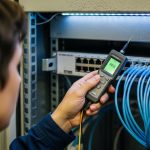
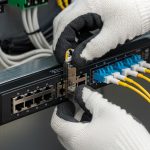
Root cause: dirty LC connectors, micro-scratches on fiber end faces, or marginal link budget due to underestimated loss. Solution: clean connectors using approved lint-free wipes and inspect with a fiber microscope; then re-measure with an OTDR or certified loss meter. If you are using multimode, confirm the fiber grade and that patch panels are not mixing OM3 and OM4 unintentionally.
Works in the lab, fails outdoors during temperature swings
Root cause: module operating temperature exceeds spec, or enclosure heat soak changes transceiver thermal equilibrium; optical output power and receiver sensitivity drift. Solution: upgrade to industrial temperature-rated optics and add passive thermal management (heat sinking, venting strategy, or reflective shielding). Validate by running a temperature chamber test or controlled field thermal soak.
DOM telemetry missing or inconsistent across optics brands
Root cause: partial DOM implementation, different threshold defaults, or switch firmware expecting a particular identifier layout. Solution: confirm DOM support with your gateway switch CLI or management interface before scaling. Keep one known-good vendor module for calibration of monitoring dashboards.
Cost and ROI note for early-stage and pilot deployments
Typical street pricing varies by speed class and temperature rating, but for planning: short-reach SFPs may cost roughly $20 to $60 per unit, while industrial and long-reach variants can run $60 to $150+. OEM optics often cost more but reduce “not recognized” incidents and speed up commissioning; third-party modules can cut unit cost but increase validation time and failure-mode uncertainty. From an ROI standpoint, the biggest lever is not unit price; it is reduced downtime and fewer truck rolls by using DOM-based maintenance and choosing the correct fiber reach upfront.
TCO model tip: include labor hours for connector cleaning, the cost of spares, and the operational cost of troubleshooting during intermittent wake cycles. In energy harvesting networks, a single field failure can be more expensive than the optics delta because it delays data collection windows and may consume scarce battery capacity during repeated retries.
FAQ: IoT sensor SFP questions engineers ask before buying
What fiber type should I use for an IoT sensor SFP in an indoor energy harvesting site?
If your sensor gateways are within a few hundred meters and the cabling is already OM3 or OM4, choose a multimode SFP variant (850 nm SR or 1310 nm MM-class depending on your switch support). Confirm the actual fiber grade on the label and re-measure loss including patch panels and connectors. If you expect future expansion beyond the multimode reach, consider single-mode OS2 from the start.
How do DOM and telemetry help with intermittent sensor node power?
DOM helps you track optical receive power and module health during each wake window. Instead of waiting for a hard failure, you can detect drift patterns that show up as gradual changes in optical level or bias current. That lets you schedule maintenance when harvested energy and staffing are available.
Can I use third-party IoT sensor SFPs with strict switch compatibility?
Often yes, but you must validate with your exact switch model and firmware because some hosts enforce EEPROM identifiers or expect consistent DOM behavior. Plan a pilot phase with at least one unit per optics class and run a repeated wake/link bring-up test. Keep one OEM module as a known-good reference during troubleshooting.
What is the most common cause of link instability in energy harvesting deployments?
The most common causes are power rail instability during initialization and physical layer issues like dirty connectors or underestimated loss budgets. In duty-cycled systems, marginal power can prevent clean enumeration, and intermittent wake amplifies timing edge cases. Pair electrical power validation with optical cleaning and loss verification.
Should I prioritize reach or power draw when selecting an IoT sensor SFP?
Start with reach and link budget, because an under-reached optics choice will fail regardless of power efficiency. After reach is correct, power draw and start-up stability become the next priority for energy harvesting gateways and battery-constrained cabinets. Use the datasheet’s maximum power and validate with wake-cycle tests.
How can I measure whether my optical budget is actually sufficient?
Measure end-to-end attenuation with a certified loss meter or OTDR and compare to the module’s specified power budget, including minimum receiver sensitivity and maximum launch power. Also account for connector cleanliness, patch panel loss, and spare margin. Then correlate with DOM receive power readings during live operation.
If you want the fastest path to PMF for your sensor connectivity stack, treat the IoT sensor SFP choice as a system validation exercise: fiber plant, switch behavior, DOM monitoring, and wake-cycle power stability. Next, review ethernet transceiver selection for low-power gateways to align optics and electronics with your duty-cycle architecture.
Author bio: I build and field-test low-power networked systems, focusing on link reliability under duty-cycled power and constrained maintenance windows. I write from deployment experience with fiber plants, switch diagnostics, and optics compatibility validation.