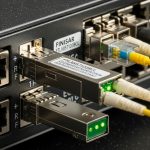
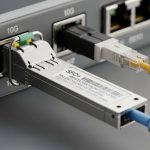
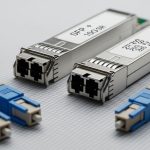
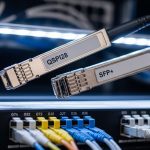
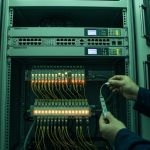
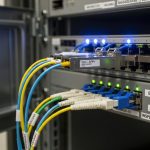
In colocation data centers, your tenant links can live or die by optics that fit the carrier hotel environment: patch-panel cleanliness, switch DOM expectations, and the actual fiber plant budget. This article helps network engineers and procurement leads choose carrier hotel optics that work on first install, with a practical head-to-head comparison across distance, compatibility, and cost. You will also get a decision checklist, troubleshooting pitfalls, and a clear recommendation by reader type.
What makes carrier hotel optics different from “standard” tenant optics?
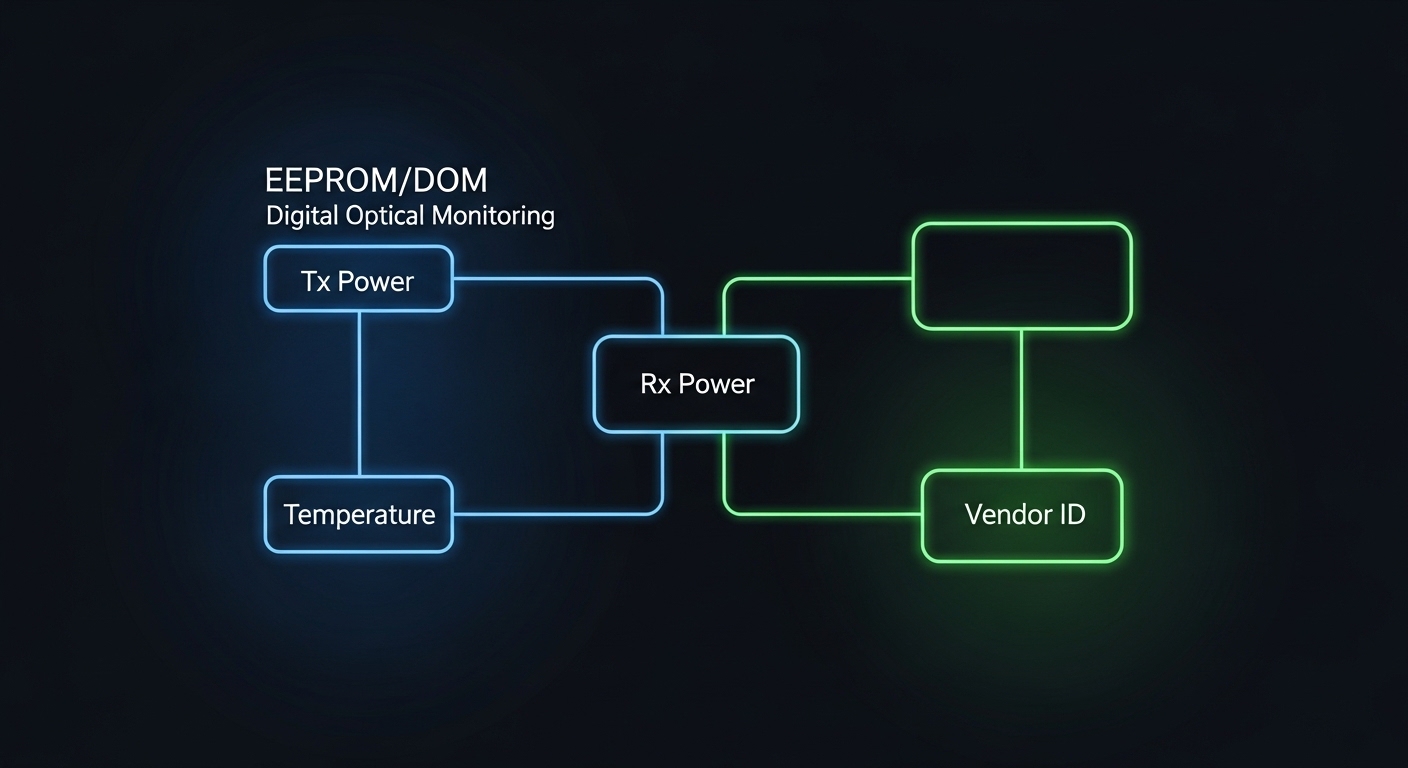
Carrier hotels introduce variables that are often invisible in lab testing. The fiber route may include multiple interconnects, conservative loss budgets, and connectorization cycles that degrade reflectance over time. On top of that, many colocation switches enforce optics compatibility via EEPROM/DOM reads (for example, IEEE 802.3 compliant electrical/optical behavior paired with vendor-specific thresholds). In practice, engineers treat carrier hotel optics as “plug-in but not plug-and-pray,” especially when you are onboarding new circuits or swapping modules under time pressure.
Where tenant requirements show up in real deployments
Tenant transceivers must align with the switch’s port signaling (10GBASE-SR, 10GBASE-LR, 25GBASE-SR, 100GBASE-LR4, etc.), the fiber type (OM3/OM4/multimode versus OS2/single-mode), and the link budget. A field engineer will typically validate: (1) receive power margins, (2) connector loss and end-to-end insertion loss, and (3) whether the switch accepts third-party optics with DOM vendor IDs. Even when the wavelength and nominal reach match, a strict platform might reject marginal DOM behavior.

Head-to-head: SR vs LR vs ER for carrier hotel reach and power margins
The most common tenant decision is not brand, but optics class. In a carrier hotel, your “actual reach” is constrained by measured link budget, not spec-sheet reach. Multimode short-reach optics (SR) can be cost-effective, but only if the building fiber and patching remain within OM3/OM4 launch conditions and insertion loss assumptions. Single-mode long-reach options (LR/ER) usually offer more operational tolerance when the plant is uncertain or when you expect future reroutes.
Key specs you should compare before ordering
Below is a practical comparison for common tenant link speeds. Values vary by vendor, but these ranges reflect typical module behavior and supported wavelengths. Always confirm the specific datasheet for the module part number you plan to buy.
| Optics class | Typical module | Wavelength | Fiber type | Typical reach | Connector | Operating case temp | Power considerations |
|---|---|---|---|---|---|---|---|
| SR (short reach) | SFP+ / SFP28 | 850 nm | OM3 / OM4 MMF | 300 m to 400 m class | LC duplex | 0 to 70 C (common) | Higher Tx current; sensitive to patch loss |
| LR (long reach) | SFP+ / SFP28 | 1310 nm | OS2 SMF | 2 km class | LC duplex | -5 to 70 C (common) | More tolerant of connectorization variability |
| ER (extended reach) | SFP / SFP+ (where supported) | 1550 nm | OS2 SMF | 10 km class | LC duplex | -5 to 70 C (common) | Usually lower Rx power margin risk over distance |
| LR4 / ER4 (100G) | QSFP28 / CFP2 | ~1310 nm | OS2 SMF | 10 km class | LC duplex | 0 to 70 C (common) | Requires precise lane performance |
What to measure in the tenant handoff
Before you pick SR versus LR, collect: (1) fiber type and core count, (2) link distance including patch cords, (3) measured attenuation (dB/km) and connector loss, and (4) whether the carrier hotel will re-terminate or re-route during circuit provisioning. If the tenant cannot obtain OTDR results, bias selection toward optics with more link budget headroom, typically single-mode LR/ER. This reduces the probability of intermittent LOS (loss of signal) events after a maintenance window.
Pro Tip: When a carrier hotel includes frequent cross-connect changes, the biggest field risk is not “distance,” it is the compound connector loss and contamination variability. Modules that barely meet spec-sheet reach can fail after a single re-patch; prioritize link budget margin and plan for cleaning and inspection at each change window.
OEM vs third-party carrier hotel optics: compatibility, DOM, and risk
In a colocation environment, “compatible” means the switch will accept the optics and keep it operational under your thermal and power conditions. OEM modules (for example, vendor-supplied transceivers) often have the cleanest DOM behavior for the specific platform. Third-party optics can be cheaper, but you must validate DOM compliance, laser safety class, and whether the switch enforces vendor allow-lists or strict thresholds.
Compatibility checks engineers actually run
- Switch model and port type: Confirm the exact platform (for example, Cisco Nexus, Arista EOS, Juniper QFX) and whether it supports the module family.
- DOM and diagnostics behavior: Verify the module returns temperature, bias, Tx power, Rx power in expected ranges. Some switches reject optics when diagnostic fields are out of expected formats.
- Electrical standard: Ensure the module matches the required interface (SFP/SFP+ vs SFP28 vs QSFP28, and lane mapping for 100G).
- Connector cleanliness and fiber type: Even “compatible” optics will not overcome contaminated LC ends or mismatched MMF/SMF.
- Operating temperature: Carrier hotel aisles can run hot near power distribution; choose modules with a case temperature range that matches your thermal reality.
Examples of real part families you will encounter
Engineers commonly evaluate known-good modules from major OEMs and optics vendors. Examples include Cisco-branded optics (such as Cisco SFP-10G-SR) and third-party compatible models like Finisar/FS-branded LR/SR modules (for example, Finisar FTLX8571D3BCL for 10G SR-class behavior, and FS.com variants such as FS.com SFP-10GSR-85). Exact naming differs by speed and wavelength, so validate against your switch datasheet and the optics ordering guide.
Cost and ROI: how to budget carrier hotel optics without hidden TCO traps
Optics pricing varies by speed, reach, and whether the platform is tolerant of third-party modules. In many colocation procurement cycles, engineers see OEM modules priced at a premium, while third-party modules offer immediate unit cost savings. However, the total cost of ownership depends on failure rates, RMA logistics, and the time required for swaps during maintenance windows.
Realistic price bands and what drives TCO
Typical market ranges (ballpark, vary by region and contract) for tenant optics often look like: SFP+ SR (10G, 850 nm) in the tens to low hundreds of dollars; SFP+ LR (10G, 1310 nm) slightly higher; and QSFP28 25G/100G-class modules in the higher hundreds to low thousands depending on reach and compliance requirements. The operational cost can dominate if you need repeated truck rolls or extended outage windows. Third-party optics can be cost-effective when you have a proven compatibility path and a documented acceptance test.
For ROI, treat the optics line item as part of an availability program: keep a small spares pool matched to the most common link types in your cage, and standardize on one or two optics families that your switch fleet tolerates consistently. This reduces mean time to repair and reduces the probability of mismatched DOM behavior during urgent incidents.
Selection criteria and decision checklist for carrier hotel optics
Use this ordered checklist to decide quickly while remaining defensible during audits and change control.
- Distance and fiber type: Confirm OS2 versus OM3/OM4 and include patch cords and cross-connects in the loss budget.
- Budget headroom: Prefer optics with margin for connector and splice loss, especially when OTDR data is missing.
- Switch compatibility: Match module form factor and verify the switch supports that optics class at your speed.
- DOM support and thresholds: Validate whether the platform enforces vendor allow-lists; test with one known port first.
- Operating temperature and airflow: Compare module case temperature rating with your cage thermal profile.
- Vendor lock-in risk: If third-party is allowed, standardize on a shortlist and document acceptance criteria.
- Spare strategy: Align spares with your most failure-prone link types and the fastest replacement path in your operations workflow.
Common mistakes and troubleshooting in carrier hotel optics deployments
Below are frequent failure modes seen in tenant turn-ups and swaps, along with root cause and practical fixes.
Choosing SR for a plant that is effectively beyond multimode assumptions
Root cause: The fiber path includes additional patching and cross-connects with higher-than-expected insertion loss, or the building uses mixed multimode conditions. SR optics can show intermittent errors that worsen after maintenance. Solution: Re-measure link loss; if you cannot get reliable OTDR results, migrate to OS2 LR and validate end-to-end receive power.
DOM mismatch leading to “unsupported transceiver” or flapping link
Root cause: Third-party optics sometimes report diagnostics in formats or ranges outside what the switch expects, or the platform enforces an allow-list. This can present as port errors, link resets, or optics warnings even when the optics are physically correct. Solution: Confirm the switch vendor’s transceiver compatibility matrix and perform a controlled test with one module in a non-critical port before scaling.
Contaminated connectors causing high error counts despite “correct” optics
Root cause: LC duplex ends accumulate dust after repeated handling. You might still see signal present, but BER and CRC errors rise, and performance degrades over hours. Solution: Inspect with a scope, clean with lint-free wipes and approved solvent, and verify with a power meter or built-in diagnostics; enforce a cleaning SOP at every swap.
Thermal derating after a cage airflow change
Root cause: Carrier hotels can modify airflow during power upgrades or nearby construction. Modules operating near maximum case temperature may fail to meet optical power stability. Solution: Confirm your module case rating and measure local temperature; improve cable management and airflow baffles if needed.

Which option should you choose? (recommendations by reader type)
Use the decision matrix below to map your situation to a safe procurement path. If you are unsure about plant loss or platform allow-list behavior, bias toward options with broader tolerance (often LR/ER on OS2) and validated compatibility.
| Your situation | Pick this optics class | OEM vs third-party stance | Why |
|---|---|---|---|
| Known OM4 within measured SR budget | SR (850 nm) | Either, but test first | Lower cost per port and predictable reach when insertion loss is controlled |
| Unknown or frequently changing cross-connect paths | LR (1310 nm) on OS2 | Validate compatibility; third-party only if proven | More forgiving link budget for patching variability |
| Time-critical onboarding and strict availability SLAs | LR4 / ER4 when using 100G over OS2 | Prefer OEM or fully tested third-party | Reduces risk of lane-level incompatibility and DOM surprises |
| Budget-constrained tenant with standardized switch fleet | Match your existing optics family | Third-party ok with acceptance test | Lower unit cost while keeping operational behavior consistent |
| Regulated environment requiring auditability | Whatever meets measured budget | OEM or documented vendor-approved list | Simplifies procurement records and support escalation |
If you are a tenant engineer: start with measured loss and choose optics class by budget headroom, usually LR on OS2 when plant details are incomplete. If you are procurement: standardize optics families and require DOM acceptance testing before scaling third-party purchases. If you are a managed service provider: maintain a curated spares inventory and document switch-port acceptance criteria to cut MTTR during incidents.
FAQ
What does “carrier hotel optics” practically mean in a tenant context?
It refers to optics you deploy inside a carrier hotel where fiber paths, patching, and switch acceptance rules can differ from your lab assumptions. In practice, it means validating reach with real loss budgets and ensuring the switch accepts the module via DOM and diagnostics behavior.
Can I use third-party optics in a carrier hotel?
Often yes, but you must confirm compatibility with your exact switch model and port type. Many platforms allow third-party optics only if DOM diagnostics fields and electrical signaling match expected behavior.
How do I decide between SR and LR without perfect OTDR data?
Use available documentation to estimate connector and splice losses, then add conservative margin. If cross-connect changes are likely or plant details are uncertain, prefer OS2 LR for operational tolerance.
What are the fastest troubleshooting steps when a port goes down after optics replacement?
First verify the module is seated correctly and that the connector type matches. Then check switch diagnostics for DOM warnings, clean and inspect the fiber ends, and confirm transmit/receive power levels against the optics datasheet.
Do temperature ratings matter for colocation optics?
Yes. Even if the optics “works,” operating near maximum case temperature can increase instability and degrade optical output over time. Match module case temperature range to your cage airflow and measure local temperature during the same operating conditions.
Where should I look for authoritative compatibility guidance?
Use the switch vendor’s optics compatibility matrix and the specific optics datasheet for DOM and electrical behavior. For standards grounding, review IEEE 802.3 for signaling requirements and vendor documentation for platform-specific implementation details. IEEE 802.3
For deeper planning on link provisioning, see fiber loss budget and tenant handoff to structure your measurements and acceptance tests. With the right optics class, verified compatibility, and a cleaning-friendly SOP, carrier hotel optics can deliver stable links that survive day-two operations.
Author bio: I have deployed and troubleshot SFP/SFP28/QSFP28 optics in colocation environments with measurable link budgets, DOM diagnostics validation, and fiber cleaning workflows. I focus on pragmatic acceptance testing, failure-mode analysis, and procurement decisions that reduce MTTR and operational risk.