Telecom-grade DWDM modules are essential for high-capacity, long-distance fiber optic communications. This article guides network engineers and infrastructure planners through technical specifications, real-world deployment practices, and strategic selection criteria critical for implementing DWDM (Dense Wavelength Division Multiplexing) modules in telecom environments.
Understanding DWDM Modules: Technical Foundations and Specifications
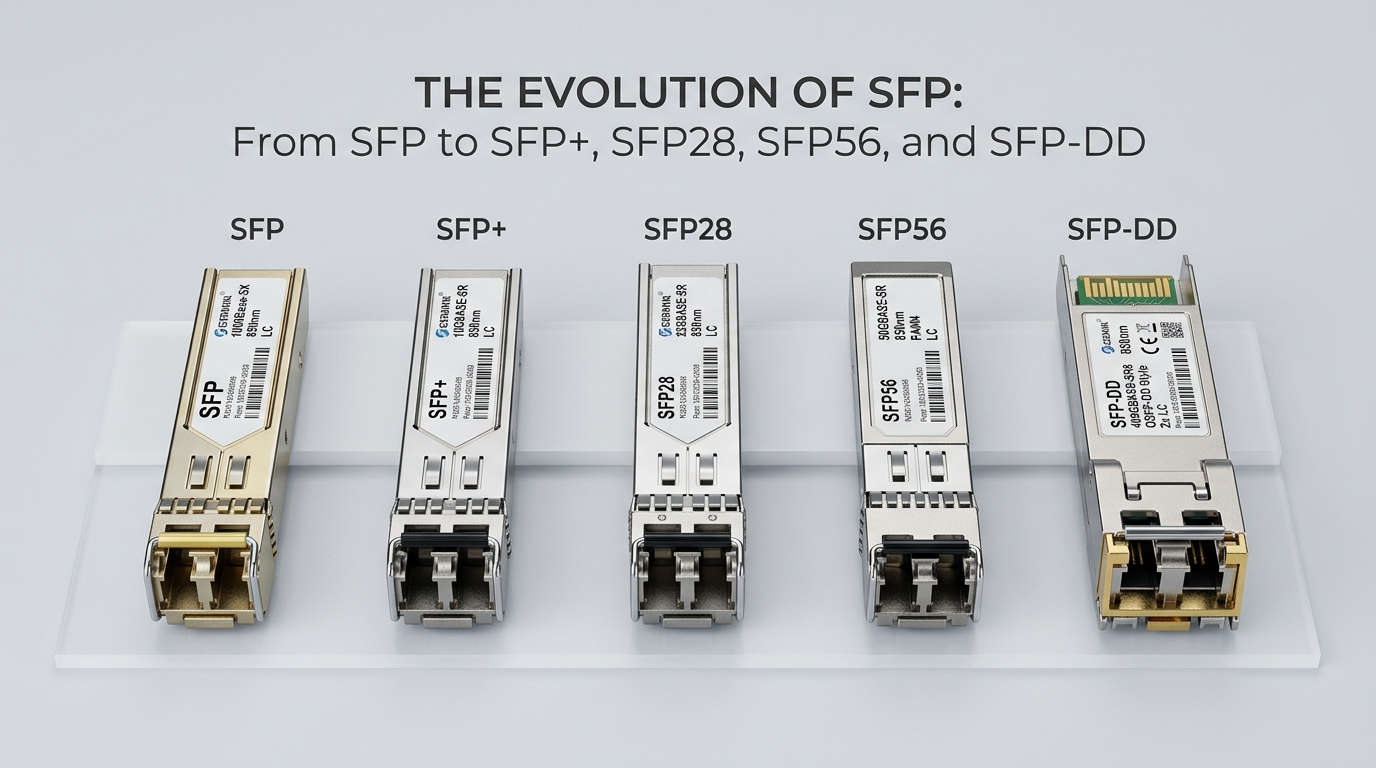
DWDM modules enable multiplexing of multiple optical signals on a single fiber by using different wavelengths. This technology allows telecom operators to maximize bandwidth over existing fiber infrastructure while minimizing latency and signal degradation over distances often exceeding 80 km without regeneration. Telecom-grade DWDM modules conform to rigorous standards such as ITU-T G.694.1 for wavelength grids and IEEE 802.3 for transmission protocols.
Key Technical Specifications Comparison
| Specification | Typical Telecom-Grade DWDM Module | Common Vendor Model Example | Notes |
|---|---|---|---|
| Wavelength Range | 1528.77 nm to 1563.86 nm (C-Band) | Cisco N77-DWDM-10G | Standard ITU grid spacing 50 GHz/100 GHz |
| Data Rate | 10 Gbps to 100 Gbps | Finisar FTLX8571D3BCL (10G), Cisco QSFP-100G-DWDM | Supports Ethernet and OTN encapsulation |
| Max Reach | 80 km (unamplified), >120 km (with EDFA) | FS.com SFP-10G-DWDM-80KM | Depends on fiber type and amplification |
| Output Power | -2 dBm to +3 dBm | Ultra Low Noise Laser Diodes | Optimized for low OSNR degradation |
| Optical Connector | LC Duplex | Industry standard | Compatible with SMF-28 fiber |
| Operating Temperature | -5°C to +70°C | Telcordia GR-468-CORE compliance | Suitable for telecom environments |
| Monitoring | Digital Optical Monitoring (DOM) | Supported by Cisco, Finisar | Real-time monitoring of power, temperature |
Real-World Deployment Scenario: Long-Haul Telecom Backbone
Consider a telecom operator deploying a metropolitan long-haul network with spans up to 120 km between central offices using G.652.D single-mode fiber. The operator employs Cisco N77-DWDM-10G modules integrated into their Cisco NCS 1000 series optical transport nodes. Each DWDM channel transmits 10 Gbps Ethernet traffic on a 50 GHz ITU grid wavelength. The network design incorporates erbium-doped fiber amplifiers (EDFAs) at 80 km intervals to compensate for fiber attenuation (~0.2 dB/km) and maintain optical signal-to-noise ratio (OSNR) above 18 dB, ensuring error-free transmission.
By multiplexing 40 DWDM channels, the operator achieves an aggregate capacity of 400 Gbps over a single fiber pair. This consolidation reduces fiber leasing costs and physical infrastructure complexity. Digital optical monitoring on each module provides real-time diagnostics, enabling proactive fault detection and rapid restoration in case of fiber cuts or transceiver degradation.
Selection Criteria for DWDM Modules in Telecom Grade Networks
- Distance and Reach Requirements: Determine span lengths and whether amplification is feasible or necessary. Modules must support the target reach with acceptable OSNR margins.
- Data Rate Compatibility: Match transceiver data rates (10G, 40G, 100G) to network equipment capabilities and traffic demands.
- Switch and Vendor Compatibility: Ensure DWDM modules are validated for interoperability with existing optical switches and routers to avoid packet loss or link flaps.
- Digital Optical Monitoring (DOM): Opt for modules with DOM for troubleshooting, performance monitoring, and predictive maintenance.
- Operating Temperature Range: Confirm modules meet environmental standards for deployment sites, especially in uncontrolled outdoor cabinets.
- Vendor Lock-In Risk: Consider multi-vendor support and third-party module options to reduce dependency and total cost of ownership.
- Wavelength Grid and Channel Spacing: Align with ITU-T standards and existing channel plans to ensure scalability and minimize crosstalk.
- Power Budget and Output Levels: Verify that transmit power and receiver sensitivity are balanced to maintain link budget margins.
Pro Tip: When deploying DWDM modules in long-haul telecom networks, always calibrate your power levels to avoid nonlinear impairments like four-wave mixing. Slightly reducing transmit power can improve overall signal integrity and extend fiber lifespan.
Common Mistakes and Troubleshooting Tips with DWDM Modules
- Pitfall 1: Mismatched Wavelengths
Root Cause: Using DWDM modules with incompatible ITU channel spacing or wavelength settings.
Solution: Always verify the module wavelength against the network’s ITU wavelength plan. Use vendor-provided tools or wavelength stickers to avoid mixing up channels. - Pitfall 2: Ignoring DOM Data
Root Cause: Overlooking real-time diagnostics leads to undetected power degradation or temperature anomalies.
Solution: Monitor DOM parameters proactively to detect early signs of fiber bends, connector contamination, or transceiver aging, enabling timely maintenance. - Pitfall 3: Excessive Insertion Loss and Connector Mismatch
Root Cause: Poor fiber connector cleanliness or mismatched polish types (UPC vs APC) causing reflection and high insertion loss.
Solution: Use appropriate APC connectors for DWDM to minimize return loss. Implement strict fiber cleaning protocols before installation.
Cost and ROI Considerations for Telecom-Grade DWDM Modules
Telecom-grade DWDM modules range from approximately $700 to $3,000 per unit depending on data rate, reach, and vendor brand. OEM modules from Cisco or Finisar typically command a premium due to guaranteed interoperability and support compliance with Telcordia GR-468-CORE standards. Third-party modules can offer cost savings of 30-50% but carry risks related to firmware compatibility and warranty coverage.
When calculating total cost of ownership (TCO), consider power consumption differences—DWDM modules often consume between 1.5 to 3 watts each. Over thousands of modules, power savings translate into significant operational expenditure reductions. Additionally, reducing physical fiber deployment via DWDM multiplexing lowers leasing and maintenance costs, driving ROI.
FAQ
- What is the maximum distance a telecom-grade DWDM module can support without amplification?
Typically, unamplified DWDM modules reach up to 80 km over standard single-mode fiber (ITU-T G.652.D), but this depends on fiber quality and module output power. - Are DWDM modules compatible with all optical switches?
Compatibility varies by vendor and firmware. It is critical to verify interoperability lists or test in lab environments before deployment. - How does digital optical monitoring improve network reliability?
DOM provides real-time readouts of power levels, temperature, and optical signal integrity, enabling preemptive maintenance and avoiding downtime. - Can I use third-party DWDM modules to reduce costs?
Yes, but ensure they meet telecom-grade specifications and are tested for compatibility with your network equipment to minimize failure risks. - What is the difference between C-band and L-band DWDM modules?
C-band operates between 1530-1565 nm and is standard for DWDM; L-band (1565-1625 nm) is used for extended capacity and longer reach when combined with C-band.
In conclusion, selecting the right telecom-grade DWDM module requires a balance of technical specifications, network design considerations, and vendor reliability. Proper deployment and proactive monitoring ensure long-distance transmission integrity and cost-effective network scaling. For more on optical transport technologies, explore our deep dive into optical transport network architectures.
Author Bio: As a founder deeply engaged in telecom infrastructure and rapid network validation, I bring hands-on experience integrating DWDM modules in operational long-haul networks. My work focuses on pragmatic solutions that deliver measurable improvements in capacity and reliability.