Edge deployments live and die by optics that stay stable under vibration, thermal swings, and tight power budgets. This article helps network and field engineers choose between Direct Attach Copper (DAC) and Active Optical Cable (AOC) for performance optimization in short-reach top-of-rack and aggregation links. You will get practical selection criteria, troubleshooting patterns, and a cost-aware ranking you can apply to real hardware refresh cycles.
Top 1: Start with the physics—what DAC and AOC change
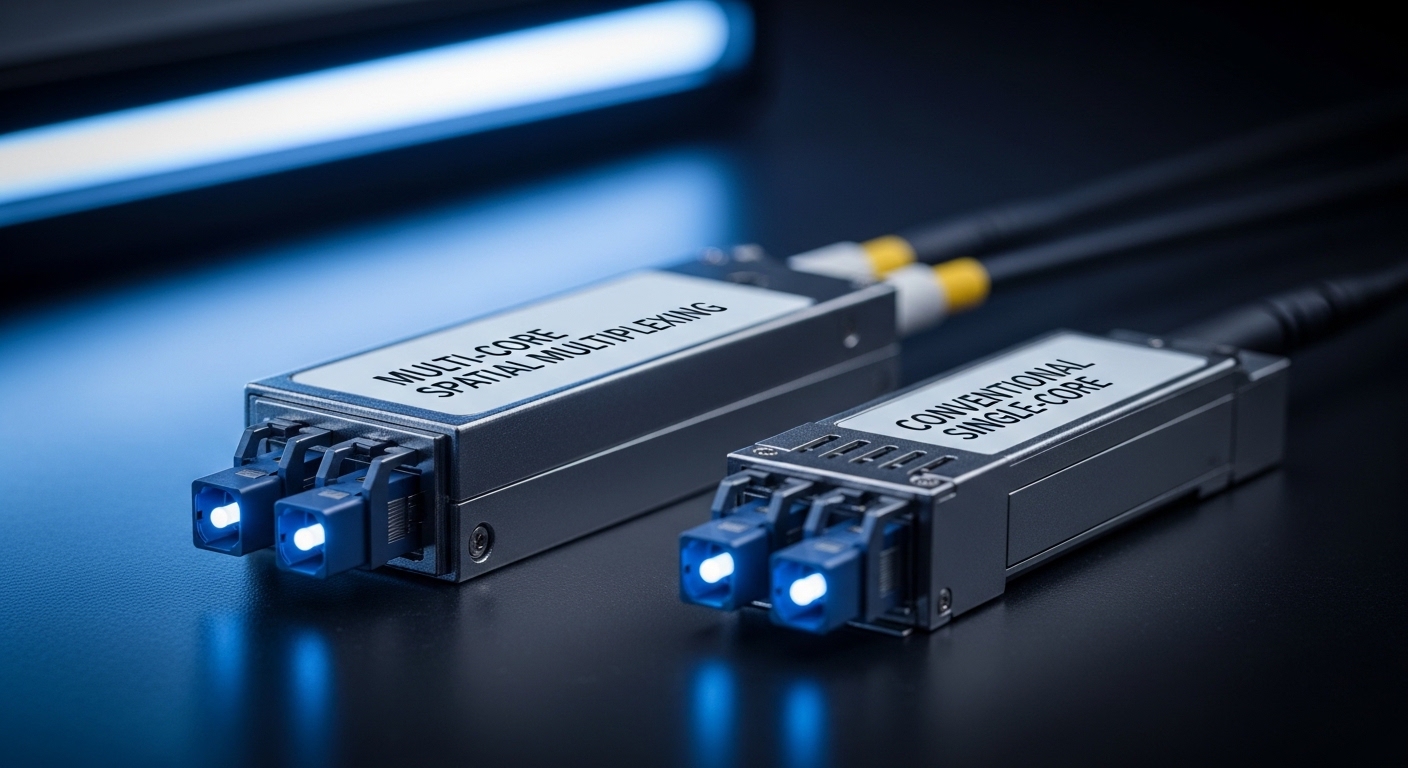
For performance optimization, the key difference is where signal conditioning happens. DAC moves electrical high-speed signaling over copper traces inside a cable assembly; the transceiver or host PHY typically performs most equalization. AOC converts electrical signals to optical near the host end, then back to electrical at the far end, which changes the dominant impairments from copper channel loss and crosstalk to optical power budget and alignment/cleanliness requirements. In edge nodes with frequent hardware swaps, that shift often reduces intermittent link flaps caused by marginal copper contacts.
From a standards perspective, Ethernet over copper and optical links are governed by IEEE 802.3 for signaling and link behavior, but the implementation details are vendor-specific. For example, 10G/25G/40G/100G optics and active cables follow IEEE-defined electrical interfaces and optical power class behaviors; always verify with the transceiver and cable datasheets. IEEE 802.3 Ethernet Standard
- DAC strengths: simplest optics-free path, no fiber cleaning, often lower latency.
- AOC strengths: better immunity to EMI and ground potential differences, less copper attenuation sensitivity.
- Tradeoff: AOC introduces optical budget constraints and connector/cable handling discipline.
Top 2: Compare reach, signaling rate, and link margin with real specs
Performance optimization starts with whether the link can maintain margin across temperature and aging. DAC and AOC are both used for short reach, but their reach is constrained differently: DAC by copper attenuation and return loss, AOC by optical transmit power, receiver sensitivity, and end-to-end optical budget. For high-density edge cabinets where ambient can exceed 50 C during summer peaks, you need to confirm the cable’s rated operating temperature and the transceiver’s acceptable power ranges.
Common edge choices include 10GBASE-SR/SW equivalents for fiber, but DAC and AOC are often used with modern high-speed Ethernet PHYs (for example, 25G and 100G KR/CA style electrical interfaces). The practical point: do not treat “works at room temperature” as performance optimization; validate the worst-case margin.
| Key spec | DAC (Direct Attach Copper) | AOC (Active Optical Cable) |
|---|---|---|
| Typical use case | In-rack short links (server to ToR, ToR to ToR) | Short links where EMI/ground issues exist |
| Data rates (common) | 10G, 25G, 40G, 100G class electrical | 10G, 25G, 40G, 100G class optical |
| Reach (typical) | ~0.5 m to 7 m (varies by rate/quality) | ~3 m to 100 m (varies by SKU) |
| Connector/handling | No fiber cleaning; robust molded ends | Fiber connectors/handling discipline (typically LC) |
| Power/thermal behavior | Lower optical power budget concerns; copper heating | Optical Tx/Rx power budget; active electronics heat |
| Operating temperature | Often 0 to 70 C but confirm SKU | Often -5 to 70 C or wider; confirm SKU |
| EMI immunity | Moderate; sensitive to poor routing/grounding | High; optical path reduces EMI coupling |
| Field failure modes | Connector wear, cable jacket damage, marginal seating | Dirty connectors, bend radius violations, oxidation |
For concrete part examples you might encounter in edge refreshes: Cisco SFP-10G-SR is fiber-based (not DAC), while DAC/AOC are usually “cable assemblies” tied to specific host cages. Third-party AOC SKUs like Finisar FTLX8571D3BCL are fiber optics, not an AOC; for active cable assemblies, vendors like FS.com and others list AOC models by length and data rate. Always cross-check compatibility with your switch’s transceiver matrix and the exact connector type.
If you need a formal view of link behavior and optical performance concepts, consult ITU guidance for optical components and power budget methodology. ITU-T Recommendations and optical system guidance
Top 3: Edge deployment scenario—what fails first in the field
Consider a 3-tier edge deployment: 48-port 25G ToR switches in 12 outdoor cabinets feeding a small aggregation router. Each cabinet has 2 ToR switches connected to the aggregation layer using 4x25G uplinks per switch, with cable runs of 2.5 m inside the cabinet and up to 12 m across cable trays to a nearby sub-aggregation shelf. Ambient peaks reach 58 C, and electricians occasionally rework grounding during maintenance. In this environment, teams often see copper DAC links degrade first when cable routing crosses high-current power conductors, increasing common-mode noise and stressing equalization.
In that same scenario, AOC uplinks typically stabilize because optical signaling reduces EMI coupling and ground reference sensitivity. However, performance optimization with AOC requires connector cleanliness discipline: even a mild contamination event can reduce received optical power enough to trigger link resets. The best practice is to implement a cleaning workflow and check end-face inspection before swapping AOCs in a live cabinet.
- DAC best-fit: short, clean rack-to-rack paths with controlled routing.
- AOC best-fit: cabinets with EMI exposure, mixed grounding, or longer short-reach spans.
- Operational note: AOC reduces intermittent “mystery flaps” but increases the importance of connector hygiene.
Top 4: Selection checklist for performance optimization (engineer ordering)
When you choose DAC vs AOC, treat it as a link budget and operational reliability problem, not a “cheapest cable” decision. Use this ordered checklist to optimize performance while minimizing downtime risk.
- Distance and margin: match cable length to the vendor’s rated reach at your data rate; confirm temperature derating guidance.
- Switch compatibility: verify the exact host model and cage type; some platforms require specific DAC/AOC firmware support or have compatibility matrices.
- DOM/telemetry needs: if you require diagnostics, check whether your AOC reports digital optical monitoring (DOM) and what the host expects for alarms.
- Operating temperature: confirm the cable assembly’s operating range and any airflow assumptions in the edge enclosure.
- EMI and grounding conditions: if the route crosses power cables or spans different grounding domains, bias toward AOC for performance optimization.
- Field handling and cleaning workflow: if you cannot reliably inspect/clean fiber ends, DAC may reduce operational friction.
- Vendor lock-in and spares strategy: consider whether your spares pool can be mixed across vendors without compatibility surprises.
For connector inspection and cleaning best practices, the Fiber Optic Association provides practical field guidance on end-face care and test workflows. Fiber Optic Association
Top 5: Common pitfalls and troubleshooting patterns (root cause + fix)
Below are frequent failure modes engineers hit when chasing performance optimization at the edge. Each one includes a root cause and a concrete solution.
“Link up, then flaps every few minutes”
Root cause: marginal copper seating, damaged jacket near the connector, or equalization stress from EMI coupling. DAC links can pass initial training but fail under thermal cycling.
Solution: reseat both ends, inspect for bent pins or cracked molded strain relief, reroute away from high-current conductors, and verify the switch’s PHY counters for CRC/FEC events. If flaps persist, switch the same path to an AOC to reduce EMI sensitivity.
“AOC works on the bench, fails in the cabinet”
Root cause: dirty fiber end faces from handling, dust from cabinet airflow, or connector oxidation due to repeated swaps. Optical power budget can be tight at higher temperatures.
Solution: inspect with a microscope/inspection scope, clean with the correct fiber cleaning method, and re-test. Enforce a bend radius policy during cable dress; check for kinks where the cable passes through metal edges.
“Telemetry mismatch: alarms after swap”
Root cause: DOM/telemetry expectations differ between vendors; some active cables report fields differently or not at all. The switch may treat unexpected thresholds as faults.
Solution: confirm whether your AOC supports DOM and how your platform interprets it. Use the switch’s transceiver diagnostics to compare baseline values before and after replacement, then standardize on a single vendor family where practical.
“Latency spikes during congestion; performance optimization seems worse”
Root cause: link training renegotiations triggered by marginal signal quality can temporarily increase buffering and loss, which looks like application-level latency spikes.
Solution: lock down cable routing, validate link errors under load, and capture interface counters during peak traffic. If errors correlate with temperature, consider AOC or higher-grade DAC SKUs rated for the enclosure thermal envelope.
Pro Tip: In edge cabinets, the fastest route to performance optimization is not “better firmware,” it is reducing the number of variables during validation. Lock the cable route, measure interface error counters across a temperature ramp, then compare DAC vs AOC with identical switch ports and the same traffic pattern. This isolates thermal and EMI effects that otherwise masquerade as random faults.
Top 6: Cost and ROI—how to justify DAC or AOC in TCO terms
Pricing varies by rate, length, and whether the assembly includes telemetry, but a realistic budgeting view helps. DAC assemblies often cost less per link initially and consume less power than active optical electronics in many short-reach cases, but they can have higher sensitivity to installation quality and EMI. AOC assemblies usually cost more upfront, yet they can reduce truck-rolls and downtime by improving stability in harsh edge environments.
In typical procurement cycles, you might see third-party DAC assemblies priced in the low tens of dollars per link for short lengths, while AOC assemblies can be higher depending on length and rate. The ROI equation should include: expected failure rate, mean time to repair, labor hours for fiber cleaning/inspection, spare inventory complexity, and the cost of downtime during maintenance windows. If your edge site maintenance capacity is limited, the operational risk reduction from AOC can outweigh the higher CAPEX.
- DAC TCO advantage: simpler handling, fewer cleaning tools, lower purchase cost.
- AOC TCO advantage: fewer EMI-driven retrains and less ground-related instability.
- Decision lever: quantify truck-roll frequency and link flap incidents per quarter, then compare against the cable cost delta.
Top 7: Practical ranking table—what to pick first
Use this ranking as a starting point for performance optimization. Your exact best choice depends on rate, length, and how disciplined your installation process is.
| Edge condition | Best first choice | Why (performance optimization angle) |
|---|---|---|
| Very short distance inside a controlled rack, clean routing | DAC | Lower operational friction; sufficient margin for short copper channels. |
| EMI-heavy cabinet, mixed grounding, long short-reach spans | AOC | Optical path reduces EMI coupling and common-mode noise sensitivity. |
| Limited ability to inspect and clean fibers | DAC | Fewer connector hygiene steps; easier field swaps. |
| High temperature swings with frequent maintenance | AOC (often) | More stable against copper equalization stress; still manage connector cleanliness. |
| Need strong observability and DOM-style telemetry | Check AOC/DAC support | Choose the assembly that matches your switch’s diagnostics expectations. |
For a deeper companion topic, see optical link budgeting on how to compute power budget and margin across transceiver and cable combinations for edge reliability.
FAQ
Q1: Which gives better performance optimization for 25G links in an edge cabinet?
If the route is short and well-managed, DAC can match performance with simpler handling. If you have EMI exposure, grounding differences, or longer spans within the cabinet, AOC often yields more stable link quality under thermal cycling.
Q2: Do I need fiber cleaning tools for AOC?
Yes, for performance optimization you should treat AOC connector hygiene as a standard operating procedure. At minimum, use an inspection scope and the correct cleaning method for your connector type; otherwise you risk optical power loss and link resets.
Q3: Will AOC always reduce link flaps compared to DAC?
Not always. If AOC connectors are contaminated or bent beyond the specified radius, you can get flaps just as easily. The key is disciplined installation plus validating error counters during temperature and load tests.
Q4: How do I verify switch compatibility before ordering DAC or AOC?
Check the transceiver and cable compatibility matrix for your exact switch model and port type, then validate in a staging environment. Also confirm telemetry expectations (DOM fields, alarm thresholds) because mismatches can look like performance problems.
Q5: What is the main economic risk in choosing AOC over DAC?
AOC’s higher initial cost is usually less important than operational risk: connector handling time, cleaning consumables, and the chance of field misuse. If your team can enforce fiber discipline, AOC often lowers overall TCO through fewer downtime events.
Q6: Can I mix DAC and AOC across uplinks to optimize performance?
Yes, but keep validation consistent. Compare at the same rate, same traffic pattern, and similar thermal conditions; otherwise you may attribute application symptoms to the wrong layer.
Performance optimization at the edge is ultimately a system-level outcome: signal integrity, thermal behavior, installation quality, and operational workflow all matter. Next, apply optical link budgeting to compute margin for your specific distances and temperature envelope, then standardize cable types for spares and troubleshooting speed.
Author bio: Senior software and hardware engineer with 10+ years building and deploying high-speed edge networks, including hands-on bring-up of DAC and AOC link stacks. Field-focused on measurement-driven reliability: PHY counters, optical power budgets, thermal qualification, and maintenance workflow design.