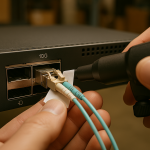
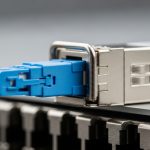
In edge computing sites, the network team often inherits a messy mix of cable runs, dusty racks, and strict power limits. You need fast, reliable interconnects between switches, servers, and storage, but you also need predictability for maintenance. This article helps SMB engineers choose between DAC (Direct Attach Copper) and AOC (Active Optical Cable) for real-world edge deployments, with specs, decision steps, and failure-mode troubleshooting.
edge cabling strategy
Why DAC and AOC behave differently in edge computing
DAC and AOC both solve the same problem: high-speed connectivity inside a rack or across a short site run. The difference is the physical layer. DAC uses copper conductors with an integrated electrical interface, while AOC converts electrical signals to optical at each end using active components. In edge computing, that distinction changes power draw, electromagnetic interference behavior, and how tolerant the link is to harsh installation practices.
What DAC actually is at the electrical layer
A DAC cable typically contains twin-ax copper conductors and an integrated connectorized transceiver function at each end (often SFP+ / SFP28 / QSFP+ / QSFP28 form factors, depending on generation). The link budget is governed by copper attenuation, channel loss, and the receiver sensitivity of the host port. Most DAC products target a narrow reach window (commonly 1 m to 7 m depending on data rate), and they expect proper bend radius and low crosstalk. If you exceed the intended length or route the cable tightly with power conductors, bit error rate can climb quickly.
What AOC changes: optical conversion and EMI immunity
AOC is an optical cable with active electronics at each end and typically pre-terminated fiber inside a jacket. Because the data path is optical, AOC is far less sensitive to EMI from nearby motors, variable frequency drives, and welding equipment common around edge sites. Many AOC SKUs offer 10 m to 100 m reaches depending on wavelength and data rate, with the added advantage that you can maintain cleaner cabling practices without needing field polishing. The trade-off is that AOC has active components that can age; thermal management still matters.
For baseline Ethernet interconnect behavior, it helps to map your link to the relevant physical layer definitions in IEEE Ethernet. Engineers usually align port type with the standard and vendor compatibility matrix, rather than assuming “it should work.” IEEE 802 Ethernet Standard

Key specs that decide DAC vs AOC for edge computing
SMB teams often compare DAC and AOC by reach alone, but edge computing decisions hinge on power, connector type, temperature range, and whether the transceiver reports diagnostics. Many vendors require specific EEPROM/DOM behavior for link bring-up and monitoring. If your site has long lead times for replacements, you also need to avoid “mystery compatibility” by using models validated by the switch vendor.
Representative module families you will see in SMB edge deployments
Below are example products that mirror typical choices. Exact availability varies by vendor and switch generation, but the parameters illustrate how DAC and AOC differ in practice. When you select a transceiver, confirm the host port supports the exact form factor (SFP28 vs QSFP28 vs SFP+) and the data rate (10G/25G/40G/100G).
| Category | Example Product | Data rate | Typical reach | Connector / form | Wavelength | Power (typ.) | Operating temp (common) | DOM / monitoring |
|---|---|---|---|---|---|---|---|---|
| DAC | Cisco SFP-H10GB-CU1M (example class) | 10G | 1 m | SFP+ | N/A | ~0.5 W to 1 W (varies) | 0 to 70 C (typical) | Often yes (vendor dependent) |
| DAC | FS.com SFP28-25G-AOC? (avoid; AOC class) | 25G | 1 m to 3 m | SFP28 / QSFP28 | N/A | ~1 W to 2 W (varies) | 0 to 70 C (typical) | Often yes |
| AOC | Finisar FTLX8571D3BCL (example class for optics) | 10G | 40 m to 100 m (SKU dependent) | SFP+ AOC | 850 nm (common for short reach) | ~1 W to 2.5 W (varies) | -5 to 70 C (common) | Usually yes for DOM-capable SKUs |
| AOC | FS.com SFP-10GSR-85 (note: SR transceiver, not AOC) | 10G | Up to 550 m on MMF (transceiver class) | SFP | 850 nm | ~1 W to 1.5 W | -40 to 85 C (varies by SKU) | Yes |
Because AOC is often sold as a complete pre-terminated cable assembly, you can treat it like a “plug-and-stabilize” optic for edge computing. For copper DAC, you must treat the cable as part of the channel and protect it from installation abuse: tight bends, kinks, and bundling with power.
If you want to anchor the Ethernet link behavior to standardized concepts (like PCS/PMA expectations and physical layer framing), IEEE 802.3 is the reference point for the Ethernet PHY families. IEEE 802.3 Ethernet Standard
10g edge network interconnect
Real deployment: choosing DAC or AOC in a busy edge site
In a 3-tier edge computing setup for a retail distribution facility, an SMB deploys two 48-port ToR switches in adjacent racks, uplinking to a small aggregation switch. The servers run 25G NICs, but the cabinet layout forces cables to pass within 30 cm of a variable frequency drive panel and a UPS battery bay. The team starts with 2 m QSFP28 DACs because the budget is tight, but after six weeks they see intermittent link resets during shift changes when the HVAC cycles and the VFD ramps. Field checks reveal that several DAC runs were bundled with power leads and exceeded the vendor’s bend radius during installation.
They switch to 25G AOC assemblies for the affected inter-rack links, keeping server-to-switch distances within 10 m. Link stability improves immediately because optical transmission eliminates the copper EMI coupling path. They also gain a maintenance benefit: AOC runs are pre-assembled with consistent internal geometry, reducing the “works on day one, degrades later” behavior that copper channel margins can exhibit. The power trade-off is modest in this case because the number of interconnects is small, but the operational win is large: fewer truck rolls and fewer hours of downtime.

Selection criteria checklist for SMB edge computing
When you are selecting DAC vs AOC for edge computing, treat it like a reliability engineering decision, not just a procurement choice. Use this ordered checklist and document the outcome so future replacements match the original intent.
- Distance and margin: confirm the SKU-rated reach for your data rate and connector type; include a safety margin for patching and slack loops.
- Switch compatibility: validate the exact transceiver part number against the switch vendor’s compatibility list; do not rely on generic “works with” claims.
- DOM and diagnostics: ensure the host port expects DOM fields (temperature, voltage, bias, Rx power) and that the transceiver supports them.
- Operating temperature and airflow: edge sites can exceed lab assumptions; confirm the module temperature range and the rack thermal design.
- EMI environment: if cables run near motors, VFDs, relays, or welding equipment, lean toward AOC for immunity.
- Power and budget: compare per-link power draw and multiply by the number of ports; model how it affects the site PDU and UPS runtime.
- Vendor lock-in risk: decide whether you can standardize on one ecosystem (OEM optics) or accept third-party modules with validated compatibility.
- Maintenance logistics: consider lead times and stocking strategy; AOC replacements are often faster because they are pre-terminated and consistent.
Pro Tip: In edge sites, copper DAC failures often show up as “random link flaps” only after days or weeks, not immediately. The root cause is usually marginal channel loss plus installation stress (tight bends, cable compression in cable trays), which slowly increases errors as thermal conditions change. Optical AOC can mask these physical routing issues by removing copper EMI coupling and reducing sensitivity to copper channel geometry.
optical transceiver troubleshooting
Common pitfalls and troubleshooting tips
DAC and AOC both fail in ways that look similar at the switch CLI, so your troubleshooting method matters. These are frequent mistakes engineers make in edge computing deployments, along with the root cause and a practical fix.
Pitfall 1: Selecting a DAC that is “in range” on paper
Symptom: Link comes up, then drops under load or during temperature swings.
Root cause: Channel loss is higher than expected due to extra patching, tight bend radius, or imperfect cable routing; copper margin shrinks as the environment heats up.
Solution: Replace with the next shorter rated length, verify bend radius compliance, and keep DAC runs separated from power conductors. If the environment is noisy, move the inter-rack link to AOC.
Pitfall 2: Using optics without validating DOM behavior
Symptom: Ports show “unsupported transceiver” or management tools report missing diagnostics.
Root cause: The host switch expects specific DOM implementation details (EEPROM layout and threshold reporting), and some third-party assemblies do not match exactly.
Solution: Confirm DOM capability and thresholds in the vendor compatibility matrix. If you need third-party, request the exact DOM/EEPROM behavior documentation or test with a staging switch before field rollout.
Pitfall 3: Assuming AOC is immune to all physical problems
Symptom: AOC links fail after a site move or rack vibration event.
Root cause: While optical signals resist EMI, connectors can be stressed, and the internal fiber can be damaged by sharp bends or repeated tugging if the cable is routed poorly.
Solution: Treat AOC like fiber: respect minimum bend radius, secure strain relief, and avoid cable pulls during maintenance. Use consistent labeling so technicians do not yank slack.
Pitfall 4: Confusing SR/MMF transceivers with AOC assemblies
Symptom: You plug in an SFP SR transceiver expecting a pre-terminated run, but the fiber path is not cleaned or not connected as assumed.
Root cause: AOC is a single pre-terminated assembly; SR transceivers require correct fiber cabling, cleaning, and patch panel handling.
Solution: Decide early: either standardize on AOC for “no field handling,” or use transceivers plus a disciplined fiber cleaning workflow.
If you maintain fiber frequently, the Fiber Optic Association provides field-relevant guidance on installation practices and safety considerations. Fiber Optic Association
fiber cleaning basics
Cost and ROI note for edge computing budgeting
In most SMB edge deployments, DAC is cheaper upfront because it is simpler and targets short reach. Typical pricing varies by speed and vendor, but rough ranges you may see are: $15 to $60 per DAC for short 10G/25G runs, while AOC assemblies commonly land around $40 to $150 per link depending on reach and data rate. OEM-branded modules can be higher, while third-party options can reduce capex but may increase validation time.
TCO matters more than purchase price. If copper DAC instability creates two extra site visits per quarter (labor plus travel plus downtime), the ROI swings quickly in favor of AOC even if the per-link cost is higher. Also model power: AOC may draw slightly more per link than a comparable DAC, but in many edge sites the number of high-speed inter-rack links is small compared to the total server and cooling load. The bigger cost driver is usually reliability and maintenance, not watts.

FAQ
Is DAC still a good choice for edge computing if my racks are close?
Yes, DAC can be a strong fit when the run length is short and installation practices are controlled. If your cables stay within the vendor’s rated reach and you prevent tight bends and power bundling, copper margins often hold up well. If the route passes near VFDs or noisy equipment, AOC becomes more attractive.
Does AOC require fiber cleaning like standard optics?
AOC is pre-terminated, so you generally avoid the “field polish and inspect” workflow of loose fiber transceivers. However, you still must handle connectors carefully and keep end faces clean during installation. If an AOC connector is contaminated, you can still get link failures.
Will DAC or AOC work across different switch vendors?
Sometimes, but you should not assume cross-vendor interoperability. Different switches may enforce strict transceiver identification and DOM thresholds. Always test the exact part number (SKU) in a staging environment or consult the switch vendor compatibility list.
Which is better for temperature extremes in edge computing?
Both can be fine, but you must verify the module’s specified operating temperature range and ensure the rack airflow supports it. Edge sites with poor ventilation can cause thermal throttling or increased error rates. If you cannot guarantee airflow, prioritize transceivers with wider temperature ratings and robust DOM monitoring.
Why do copper links sometimes flap only after a few weeks?
Because the initial link margin may be barely sufficient, and installation stress can worsen with thermal cycling. Tight bends or cable compression can change the effective channel loss over time, leading to intermittent errors. AOC often reduces the sensitivity to those routing-induced copper effects.
What should I stock for maintenance at a remote edge location?
Standardize on one approach per link type: either keep a short DAC kit for short, clean runs or keep AOC kits for EMI-prone or “messy route” links. Stock the exact SKU and length, and include any required spares for patch panels or connector adapters. Document the port mapping so a field tech can swap quickly.
If you want fewer surprises, decide DAC vs AOC using distance, EMI reality, DOM expectations, and thermal constraints—not only nominal reach. Next, map your current interconnect lengths and noise sources, then standardize your edge cabling plan with edge cabling strategy.
Author bio: I have deployed and validated 10G to 100G interconnects in constrained edge racks, tuning link margins and diagnosing transceiver DOM alerts during field rollouts. I write from the perspective of what works under operational pressure: cable routing, thermal airflow, and maintenance workflows.