
Telecom teams lose hours when fiber links degrade silently, transceivers fall out of spec, or power budgets get tight after reroutes. This article helps network engineers and reliability leads implement optical resilience with practical architecture choices, verified optical budgets, and troubleshooting steps that match real operations. You will compare common options, understand compatibility constraints, and leave with a decision matrix you can apply to upgrade planning.
Optical resilience vs redundancy: what actually keeps traffic moving?
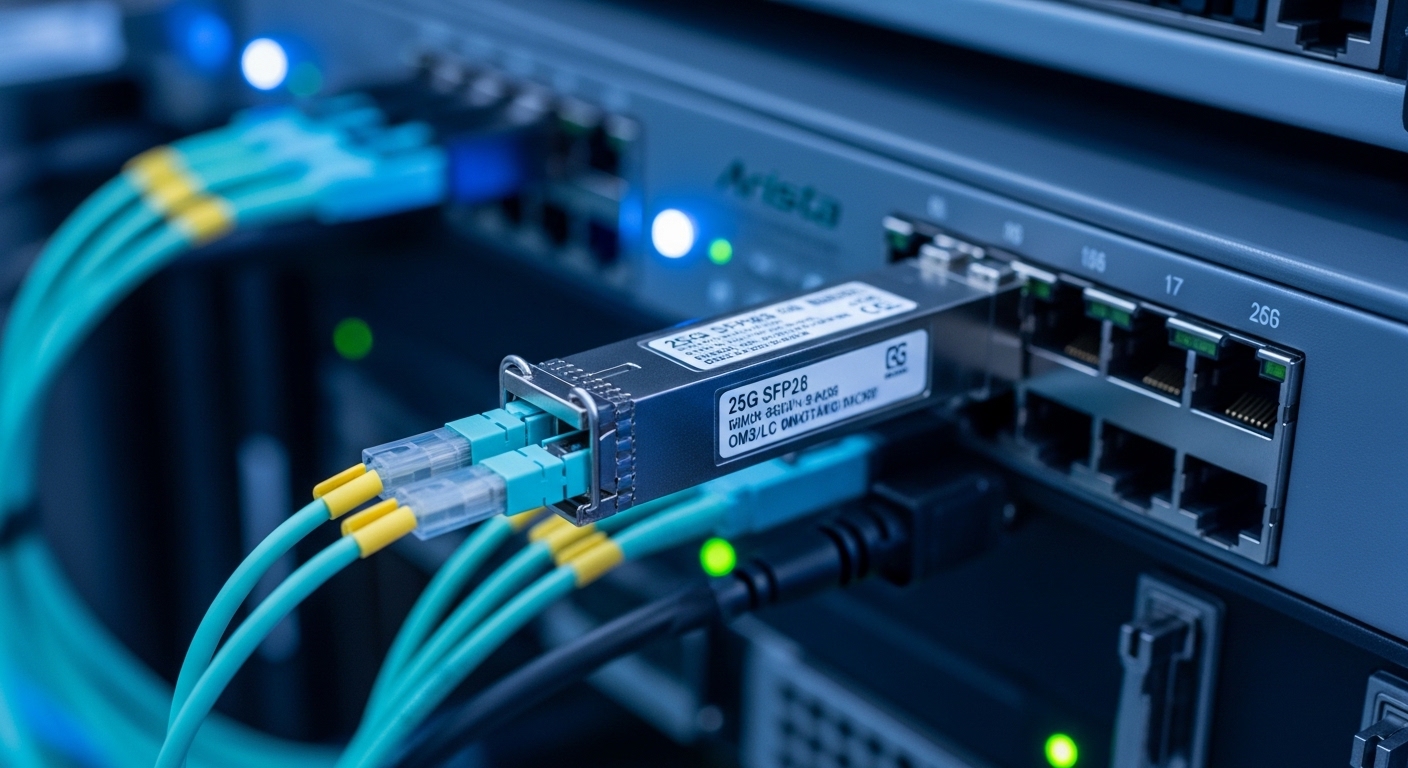
Many networks rely on redundancy, but optical resilience is broader: it includes how quickly the system detects degradation, how paths are protected, and whether the optical layer tolerates variation in power, temperature, and connector cleanliness. In practice, resilience depends on both transport protection (for example, ring or mesh switching) and physical-layer margins (link budget, dispersion tolerance, and transceiver stability). IEEE Ethernet optics are defined by reach and power requirements, but telecom deployments often exceed comfort zones due to patching changes and aging optics.
From an engineering standpoint, you aim for three layers of protection: path diversity (multiple fibers/routes), signal robustness (enough optical budget with margin), and operational automation (telemetry-driven alarms and fast rollback). Vendors and standards treat these separately, so projects fail when teams optimize only one layer.
Architecture comparison: ring protection, mesh protection, and DCI
- Ring protection (common for metro aggregation): typically faster restoration within a defined domain, but can be limited when multiple faults occur on the same ring.
- Mesh protection (more flexible): higher design complexity, but better for diverse routing and multi-fault scenarios.
- DCI interconnect (data center interconnect) with optical protection: often depends on how quickly the control plane reroutes and whether the optical layer supports hot swapping and consistent signal levels.
If you are building resilience for telecom carrier-grade uptime, validate protection behavior under fault injection, not just steady-state link tests. Measure restoration time end-to-end, including optics warm-up and transceiver reinitialization when failover happens.
Optical budgets that survive reality: power, dispersion, and margins
Optical resilience begins with the link budget. You must treat every patch panel, connector, splitter, and bend as a measurable loss contributor, then add margin for aging and operational variability. In the field, the “spec reach” is not the same as “spec uptime,” because transceivers tolerate only a bounded range of received power and eye quality.
Engineers typically calculate a budget as: transmit power minus fiber attenuation minus connector/splice losses minus additional system losses (for example, splitters). Then you compare the result to the receiver sensitivity and allowable power range. For coherent systems, dispersion and OSNR matter more; for many common short-reach modules, chromatic dispersion is less dominant than power and modal effects.
Technical specs you should align before committing
When teams select modules, they often compare only wavelength and nominal reach. For optical resilience, also compare optical output power, receiver sensitivity, DOM availability, and operating temperature. DOM data is crucial for early warning: you can trend laser bias current and received power to detect marginal links before they fail.
| Module type (example) | Wavelength | Typical reach | Connector | DOM | Operating temp | Optical resilience relevance |
|---|---|---|---|---|---|---|
| Cisco SFP-10G-SR (10G SR) | 850 nm | Up to 300 m (OM3/OM4 dependent) | LC | Commonly supported | Vendor-defined industrial range | High value for short-reach redundancy; sensitive to fiber quality and cleaning |
| Finisar FTLX8571D3BCL (10G SR-class) | 850 nm | ~300 m class (OM3/OM4 dependent) | LC | Supported on many SKUs | Vendor-defined | Useful baseline; watch received power and temperature drift |
| FS.com SFP-10GSR-85 (10G SR-class) | 850 nm | ~300 m class (OM3/OM4 dependent) | LC | Often included | Vendor-defined | Cost-effective option; validate compatibility and DOM reporting |
For standards context, Ethernet over optics is specified by IEEE 802.3 for electrical/optical signaling and link parameters, while optical transceivers follow vendor-specific electrical interfaces and safety. Use [Source: IEEE 802.3] as the baseline for data rates and optical interface expectations, and then apply the transceiver datasheet for power, temperature, and DOM behavior.
Pro Tip: In many telecom sites, the biggest “mystery” failures come from patching changes rather than the original design. Add a patch-loss verification step using an OTDR or certified loss test at acceptance, then set alarm thresholds on received power so you catch slow degradation long before a BER spike triggers a hard outage.
Head-to-head: transceiver and fiber choices for optical resilience
Transceivers and fiber type determine how much margin you can realistically maintain. If your network uses 850 nm short-reach optics over OM3/OM4, your resilience depends heavily on connector cleanliness, bend radius compliance, and patch panel quality. If you use 1310 nm or long-reach optics, you trade connector sensitivity for longer fiber attenuation and potentially higher dispersion concerns depending on the system.
In telecom, resilience planning also includes failure domain design: can you swap a transceiver without taking down a whole shelf, and do you have a spare compatible module with predictable DOM and firmware behavior? These operational questions matter as much as nominal reach.
Fiber type comparison for operational robustness
- OM3/OM4 multimode: strong for cost-effective short reach; resilience hinges on fiber quality and installation controls.
- Single-mode (for longer reach): generally more forgiving over distance, but requires careful optics selection and accurate attenuation assumptions.
- Connector ecosystem: LC cleanliness and APC versus UPC matching can dominate real-world performance. A single contaminated connector can drive link instability.
Cost and ROI: OEM optics vs third-party spares without breaking compatibility
Budget pressure is real, but optical resilience is not free. OEM optics often cost more upfront, yet they may reduce integration risk, simplify support escalation, and provide more consistent DOM behavior across swaps. Third-party modules can lower acquisition cost, but you must evaluate compatibility with the exact switch or transponder platform and verify that alarm thresholds and DOM readings behave as expected.
A practical ROI model includes: module unit price, expected failure/DOA rates over the warranty window, labor cost for swaps, and downtime cost during restoration. For many telecom environments, the cost of an outage hour can dwarf the difference between OEM and third-party transceivers, so you should prioritize predictable behavior and fast replacement logistics.
In current market terms, short-reach optics often range from tens to low hundreds of currency units per module depending on OEM and grade, while long-reach and coherent optics can be substantially higher. TCO should also include testing and certification labor: if you need to re-qualify third-party modules at every hardware revision, the savings can disappear.
Compatibility caveats that affect optical resilience
- Vendor lock-in risk: some platforms enforce strict transceiver qualification or require firmware alignment.
- DOM and monitoring consistency: ensure your NMS interprets DOM thresholds correctly; otherwise you lose early warning signals.
- Power class mismatch: if a module’s optical power and receiver range do not align with the link budget, you can see instability even when “link up” succeeds.
For authoritative guidance, consult vendor datasheets and platform transceiver compatibility lists. For safety and operational constraints, also reference [Source: ANSI/TIA-568] for cabling practices and performance expectations.
Common mistakes and troubleshooting tips for optical resilience
Even well-designed networks fail when operational processes drift. Below are concrete failure modes you can use as a checklist during incident response.
Link flaps after patching: root cause and fix
Root cause: connector contamination or micro-damage caused during re-patching, combined with insufficient cleaning procedures. In short-reach multimode, the margin is smaller and the system is more sensitive to cleanliness and fiber quality.
Solution: re-clean with approved methods, inspect with a fiber microscope, and re-test with a certified loss meter or OTDR where applicable. Then set received power alarm thresholds based on your measured baseline.
“Works in the lab, fails in the field”: margin mismatch
Root cause: design assumed ideal patch loss, but the deployed environment has higher insertion loss from extra jumpers, unplanned splits, or aged components. The link may come up but drift into a marginal state under temperature changes.
Solution: recalculate optical budget with measured losses, confirm transceiver power within allowable range, and validate receiver sensitivity against the actual link. Add headroom and consider higher-power or more sensitive module classes if compatible.
False alarms or missing telemetry: DOM and threshold misalignment
Root cause: third-party optics report DOM values differently, or your monitoring system uses thresholds that do not match the module’s supported diagnostics. Engineers then either ignore real degradation or chase phantom faults.
Solution: verify DOM mapping in the NMS, confirm the reported laser bias current and received power units, and update threshold logic using vendor guidance. During rollout, validate alarms with controlled optical attenuation tests.
Thermal instability during failover: warm-up and reinit timing
Root cause: transceiver temperature and initialization sequencing can cause transient link loss when protection switches. If the control plane restoration time is shorter than optics stabilization, you may see repeated flaps.
Solution: measure restoration behavior during fault tests, check transceiver temperature operating range, and tune protection timers where supported. Ensure your spares are from the same hardware family with consistent thermal characteristics.
Decision matrix: selecting the best optical resilience option for your scenario
Use this matrix to compare approaches quickly. It is intentionally engineer-focused, balancing performance, compatibility, and operational risk.
| Option | Best for | Resilience strength | Main risk | Recommended when |
|---|---|---|---|---|
| Ring protection with short-reach optics | Metro aggregation with predictable fault domains | Fast restoration within ring; simple operations | Multi-fault on same ring; patching sensitivity | You can enforce cleaning/testing and keep patch loss within budget |
| Mesh protection with diverse routing | Higher fault tolerance and multi-fault scenarios | Path diversity; better containment | Complex control-plane and operational overhead | You have automation and telemetry maturity to manage complexity |
| OEM optics with strict compatibility validation | Carrier-grade environments with strict support needs | Predictable DOM and vendor support | Higher acquisition cost | Downtime cost is high and support escalation matters |
| Third-party optics with DOM verification and lab qualification | Large-scale spares and cost optimization | Potentially strong resilience if qualified correctly | DOM mismatch, power class variation, platform compatibility issues | You can run acceptance tests per switch model and firmware revision |
| Single-mode long-reach optics for distance | DCI and longer rural or metro spans | Reduced sensitivity to multimode installation variance | More dependency on accurate attenuation and dispersion parameters | Your link budget can be validated with measured loss and stable optics |
Which option should you choose?
If you run a telecom metro network with defined fault domains and you can enforce disciplined installation, ring protection plus short-reach optics is often the most operationally straightforward path to optical resilience. If you expect multi-fault events or need higher path diversity across sites, choose mesh protection and invest in telemetry-driven automation so restoration is measurable and repeatable.
For transceivers, OEM optics are the safest route when your priority is supportability and predictable DOM behavior. Choose third-party modules only after platform-specific lab qualification and DOM threshold validation, especially if your incident response depends on early warning alerts. If your reach requirements extend beyond multimode comfort zones, prefer single-mode long-reach designs with measured link loss and realistic margin.
FAQ
How do I measure optical resilience beyond “link up”?
Measure restoration time end-to-end during fault injection and track optical metrics like received power and laser bias from DOM. Validate that alarms trigger before hard failures by applying controlled attenuation and confirming your NMS thresholds behave correctly.
What optical metrics matter most for early detection?
For most legacy and short-reach systems, received optical power and laser bias current trends are primary indicators. For longer-reach or coherent systems, OSNR, dispersion margin, and error counters also matter, depending on your modulation format and receiver type.
Can third-party transceivers improve optical resilience, or do they increase risk?
They can improve resilience by expanding spare coverage and lowering procurement lead times, but only if you qualify them on the exact platform and verify DOM compatibility. Without DOM and threshold alignment, you may lose early warning signals, which reduces resilience.
How much margin should we target in the link budget?
A common engineering practice is to maintain meaningful headroom over calculated loss, then validate with measured insertion loss from installed components. The exact margin depends on connector counts, patching frequency, and whether the system is multimode or single-mode.
What is the fastest troubleshooting path during an outage?
Start with physical inspection: clean and inspect connectors, confirm fiber continuity, and verify patching order. Then check transceiver DOM telemetry for out-of-range values and compare against your historical baseline before assuming a full optical hardware failure.
Which standard should we align to for cabling and optical practices?
Use [Source: ANSI/TIA-568] for structured cabling practices and performance expectations, and [Source: IEEE 802.3] for Ethernet optical interface parameters. Always defer to the specific transceiver datasheet for power range, DOM details, and supported temperature operating limits.
For stronger optical resilience, treat the optical layer as an operational system: design with budgets and margins, then prove behavior with telemetry and fault tests. Next, review optical monitoring and alarms to build reliable early-warning workflows that reduce repeat incidents.
Author bio: I have deployed and validated optical transports in telecom environments, including acceptance testing with OTDR and DOM-based alarm tuning. I write from field experience to help teams design measurable optical resilience with fewer surprises.
