
When a leaf-spine fabric starts throwing link flaps or CRC bursts after a transceiver swap, the real problem is rarely “fiber is bad.” It is usually a mismatch between optics, switch expectations, temperature/power budgets, and diagnostics behavior. This article helps network engineers and procurement teams pick the top transceiver manufacturer using a practical, field-ready implementation checklist, plus realistic cost and failure-mode guidance.
Prerequisites before you rank transceiver vendors
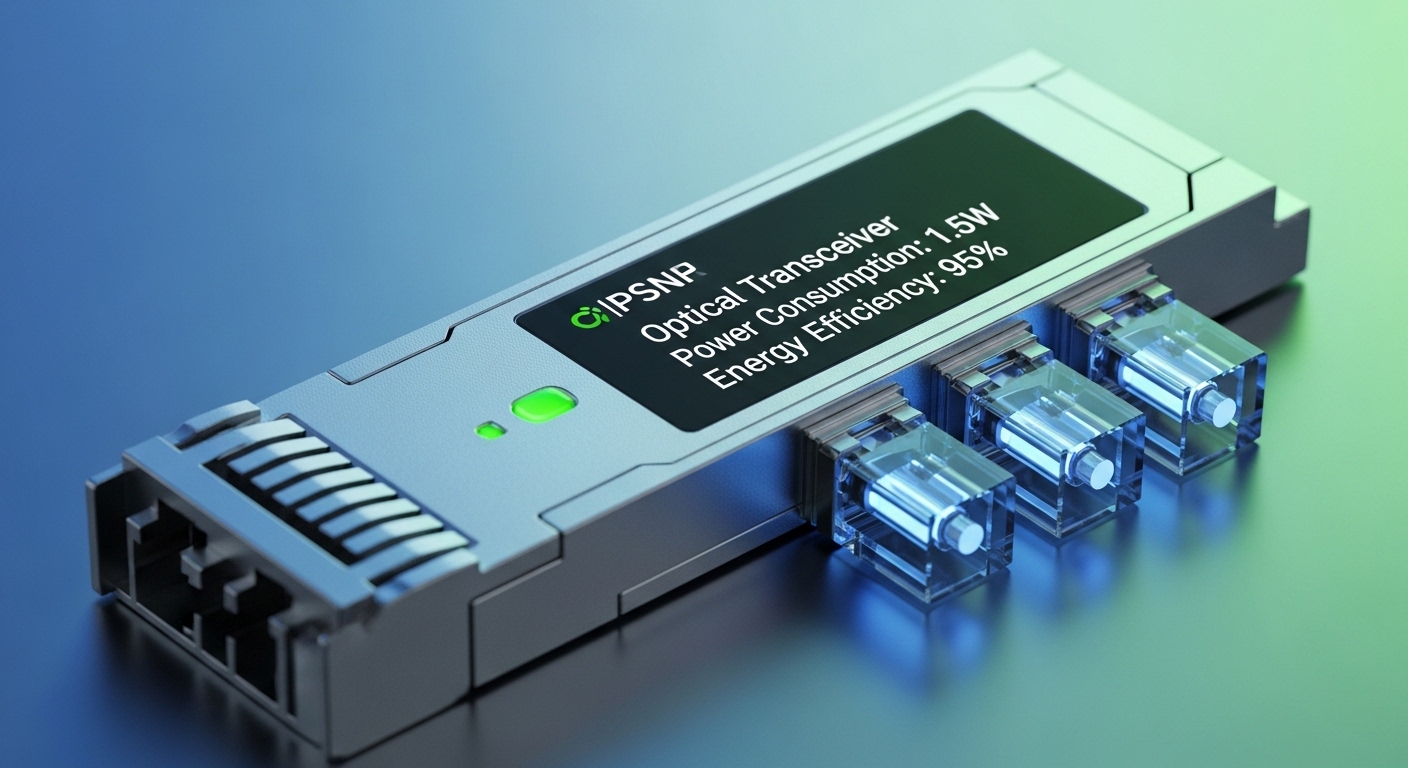
Before comparing brands, lock down the physical and electrical constraints of your environment. Most optics issues come from overlooked details: transceiver form factor, lane rate, fiber type, connector style, and the switch vendor’s compatibility rules for EEPROM and digital optical monitoring (DOM). If you cannot reproduce current link behavior, you will misattribute root cause to the brand rather than the configuration.
What you should have on hand
- Switch make and model for each endpoint (for compatibility policies and DOM expectations).
- Transceiver model numbers currently in service (e.g., Cisco SFP-10G-SR, Finisar FTLX8571D3BCL, FS.com SFP-10GSR-85) and their link status.
- Fiber plant details: OM3 vs OM4 vs OS2, patch panel loss, and connector cleanliness standards.
- Port diagnostics access: ability to read DOM (DMI/MDIO depending on platform) and interface error counters.
- Environmental constraints: rack airflow direction, intake temperature, and maximum module operating temperature rating.
Expected outcome: a testable scope where you can change only one variable at a time (vendor, module type, or fiber path) without confounding results.
Step-by-step implementation: rank the top transceiver manufacturer for your links
This section turns “vendor ranking” into an engineering workflow. You will evaluate optics as components in an IEEE 802.3 physical layer system, not as isolated products. The goal is to identify the manufacturer whose modules most reliably negotiate and run within your switch’s optics profile and your fiber plant’s loss and dispersion limits.
Normalize your target link types and standards
Start by mapping each required connection to the relevant IEEE 802.3 clause and optical interface. For example, 10GBASE-SR typically corresponds to short-reach multimode requirements, while 25G/50G and 100G have distinct lane rates and optics classes. Ensure you are not comparing an “SR” module intended for a different lane rate or management interface.
Implementation detail: For each port group, record the expected standard (e.g., 10GBASE-SR), data rate, and reach class. Then group ports by the optics type you truly need (SFP+, SFP28, QSFP28, QSFP56, QSFP-DD, CXP, or CFP2).
Expected outcome: a clean matrix of “port group → optics type → expected standard,” so brand comparisons are apples-to-apples.
Build a compatibility matrix around form factor and DOM behavior
Even when a module matches wavelength and reach, platforms may enforce strict EEPROM layouts, vendor IDs, or DOM calibration behavior. Many modern switches read temperature, bias current, and received optical power through standardized mechanisms, but interpretation and thresholds can differ by vendor.
Implementation detail: For each switch model, verify that it accepts third-party optics by checking its official optics compatibility list, and confirm whether it uses digital diagnostics over the standard management interface (DOM). If your platform supports it, enable optics alarms and set conservative thresholds for RX power and temperature.
Expected outcome: a compatibility list that prevents “it should work” purchases that later trigger err-disable events.
Use a quantitative specs table to eliminate mismatches early
Filter candidates by the optics parameters that actually constrain link budget: wavelength, nominal reach, receiver sensitivity, and module power draw. Also verify connector type (LC/SC), fiber mode support (OM3/OM4), and operating temperature range, since thermal margins are a common cause of intermittent errors.
| Parameter | 10GBASE-SR (Example) | 25GBASE-SR (Example) | 100GBASE-SR4 (Example) |
|---|---|---|---|
| Form factor | SFP+ (optics class varies) | SFP28 or QSFP28 | QSFP28 |
| Wavelength | ~850 nm (VCSEL) | ~850 nm (VCSEL) | ~850 nm (multi-lane) |
| Reach target | Up to ~300 m on OM3, ~400 m on OM4 (class-dependent) | Typically up to ~100 m on OM3, ~150 m on OM4 (class-dependent) | Typically up to ~100 m on OM3/OM4 (class-dependent) |
| Connector | LC duplex | LC duplex | LC duplex |
| Optical power / budget | Must meet switch sensitivity; verify RX/TX ranges | Verify lane-level power and sensitivity margins | Verify per-lane diagnostics and total link budget |
| DOM / diagnostics | Temperature, bias, TX power, RX power (platform dependent) | Same; confirm thresholds and alarm behavior | Same; confirm per-lane reporting where supported |
| Operating temperature | Commonly 0 to 70 C for standard; -5 to 85 C for extended (check datasheet) | Same range logic; verify your airflow assumptions | Same range logic; verify thermal headroom |
| Power draw | Often a few watts; verify module-specific maximum | Higher than 10G in many cases | Can be higher due to multi-lane optics |
Authority references: IEEE 802.3 physical layer requirements for short-reach Ethernet and vendor datasheets for module specifications. [Source: IEEE 802.3 (various clauses for 10GBASE-SR, 25GBASE-SR, 100GBASE-SR4)] [Source: vendor datasheets for specific transceiver part numbers]
Expected outcome: you remove modules that cannot meet distance or thermal constraints before you even consider brand reputation.
Run a controlled pilot with measurable acceptance criteria
Do not “test by plugging in.” Run a pilot that checks stability over time and under realistic traffic patterns. In a typical data center, errors may only appear after temperature rises or after a specific traffic burst pattern. Use a traffic generator or your normal application workload, and watch interface counters and DOM trends.
Implementation detail: For each candidate module, monitor CRC errors, symbol errors, link-down events, and any optics alarm counters for at least 24 to 72 hours. Record DOM values every 5 minutes (temperature, TX power, RX power). A good acceptance gate is: zero unplanned link resets, no rising CRC trend, and DOM values staying within vendor-recommended operating ranges.
Expected outcome: brand ranking becomes evidence-based, not reputation-based.
Score manufacturers on reliability signals and operational support
When you compare the top transceiver manufacturer, look beyond marketing. Build a score from measurable signals: RMA rates where available, warranty terms, documented compliance testing, supply chain continuity, and responsiveness of field support. If you operate multi-site, also evaluate how quickly each vendor provides firmware or configuration guidance for platform-specific behavior.
Practical note: Some brands are strong in OEM supply contracts and high-volume manufacturing, while others excel in faster custom adaptation (for example, slightly different EEPROM profiles or DOM calibration handling). Your scoring should reflect your procurement and operational realities.
Expected outcome: a ranked list you can defend to both engineering and finance.
Cost and ROI: what you should realistically expect
Pricing varies by speed, reach class, and whether you buy OEM-branded or third-party compatible optics. In many enterprise and colocation environments, a standard 10G SR SFP+ transceiver often lands in the low double-digit to low triple-digit USD range per unit depending on brand and warranty tier. Higher-speed modules (25G/100G) and extended-temperature variants typically cost more, and multi-lane optics can carry higher component risk.
TCO lens: Include not only purchase price but also operational costs from failed modules, downtime risk, and time spent troubleshooting. Third-party modules can reduce upfront cost, but only if they meet compatibility and DOM threshold behavior on your specific switch models. If your acceptance criteria require a longer pilot or additional monitoring tooling, bake that engineering time into ROI.
Power and thermal: Slight differences in module power draw can matter in dense racks. If your cooling is marginal, a higher power module can push temperature near the top of its rated range, increasing the probability of intermittent receiver sensitivity issues.
Expected outcome: a budget decision that accounts for downtime and reliability, not just unit cost.
Pro Tip: In many real deployments, the fastest way to predict future link trouble is to trend DOM RX power and temperature over time. A gradual RX power drift paired with rising temperature often precedes CRC growth, even when “link up” stays stable. Capture these trends during your pilot and you will catch weak optical budgets long before failures trigger alarms.
Selection criteria checklist for the top transceiver manufacturer
Use this ordered checklist to decide which manufacturer to standardize on. The order matters because it prevents late-stage surprises like incompatibility or insufficient thermal headroom.
- Distance and fiber type: confirm OM3 vs OM4 vs OS2, and ensure the module reach class matches your actual measured link loss.
- Data rate and lane mapping: validate that the optics supports the exact Ethernet speed and lane configuration required by your switch port.
- Switch compatibility: check the switch vendor optics support list and confirm third-party acceptance policy for your exact model.
- DOM support and alarm thresholds: verify that temperature and RX/TX power reporting behaves as expected and does not trigger alarms prematurely.
- Connector and patching: LC vs SC, polarity correctness, and whether you need MPO/MTP for multi-lane optics.
- Operating temperature and airflow: verify module temperature rating and validate rack intake temperature with your airflow direction.
- Vendor lock-in risk: assess lead times, warranty terms, and whether you can qualify a second manufacturer without re-engineering the plant.
- Supply chain continuity: evaluate whether the manufacturer can sustain your volume over refresh cycles.
Expected outcome: a defensible, repeatable decision process that reduces procurement risk and troubleshooting time.
Common mistakes and troubleshooting tips
Even experienced teams get tripped up. Below are the top failure modes that look like “bad optics brand” but are usually configuration, fiber, or compatibility issues. For each, identify the root cause and the fix you can apply immediately.
Link flaps or err-disable after module swap
Root cause: Switch enforces optics compatibility based on EEPROM vendor ID, DOM behavior, or lane mapping expectations. Some platforms will administratively disable ports when diagnostics thresholds or module identity checks fail.
Solution: Verify the transceiver is explicitly supported for your switch model and firmware version. If using third-party optics, test a single known-compatible model number first, then expand. Update switch firmware only within a controlled change window.
CRC bursts with “link up” and no major alarms
Root cause: Optical budget is marginal due to higher-than-expected connector loss, dirty optics, or incorrect fiber polarity. In multimode systems, installation cleanliness and patching quality dominate performance.
Solution: Clean LC/MPO connectors using a verified cleaning workflow, then inspect with a fiber scope. Confirm polarity (especially for duplex LC and MPO/MTP). Re-measure end-to-end loss and compare it to the module’s link budget assumptions.
Intermittent failures correlated with temperature
Root cause: Module is operating near or above the effective thermal margin due to insufficient airflow, blocked intake vents, or higher ambient temperatures than assumed. Receiver sensitivity can degrade as temperature rises.
Solution: Verify rack airflow direction and clear any blocked vents. Log temperature at the rack intake and compare to the module’s rated operating range. Consider airflow baffles or relocating high-power modules to better-cooled positions.
FAQ
Q: How do I confirm a transceiver is compatible with my switch?
Check the switch vendor’s optics compatibility list for your exact switch model and firmware. Then validate DOM behavior during a pilot by monitoring RX power and interface error counters for at least 24 hours. [Source: switch vendor hardware installation and optics compatibility documentation]
Q: What matters more for reliability: brand or fiber cleanliness?
For short-reach multimode links, fiber cleanliness and patching quality often dominate day-2 reliability. However, brand matters because module power, receiver sensitivity, and DOM calibration influence how much margin you have. Treat both as first-order variables.
Q: Should I standardize on OEM optics or third-party modules?
OEM optics reduce compatibility risk, but third-party modules can be cost-effective if they are explicitly supported and pass your acceptance tests. The best approach is to qualify two vendors for redundancy, so supply constraints do not force emergency changes.
Q: What DOM metrics should I watch during a pilot?
Track temperature, TX bias/current (if available), TX power, and RX power trendlines. Also watch for optics alarm thresholds and any platform-specific diagnostics counters. A stable link with slowly drifting RX power is often an early warning sign.
Q: What is a realistic pilot duration for ranking the top transceiver manufacturer?
A minimum of 24 hours is common, but 72 hours is better if you expect temperature swings or if you run bursty traffic patterns. Include at least one traffic profile representative of production and log counters throughout.
Q: How should I factor cost into TCO for optics?
Use a TCO model that includes unit price, warranty/RMA likelihood, labor for replacement and troubleshooting, and downtime risk. If third-party optics require extra engineering time for qualification or monitoring, include those costs explicitly.
Field-ready vendor selection reduces outages, not just purchase spend. If you want the next step after this ranking workflow, review how to build a fiber link budget for multimode and singlemode to tighten your acceptance criteria and eliminate optical-budget surprises.
Author bio: I have deployed and validated Ethernet optics in leaf-spine data centers, working directly with switch DOM diagnostics, fiber scopes, and acceptance test scripts. My focus is turning vendor specifications into measurable reliability outcomes under real operational constraints.
