
5G transport networks move huge volumes of traffic between baseband units, regional aggregation, and the core. A wrong optical transceiver choice can cause link instability, wasted optics spend, and avoidable truck rolls at remote sites. This buying guide helps network and IT leaders select the right optics by balancing distance, switch compatibility, governance, and total cost of ownership for 5G.
Top 8 items to verify before buying 5G optical transceivers
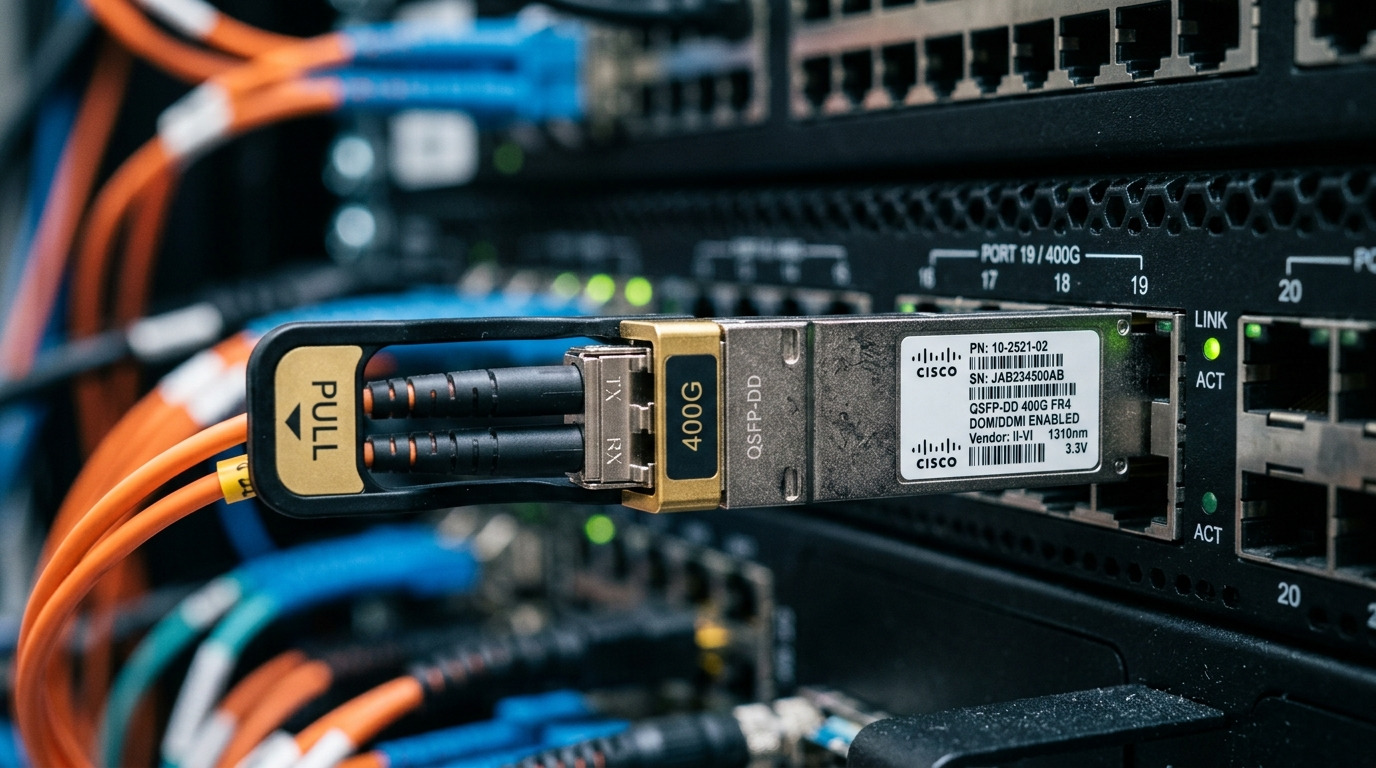
In 5G fronthaul and midhaul, optics must match the exact fiber plant, switch optics support, and operational environment (temperature, vibration, dust). Field teams typically standardize on a few wavelengths and form factors, then enforce governance via part numbers, optical power budgets, and DOM validation. Start with these eight checks so procurement and engineering stay aligned.
Confirm the interface type: SFP, SFP+, QSFP+, QSFP28, or CFP2
First, map the switch port speed and physical form factor to the optics you plan to buy. For example, many aggregation layers use 10G SFP+ (IEEE 802.3ae) or 25G SFP28 (IEEE 802.3by), while newer leaf/spine designs use 100G QSFP28 (IEEE 802.3bm). In 5G transport, a mismatch is the fastest way to end up with “no link” or incompatible diagnostics.
Best-fit scenario: A regional aggregation ring using 48-port ToR switches with 10G SFP+ uplinks to packet core gateways.
- Pros: Fewer compatibility surprises; clearer spares strategy.
- Cons: Limits flexibility if you later change switch models.
Match reach to your fiber budget (not just vendor reach)
Vendor “max reach” assumes ideal optics and typical fiber attenuation. Your real budget includes fiber attenuation, connector loss, splice loss, and aging margin. Use the link budget approach aligned with IEEE optical link practices and your fiber type (OM3/OM4 multimode, or OS2 single-mode).
Best-fit scenario: A midhaul path of 500 m on OM4 with multiple patch panels and two fusion splices, where you need margin for future re-cabling.
- Pros: Prevents marginal links that flap under temperature swings.
- Cons: Requires you to measure or model plant loss.
Choose wavelength and optics class: SR vs LR vs ER vs ZR
For 5G, wavelength selection often follows topology. SR (typically 850 nm) targets short reach over multimode; LR (typically 1310 nm) and ER (typically 1550 nm) support longer single-mode spans; ZR targets very long reach with coherent optics in many designs. Even within the same speed, “SR” and “LR” are not interchangeable.
- Pros: Better alignment to your physical plant and redundancy design.
- Cons: Wrong wavelength selection can permanently prevent link establishment.
Verify DOM support and readout policy (governance)
Digital Optical Monitoring (DOM) is essential for operational governance. You want DOM that your switch can read reliably for TX bias, received power, module temperature, and laser voltage. Define alerts (for example, low received power thresholds) and decide whether you will hard-block unknown optics based on vendor IDs or calibration data.
Pro Tip: In the field, most “random” 5G transport outages are actually optics aging plus marginal power budgets. Enable DOM-based trending and alert on the slope of received power drift, not only absolute thresholds.
Confirm connector and cabling: LC vs MPO, and polarity rules
Connector type matters for installation time and link reliability. LC is common for 1G/10G/25G optics; MPO/MTP is common for higher-density parallel optics (for example, 40G/100G). Also verify polarity: MPO arrays may require specific harness polarity to align transmit and receive fibers correctly.
Best-fit scenario: A 100G QSFP28 rollout using MPO harnesses where the team enforces polarity labels and uses a continuity tester before powering optics.
- Pros: Fewer remediations during cutovers.
- Cons: MPO polarity mistakes can create “link down” that looks like an optics fault.
Validate operating temperature and site conditions
Remote 5G sites and outdoor cabinets can swing temperatures and experience airflow restrictions. Check the transceiver’s specified operating range (commonly 0 to 70 C for standard modules, and wider ranges like -40 to 85 C for extended options). Confirm your enclosure thermal design to avoid derating surprises.
- Pros: Better reliability and predictable maintenance intervals.
- Cons: Extended-temp modules may cost more.
Compare real module options with example part numbers
Procurement often asks for “equivalent” optics. Engineering should require the same electrical interface class and optical parameters, then verify DOM behavior. Example families include:
- Cisco-branded: Cisco SFP-10G-SR and related 10G SR modules.
- Vendor optics: Finisar FTLX8571D3BCL (10G SR class examples vary by revision and DOM).
- Third-party: FS.com SFP-10GSR-85 (verify DOM and temperature grade before purchase).
Plan for cost and ROI: OEM vs third-party, power, and failure rates
ROI in 5G transport comes from fewer truck rolls, higher availability, and predictable spares. OEM modules often carry higher unit prices, while third-party options can reduce upfront spend, but you must account for governance testing, RMA rates, and compatibility validation. Also consider power: optics with slightly higher power draw can matter at scale in large aggregation closets.
Typical price range: 10G SR SFP+ modules often fall roughly in the $30 to $120 range depending on brand, temperature grade, and DOM. 25G and 100G optics can range much higher, so standardizing on a small set of profiles usually beats broad “mix-and-match” purchasing.
Technical specs to compare for 5G optics (wavelength, reach, power, temperature)
Use this table as a quick buying guide template. Always cross-check with your switch compatibility list and the exact transceiver datasheet.
| Module type (example) | Data rate | Wavelength | Reach (typical) | Fiber / connector | DOM | Operating temperature |
|---|---|---|---|---|---|---|
| SFP+ SR (850 nm class) | 10G | 850 nm | ~300 m on OM3, ~400-550 m on OM4 (model-dependent) | Multimode / LC | Commonly yes | 0 to 70 C or extended (varies) |
| SFP+ LR (1310 nm class) | 10G | 1310 nm | ~10 km (model-dependent) | Single-mode / LC | Commonly yes | 0 to 70 C or extended (varies) |
| SFP28 SR (850 nm class) | 25G | 850 nm | ~100 m to ~150 m on OM4 (model-dependent) | Multimode / LC | Commonly yes | 0 to 70 C or extended (varies) |
| QSFP28 SR (parallel MM) | 100G | ~850 nm (parallel) | ~100-150 m on OM4 (model-dependent) | Multimode / MPO | Commonly yes | 0 to 70 C or extended (varies) |
Selection checklist for a 5G-ready buying guide
When you evaluate optics for 5G, the decision should be repeatable across procurement, network engineering, and field operations. Use this ordered checklist so every purchase is defensible during audits.
- Distance and fiber type: OM3/OM4 vs OS2; include connector/splice loss and margin.
- Speed and interface: SFP/SFP+/SFP28/QSFP28/CFP2 must match the switch port.
- Wavelength profile: SR vs LR vs ER; confirm the exact nm class.
- Switch compatibility: validate with the switch vendor’s supported optics list when available.
- DOM behavior: confirm DOM readout and alert thresholds for TX bias and RX power.
- Operating temperature: align to outdoor cabinet or indoor enclosure thermal range.
- Connector and polarity: LC vs MPO; verify polarity harness requirements for parallel optics.
- Vendor lock-in risk: plan an approved third-party pool and require compatibility testing.
Common mistakes and troubleshooting tips
Even experienced teams get tripped up by optics details. Below are frequent failure modes in 5G transport rollouts and how to fix them.
-
Mistake: Buying “SR” modules when the design expects “LR” (or a different nm class).
Root cause: Optical profile mismatch; the receiver cannot lock to the expected wavelength/optical budget.
Solution: Verify wavelength in the transceiver datasheet and confirm the link budget for the exact fiber type. -
Mistake: Installing MPO harnesses with incorrect polarity.
Root cause: Transmit and receive fibers are crossed, creating low received power or total link failure.
Solution: Use a polarity checker and label both ends; re-seat harnesses to match the documented polarity scheme. -
Mistake: Ignoring DOM and relying only on “link up/down”.
Root cause: Marginal optics operate near the receiver sensitivity floor and fail intermittently as temperature changes.
Solution: Poll DOM continuously; trend RX power and TX bias, and replace optics before thresholds are crossed. -
Mistake: Exceeding the real fiber budget with “it should work” cabling assumptions.
Root cause: Extra patch panels, aged connectors, or uncounted splices reduce received power.
Solution: Recalculate link budget with
