
In 400G leaf-spine upgrades, the wrong interconnect can create link flaps, thermal throttling, or unexpected optics budgets. This buying guide helps network and facilities teams choose between DAC and AOC for short-reach deployments, with a focus on what to verify before you rack and run. You will get selection criteria, a spec comparison table, and field troubleshooting tips grounded in vendor datasheets and Ethernet standards.
Why 400G transitions expose DAC and AOC tradeoffs
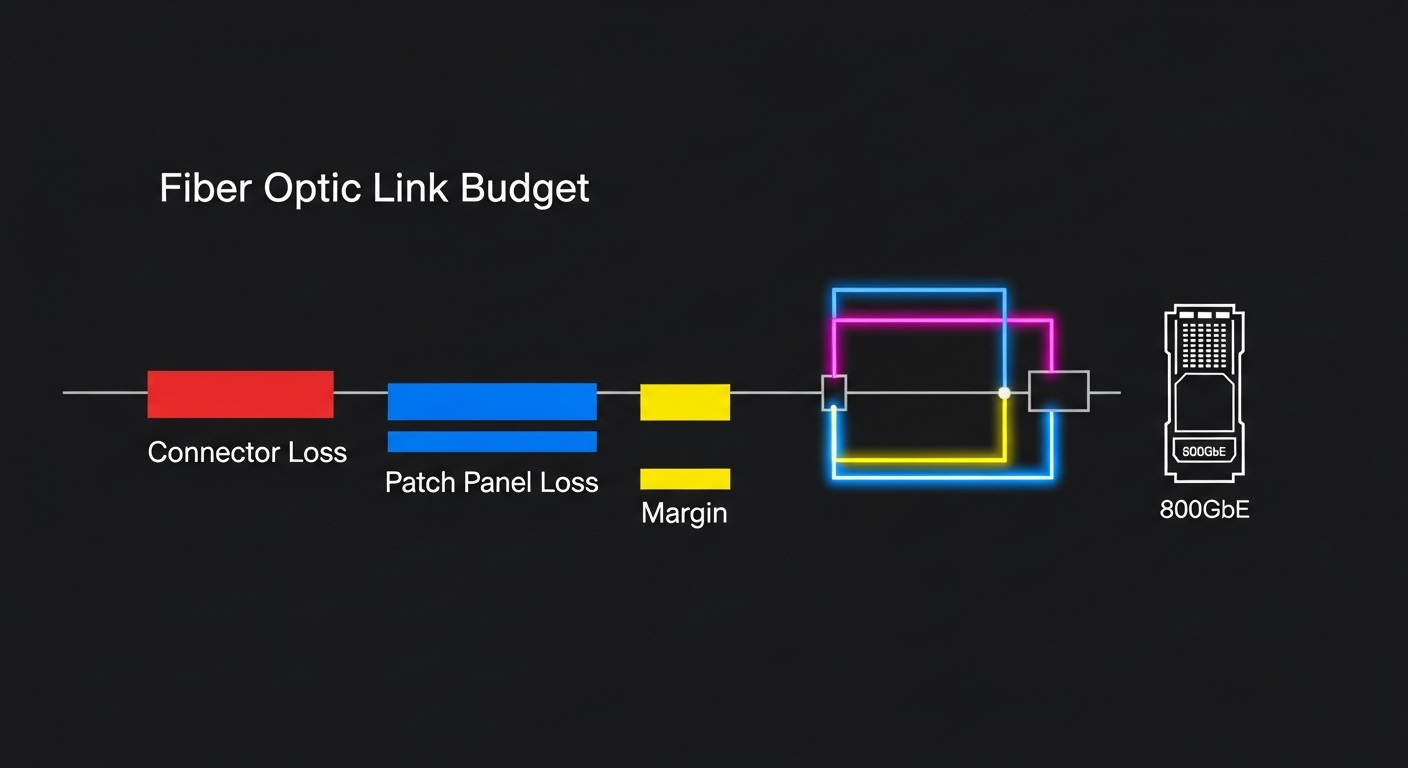
For 400G, operators often move from 100G lanes to higher-speed aggregation, pushing reach, connector cleanliness, and power/thermal constraints. AOC (Active Optical Cable) typically replaces copper direct-attach with fiber inside a cable assembly, improving EMI behavior and easing cable management in dense rows. DAC (Direct Attach Copper) can be cheaper per cable and quicker to swap, but it is more sensitive to channel loss and board-to-board routing constraints. Standards like IEEE 802.3 define the Ethernet PHY behavior, while vendor modules define the practical operating envelope. IEEE 802.3 reference
DAC vs AOC for 400G: key specs that decide the outcome
Engineers usually start with the physical and optical electrical limits the switch expects. With 400G, the most common approach is a breakout-aware 400G port design that supports specific optical standards and form factors (for example, QSFP-DD or OSFP depending on vendor). AOC assemblies are commonly built to an optical specification with a defined wavelength, typical reach class, DOM availability, and power draw. DAC assemblies are built for a defined electrical channel budget and often lack optical diagnostics.
| Spec | DAC (Direct Attach Copper) | AOC (Active Optical Cable) |
|---|---|---|
| Typical use | Very short reach inside racks | Short reach across racks/rows |
| Reach class (common) | ~1 m to 5 m (varies by vendor) | ~10 m to 100 m (varies; check datasheet) |
| Medium | Copper electrical | Fiber optic (internal active electronics) |
| Connector type | QSFP-DD or similar copper plug | QSFP-DD or similar optical plug |
| Wavelength | Not applicable | Commonly 850 nm for short-reach multimode |
| Diagnostics | Often limited or none | Usually supports DOM (digital optical monitoring) |
| Power / thermals | Lower cable power but higher EMI sensitivity | Higher cable power; better EMI behavior |
| Operating temperature | Varies by cable grade | Varies by cable grade; verify min/max |
| Failure modes | Channel loss, connector seating issues | Fiber micro-bend, dirty ferrules, DOM mismatch |
For 850 nm multimode short reach, choose AOC assemblies that match your switch PHY expectations and cabling plant (OM3/OM4). If your vendor supports it, prefer AOC with DOM so your NMS can trend optical power and error rates. For optical interface behavior at the PHY layer, reference IEEE Ethernet clauses and vendor transceiver compatibility guidance. IEEE 802.3 working group
Selection criteria checklist: DAC vs AOC for 400G links
Use this ordered checklist when planning the 400G transition. It is designed to prevent “it should work” assumptions during pre-deploy testing.
- Distance and reach margin: Measure end-to-end distance including patch panels and slack. DAC may fail when the electrical channel budget is exceeded by minor routing changes; AOC typically tolerates longer distances but still requires correct fiber type.
- Switch compatibility: Confirm the port supports that form factor and vendor-validated optics list. Some vendors restrict third-party optics; third-party AOC can be blocked or run in reduced modes.
- DOM and telemetry needs: If you need error-rate trending (BER proxies, Rx power), prefer AOC with DOM. If you only need link up/down, DAC can be acceptable.
- Operating temperature and airflow: In high-density 400G rows, verify the cable assembly thermal rating. AOC electronics can run warmer than passive fiber jumpers.
- Budget and spares strategy: Price cables as a line item, but also price the downtime risk. AOC spares may cost more, yet reduce service calls if they tolerate routing variability.
- Vendor lock-in risk: Check whether your switch firmware enforces optics vendor IDs. If yes, factor the cost of buying validated AOC from the switch OEM or an approved reseller.
Pro Tip: In field installs, the biggest AOC “mystery failures” are not wavelength or reach—they are dirty fiber endfaces or micro-bend from tight cable routing near doors and cable ladders. If a link comes up intermittently, inspect and clean the fiber interface and then relax bend radius before replacing hardware.
Real-world deployment scenario: 400G AOC success in a leaf-spine row
In a 3-tier data center leaf-spine topology, a team upgraded 48-port ToR switches from 100G to 400G uplinks. They ran 400G over QSFP-DD optical interfaces across two racks per uplink pair, with measured distances of 18 m from switch ports to the patch panel and 2 m patch cords per side. DAC assemblies were tested first but showed intermittent CRC/packet drops after cable re-routing for airflow, consistent with marginal electrical channel performance. The team switched to an 850 nm AOC rated for multimode short reach with DOM enabled, which improved link stability and gave telemetry to confirm Rx power stayed within the vendor’s recommended operating window. Vendor validation and DOM monitoring reduced troubleshooting time from hours to minutes during the cutover window.
Common mistakes and troubleshooting for DAC vs AOC
These are the failure modes that repeatedly show up during 400G transitions, with fast fixes.
- Root cause: marginal channel loss on DAC. Symptom: link flaps or rising error counters after cable management changes. Solution: re-measure the true length and routing path; swap to a shorter DAC or an AOC with verified reach, and ensure full connector seating.
- Root cause: optics compatibility enforcement. Symptom: interface stays down or runs at an unexpected mode. Solution: check the switch vendor’s optics compatibility matrix and DOM presence; use validated part numbers or approved AOC vendors.
- Root cause: dirty or damaged fiber endfaces with AOC. Symptom: intermittent link up/down, sudden BER spikes. Solution: clean connectors using proper fiber cleaning kits, inspect with a scope when possible, and verify bend radius and cable strain relief.
- Root cause: thermal stress near high-speed cages. Symptom: link errors increase during hot hours. Solution: confirm operating temperature ratings for the cable assembly, adjust airflow baffles, and ensure cables are not tightly bundled against hot exhaust.
Cost and ROI note for 400G interconnects
Typical street pricing varies by OEM validation and volume, but budgeting ranges are directionally useful. DAC often costs less per cable than AOC, but it can drive higher replacement rates when routing changes or reach margin is tight. AOC generally costs more upfront; however, DOM telemetry can reduce incident time and improve preventive maintenance, lowering TCO in environments with frequent moves/adds/changes. When calculating ROI, include labor for troubleshooting, downtime risk, and the cost of validated spares; for many teams, the operational savings outweigh the higher unit price during 400G cutovers.
FAQ
Q: When should I choose AOC instead of DAC for 400G?
Choose AOC when link distance exceeds your DAC comfort zone, when EMI/routing variability is high, or when you need DOM telemetry for monitoring. If your patching and cable routing change often, AOC’s tolerance can reduce rework.
Q: Are AOC cables always compatible with QSFP-DD 400G ports?
No. Form factor alone is not enough; your switch firmware may enforce an optics compatibility list and DOM expectations. Verify with the switch vendor’s validated optics guidance before ordering.
Q: What wavelength and fiber type should I plan for?
Many short-reach AOC solutions use 850 nm multimode optics. Still, confirm whether you are on OM3 or OM4 in your cabling plant and verify the vendor’s reach rating for your exact link length.
Q: Why do AOC links sometimes come up intermittently?
Common causes include dirty endfaces, micro-bends from tight cable routing, and connector seating issues. Start by checking optics cleaning and bend radius before replacing the cable.
Q: What should I monitor after deployment?
Use switch counters and DOM telemetry: Rx power, error counters, and any PHY-level alarms. Establish a baseline during a stable period, then alert on drift rather than only on link-down events.
Q: Can I mix DAC and AOC within the same 400G upgrade?
Yes, but keep a consistent strategy per link distance and per port compatibility. Mixing is fine for performance, but it can complicate troubleshooting if you do not standardize monitoring and labeling.
For the next step, map your link distances to validated reach classes and then standardize on either AOC or DAC per topology segment using related topic:400G optics reach planning. That will streamline spares, cutover windows,
