
Telecom providers are under pressure to scale bandwidth without blowing up power budgets, rack density, or maintenance risk. This article compares 400G vs 800G optical links from a reliability and deployment perspective: optics choices, reach realities, thermal constraints, DOM telemetry, and MTBF expectations. It helps network engineers and planners decide when 800G is worth the cost and when 400G remains the safer operational bet.
Why telecom teams are debating 400G vs 800G right now
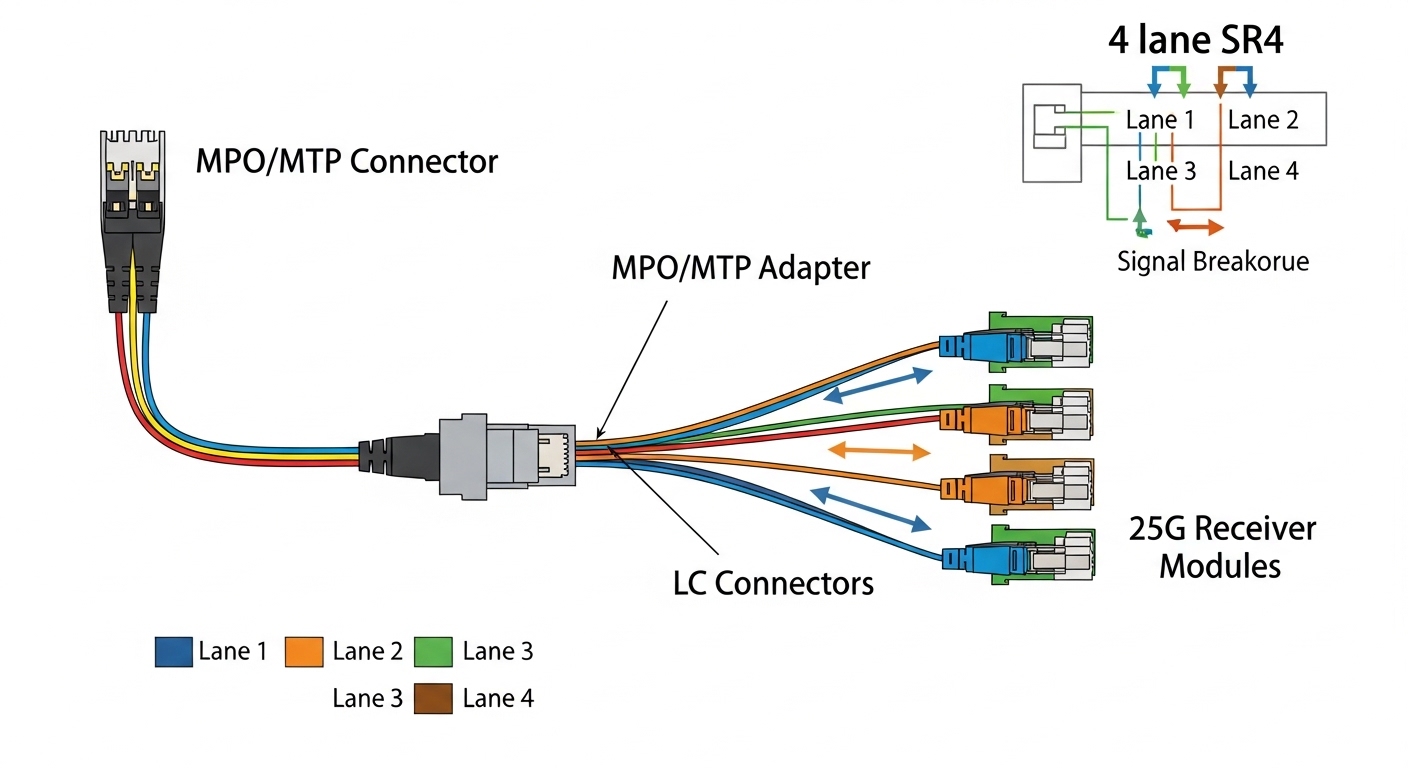
In modern transport and aggregation layers, traffic growth is not linear: bursts, video demand, and AI backhaul can push utilization from 60% to 85% in a single quarter. That changes the economics of transceivers because optics count, fan power, and spare inventory all scale with the number of pluggables. Many operators see a practical tipping point where moving from 400G to 800G reduces total port count, but also increases per-module complexity and thermal sensitivity.
From an ISO 9001 and quality-management lens, the decision is also about repeatability: can your teams test, qualify, and sustain the same optical performance across vendors and sites? The right answer depends on your target reach (metro vs long-haul), fiber plant quality, and whether your vendor platform supports the specific coherent or direct-detect form factors you plan to deploy. IEEE 802.3 and vendor datasheets define electrical and optical behavior, but field outcomes hinge on how those specs interact with your real rack airflow and patch panel losses. Source: IEEE 802.3
400G and 800G optical link fundamentals: what changes in the field
At a high level, 400G and 800G can both be delivered using coherent or direct-detect architectures depending on distance and interface type. Direct-detect is often used for short-reach and metro where cost and simplicity matter most; coherent is used when reach, dispersion tolerance, and spectral efficiency justify complexity. For telecom planners, the key difference is not only throughput; it is also optics power per transceiver, the number of optics per capacity unit, and how quickly link margins erode with aging and temperature swings.
Key parameters telecom engineers compare
- Wavelength and modulation format: coherent links depend on spectral planning and modulation choices; direct-detect depends on wavelength stability and receiver sensitivity.
- Reach: specified reach is conditional on link budget, fiber type, and connector/splice loss.
- Optical power and receiver sensitivity: affects margin for aging, cleaning quality, and number of patch points.
- Operating temperature: sustained high temperatures can increase error rates and accelerate component aging.
- DOM telemetry: helps isolate intermittent faults and validate transceiver health during change windows.
- Interface compatibility: platform support for the exact transceiver family and firmware expectations.
Spec comparison table: 400G vs 800G optics you will actually buy
Because “400G” and “800G” can map to multiple technologies, the most useful comparison uses common industry categories: short-reach direct-detect (often QSFP-DD/OSFP-style) versus coherent pluggables (often CFP2-DCO/CFP2-ACO-like ecosystems). Below is a practical, telecom-oriented comparison of representative characteristics you will see in vendor offerings. Always validate against your specific switch or line-card compatibility list and the optics datasheet for the exact part number you plan to deploy.
| Parameter | Representative 400G Optical Link | Representative 800G Optical Link |
|---|---|---|
| Typical data rate | 400 Gbps | 800 Gbps |
| Common use case | Metro aggregation, data center interconnect, short-haul transport | Higher-capacity aggregation, densified transport, long-haul planning where supported |
| Architecture (typical) | Direct-detect short-reach or coherent depending on reach target | Coherent often for longer reach; direct-detect for short-reach where available |
| Wavelength range | Direct-detect: commonly around 850 nm for multimode; coherent varies by vendor | Often coherent bands depending on design; direct-detect options vary by vendor |
| Connector / interface | Common pluggable families vary by vendor; check platform support | Same note: pluggable family must match line-card or switch cage |
| Optical power / sensitivity | Vendor-specific; link margin depends on fiber plant and patching | Vendor-specific; margin can be tighter due to higher aggregate channel count |
| Operating temperature | Typically industrial or extended ranges; confirm your module grade | Often similar categories, but thermal behavior can be more sensitive in dense cages |
| DOM telemetry | Commonly available with transceiver diagnostics | Commonly available; leverage for acceptance tests and ongoing monitoring |
| Power impact | Fewer ports per capacity unit than 100G; still requires power budgeting | Fewer ports per capacity unit, but higher per-module heat load is possible |
For concrete examples of direct-detect parts used in metro and data-center environments, you may encounter models such as Cisco SFP-10G-SR for 10G, and higher-speed equivalents in QSFP or OSFP families. For 10G/25G SR optical modules, vendor datasheets and interoperability notes are abundant, but for 400G and 800G, the exact part numbers vary by platform and technology generation. When evaluating, treat the optics datasheet as necessary but not sufficient evidence; validate in your chassis with your specific firmware and with your fiber test results.
What to ask vendors for during qualification
- Measured receiver sensitivity at your target temperature points.
- DOM alarm thresholds and whether they match your monitoring stack.
- Guaranteed link budget assumptions: fiber type, connector type, and patch loss.
- Documented compatibility with your platform’s transceiver manager and firmware.
Source: IEEE 802 Working Group
Reliability engineering view: MTBF, failure modes, and thermal margin
Telecom reliability is not just “module lifetime.” It is the system behavior under real conditions: temperature gradients across a crowded shelf, intermittent panel cleaning issues, and the operational reality of frequent maintenance. MTBF targets are influenced by component stress, optical output power aging, and driver electronics thermal cycling. Even if two optics parts share a datasheet temperature range, your chassis airflow and cage design can shift the true operating point by several degrees, which can move you toward or away from the margin cliff.
How 800G changes the failure probability profile
- More aggregate optics activity per transceiver: when density increases, a single module failure can impact more traffic immediately.
- Higher heat density: higher per-module power and tighter thermal envelopes can increase the rate of performance degradation.
- More dependencies: coherent formats may require tighter spectral stability and better fiber management, while direct-detect at higher rates may be more sensitive to connector cleanliness.
Pro Tip: In field acceptance tests, teams often focus on “link up” and bit error rate snapshots. A better practice is to log DOM telemetry and optical power drift over at least 8 to 24 hours at steady load, then compare the slope of receive power and temperature against your maintenance baseline. Small drift differences between 400G and 800G modules can reveal thermal coupling issues that only show up after the cage reaches equilibrium.
Deployment scenario: deciding in a leaf-spine metro aggregation build
Consider a metro network rollout for a telecom provider using a 3-tier leaf-spine style aggregation with 48-port 400G-capable ToR switches at the edge and a core aggregation layer feeding regional transport. Over a 12-month period, the operator plans to upgrade 24 aggregation sites, each with 120 Tbps aggregate capacity target growth. They start with 400G to preserve operational familiarity and reduce risk, but they also trial 800G on two spine uplink pairs per site where the fiber plant is recently cleaned and connector types are standardized.
In this scenario, the decision is guided by measured link loss from OTDR and connector inspection results, not just vendor reach statements. If the average patch loss budget is near the limit (for example, high connector count with variable cleaning outcomes), 400G direct-detect might deliver safer margin due to simpler receiver behavior and more forgiving tolerance. If the operator has strong fiber hygiene and consistent airflow, 800G can reduce the number of pluggables and ports needed to hit the same capacity, lowering inventory SKUs and the number of active interfaces monitored per Tbps.
Selection criteria checklist: how to choose 400G vs 800G without regrets
- Distance and reach category: metro short-reach versus longer-haul. Confirm whether your planned architecture is direct-detect or coherent and what reach is guaranteed in your exact fiber context.
- Platform compatibility: verify transceiver family support for your switch or line-card model, including firmware versions and any vendor “golden optics” lists.
- DOM support and monitoring integration: ensure your NMS can read alarms and thresholds. If telemetry is incomplete, your reliability strategy weakens.
- Operating temperature and airflow assumptions: model cage temperature rise using your rack fan curves and measure with sensors during acceptance.
- Link budget margin and fiber plant quality: use OTDR, connector loss testing, and cleaning verification. Do not assume “datasheet reach” equals “installed reach.”
- Vendor lock-in risk: assess whether third-party optics are supported, and whether you can standardize across sites without surprise compatibility failures.
- Spare strategy and lead times: 800G can reduce port counts but may require different spare parts and testing workflows.
- Reliability and service model: align with your MTTR goals. If maintenance crews need faster isolation, DOM telemetry and standardized alarms matter.
Common mistakes and troubleshooting tips in real networks
Even strong designs fail when operational details slip. Below are common failure modes seen in telecom deployments, with root causes and corrective actions you can apply quickly.
“Link up” passes, but errors spike after thermal equilibrium
Root cause: transceiver performance drifts as the cage warms; 800G modules can be more sensitive due to higher aggregate power and tighter thermal coupling. Solution: run an 8 to 24 hour burn-in at target load, log BER counters and DOM temperature/optical power trends, and compare against your acceptance thresholds.
Connector cleanliness and patch loss are underestimated
Root cause: field patch panels and connector reuse introduce microscopic contamination; at higher data rates, receiver tolerance for margin erosion can shrink. Solution: standardize connector types, enforce inspection with a microscope, and clean with approved procedures. Re-measure loss after cleaning and confirm the link budget still has headroom.
Incompatible optics family or firmware expectation mismatch
Root cause: the transceiver may physically fit but not behave correctly with the platform’s transceiver manager, lane mapping, or power control expectations. Solution: confirm exact part numbers and firmware compatibility. If you must test third-party optics, do it in a lab with the same chassis and firmware, then roll out gradually with monitoring gates.
Misconfigured power settings or monitoring thresholds
Root cause: default thresholds might not align with your installed fiber losses, causing either nuisance alarms or missed early warning. Solution: calibrate alarms using measured baselines from a healthy link cohort, then set thresholds with conservative hysteresis.
Cost and ROI note: where 800G usually wins and where it does not
In practice, 800G vs 400G ROI depends on whether your bottleneck is port count, power per capacity, or operational risk. Typical optics pricing varies widely by technology generation and vendor partnerships, but telecom buyers should expect that 800G optics often carry a higher per-module unit price and may have longer qualification cycles. However, the total cost of ownership can still improve if you reduce the number of pluggables, reduce interface management overhead, and lower rack-level power consumption per Tbps.
A realistic TCO model for telecom should include optics purchase cost, installation labor, spare inventory holding, and the operational cost of troubleshooting. If you deploy 800G in a clean, well-controlled airflow environment with standardized fiber hygiene, you are more likely to realize ROI. If your sites have variable patch panel quality, inconsistent cleaning practices, or tight maintenance windows, 400G can be the safer and faster path that avoids costly escalations.
Source: Finisar
Source: FS.com
FAQ: buying decisions for 400G vs 800G optical links
Is 800G always better than 400G for telecom networks?
No. 800G can reduce port count and simplify capacity scaling, but it may increase thermal sensitivity and complicate qualification. If your fiber plant margin is thin or your sites are operationally inconsistent, 400G often yields more predictable performance.
Which technology should I consider: direct-detect or coherent?
Direct-detect is commonly used for shorter reach and simpler deployments, while coherent is often chosen for longer reach and higher spectral efficiency. Your choice should be based on required reach, dispersion tolerance needs, and the compatibility matrix of your specific line cards or switches.
How do I validate that my installed reach matches the datasheet?
Use OTDR and connector loss testing before and after cleaning, then confirm the end-to-end link budget with your patch panel and splice counts. After installation, run a steady-load test period and compare DOM telemetry baselines against acceptance criteria.
What should I monitor with DOM telemetry for reliability?
Track optical receive/transmit power drift, module temperature, and alarm flags. For high-availability networks, build alert thresholds based on measured baseline cohorts, not only vendor defaults.
Can we mix vendors for 400G vs 800G optics?
Sometimes, but you must verify platform support for each optics family and firmware compatibility. Mixing can also complicate spare strategies and maintenance workflows, which can raise operational risk even if link performance is acceptable.
What is the most common cause of intermittent link flaps?
Connector contamination, marginal link budget due to patch loss, or a monitoring threshold mismatch are frequent culprits. Confirm physical layer health first with inspection and power measurements, then validate platform configuration and optics compatibility.
If you want a dependable path to capacity scaling, start with a link budget and thermal qualification plan, then use compatibility and DOM telemetry to de-risk the migration from 400G vs 800G. Next, review how to build an optics acceptance test plan to standardize your commissioning workflow across sites.
Author bio: I am a reliability and QA engineer who has qualified optical transceivers in carrier-grade racks, using DOM telemetry, OTDR baselines, and burn-in protocols to predict field failures. I focus on measurable MTBF drivers, environmental testing realism, and ISO-aligned documentation that helps teams deploy faster with fewer surprises.
