
Edge computing networks live under tight constraints: limited rack space, strict power budgets, and frequent field swaps. This article compares AOC vs DAC for edge deployments where you need predictable link stability across varying temperatures and cabling practices. You will get an engineer-focused selection checklist, a specs comparison table, and concrete troubleshooting patterns seen in production.
Why edge links fail differently: AOC vs DAC in the field
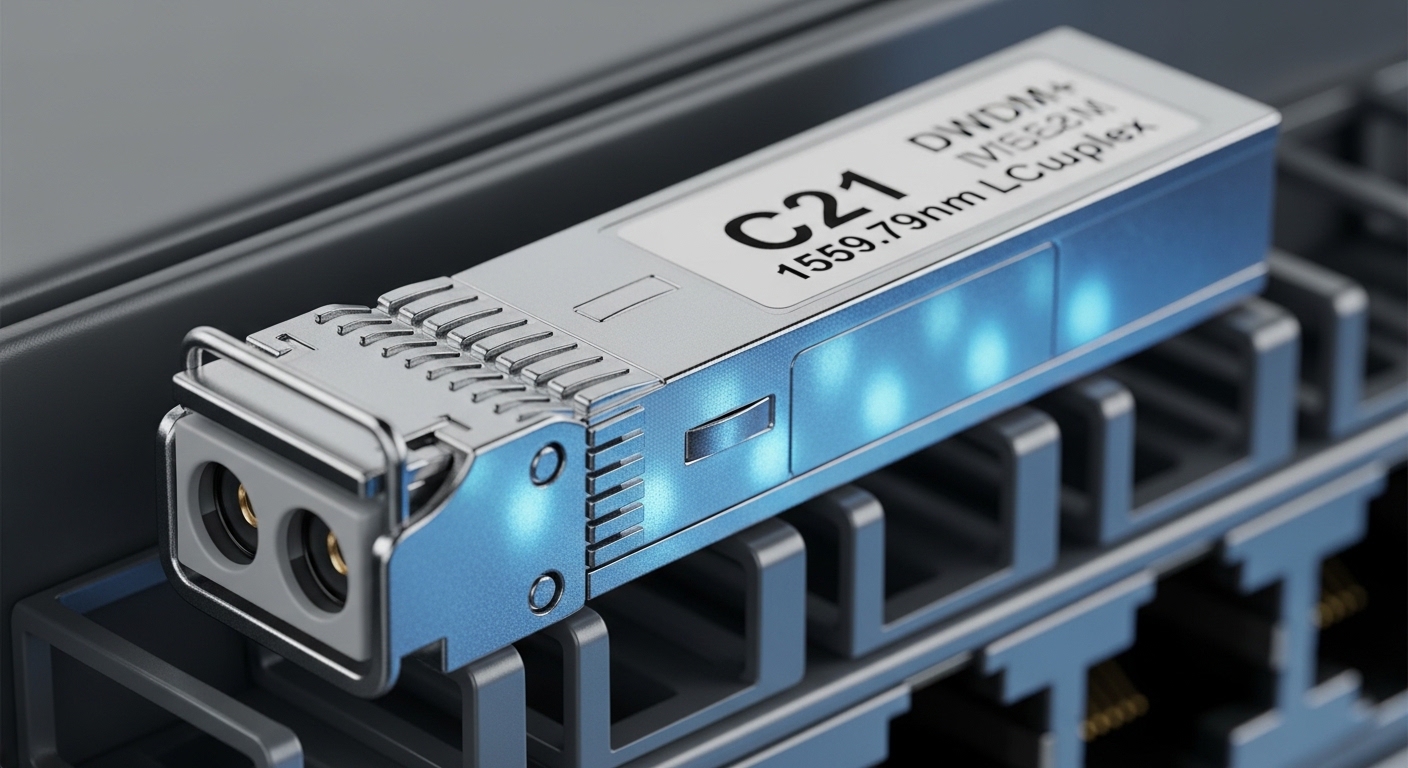
In edge sites, the “last mile” inside the rack is often the most error-prone: patch cords get moved, dust accumulates on fiber ferrules, and airflow can be uneven. DAC (Direct Attach Copper) typically uses passive copper twinax at short reach; AOC (Active Optical Cable) uses integrated optics with fiber inside a cable assembly. In practice, DACs are simpler electrically and can be cost-effective, but they are more sensitive to connector cleanliness and mechanical stress that changes impedance. AOCs add optical isolation and usually tolerate EMI better, but they introduce fiber handling and optical budget considerations.
From a standards perspective, the underlying line rates and optics behaviors map to IEEE 802.3 Ethernet PHY requirements for the relevant speeds (for example, 10GBASE-SR/LR behavior at the PHY level) even though AOC and DAC are distinct physical media. For edge engineers, the operational detail is less about the abstract standard and more about what your switch QSFP/SFP cage expects: electrical compliance, DOM interpretation, and supported cable assemblies.
Core specifications that decide AOC vs DAC
Edge design decisions usually start with link budget and budget constraints: reach, power, and thermal load. Then you validate switch compatibility and monitoring features. The table below summarizes typical engineering parameters you will see when comparing common 10G and 25G implementations used in edge racks.
| Spec | DAC (Passive / Active Twinax) | AOC (Active Optical Cable) |
|---|---|---|
| Typical data rates | 10G, 25G (often 100G via QSFP28 DAC depending on platform) | 10G, 25G, 40G, 100G (platform dependent) |
| Wavelength / medium | Copper twinax (no wavelength) | Optical: e.g., 850 nm for SR-class short reach, or other bands depending on model |
| Reach in edge racks | Commonly 1 m to 7 m for many 10G/25G DAC assortments | Commonly 10 m to 100 m+ depending on speed and optical budget (often SR-class) |
| Connector type | Direct attach twinax plugs into SFP+ or QSFP+ / QSFP28 ports | Typically fiber LC (or proprietary integrated ends) into the transceiver interface |
| Power draw | Often lower per link for short reaches, but varies by passive vs active DAC | Usually higher than passive DAC, but still modest vs full transceivers; varies by vendor and speed |
| DOM / monitoring | Passive DAC may lack rich DOM; active DAC often supports more diagnostics | Most AOC assemblies support DOM (temperature, supply voltage, optical power) |
| Operating temperature | Varies; many are rated for 0 to 70 C (some extended options exist) | Varies; many are rated for 0 to 70 C or extended ranges depending on model |
| EMI behavior | More sensitive to nearby power cabling; still works well in controlled racks | Better EMI immunity due to optical transmission |
When evaluating specific parts, you will see product families with well-defined optical parameters. For example, Finisar and other vendors publish AOCs and SR optics with specified center wavelength and optical power ranges; for copper DAC, vendor datasheets specify supported reach and insertion loss budgets. Always cross-check the switch vendor’s compatibility list, since even electrically similar modules can fail link bring-up if the PHY expects a particular electrical signature.
Useful external references include IEEE Ethernet PHY guidance for the underlying link behavior: [Source: IEEE 802.3]. For practical deployment guidance on optical interfaces and fiber handling, consult ANSI/TIA fiber cabling practices: [Source: ANSI/TIA cabling standards portal].
Edge computing deployment scenario: leaf-spine at the site
Consider a retail edge aggregation site with a 3-tier design: an access layer of 24-port 10G switches uplinking to two aggregation switches, which then connect to a local mini-leaf-spine fabric. Each aggregation switch uses 2 x 25G uplinks to a small spine pair, and the patch distance between ToR and aggregation is 4 to 6 meters across cable trays. In this environment, engineers often choose DAC for the short in-rack uplinks (lower cost, no fiber cleaning) and AOC for the tray runs that cross high-current cabling or where patch cord length varies. A typical operational plan: install DAC on the first hop where you can control cable routing, install AOC on tray-crossing links, and enable link diagnostics using DOM for early detection of optical power drift.
In a production change window, you can validate performance by watching error counters on the switch: interface CRC errors, FEC-related counters (if applicable), and link flaps after temperature cycling. If an AOC shows rising receive power warnings while DAC remains stable, the root cause is usually fiber contamination or micro-bending from cable management rather than switch PHY issues.
Selection criteria checklist for AOC vs DAC
Use this ordered checklist during design and procurement. It is the same sequence field engineers follow when they need deterministic outcomes under tight change control.
- Distance and insertion loss budget: confirm the expected run length and worst-case margin after slack loops and tray bends. For DAC, ensure the reach rating matches your speed and connector class; for AOC, ensure the optical budget supports any additional attenuation from splices or patching.
- Switch and port compatibility: validate against the switch vendor’s supported cable list (especially for QSFP28 and 100G-class ports). Mismatches can cause link training failures even when the transceiver “looks” correct.
- Speed and PHY expectations: confirm the port mode (for example, 25G vs 10G breakout) and any platform-specific constraints like required FEC behavior.
- DOM and monitoring requirements: if you need optical power and temperature telemetry for remote monitoring, prefer AOC with reliable DOM. For DAC, confirm whether the platform surfaces meaningful diagnostics.
- Operating temperature and airflow: edge enclosures often see hotspot gradients. Verify the module temperature rating and ensure the cable assembly is not trapped against heat sources.
- Operating environment and EMI: if fiber runs cross noisy environments with high-current conductors, AOC often reduces susceptibility to crosstalk and ground noise.
- Vendor lock-in risk: third-party AOCs and DACs can be cost-effective, but plan for compatibility churn during firmware upgrades. Maintain a tested spares list per platform.
Pro Tip: In edge deployments, the fastest way to isolate AOC vs DAC problems is to compare interface optical warnings or DOM temperature deltas against the physical routing change. If an AOC starts flapping after a “minor” cable re-seat, treat it as a fiber cleanliness or micro-bend event before suspecting the switch. Most teams waste hours swapping switches when the real issue is a contaminated LC end-face or tight bend radius in the cable tray.
Common pitfalls and troubleshooting patterns
Below are failure modes engineers actually see when choosing AOC vs DAC for edge links. Each includes root cause and a practical fix.
- DAC link does not come up after reseat: root cause is often impedance discontinuity from connector damage, bent twinax, or residue on the plug interface. Solution: inspect the connector for deformation, replace the cable, and verify the port cage alignment; avoid “force seating” during maintenance.
- AOC shows increased receive power and intermittent drops: root cause is usually fiber end-face contamination or micro-bending from aggressive cable tray routing. Solution: clean connectors with proper fiber cleaning tools, inspect under magnification, and re-route to maintain bend radius; confirm DOM optical power trend after re-seat.
- Works at room temperature, fails in field heat: root cause is thermal stress exceeding module or cage operating limits, or uneven airflow causing local hotspots. Solution: measure enclosure inlet and hotspot temperatures; ensure cable assemblies are not zip-tied against hot components; choose extended temperature rated assemblies where required.
- Interface counters climb only on one direction: root cause is asymmetric optical power imbalance (AOC) or marginal signal integrity (DAC active/passive mismatch). Solution: verify TX/RX polarity, check DOM for Tx power and Rx power asymmetry, and confirm the exact cable SKU and revision.
Cost and ROI: how to estimate total impact
Pricing varies by speed and vendor, but a realistic budgeting approach helps you avoid “cheapest wins” decisions. In many edge procurement cycles, short DACs can cost less per link than AOCs, especially for 1 m to 5 m runs. AOCs often carry a higher unit cost but can reduce truck rolls by improving EMI tolerance and supporting longer reaches without re-cabling. For TCO, include spares strategy (how many extra links you keep on-site), cleaning consumables for fiber, and failure rates driven by field handling. In practice, third-party AOCs and DACs can be 10% to 30% cheaper, but you must validate compatibility and DOM behavior to avoid downtime during firmware upgrades.
If you plan to standardize across sites, consider the operational ROI: AOCs with consistent DOM telemetry enable predictive maintenance dashboards, while DACs may require less monitoring but can be harder to diagnose when signal integrity degrades silently. Balance the monitoring requirement against the maintenance workflow your edge teams can realistically execute.
FAQ: AOC vs DAC for edge computing links
Which is better for edge racks: AOC vs DAC?
For very short in-rack runs (often a few meters), DAC is typically the simplest and lowest-cost option. For longer runs across EMI-heavy cable trays or variable patch lengths, AOC is often more robust and easier to scale. The best choice depends on switch compatibility, required reach, and whether you need DOM telemetry.
Do AOCs work like standard fiber transceivers?
AOCs are integrated cable assemblies that include optics, so they behave similarly to using optical transceivers plus fiber patching. However, you still must validate switch support for the specific cable SKU and confirm DOM fields exposed to the platform. Treat AOCs as a managed optical link, not just a passive cable.
Can DAC be used beyond its rated distance?
Running a DAC beyond its rated reach commonly causes marginal signal integrity, leading to CRC errors and link flaps. Some active DACs tolerate slightly more distance, but performance becomes highly dependent on the exact routing and connector condition. For deterministic edge operations, stay within vendor reach guidance and validate with your switch model.
What DOM signals should I watch for AOC health?
Monitor receive optical power warnings, transmitter bias, and temperature. If you see a steady drift toward warning thresholds after a maintenance event, focus on fiber cleanliness and routing changes. If temperature rises faster than expected, reassess airflow and enclosure thermal design.
Are third-party AOC and DAC modules safe to deploy?
They can be cost-effective, but you must test compatibility with your specific switch firmware and optic cage behavior. Some platforms reject unsupported cable signatures or expose limited diagnostics. Maintain a tested spares pool per switch model to reduce downtime risk.
How do I troubleshoot link issues faster?
Start with interface counters and DOM (for AOC). Next, verify polarity and connector cleanliness, then check physical routing for bend radius violations. Finally, compare behavior across a known-good spare cable to isolate whether the issue is media-related or switch-related.
Choosing between AOC vs DAC for edge computing is mostly about reach, thermal and EMI realities, and platform compatibility—not just headline specs. If you want to extend this decision framework to higher speeds and port types, review optical transceiver vs cable assemblies for transceiver selection patterns and monitoring strategies.
Author bio: Field-focused network engineer and technical writer specializing in Ethernet PHY behavior, optical budgets, and edge deployment reliability. Hands-on experience validating module compatibility, DOM telemetry, and failure root causes across multi-vendor switch platforms.
