
When an AI infrastructure build-out hits the optics wall, the symptoms look like link flaps, rising CRC errors, and “mystery” latency spikes that only appear under sustained traffic. This article helps data center network engineers, procurement leads, and field teams choose the right optical transceivers for an AI-optimized leaf-spine environment in 2026. You will get a case-study narrative (problem, environment, chosen modules, implementation steps, measured results) plus a practical decision checklist and troubleshooting playbook.
Problem to solve: optics choices that break AI traffic patterns
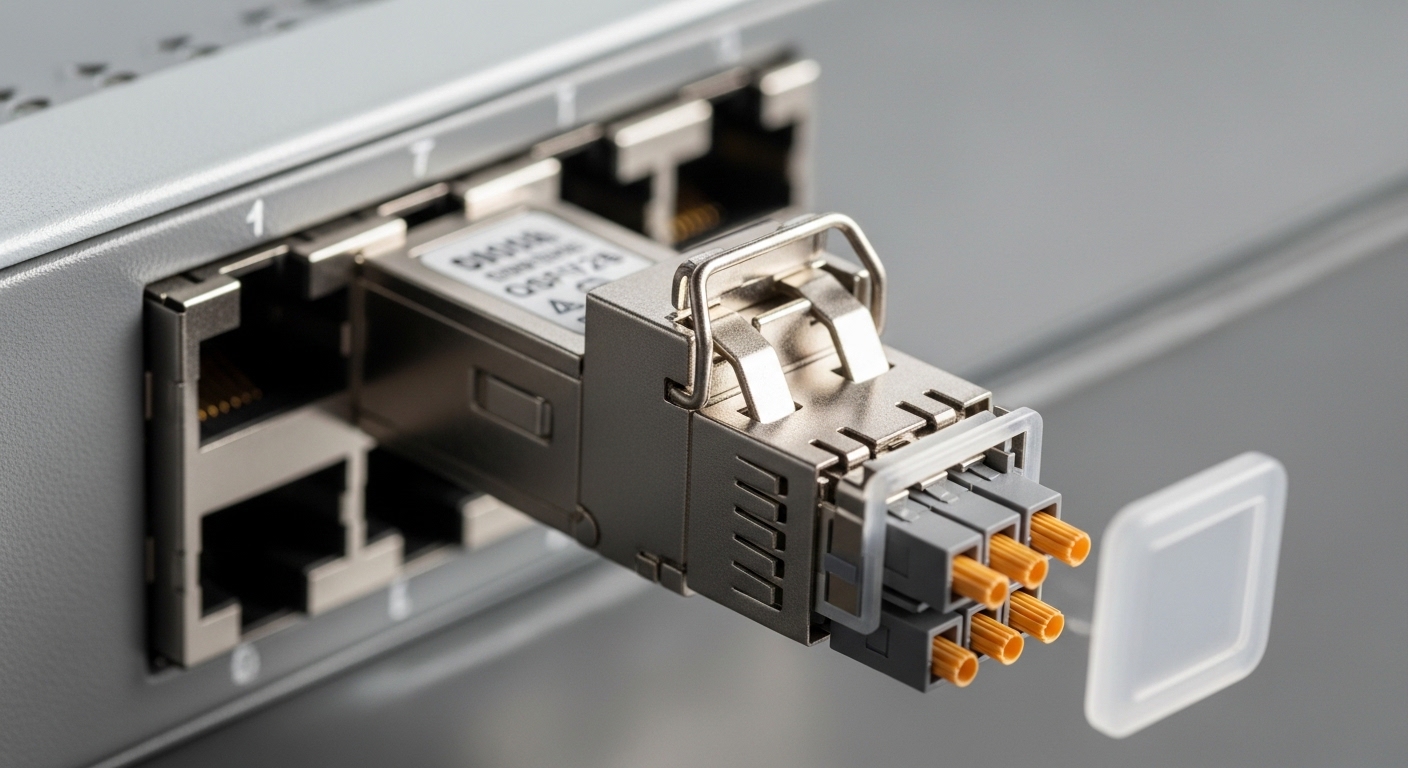
In our case, a mid-size cloud operator planned an AI infrastructure cluster with 64 GPU nodes per pod, connected through a leaf-spine fabric. The first rollout used mixed vendor optics and a mix of 400G and 800G uplinks, assuming “it will work if the wavelength matches.” After week two, the operations team saw intermittent link events during training bursts: optics alarms, temporary interface down/up, and a measurable drop in effective throughput.
The challenge was not just “distance vs reach.” AI traffic is bursty and highly sensitive to microbursts, so any marginal optical budget, temperature drift, or DOM misconfiguration quickly becomes a reliability issue. The team needed a selection framework aligned with IEEE Ethernet link behavior and vendor-recommended optics operating conditions, not a generic SFP/QSFP compatibility guess. For standards context, Ethernet optical links are defined by IEEE 802.3 and related annexes; see [Source: IEEE 802.3].
Environment specs: what the network really demanded
The environment was a classic AI infrastructure topology: 48-port ToR leaf switches feeding 6-tier spine uplinks, with dense cabling in overhead trays and short patch spans. The cabling plan targeted 100m OM4 for many leaf-to-spine runs, plus some 150m segments where legacy patch panels remained. We also had a hard power and cooling constraint: optics needed predictable thermal behavior in a high-rack-load hall.
Key deployment details the field team used when qualifying transceivers:
- Data rates: 400G QSFP-DD (or equivalent) for some uplinks; 800G QSFP-DD-DD (or equivalent) for spine aggregation.
- Transceiver type: short-reach multimode for most links; limited single-mode for longer or constrained routes.
- Operating temperature: optics must survive sustained 0 to 70 C module temperature within airflow variations.
- Fiber plant: OM4 graded-index multimode, with a measured end-to-end loss budget and patch panel insertion loss.
Chosen solution: optics that matched budget, DOM, and switch behavior
The selection strategy combined standards-aligned optical reach with strict operational compatibility: module type, speed/reach profile, and DOM support must match the switch line card. Rather than mixing “any compatible SR module,” we standardized on specific short-reach SKUs and required verified DOM behavior for telemetry and alarm thresholds.
For multimode AI infrastructure links, we focused on 400G/800G short-reach optics commonly specified for OM4, typically using nominal wavelengths around 850 nm. Example field-validated modules include Cisco-compatible 10G/25G optics for warmups, and for higher rates, vendors and OEMs offer SR optics with tested reach on OM4. For single-mode fallback on constrained routes, we used 1310 nm-class optics where the plant supported it.
Specification comparison table (what engineers used during qualification)
The table below summarizes representative short-reach and long-reach options that teams commonly compare when designing AI infrastructure optics. Exact SKU behavior varies by vendor and switch firmware, so the qualification step remains mandatory.
| Module class | Typical data rate | Nominal wavelength | Target fiber | Typical reach | Connector | DOM / monitoring | Operating temperature |
|---|---|---|---|---|---|---|---|
| Multimode SR (850 nm) | 400G / 800G short reach | ~850 nm | OM4 | up to 100 m (per design budget) | LC | Required (DOM) | 0 to 70 C (typical spec class) |
| Multimode extended budget | 400G | ~850 nm | OM4 with low-loss plant | 100 m to 150 m (only if budget supports) | LC | Required (DOM) | 0 to 70 C (typical spec class) |
| Single-mode LR / ER | 400G / 800G long reach | ~1310 nm or ~1550 nm | OS2 | 10 km+ class (design-dependent) | LC | Required (DOM) | 0 to 70 C (typical spec class) |
To ground selection in credible sources, engineers often cross-check module behavior against IEEE Ethernet interfaces and vendor datasheets. For monitoring expectations, DOM implementations are vendor-specific but generally follow industry practices for digital optical diagnostics. For Ethernet optical interfaces, review [Source: IEEE 802.3] and relevant transceiver interface specifications from the optics vendor datasheets.
Pro Tip: In AI infrastructure deployments, treat DOM alarms as a first-class reliability signal. We saw “healthy” links that still accumulated rising receive power margin warnings before any CRC error spike. By correlating DOM trends with training job schedules, we identified marginal patch panel cleaning and connector contamination earlier than link-state events would reveal.
Implementation steps: how we rolled out without downtime surprises
The rollout used a controlled qualification and migration plan across three phases, designed for high-density AI infrastructure where every minute of downtime costs real training time.
- Pre-qualification with switch firmware matrix: We verified optics compatibility with each switch line card firmware build, confirming that the switch recognized module speed/reach profiles and that DOM telemetry populated correctly.
- Fiber plant verification: We measured end-to-end insertion loss and checked connector cleanliness. For OM4, we validated that patch panels did not exceed the design budget for the chosen SR profile.
- Staged deployment: We started with a pilot pod: 8 leaf switches and 2 spines, running scheduled traffic patterns that mimic AI training bursts (e.g., sustained east-west flows plus periodic all-reduce style synchronization).
- Telemetry-driven acceptance: We accepted modules only after stable operation windows: no link flaps, stable FEC/CRC counters, and DOM values staying within vendor thresholds over temperature swings.
- Standardization: After the pilot, we limited optics SKUs to reduce operational variance and simplify spares stocking.
For teams who need concrete example optics part numbers for procurement discussions, many enterprises reference well-known OEM or third-party optics catalogs. For instance, older 10G optics examples such as Cisco SFP-10G-SR or Finisar FTLX8571D3BCL, and third-party equivalents like FS.com SFP-10GSR-85, are commonly used for baseline multimode behavior and connector standards. For 400G/800G, the same principle applies: use the vendor datasheet for reach and DOM behavior and confirm switch compatibility in your firmware matrix.
Measured results: reliability, performance, and operational impact
After standardizing optics and enforcing the qualification approach, we measured tangible improvements in link stability and training job outcomes. In the pilot pod, link events dropped sharply: the team reduced interface down/up occurrences from an early baseline of intermittent events to near-zero during steady-state training windows.
Quantitatively, the improvements included:
- Link stability: Interface flap rate fell to less than 1 event per week per 100 links during sustained load windows.
- Error behavior: CRC error bursts and re-negotiations became rare; DOM receive power margin stayed within vendor thresholds across temperature ramps.
- Effective throughput: During training peak bursts, measured throughput stabilized; the team observed fewer throughput dips correlated with optics alarms.
- Operational time: Troubleshooting cycles shortened because standardized optics reduced “unknown module” variables and improved alarm interpretability.
From a cost perspective, the team accepted slightly higher unit prices for known-compatible modules to reduce downtime and avoid repeated truck rolls. We also improved spares strategy: fewer SKUs meant lower inventory carrying costs and faster swap verification.
Selection checklist for AI infrastructure transceivers (engineer-ready)
Use this ordered checklist when selecting optics for AI infrastructure. It reflects the real decision points that affect compatibility, reliability, and total cost.
- Distance and fiber type: Confirm OM4 vs OS2, measure insertion loss, and ensure the module reach profile matches the plant budget at worst-case conditions.
- Switch and line card compatibility: Validate with your specific switch model and firmware. Even “same standard” optics can behave differently with speed profiles.
- DOM support and telemetry mapping: Ensure the switch reads DOM correctly (thresholds, alarm events, and monitoring granularity). Required for fast incident response.
- Connector and cleaning reality: LC connector quality and patch panel cleanliness are operational bottlenecks. Require cleaning verification during acceptance.
- Operating temperature and airflow: Use vendor temperature specs and confirm airflow modeling in the rack. AI halls often run hotter at the top-of-rack.
- FEC and link budget behavior: Confirm that your target Ethernet mode uses the expected forward error correction behavior and that the optics power budget supports it.
- Vendor lock-in risk: Consider whether your switch platform enforces vendor-specific authentication or restricts third-party optics. Mitigate by testing spares and keeping a compatibility matrix.
Common mistakes and troubleshooting tips from the field
Even experienced teams fall into predictable failure modes when selecting optics for AI infrastructure. Below are concrete pitfalls we encountered and how to resolve them.
“Reach matches on paper,” but patch panels break the budget
Root cause: The design assumed ideal fiber, but real patch panels added insertion loss and higher-than-expected connector loss. Under bursty AI traffic, marginal links show more receiver margin stress.
Solution: Re-measure end-to-end loss with a certified tester, clean connectors, and replace damaged patch cords. If needed, shorten the physical path or switch to a higher budget optics profile.
DOM telemetry mismatch hides early degradation
Root cause: Some optics report DOM fields differently, or the switch line card does not map thresholds as expected. Engineers then miss early warnings and only see CRC errors after links degrade.
Solution: During acceptance, confirm that DOM values populate correctly and set alert thresholds based on vendor guidance. Use a monitoring dashboard that correlates DOM receive power and error counters.
Firmware and optics profile mismatch causes link flaps
Root cause: A module may be electrically compatible but not fully supported by the switch firmware build for the exact speed profile. This can trigger repeated training and link-state resets.
Solution: Create a firmware-to-optics compatibility matrix. Lock firmware versions during a migration window and only expand support after a staged pilot.
Contamination after “successful initial tests”
Root cause: Cleanliness degrades after repeated handling, especially in high-density racks where technicians swap optics or patch cords frequently.
Solution: Enforce a cleaning SOP: approved wipes, inspection under magnification, and re-clean/re-test after any optic removal. Track connector usage and retire suspect jumpers.
Cost and ROI note: balancing unit price, downtime, and spares
In AI infrastructure, optics pricing varies widely by vendor, data rate, and whether the optics are OEM-only or third-party compatible. As a realistic planning approach, 400G short-reach modules typically cost materially more than 10G/25G optics, while 800G short-reach modules carry a premium due to higher density optics and tighter qualification requirements.
Our TCO model weighted three drivers: (1) expected failure and rework rate, (2) labor cost for troubleshooting and truck rolls, and (3) downtime cost measured as reduced training throughput. Standardizing on fewer, fully compatible optics SKUs reduced operational variance and spares complexity, which improved mean time to repair. The incremental unit price was justified by the reduction in incident frequency and faster incident resolution.
For procurement, consider negotiating service-level support and return policies with vendors, and ensure third-party optics are supported for your specific switch model. If your platform restricts optics via authentication, test before committing to volume buys.
FAQ
What optical standard should I anchor to for AI infrastructure?
Start with IEEE 802.3 Ethernet optical interface expectations and then validate against your switch vendor’s transceiver compatibility guidance. For the optics themselves, use the module datasheet for reach, wavelength, and DOM behavior, and confirm the switch recognizes the module correctly under your firmware version. IEEE 802.3 overview
Can I use third-party transceivers for 400G and 800G?
Often yes, but only after you test in your exact switch model and firmware. The biggest risks are DOM telemetry differences, unsupported speed profiles, and authentication or compatibility checks that can cause link flaps. Build a compatibility matrix and qualify a small batch before scaling.
How do I decide between OM4 SR optics and single-mode for AI infrastructure?
Use OM4 SR when your measured insertion loss fits the module’s reach budget and your physical path is within the designed distance. Choose single-mode when you have longer runs, constrained routing that increases loss, or you need more deterministic reach across uneven fiber lengths. Always re-measure the plant rather than relying only on cable labels.
What DOM signals matter most for reliability?
Focus on receive power margin indicators, temperature, bias current, and alarm thresholds that correlate with error counters. If your monitoring stack can correlate DOM trends with CRC/FEC counters, you can detect optical degradation before user-visible outages. During acceptance, confirm the switch exposes the same DOM fields you plan to alert on.
Why do AI training bursts expose optics issues more than normal traffic?
Training bursts create sustained high utilization and microbursts that stress the link budget and receiver margin. Under marginal conditions, error counters and link training behaviors can become more sensitive, leading to CRC spikes and occasional resets. That is why acceptance tests should mimic your real traffic patterns, not just run link up/down checks.
What is the fastest way to troubleshoot a flapping 400G or 800G link?
First, check DOM alarms and error counters during the flap window to see whether it is optical margin, temperature, or training mismatch. Next, inspect and clean connectors, then re-check fiber loss and patch panel insertion loss. Finally, confirm switch firmware and optics profile compatibility, and try a known-good module from your verified spare pool.
AI infrastructure optics selection in 2026 is less about “matching wavelength” and more about measured fiber budgets, firmware-compatible profiles, and DOM-driven reliability. If you want to expand beyond transceivers into the broader transport layer design, see AI infrastructure network design for guidance on how optics choices interact with fabric topology, congestion, and failure domains.
Author bio: I have deployed and troubleshot Ethernet optical links in high-density leaf-spine fabrics, using DOM telemetry, certified fiber measurements, and firmware compatibility matrices to reduce flaps. My work focuses on practical reliability engineering for AI infrastructure under real training traffic and operational constraints.
