
Your network is probably doing more with less fiber, less power, and more speed than it did two years ago. That pressure is exactly where optical transceiver design is being reshaped by AI-driven control, smarter diagnostics, and tighter power budgets. This article helps network engineers and field technicians understand what is changing, what still matters in IEEE terms, and how to choose modules that will not ruin your week at 2 a.m.
How AI changes optical transceiver design in practice
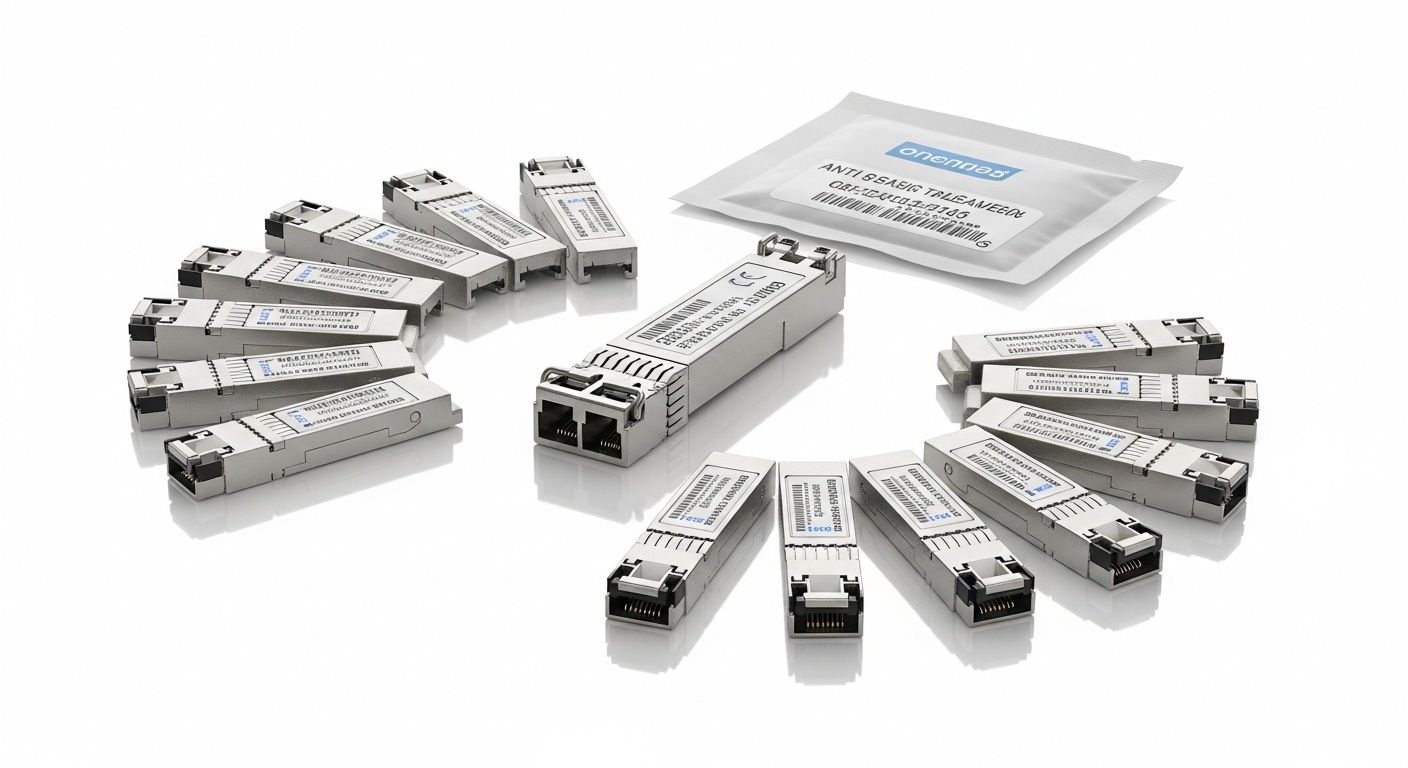
Traditional optical modules focused on stable analog and digital behavior: fixed equalization, conservative margins, and diagnostics that were mostly “pass or fail.” AI adds adaptive control loops that can tune transmitter bias, receiver decision thresholds, and DSP parameters based on live link conditions. In real deployments, that can improve reach on aging fiber and reduce retransmissions by compensating for temperature drift and link degradation. The catch: AI-enhanced designs add complexity, so you must verify compatibility with your switch ASIC and optics management workflow.
What gets optimized: signal, power, and diagnostics
AI-assisted DSP and control typically target three areas. First, link margin improves by adjusting equalization and sampling phase as the channel changes. Second, power can drop by turning down non-critical operating points when BER headroom is high. Third, diagnostics become more predictive: modules can estimate risk of failure from patterns in laser current, monitor photodiode trends, and thermal behavior.
Pro Tip: If your optics vendor exposes DOM fields for laser bias and receiver monitor trends, log them into your monitoring system. Engineers often discover “slow drift” weeks before hard failures, and AI-based forecasting works best when you have time-series history at consistent sampling intervals.
Key specifications that still decide compatibility
Even with AI helping inside the module, the external contract is still standard-based: wavelengths, interface type, optical budgets, and electrical signaling must match your host. For Ethernet optics, IEEE 802.3 defines electrical interfaces and optical link requirements for many speeds, while vendor datasheets define exact parameters. In practice, the “AI magic” cannot fix a wrong wavelength, incompatible lane mapping, or a host that expects a different optical interface.
Comparison table: common module targets
Below is a practical comparison of typical short-reach and extended short-reach targets you will encounter when evaluating optical transceiver design for data center and campus links.
| Module type | Wavelength | Typical reach | Data rate | Connector | Operating temp | Power class (typical) |
|---|---|---|---|---|---|---|
| SFP+ SR (10G) | 850 nm | ~300 m OM3 / ~400 m OM4 | 10.3125 Gb/s | LC | 0 to 70 C (varies by vendor) | ~0.8 to 1.5 W |
| SFP+ ER (10G) | 1310 nm | ~40 km (single-mode) | 10.3125 Gb/s | LC | -5 to 70 C (varies) | ~1.5 to 2.5 W |
| SFP28 SR (25G) | 850 nm | ~100 m OM3 / ~150 m OM4 | 25.781 Gb/s | LC | 0 to 70 C (varies) | ~1.0 to 2.0 W |
| QSFP+ or QSFP28 LR (40G/100G variants) | 1310/1330 nm | ~10 km typical (varies) | 40G or 100G | LC | 0 to 70 C (varies) | ~3 to 7 W (depends on format) |
Reference anchors: IEEE 802.3 for Ethernet optical interfaces and link definitions, plus vendor datasheets for exact power, wavelength, and DOM behavior. [Source: IEEE 802.3 Ethernet standards] IEEE 802.3 Standards
DOM and management: where AI gets practical
DOM (Digital Optical Monitoring) fields usually include laser bias current, received optical power, temperature, and in many modern modules additional diagnostic counters. When AI models are used internally, they often consume these signals to adjust DSP settings or to flag “degrading link likelihood.” Your job is to ensure your switch reads DOM correctly and that your monitoring system does not misinterpret thresholds.
Deployment scenario: AI-enhanced optics in a leaf-spine fabric
In a 3-tier data center leaf-spine topology with 48-port 10G ToR switches and 100G spine uplinks, teams often push optics to their comfort zone during peak VM migration. Imagine 24 leaf switches each with 4 uplinks to a pair of spines, totaling 96 uplink links. If you standardize on 100G short-reach optics and reuse older OM3 patch panels, link conditions can drift with temperature and connector wear. AI-driven adaptation inside the transceiver can help maintain BER targets by compensating for receiver threshold shifts and equalizer settings, reducing link flaps when ambient temperatures swing by 10 C to 15 C between day and night.
Selection criteria checklist for engineers choosing AI-era transceivers
When evaluating optical transceiver design for an AI-friendly environment, use this ordered checklist before you buy a pallet.
- Distance and fiber plant: confirm OM type, measured loss, patch panel cleanliness, and expected temperature range.
- Data rate and lane mapping: ensure the optical format matches the host (for example, 25G/50G/100G lane bonding expectations).
- Switch compatibility: verify vendor interoperability notes; test at least one link per switch model to avoid surprises.
- DOM support and threshold behavior: confirm your monitoring stack interprets alarms consistently and that thresholds are not overly aggressive.
- Operating temperature and thermal design: check module temp range and whether high-density airflow is sufficient.
- Vendor lock-in risk: evaluate OEM vs third-party support, return policy, and firmware or compatibility constraints.
- DOM telemetry granularity: AI features are only as useful as your data; prefer modules that expose the fields your team can log.
For concrete part examples when doing lab validation, engineers commonly test OEM and compatible optics such as Cisco SFP-10G-SR, Finisar FTLX8571D3BCL, and FS.com SFP-10GSR-85, but always validate against your exact switch and firmware revision. [Source: Cisco and vendor datasheets] Cisco product documentation
Common mistakes and troubleshooting that waste time (a lot)
AI can reduce some link pain, but it cannot fix bad engineering inputs. Here are frequent failure modes with root cause and a practical solution.
Wrong fiber type or optimistic reach assumptions
Root cause: OM3 vs OM4 mismatch, dirty connectors, or unmeasured patch panel loss. The module “adapts” but still runs out of margin. Solution: measure end-to-end loss with an optical power meter and confirm worst-case with a conservative budget; clean connectors before swapping anything.
DOM alarm misconfiguration triggers “ghost faults”
Root cause: Your monitoring system flags alarms based on thresholds that do not match the module’s DOM calibration or units. Solution: compare raw DOM values from the module with switch-reported status, then align thresholds and sampling rate in your telemetry pipeline.
Thermal starvation in high-density ports
Root cause: Modules get hotter than expected because airflow is blocked by cabling density or fan curves changed after maintenance. AI may compensate signal quality, but it cannot overcome overheating. Solution: verify airflow paths, check module temperature telemetry, and validate that you meet the vendor’s recommended airflow conditions.
Lane or breakout mismatch during cabling changes
Root cause: Transceiver format requires correct lane mapping; a field tech swaps MPO polarity or uses the wrong breakout order. Solution: re-check polarity, verify MPO keying and fiber ordering, and confirm link mapping with the switch diagnostic command set.
Cost and ROI: what you should budget beyond the purchase price
OEM optics often cost more upfront than third-party modules, but they may reduce compatibility headaches and shorten time-to-repair. In many environments, a 10G or 25G short-reach module might land in a broad range depending on vendor and contract pricing, while 100G optics can be several multiples of that. The realistic ROI usually comes from fewer outages, faster troubleshooting due to better DOM telemetry, and less power draw per port when the design includes efficient DSP and adaptive operation.
Also consider total cost of ownership: failed optics handling, expedited shipping, and the engineering time spent on interoperability testing. AI-era designs may include more diagnostics, which can reduce mean time to repair, but only if your operations team logs and uses the telemetry. If you do not have that pipeline, you are buying features you will not benefit from.
FAQ
What does “AI inside” mean for optical transceiver design?
It usually refers to adaptive DSP/control that tunes parameters based on live telemetry such as temperature, laser bias, and received power. The module may adjust equalization or decision thresholds to preserve BER. It does not replace the need for correct wavelength, fiber type, and link budgeting.
Will AI transceivers work with any switch?
Often yes within the same standards family, but compatibility is not guaranteed. Host ASIC expectations for optics management, lane mapping, and DOM behavior can vary by vendor and firmware. Always validate with a representative test set before scaling.
How do I verify link health beyond “link up”?
Use DOM telemetry to track received optical power, laser bias current, and temperature over time. Then correlate those trends with BER counters or interface error statistics on the switch. Predictive warning is only helpful when you have historical data.
Are third-party optics safe to deploy?
They can be safe if you validate compatibility, optical budgets, and DOM behavior in your specific environment. The risk is usually operational: unexpected alarm thresholds, firmware quirks, or slower RMA turnaround. Build a small pilot and measure incident rates.
What is the biggest troubleshooting time-sink?
Most teams waste time assuming the optics are wrong when the root cause is cabling loss, polarity, or connector contamination. Start with physical inspection and measured optical power before swapping modules. Use a structured approach so you do not invent new problems in the process.
How should I plan temperature and airflow for transceivers?
Check the module’s operating temperature range and monitor it during peak load. Then verify that airflow is not blocked by cable routing or partially closed front doors. Thermal issues can look like “mysterious link flaps,” especially during hot afternoons.
If you treat optical transceiver design as an engineering system — not just a part number — you will get higher uptime and fewer midnight surprises. Next, read fiber link budgeting basics to tighten your reach assumptions and avoid the classic “works in the lab, fails in the rack” tragedy.
Author bio: I have deployed and validated multi-vendor optics in leaf-spine fabrics, with hands-on DOM telemetry logging and structured rollback plans. I write from the perspective of the field engineer who has cleaned more connectors than I care to count.
