
Teams planning an 800G upgrade often spend too much on the wrong optics mix or discover late that the switch line cards, optics DOM behavior, or fiber plant cannot support the target lanes. This reference helps data center and network engineers choose a cost-saving path that reduces churn, keeps performance stable, and avoids avoidable truck rolls. You will get selection checklists, a spec comparison table, and field-tested troubleshooting patterns.
ROI-first planning for an 800G upgrade
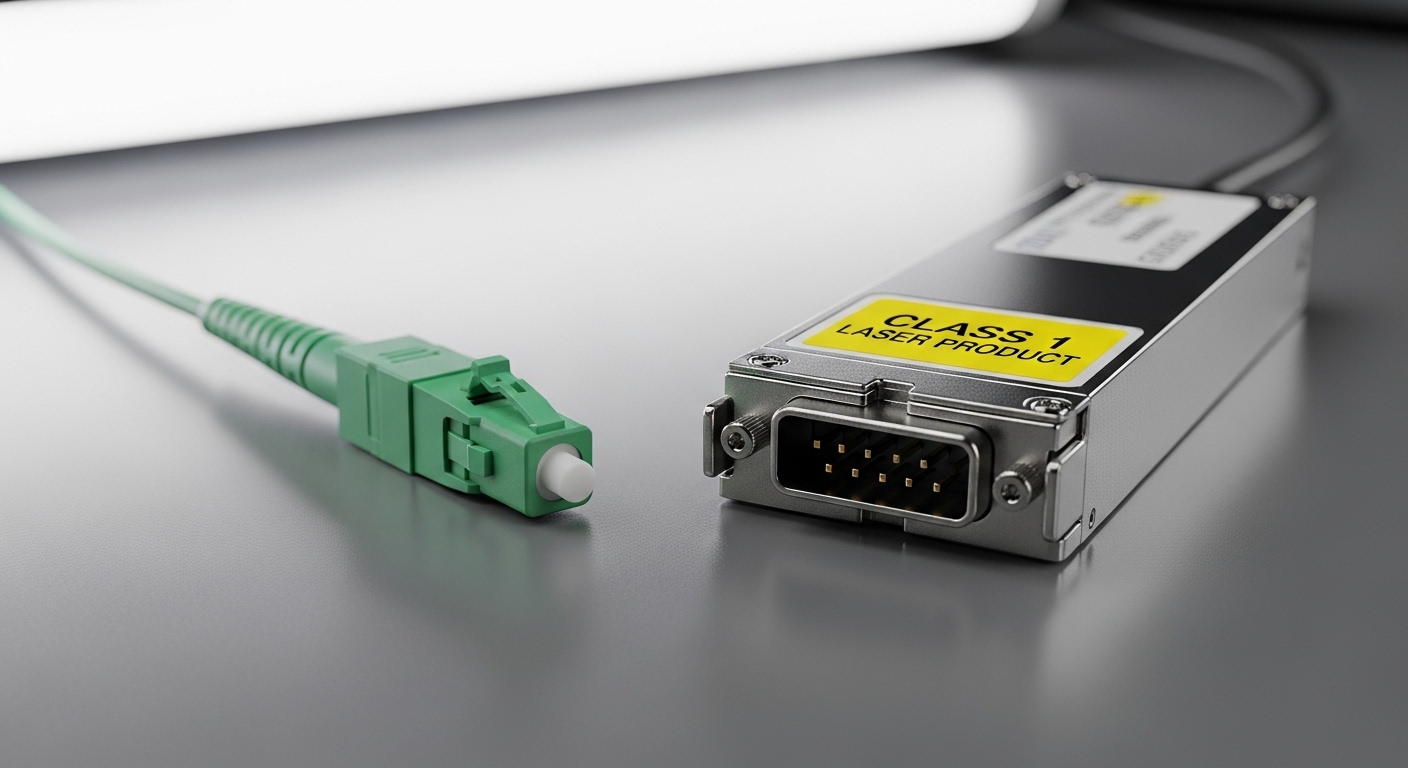
Think of the upgrade like replacing lanes on a highway: the new lanes only pay off if the entrances, road markings, and speed limits match. For 800G upgrade ROI, the biggest cost levers are (1) transceiver purchase cost and spares, (2) installation and downtime window length, and (3) the probability of rework due to optics incompatibility or marginal fiber. In practice, engineers target a deployment plan that minimizes module swaps and keeps optics selection aligned to the switch vendor’s electrical interface requirements.
Measure what you already have before buying optics
- Port inventory: confirm switch model, line card, and whether ports are natively 800G or require a specific breakout mode.
- Fiber plant: document link distances, existing MPO/MTP polarity conventions, and attenuation targets.
- Dominant failure sources: track past incidents by root cause (bad patch cord, dirty ferrules, DOM mismatch, temperature out of spec).
If you cannot guarantee these inputs, the cheapest transceiver option can become expensive after failed bring-up and replacement shipping.
Pro Tip: In many real deployments, the fastest path to ROI is not “cheapest optics,” but “lowest operational risk.” Choose modules with deterministic DOM behavior and verify temperature range against your rack airflow plan before ordering a full spares pool.
800G optics and compatibility: what actually drives cost
Cost varies mainly by wavelength, reach class, connector standard, and whether the module is designed for the exact host interface. Most 800G deployments use coherent or direct-detect optics depending on distance and economics; for typical data center short reach, direct-detect multimode is common when the fiber plant supports it. For vendor compatibility, always consult the host switch optics matrix and confirm DOM support expectations.
Key spec comparison (short-reach planning)
The table below illustrates how the same 800G upgrade intent can lead to different purchasing decisions based on reach and connector type. Values are representative of common market offerings; confirm exact specs in each vendor datasheet.
| Module type (example class) | Data rate | Wavelength | Reach class | Connector | Typical power | Operating temperature |
|---|---|---|---|---|---|---|
| 800G SR8-class (multimode) | 800G (8x lanes) | 850 nm nominal | Up to ~100 m on OM4/OM5 (depends on link budget) | MPO-16 (row/parallel mapping varies) | ~10-15 W class | 0 to 70 C (verify) |
| 800G FR8-class (single-mode) | 800G (8x lanes) | ~1310 nm band | Up to a few km (depends on module and fiber) | LC (often 8-fiber or breakout) | ~8-12 W class | -5 to 70 C (verify) |
| 800G ER8-class (single-mode) | 800G (8x lanes) | ~1550 nm band | 10 km class (vendor-specific) | LC | ~7-11 W class | -5 to 70 C (verify) |
When budgeting, remember that reach class affects not only optics price but also whether you can reuse existing patch panels and cabling. If you must re-cable, that installation labor can dominate optics cost.
Deployment scenario: where ROI is won
In a 3-tier data center leaf-spine topology, a team upgraded 48-port ToR switches to support an 800G upgrade on uplinks. They had 20 uplink links needing 60 to 70 m spans across the row using OM4; patch cords and polarity were already standardized. They selected an 800G SR8-class multimode option for all within-OM4 links and reserved single-mode FR8 optics only for two cross-row paths at 180 m where OM4 would not meet the margin. Result: fewer optics SKUs, a shorter staging window, and no rework due to connector mapping because they validated polarity end-to-end before the cutover.
Selection criteria and decision checklist
Use this ordered list to prevent expensive surprises during bring-up.
- Distance and link budget margin: verify attenuation and connector loss; do not target “max reach” on paper.
- Switch compatibility: confirm the exact host model and line card optics support list; test one module per vendor SKU if possible.
- Connector and polarity mapping: validate MPO/MTP polarity, lane mapping, and whether the module expects a specific polarity convention.
- DOM and diagnostics: confirm supported readings (temp, bias, tx power, rx power, alarms) and how the switch interprets them.
- Operating temperature: compare module temperature range to measured rack inlet and internal airflow; avoid “typical” assumptions.
- Vendor lock-in risk: price OEM vs third-party, but also include the risk cost of failed compatibility and support escalation delays.
Common mistakes and troubleshooting tips
These failure modes show up repeatedly in field deployments of an 800G upgrade.
-
Mistake: Buying optics based only on reach headline numbers.
Root cause: Link budget mismatch from aging patch cords, extra mated connectors, or insufficient margin.
Fix: Measure fiber loss, include connector and patch cord losses, and verify rx power thresholds using the switch DOM readings after install. -
Mistake: Ignoring MPO polarity and lane mapping.
Root cause: Transmit/receive lane reversal or incorrect polarity keying leading to no link or intermittent FEC failures.
Fix: Validate with an MPO polarity test method, then confirm link training success and check for port-side FEC or error counters. -
Mistake: Skipping optical cleaning and inspection.
Root cause: Dirty ferrules causing high insertion loss and receiver overload or low rx power.
Fix: Use proper fiber inspection tools, clean with approved procedures, re-seat connectors, and retest under the same DOM conditions. -
Mistake: Assuming third-party modules behave identically to OEM for DOM alarms.
Root cause: Differences in DOM scaling, threshold defaults, or switch interpretation causing false alarms or link drops.
Fix: Pilot-test one module per SKU in the target switch, confirm alarm interpretation, and align thresholds if supported by the platform.
Cost, ROI, and TCO notes (OEM vs third-party)
Pricing varies by market and volume, but in many enterprise and colocation environments, short-reach 800G optics often land in the mid-hundreds to low-thousands of dollars per module, while longer-reach single-mode variants can be higher. ROI comes from reducing downtime and rework: a single failed cutover can cost far more than the delta between OEM and third-party optics. For TCO, include spares strategy (how many modules to hold), expected failure rates, and the cost of compatibility testing time. If you can keep to one or two optics SKUs that match your fiber classes, you reduce both inventory complexity and operational risk.
FAQ
What does “800G upgrade” planning change versus 400G?
It changes the optics mix and the operational risk profile: more parallel lanes increase the impact of polarity and fiber loss. You also need tighter alignment between module DOM behavior and the switch platform’s diagnostics. Start with a pilot test on one rack pair before scaling.
Can I reuse existing MPO cabling for an 800G upgrade?
Often yes if the fiber class and link distances are within margin and the polarity convention is correct. Reuse tends to be ROI-positive when patch panels and polarity labeling are already standardized. If you see frequent trouble at 400G, treat that as a warning to re-verify cleaning and loss before going to 800G.
How do I choose between SR and FR optics for ROI?
Choose SR when your measured link budget supports it; SR typically reduces connector and infrastructure complexity. Choose FR when distance or margin forces it, but limit FR to only the links that truly require it to avoid SKU sprawl. Use the switch optics matrix to ensure compatibility for the exact host model.
What DOM checks should I perform after installation?
Verify that temperature is within range, tx power and rx power are stable, and that alarm thresholds do not immediately trigger. Then check link training success and monitor error counters for a defined soak period. If you observe frequent link flaps, correlate with rx power margin and connector re-seating.
Are third-party 800G optics safe for production?
They can be, but you must validate compatibility on the target switch model and line card. The risk is not only link bring-up; it is also supportability when alarms behave differently. Run a pilot with at least a representative sample of transceiver SKUs and record DOM readings.
Which standards should I reference?
For Ethernet PHY behavior, engineers often reference IEEE 802.3 and the relevant optical interface documentation from vendors and platform integrators. For cabling practices, ANSI/TIA guidance helps with installation and test methodology. Always prioritize the specific switch vendor’s optics compatibility documentation.
.wpacs-related{margin:2.5em 0 1em;padding:0;border-top:2px solid #e5e7eb} .wpacs-related h3{margin:.8em 0 .6em;font-size:1em;font-weight:700;color:#374151;text-transform:uppercase;letter-spacing:.06em} .wpacs-related-grid{display:grid;grid-template-columns:repeat(auto-fill,minmax(200px,1fr));gap:1rem;margin:0} .wpacs-related-card{display:flex;flex-direction:column;background:#f9fafb;border:1px solid #e5e7eb;border-radius:6px;overflow:hidden;text-decoration:none;color:inherit;transition:box-shadow .15s} .wpacs-related-card:hover{box-shadow:0 2px 12px rgba(0,0,0,.1);text-decoration:none} .wpacs-related-card-img{width:100%;height:110px;object-fit:cover;background:#e5e7eb} .wpacs-related-card-img-placeholder{width:100%;height:110px;background:linear-gradient(135deg,#e5e7eb 0%,#d1d5db 100%);display:flex;align-items:center;justify-content:center;color:#9ca3af;font-size:2em} .wpacs-related-card-title{padding:.6em .75em .75em;font-size:.82em;font-weight:600;line-height:1.35;color:#1f2937} @media(max-width:480px){.wpacs-related-grid{grid-template-columns:1fr 1fr}}