
If you are running 400G in a high-density data center, the path to an 800G transition is not just “swap the transceiver.” This guide helps network and field engineers plan optics, cabling, and interoperability so migrations land with predictable link power, clean eye margins, and minimal outages. You will get selection checklists, a spec comparison table, and hands-on troubleshooting patterns drawn from real deployments.
Why the 800G transition stresses optics more than switching
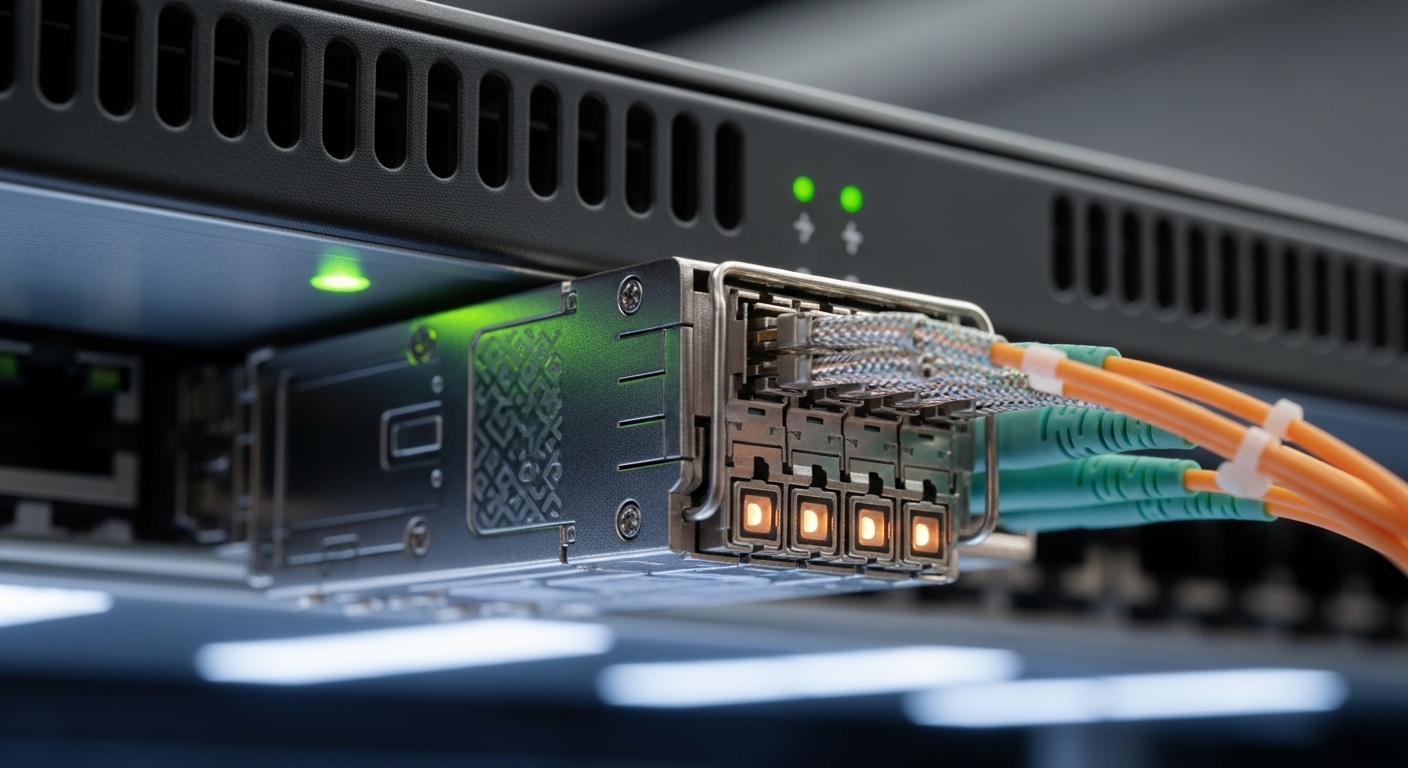
Moving from 400G to 800G transition typically changes the optical interface behavior: you may keep the same chassis footprint, but you must match wavelength plan, lane mapping, and transmitter/receiver power budgets. In many real leaf-spine networks, the switch line card supports 400G optics today, while the 800G upgrade demands a different optical technology class (for example, PAM4-based approaches or different multiplexing strategies depending on vendor). Even when the connector type looks the same, the link budget is tighter and the allowable optical power drift is smaller.
At the physical layer, IEEE 802.3 defines Ethernet PHY classes and signaling behavior; your transceiver must comply with the relevant 800G Ethernet optical PHY requirements for lane rates, FEC expectations, and link initialization behavior. For engineers, the practical takeaway is simple: validate the switch vendor’s compatibility matrix, then validate the optical budget with actual measured Tx power and Rx sensitivity from the DOM.
For standards context, start with Ethernet PHY definitions in IEEE 802.3 and vendor datasheets for the specific 800G optical module family. Field experience shows that “it lights up” does not equal “it will stay error-free under temperature swings.”
Core optics choices: what changes from 400G to 800G
The 400G era commonly used single 8-lane or 4-lane patterns depending on the module generation, while the 800G transition often consolidates more capacity per cable plant or per module. That consolidation changes how many optical channels exist, how they are combined, and how tolerant the system is to connector insertion loss and patch cord quality.
Common module families you will see in 800G planning
- Co-packaged coherent (where applicable): usually for longer reach or specific architectures; higher cost and stricter tuning.
- Direct-detect multi-lane optics: designed for short to intermediate reach; simpler operational model but requires careful power budgeting.
- WDM-based approaches: can increase capacity per fiber pair but require matching wavelength plans and strict filtering compatibility.
Spec comparison snapshot (how to read it fast)
Below is a compact comparison of the key engineering parameters you should extract from datasheets and DOM outputs. Exact values depend on vendor part number, but the decision logic stays the same.
| Spec item | What to check for 400G | What changes in 800G transition planning |
|---|---|---|
| Data rate / PHY | 400G Ethernet optical PHY class | 800G Ethernet PHY class; lane mapping and FEC behavior may differ |
| Reach (typical) | Short reach options for ToR/leaf | Short/intermediate reach may tighten margin; verify budget with worst-case temps |
| Wavelength plan | Often a simpler wavelength set | More channels or different multiplexing; confirm wavelength compatibility end-to-end |
| Connector type | LC duplex common | LC duplex may remain, but insertion loss limits can tighten; inspect ferrules |
| Optical power range | Tx and Rx ranges documented | Budget is tighter; verify DOM Tx bias, Tx power, Rx power, and alarm thresholds |
| Receiver sensitivity | Measured sensitivity at target BER | Margin shrinks; confirm FEC mode and required optical input power |
| Operating temperature | Commercial or extended | 800G modules may be more sensitive to thermal drift; confirm spec for your environment |
| DOM support | Basic monitoring | DOM thresholds matter for alarms; confirm vendor supports your switch DOM expectations |
Hands-on deployment: a realistic 800G transition in a leaf-spine fabric
Picture a 3-tier data center leaf-spine topology with 48-port 10G ToR switches uplinking to spine routers, and an upgrade path toward higher east-west capacity. In one common migration plan, the operator initially uses 400G links between top-of-rack and spine to aggregate traffic from dense GPU servers. During the 800G transition, they replace selected spine line cards and optics on specific paths first: for example, four uplink pairs per leaf, totaling 96 active links per row group.
In the cutover window, field teams typically perform: (1) DOM pre-checks on current 400G modules, (2) optical budget calculations for the exact fiber routes, then (3) live swapping optics with a staged rollback plan. A practical metric: engineers often log Rx power and error counters immediately after link up, then again after 30 minutes and after thermal stabilization. If Rx power drifts near the lower threshold, you will see it as higher FEC correction counts or rising BER proxies before outright link drops.
Selection criteria checklist engineers actually use
When you plan the 800G transition, follow an ordered checklist. Skipping steps is the fastest route to flapping links, intermittent CRC bursts, and costly truck-rolls.
- Distance and fiber type: confirm multimode vs singlemode, patch cord lengths, and worst-case insertion loss. Use measured OTDR where possible.
- Switch compatibility matrix: verify the exact switch model and line card SKU support the chosen 800G module family. Many “works in lab” optics fail in production due to strict initialization timing.
- DOM and alarm thresholds: ensure the switch reads DOM fields correctly (vendor-specific thresholds can trigger nuisance alarms).
- Operating temperature: match module temperature grade to your aisle airflow and top-of-rack thermal profile. Extended temperature modules are not optional in hot aisles.
- Vendor lock-in risk: decide whether you accept OEM-only optics or allow third-party modules. If you do allow third-party, require documented compatibility and test results with your exact switch firmware.
- FEC and optics mode: confirm the PHY/FEC mode is supported end-to-end. Mismatched FEC expectations can cause persistent errors even when link stays up.
- Power budget margin: compute worst-case Tx power minus fiber loss plus connector loss, then compare to receiver sensitivity at the specified BER target and temperature.
Pro Tip: In field installs, the most reliable early-warning signal is not “link up,” but the DOM-reported Rx power trend versus temperature. Log Rx power at link bring-up, then again after airflow changes; a small downward drift can predict future error bursts long before users notice congestion.
Common mistakes and troubleshooting patterns during 800G transition
Even experienced teams hit predictable failure modes during an 800G transition. Here are the most common pitfalls with root causes and fixes.
Link comes up, then flaps under load
Root cause: insufficient optical margin from patch cord insertion loss, dirty LC ferrules, or aging in MPO/LC assemblies. The link may pass initial bring-up but fail as thermal drift increases Tx bias changes.
Solution: clean connectors with approved lint-free wipes and isopropyl alcohol, re-seat the transceivers, and re-measure end-to-end loss. Confirm Rx power stays inside the vendor’s recommended operating window across your temperature range.
High FEC correction counts with no obvious link errors
Root cause: FEC mode mismatch, suboptimal optical budget, or lane mapping differences that force extra correction. Some platforms show CRC bursts late, not immediately.
Solution: verify PHY/FEC configuration on both ends and check vendor guidance for supported FEC modes. Compare DOM Tx/Rx power to expected values and test with a known-good reference patch path.
Nuisance DOM alarms or “incompatible module” messages
Root cause: DOM field interpretation differences, unsupported transceiver vendor, or firmware incompatibility. Some switches enforce stricter vendor IDs or calibration ranges for 800G optics.
Solution: update switch firmware to the version validated for the module family, then retest in a controlled staging port. If you use third-party optics, require a test report from the optics vendor against your switch SKU and firmware.
Works on one port, fails on another in the same chassis
Root cause: port-level hardware differences, inconsistent lane mapping wiring, or wrong breakout/cabling pattern. In 800G, small mapping errors can still light up but fail under specific traffic profiles.
Solution: confirm port-to-transceiver mapping documentation from the switch vendor, validate transceiver orientation and cable assignment, and use a loopback test if supported by the module/switch.
Cost and ROI reality check for the 800G transition
Pricing varies heavily by reach, vendor, and whether you choose OEM or third-party. In many markets, you can expect a broad range: short-reach 800G optics may be priced several hundred to over a thousand USD per module, while longer-reach or coherent-capable options can cost significantly more.
For TCO, include: module purchase price, expected failure rate over the first year, labor time for staged swaps, and the cost of downtime during cutovers. OEM optics often reduce compatibility risk and speed up RMA handling; third-party optics can lower capex but raise validation time. If you can reuse existing fiber trunks and only change transceivers, ROI improves dramatically; if you must re-cable due to reach limits, the TCO equation shifts quickly.
For reference on Ethernet PHY behavior and interoperability considerations, consult [Source: IEEE 802.3] and the specific vendor datasheet for the exact 800G module part number you plan to deploy. Also cross-check with your switch vendor’s compatibility documentation.
FAQ
What does an 800G transition change at the physical layer?
It changes the optical PHY requirements, including lane rates, FEC expectations, and the optical power budget tightness. Even when connectors look identical, the transceiver’s internal signaling and calibration can differ.
Can I reuse the same fiber cabling from 400G to support 800G?
Often yes for short reach, but you must re-check worst-case insertion loss, connector cleanliness, and patch cord quality. Use measured loss data or OTDR to confirm margin across temperature.
How do I verify compatibility before buying 800G optics?
Start with the switch vendor’s compatibility matrix for the exact switch model and line card SKU, then validate with firmware versions. Require DOM field compatibility and confirm supported FEC modes in the vendor documentation.
What DOM values should I track after the 800G transition?
Track Tx power, Rx power, temperature, and any alarm or warning thresholds reported by DOM. Log them at bring-up and after thermal stabilization to catch drift early.
Are third-party optics safe for 800G deployments?
They can be, but only if the vendor provides documented compatibility with your switch SKU and firmware. Expect extra staging-test time, especially for error counters and FEC behavior under load.
What is the fastest troubleshooting step when 800G links fail intermittently?
Clean and re-seat connectors, then compare DOM Rx power against expected values. If Rx power is near the lower limit, fix the optical budget first before touching switch configuration.
Bottom line: plan the 800G transition as a system change—optics, firmware, fiber loss, and DOM behavior all interact. If you want the next step, review How to calculate optical power budgets for multi-lane transceivers and build a repeatable budget-and-test workflow.
Author Bio: I am an electronics and optical network specialist who has deployed multi-vendor transceivers in production data centers, focusing on measured link budgets and DOM-driven validation. I write migration playbooks that field engineers can execute under cutover constraints.
