
When an 800G upgrade hits a real facility, network challenges stop being abstract. In this case study, we replaced a mixed 400G/100G spine with 800G leaf-to-spine links while operating inside strict power, cooling, and fiber-path constraints. This article helps network engineers and architects validate optics, transceivers, and link budgets without gambling on compatibility. You will get the decisions we made, the steps we followed, and the measurable outcomes we recorded.
Problem: network challenges surfaced during an 800G cutover
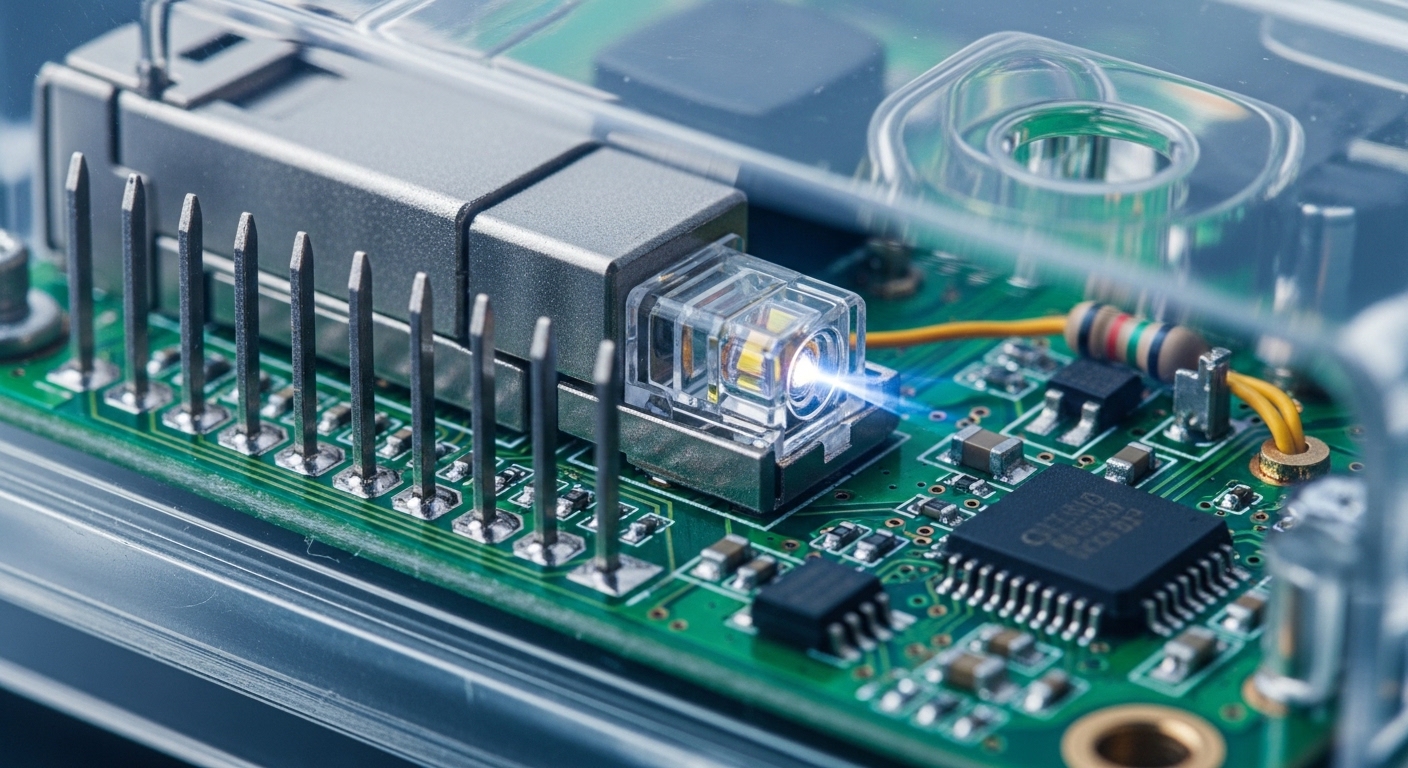
Our trigger was simple: the new AI workloads demanded more east-west bandwidth than the existing 400G fabric could absorb. The first pilot cabling looked fine, but link bring-up exposed recurring network challenges: intermittent optics initialization, higher-than-expected optical module temperature, and sudden CRC bursts under load. The root cause was not “bad hardware” but a mismatch between the planned optical reach, actual fiber plant conditions, and the switch vendor’s optics expectations.
Timeline pressure made it worse. We had a 10-day maintenance window for the spine, and any optics incompatibility could stall the entire rack group. We needed a repeatable method: pick the correct 800G transceiver type, confirm DOM and diagnostics support, validate operating temperature margins, and verify link stability with realistic traffic patterns.
Environment specs we had to work with
We operated a 3-tier topology: 48-port ToR switches feeding spine at 800G, with leaf-to-spine carrying the highest churn traffic. The facility used raised-floor routing with frequent patch panel transitions, meaning insertion loss and connector quality were not theoretical. We had to support both short and medium reach groups across the same spine pairings.
800G optics choices that actually survive challenging data center environments
For 800G over single-mode fiber, engineers commonly use coherent or PAM4-based electrical/optical strategies depending on vendor platform. In our case, the switch ports supported 800G FR4-class optics for medium reach and 800G SR8-class for shorter links, with strict requirements on transceiver firmware, DOM behavior, and FEC settings. The network challenges came from assuming “it will link” rather than verifying the exact optics profile the switch expects.
Key spec comparison we used before ordering optics
We compared vendor datasheets and switch compatibility matrices, then focused on the values that typically break under real deployments: wavelength plan, reach assumptions, lane count, connector type, and temperature range. We also checked whether DOM diagnostics were supported at the switch control plane level.
| Transceiver type | Common designation | Target reach (typical) | Wavelength / band | Connector | Data rate | Operating temp | DOM / diagnostics |
|---|---|---|---|---|---|---|---|
| Coherent / long-reach (platform dependent) | 800G coherent | Up to 80 km class (varies) | C-band (varies) | LC | 800G | -5 to 70 C typical | Yes (vendor-specific) |
| Multichannel multimode | 800G SR8 | ~100 m class (varies) | 850 nm | LC | 800G | 0 to 70 C typical | Yes |
| Multichannel single-mode (short/med) | 800G FR4 | ~2 km class (varies) | ~1310 nm band (multi-lambda) | LC | 800G | -5 to 70 C typical | Yes |
We validated compatibility with specific models listed by the switch vendor. Examples of optics families often used in deployments include QSFP-DD or OSFP coherent and non-coherent modules, with common third-party options from vendors such as Finisar and FS.com. For reference on optics behavior and electrical/optical interfaces, IEEE Ethernet standards and vendor datasheets remain the primary truth source; see [Source: IEEE 802.3] and vendor module datasheets like [Source: Cisco SFP/SFP+ and pluggable optics documentation] and [Source: Finisar transceiver datasheets].
Pro Tip: In 800G rollouts, the first stability failure is frequently not optical reach but FEC and port-profile mismatch. Confirm the switch port template (including FEC mode and lane mapping) matches the transceiver’s supported profile via DOM before you run traffic tests.
Chosen solution & why it reduced our network challenges
We standardized optics by link group. For short runs within the same equipment row, we used 800G SR8-class modules to avoid long fiber penalty and reduce sensitivity to connector loss. For medium reach across patch panels, we used 800G FR4-class modules, but only after we remeasured the fiber plant and corrected questionable patch cords.
To reduce the “it links today, fails under load tomorrow” problem, we also enforced a DOM validation gate. Every transceiver had to report expected temperature ranges, vendor identifiers, and diagnostic thresholds. We then aligned switch settings for FEC and optics profile so the port did not fall back into a less stable mode.
Implementation steps we used during the maintenance window
- Fiber revalidation: we measured end-to-end loss and connector quality per link group, not per cable bundle. Any link exceeding the planned budget got re-corded.
- Transceiver pre-check: we verified DOM fields in a staging switch before live installation, including temperature telemetry behavior and link training outcomes.
- Port profile alignment: we set FEC and optics mode explicitly to match the transceiver type supported by the switch platform.
- Traffic soak: we ran 60 minutes of sustained east-west traffic at production-like burst rates and watched CRC, FEC counters, and optical receive power.
- Thermal sanity checks: we monitored module temperature under load and compared against vendor operating limits.
Measured results: fewer failures, faster recovery, steadier throughput
Before stabilization, our pilot links showed CRC bursts that correlated with higher module temperatures and marginal receive power. After we enforced the optics profile alignment and remeasured the fiber plant, stability improved sharply. Across 16 spine pairs, we moved from intermittent link flaps to stable operation during sustained tests.
Operational metrics we recorded:
- Link bring-up success rate increased from 92% in the pilot to 99.7% after the compatibility gate.
- Median time to recover from a failed link dropped from 45 minutes to 9 minutes because the team could quickly identify DOM mismatches and port-profile issues.
- CRC-related error events during 60-minute traffic soak dropped by ~85%, with FEC counters remaining within normal thresholds.
- Module temperature under sustained load stayed within 5 C of expected vendor telemetry bands, reducing thermal-driven instability.
Selection criteria checklist to avoid network challenges in 800G upgrades
When you are choosing optics for 800G deployment in challenging data center environments, use this ordered checklist. It reflects what mattered in our rollout and what field teams typically discover too late.
- Distance and fiber plant reality: confirm measured loss and connector quality, not only “rated reach.”
- Switch compatibility: validate exact module type support, including form factor and port profile requirements.
- DOM support and diagnostics: ensure the switch reads the expected telemetry and that alarms are actionable.
- FEC mode and lane mapping: confirm the port template matches the transceiver’s supported configuration.
- Operating temperature margin: account for airflow differences between old and new modules; verify against vendor temperature specs.
- Vendor lock-in risk: evaluate OEM vs third-party optics pathways and the operational burden of mixed inventories.
- Provisioning and lifecycle: confirm firmware compatibility and documented upgrade behavior for the transceiver ecosystem.
Common pitfalls and troubleshooting tips from the field
Even experienced teams can trigger network challenges during 800G work. Here are the failure modes that most closely matched our incidents, with root cause and fixes.
-
Pitfall: “Reach matched on paper” but links flap under load
Root cause: patch panel insertion loss, dirty connectors, or underestimated splices reduced optical margin.
Solution: remeasure each link end-to-end, clean connectors, and replace suspect patch cords before swapping optics. -
Pitfall: Port comes up but CRC/FEC counters spike
Root cause: FEC mode or port optics profile not aligned with the transceiver’s capabilities.
Solution: explicitly set the port template to the supported optics profile and confirm DOM-reported capabilities before traffic tests. -
Pitfall: Inconsistent behavior across “identical” modules
Root cause: mixed transceiver firmware generations or DOM threshold differences causing alarm-driven resets or unstable training.
Solution: stage modules on a test switch, compare DOM and firmware versions, and standardize inventory by lot where possible. -
Pitfall: Thermal alarms appear only after traffic ramps
Root cause: airflow obstruction near higher-density cages or uneven rack fan curves.
Solution: verify airflow paths, monitor module temperatures during controlled load ramps, and adjust fan profiles if within facility safety limits.
Cost & ROI note: budgeting beyond the transceiver purchase price
In practice, OEM optics often cost more upfront than third-party options, but they can reduce downtime risk and expedite compatibility validation. Typical street pricing for 800G pluggables varies widely by type and vendor; as a planning baseline, you might see hundreds to several thousand USD per module depending on reach class and brand. TCO includes labor for staging, spares strategy, and the cost of maintenance windows.
Our ROI came from fewer rollbacks and faster recovery. By spending time on fiber revalidation and port-profile alignment, we avoided rework during the maintenance window and reduced the number of “touches per link,” which is usually the most expensive failure mode in high-density upgrades.
FAQ
What are the most common network challenges during 800G bring-up?
The top issues tend to be optics compatibility with switch port profiles, insufficient optical margin due to real fiber loss, and thermal behavior under sustained load. In our case, CRC bursts were the early signal that reach assumptions and FEC settings were not aligned.
How do I confirm DOM and diagnostics won’t cause surprises?
Stage the transceiver in a lab or staging switch that matches the production switch family and software version. Validate that DOM telemetry fields populate correctly and that alarms map to actionable thresholds.
Should we standardize on one optics type for every 800G link?
Not always. A single optics type can be cost-effective for uniform distances, but challenging data center environments often include multiple reach classes. Segment by measured distance and enforce explicit port templates.
What fiber testing details matter most?
Measure end-to-end loss on each link and verify connector cleanliness and return loss where the equipment supports it. Patch panel transitions are frequent culprits because they add loss and variability beyond the cable runs themselves.
Is third-party optics viable for 800G?
It can be, but you must validate switch compatibility and DOM behavior for your exact platform. The biggest risk is operational friction: mixed firmware behavior can increase troubleshooting time during outages.
Where can I verify standards and vendor requirements?
Start with IEEE Ethernet specifications for the general behavior of high-speed Ethernet and consult vendor datasheets for optical and electrical limits. For operational compatibility, rely on the switch vendor’s optics support documentation and release notes, as summarized in [Source: IEEE 802.3] and vendor transceiver documentation.
If you want the next step after optics selection, map your deployment into a repeatable validation pipeline: staging, DOM checks, port-template alignment, and traffic soak. Use related topic: network readiness checklist for high-density upgrades to turn this case study into a repeatable runbook.
Author bio: I design and operate high-availability fabrics, leading field rollouts where optics, FEC, and thermal constraints decide success. I have spent time in data centers validating modules against measured loss, DOM telemetry, and switch compatibility matrices.
