
If you run a leaf-spine fabric or high-throughput spine uplinks, the shift from 400G to 800G upgrade is no longer just a capacity story; it is an operations and procurement story. This article helps network and infrastructure engineers quantify ROI, compare upgrade paths, and avoid the common failure modes that quietly erase savings. You will get a practical decision checklist, a deployment scenario with numbers, and a head-to-head comparison of the main options vendors offer.
Why the 800G upgrade changes ROI math versus 400G
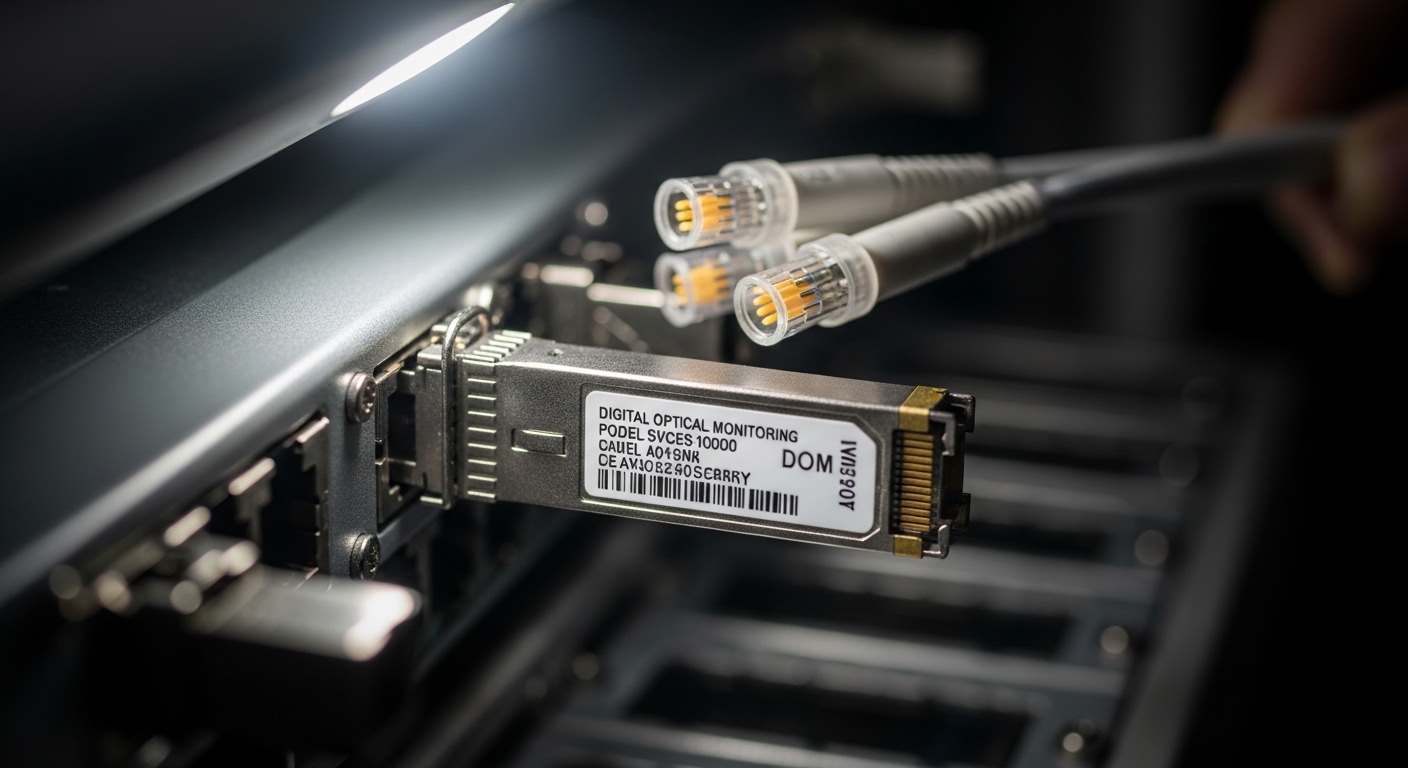
At a high level, the ROI case for an 800G upgrade is driven by fewer oversubscription constraints, higher per-link throughput, and the ability to keep application headroom longer. In practice, your ROI hinges on three cost buckets: optics and switch line-card pricing, installation and downtime, and ongoing power plus cooling impact. IEEE 802.3 defines the Ethernet physical-layer behavior for these high-speed links, but vendor datasheets govern the real-world operating margins, reach, and DOM telemetry support across temperature ranges. For standards context, see Source: IEEE 802.3 and for optics guidance, consult Source: SNIA.
ROI model engineers actually use in enterprise refresh cycles
Most teams model a 3 to 5 year horizon because line cards and optics are typically amortized alongside the fabric refresh. A realistic model uses: (1) capex for switch port activation plus transceivers, (2) opex for power and cooling, and (3) labor and risk costs for maintenance windows. Example inputs you can plug in: power per port for 400G versus 800G line-rate operation, expected failure and swap labor rates, and the value of avoided congestion events (often captured as reduced packet loss and fewer application slowdowns). If your organization tracks utilization SLOs, you can map “congestion hours” to business impact more credibly than generic “bandwidth growth.”
Pro Tip: In field rollouts, the biggest ROI swing often comes from how many ports you can replace rather than how many total watts you save. If your traffic is constrained by oversubscription at the spine uplinks, moving to 800G can reduce the number of parallel flows that contend for the same bottleneck, lowering retransmissions and improving effective throughput even when raw link utilization looks similar.
400G to 800G upgrade paths: performance and reach tradeoffs
Before you compare costs, compare what “800G” means in your environment: short-reach optics for data center fiber, longer-reach options for campus, and the exact connector and wavelength pairings your switch supports. Many enterprises start with SR (short reach) for leaf-spine and then decide whether LR/ER is needed for any cross-building links. Vendor compatibility matters because the switch vendor may require specific optics families and may enforce transceiver capability checks at boot.
Key optics parameters that affect real feasibility
For an 800G upgrade, the operational parameters that most often break deployments are reach budget, lane/encoding expectations, DOM telemetry availability, and temperature performance. If your current 400G deployment uses a particular transceiver brand or DOM profile, you must verify that the 800G optics you plan to install deliver the same telemetry fields and alarm thresholds required by your monitoring stack. Also confirm whether your switch ports are configured for a specific optics type (for example, vendor-specific “optics profile” settings) because “it fits physically” does not guarantee it trains and stabilizes correctly.
| Parameter | Typical 400G SR option | Typical 800G SR option | What to verify in your switch |
|---|---|---|---|
| Data rate | 400G Ethernet | 800G Ethernet | Port capability and supported lane mapping |
| Wavelength | 850 nm (SR) | 850 nm (SR) | Switch optics compatibility matrix |
| Reach (OM4) | Often up to about 100 m class | Often about 70 m class (varies by vendor) | Actual installed fiber grade, patch loss, and splitter/connector losses |
| Connector | LC duplex (common in SR) | LC duplex (common in SR) | Transceiver form factor and polarity labeling |
| Power (typical) | ~a few watts per module | ~higher than 400G; still optimized vs older generations | Power budget per chassis and PSU/thermal headroom |
| DOM/telemetry | Commonly supported | Commonly supported; field names vary | Monitoring integration and alarm thresholds |
| Operating temperature | Vendor-specific industrial ranges | Vendor-specific industrial ranges | Confirm in the switch and optics datasheets |
[[IMAGE:A realistic product-focused photography scene of two server racks in a modern data center aisle, showing a top-of-rack switch with blank transceiver cages and a technician installing a fiber optic module; foreground shows an 800G SR optical transceiver with LC connectors, gloved hands, braided fiber patch cords, cool white overhead lighting, shallow depth of field, high detail, documentary style, no visible brand logos.]
Cost and ROI comparison: OEM optics versus third-party modules
The capex line for optics is usually the largest immediate cost in an 800G upgrade, but it is not the only one. OEM optics can reduce integration friction because they match the switch vendor’s validation pipeline, which lowers the probability of bring-up delays. Third-party modules can cut unit price, yet the ROI becomes sensitive to the risk of incompatibility, different DOM behavior, and higher failure rates in a specific operating environment. For real-world comparisons, consult the transceiver vendor datasheets and the switch vendor’s certified optics list before you commit.
ROI levers you can quantify
Use a simple worksheet: total cost of ownership equals (module purchase cost + installation labor + expected downtime cost) plus (power and cooling over the amortization period) plus (expected replacement and warranty friction). Power and cooling can dominate if you scale from a pilot to the whole fabric: 800G modules may consume more per port than 400G modules, but fewer ports can still reduce total chassis and cabling overhead. Downtime cost is often underestimated; even a small maintenance window can add labor and risk if link training fails and you must reseat optics or re-check polarity and patch loss.
Compatibility caveats that change ROI outcomes
Switch vendors frequently enforce optics capability discovery during link bring-up. If your 400G setup already uses non-OEM optics, you may be comfortable with that approach, but an 800G upgrade introduces new form factors and potentially different lane configurations that can trigger “unsupported optics” states. If you are using Cisco SFP-10G-SR style legacy examples, note that modern 800G typically uses different module types than 10G-era optics; your compatibility matrix must be current. Example 10G SR part numbers like Cisco SFP-10G-SR, Finisar FTLX8571D3BCL, or FS.com SFP-10GSR-85 illustrate how quickly part ecosystems diverge across generations; do not assume naming continuity across 400G to 800G.
Decision checklist: how engineers choose an 800G upgrade option
Use this ordered checklist during procurement and change planning for an 800G upgrade from 400G. It is designed to prevent “cheap optics, expensive delay” outcomes.
- Distance and reach budget: confirm fiber grade (OM3/OM4/OM5), patch loss, splitter loss (if any), and connector cleanliness. Recalculate with your actual measured dB margins.
- Switch compatibility: verify the exact switch model and port profile supports the target 800G optics family; check the certified optics list.
- DOM support and monitoring: ensure your NMS can parse alarms and metrics from the module; validate field names and thresholds.
- Operating temperature and airflow: confirm the optics temperature rating and that your chassis meets thermal design under peak load.
- Budget and warranty: compare total warranty coverage, RMA turnaround time, and whether you can get spares quickly.
- Vendor lock-in risk: estimate the future cost of revalidation and whether you can standardize on a multi-vendor optics strategy.
- Migration plan: plan a staged rollout with rollback steps, including how you will handle link training failures.
Common pitfalls and troubleshooting during an 800G upgrade
Even strong teams run into predictable issues when moving from 400G to 800G. Below are concrete failure modes with root causes and fixes that show up in real maintenance windows.
Pitfall 1: Reach miscalculation despite “datasheet matches”
Root cause: patch cords, connectors, and splices add insertion loss beyond what the datasheet assumes. A 70 m class SR link can fail when the real path includes extra patch panels or degraded connectors.
Solution: measure end-to-end loss with an OTDR or calibrated optical power meter, clean connectors (IPA-safe procedure), and verify polarity and mating cleanliness before reseating optics.
Pitfall 2: DOM telemetry mismatch breaks monitoring and automation
Root cause: your NMS expects certain DOM fields or alarm thresholds; a third-party module may expose equivalent metrics under different labels or with different scaling.
Solution: run a pilot with the exact monitoring integration in a lab or staging rack, confirm alarms for laser bias current, temperature, and optical power, and update parsing rules if needed.
Pitfall 3: Link bring-up failures from unsupported optics profiles
Root cause: the switch requires a specific optics profile or capability set for 800G training. The module may physically fit but fail capability negotiation.
Solution: check the switch logs for optics capability discovery errors, confirm the optics are on the vendor-supported list, and align the port configuration to the supported optics mode.
Pitfall 4: Thermal headroom surprises under peak traffic
Root cause: 800G modules can increase localized heat, and airflow patterns can differ from the earlier 400G layout, especially if you change port density or oversubscription strategy.
Solution: validate chassis fan curves, verify inlet temperatures, and confirm optics temperature readings from DOM remain within spec during traffic tests.
[[IMAGE:Concept art style illustration of a network “heat map” overlay on a leaf-spine fabric diagram, showing red hotspots around spine uplink ports during an 800G upgrade window; include small icons for fiber loss, DOM telemetry, and optics profile negotiation; clean vector look, dark background with neon accents, dramatic lighting, high clarity.]
Deployment scenario: where the ROI shows up in a real enterprise
Consider a 3-tier data center leaf-spine topology with 48-port 10G ToR switches feeding a spine layer via aggregated uplinks. In a particular quarter, the enterprise plans to support a new analytics workload that drives east-west traffic, pushing spine uplink utilization from 55 percent to 78 percent during peak hours. The team identifies 16 spine ports that are the recurring bottleneck and proposes replacing each pair of 400G uplinks with a single 800G upgrade per direction to reduce contention and simplify cabling. In this scenario, they forecast a reduction in congestion events by roughly 25 to 35 percent because fewer parallel flows contend for the same scheduling resources, even though the application’s offered load increases.
Measured operational steps for the rollout
During the change window, engineers replace optics in a staged order: first verify port capability, then confirm optical levels and DOM health, then run a controlled traffic test to validate packet loss and error counters. If the pilot passes, they proceed with the remaining blocks, using pre-cleaned patch cords and labeled polarity. This approach typically reduces the chance of extended downtime because the team validates reach and monitoring behavior before scaling.
Which option should you choose? clear recommendations by reader type
The best choice depends on your risk tolerance and timeline. Use this head-to-head decision matrix as a practical guide for an 800G upgrade.
| Upgrade option | Best for | Pros | Limitations | Typical ROI profile |
|---|---|---|---|---|
| OEM optics + validated port profiles | Strict uptime requirements and complex monitoring | Highest compatibility confidence; smoother bring-up | Higher unit cost; possible vendor lock-in | Lower risk, steady ROI |
| Third-party optics from certified sources | Budget-sensitive pilots with strong change control | Lower capex; potential savings at scale | DOM/telemetry differences; occasional incompatibility risk | Higher upside, higher risk |
| Hybrid approach (OEM for spines, third-party for less critical links) | Teams balancing cost and reliability | Risk containment; targeted savings | More procurement complexity and validation work | Often the best compromise ROI |
Recommendation by reader type
- Uptime-critical enterprise ops teams: choose OEM optics for the spine uplinks first, then expand after telemetry and reach are proven.
- Budget-constrained infrastructure teams: run a staged pilot with third-party optics only after confirming switch compatibility, DOM parsing, and measured reach margins.
- Teams modernizing monitoring and automation: consider a hybrid strategy so you can validate telemetry behavior early without risking every critical link.
Cost and ROI note: realistic price ranges and TCO drivers
In most markets, optics pricing varies by vendor, reach class, and certification. As a planning range, many enterprises see OEM high-speed transceivers priced meaningfully above third-party equivalents, sometimes by 20 to 60 percent per module depending on availability and validation requirements. TCO should include: (1) labor for installation and testing, (2) potential downtime costs, (3) power and cooling over the amortization period, and (4) spares strategy. If your failure and RMA turnaround are slow, a slightly higher unit price for OEM can still produce better ROI through reduced operational disruption.
FAQ
Is an 800G upgrade usually worth it if utilization is only slightly high?
It can be worth it when congestion is driven by oversubscription or scheduling bottlenecks rather than raw utilization alone. If your congestion events correlate with specific spine uplinks, replacing bottleneck links with 800G may reduce effective contention.
Do I need to change fiber when moving from 400G to 800G?
Not always. Many 800G SR deployments can reuse existing OM4/OM3 infrastructure, but reach margins are tighter in practice. Measure insertion loss and patch loss end-to-end before you assume compatibility.
Can I use third-party optics to cut costs?
You can, but you must validate against your
