
AI clusters are pushing leaf-spine fabrics and storage networks toward 400G migration faster than many teams expected. This article helps network, reliability, and facility engineers choose optics and validate behavior under real thermal and link-loss conditions. You will get a practical selection checklist, a troubleshooting playbook, and an engineer-focused view of costs and risk.
Why AI workloads change the 400G migration requirements
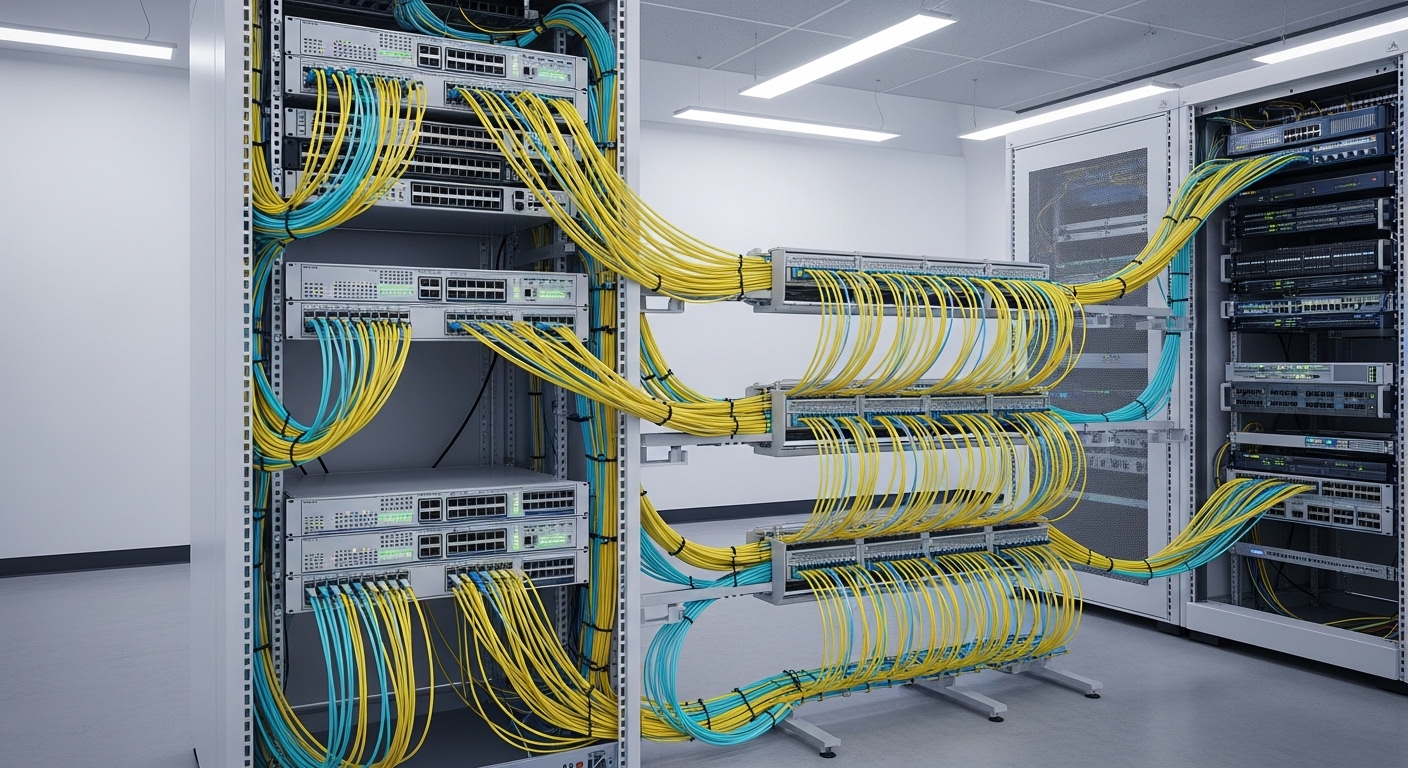
Compared with traditional north-south traffic, AI workloads can create bursty east-west flows that stress switch buffers, optics power budgets, and error-rate margins. In practice, teams often run 400G links as FR4, SR4, or DR4 depending on reach and cabling plant, then tune congestion management while monitoring optics telemetry. Reliability work starts with confirming the IEEE PHY behavior and the optical link budget under worst-case conditions, not just nominal commissioning.
Operationally, the most common failure drivers during 400G migration are thermal headroom, connector contamination, and marginal transceiver calibration. Field engineers also watch for DOM telemetry mismatches (thresholds, vendor scaling) that can hide early drift in laser bias current or receiver sensitivity. For reference on Ethernet PHY behavior and link performance expectations, see [Source: IEEE 802.3].
For optical module and interface expectations, vendor datasheets and interoperability guidance matter as much as standards. When you reference specific models, confirm compatibility with your switch vendor’s transceiver qualification list and optics cage wiring.
400G optics choices: SR4 vs DR4 vs FR4 and what to validate
Most 400G deployments use parallel optics (SR4/DR4) or wavelength-division multiplexing (FR4) depending on distance. The key is aligning the optics reach to your actual patch-panel and tray routing, then validating link budget with your connector and splice losses. Engineers typically validate with a combination of vendor link calculators, OTDR traces for the fiber plant, and BER testing at commissioning.
| Optic type | Typical wavelength | Lane format | Reach (typical) | Connector | Data rate | Operating temp | Power class (typ.) |
|---|---|---|---|---|---|---|---|
| 400G SR4 | 850 nm | 4x 100G (MMF) | ~100 m over OM4 | LC | 400G Ethernet | 0 to 70 C (varies) | ~8 to 15 W |
| 400G DR4 | 1310 nm | 4x 100G (SMF) | ~500 m over SMF | LC | 400G Ethernet | -5 to 70 C (varies) | ~8 to 15 W |
| 400G FR4 | 1310 nm band (WDM) | 4x 100G (SMF) | ~2 km over SMF | LC | 400G Ethernet | -5 to 70 C (varies) | ~10 to 20 W |
In real deployments, SR4 is common inside a data hall where MMF OM4/OM5 is already standardized. DR4 and FR4 become attractive when horizontal runs exceed the MMF reach or when you are consolidating cabling standards. For example optics vendors publish part numbers such as Cisco SFP-10G-SR for legacy 10G, but for 400G you will commonly see modern QSFP-DD or OSFP style modules; always verify model-specific details in the datasheet.
What to test before you declare the 400G link “done”
Commissioning should include a fiber plant verification and a link stability test window. For fiber, confirm end-to-end attenuation and inspect connectors for contamination; for performance, run a sustained traffic test and check forward error correction counters if your platform exposes them. Use an error-rate target appropriate to your PHY implementation and monitor for spikes during thermal cycling or scheduled maintenance.
Reliability teams should also validate that DOM readings (temperature, bias current, received power) align with your alert thresholds and that the optics support the operational modes you intend to run. If you plan to use third-party optics, validate with a controlled pilot because DOM scaling and warning thresholds can differ across vendors.
Deployment scenario: leaf-spine AI fabric with 400G migration gates
Consider a 3-tier data center fabric where ToR switches connect to aggregation at 48 ports of 400G per aggregation pair. An AI training cluster uses 8 GPUs per node with high east-west data movement, and the team schedules a staged 400G migration by pods: Pod A moves first with SR4 over OM4 limited to 90 m including patch cords, while Pod B uses DR4 for a 240 m run through a raised corridor. During rollout, engineers enforce a gate: each new 400G pair must pass a 24-hour traffic soak at line rate with no uncorrectable errors and stable DOM trends.
To manage risk, they create a cabling “acceptance envelope” of connector endfaces, measured insertion loss, and patch cord lengths. They also set a temperature policy: if the rack inlet temperature exceeds the optics operating specification by more than a small margin, they delay enabling oversubscription modes. This prevents a common failure pattern where links flap after a cooling change or during door-open maintenance.
Selection criteria checklist for 400G migration in production
Use the following ordered checklist to reduce rework and shorten your commissioning timeline.
- Distance and fiber type: match SR4/DR4/FR4 to measured plant reach, including patch cords and connectors.
- Switch compatibility: confirm transceiver qualification for your exact switch model and port type; check lane mapping and breakout behavior.
- DOM support and alert thresholds: verify that telemetry fields exist and that your monitoring system interprets units correctly.
- Operating temperature and airflow: ensure the module’s rated range covers your rack inlet and local hot-spot conditions.
- Power and thermal budget: estimate per-port power and confirm airflow capacity; sum module heat per chassis.
- Vendor lock-in risk: decide whether you will accept OEM-only optics or allow third-party after a pilot interoperability test.
- Reliability strategy: define MTBF targets, receive-end cleaning plans, and RMA criteria for early-life failures.
Pro Tip: In many 400G migration pilots, the biggest “surprise” is not reach; it is connector cleanliness and patch cord handling. If you clean LC connectors with the wrong scope procedure or reuse dusty caps, the receiver margin can look acceptable at first and then fail during higher sustained utilization when thermal and laser bias drift increase.
Common mistakes and troubleshooting for 400G migration
Reliability-focused teams reduce outages by anticipating failure modes. Below are frequent issues with root causes and practical fixes.
Link up during commissioning, then flapping under sustained traffic
Root cause: marginal optical power margin caused by connector contamination, micro-scratches, or patch cords with higher-than-expected insertion loss. Elevated utilization increases heat and can push the receiver closer to its sensitivity limit. Solution: re-clean connectors using a verified workflow, inspect with a scope, replace suspect patch cords, and re-run a BER or traffic soak while logging DOM receiver power.
DOM alarms that do not match actual behavior
Root cause: third-party optics may expose DOM fields with different scaling or threshold behavior, or monitoring software may assume OEM-specific calibration. This can mask early degradation or generate noisy alerts. Solution: align alert thresholds per vendor datasheet, confirm unit conversions in monitoring, and compare DOM trends between known-good OEM optics and the candidate module.
Overheating after airflow changes or during rack maintenance
Root cause: optics rated for a certain ambient range can still fail if local hot-spot airflow is blocked by cable bundles or if the rack fan profile changes during maintenance. Solution: measure rack inlet and local exhaust temperatures, enforce cable management that preserves airflow, and delay enabling full-rate traffic until temperature stabilizes within the optics operating envelope.
Incompatibility with switch port mode or optics type
Root cause: wrong transceiver class (for example, a module intended for a different interface profile) or unsupported lane mapping can create intermittent link failures even if optics appear “present.” Solution: validate using the switch vendor’s optics compatibility list, confirm the port mode configuration, and run a controlled lab test before deploying to production.
Cost and ROI note: how to budget 400G migration without surprises
Pricing varies widely by vendor, reach, and form factor. In many markets, 400G SR4 optics often land in the hundreds of dollars to low-thousands per module, while DR4 and FR4 can be higher due to tighter performance requirements. OEM optics typically carry higher unit cost but may reduce integration time; third-party optics can cut acquisition costs but increase validation and RMA planning effort.
For TCO, include not only module price but also commissioning labor, downtime risk, spares inventory, and test equipment time. Reliability improvements can pay back quickly: a single avoidable outage during an AI training window can outweigh the optics premium, especially when GPU time is expensive. Track early-life failures separately from wear-out, and consider a small pilot with accelerated stress testing to refine your MTBF assumptions.
FAQ about 400G migration for AI workloads
What fiber type should we standardize for 400G migration?
Standardize based on measured reach and existing plant. For many intra-hall runs, SR4 over OM4 or OM5 is practical; for longer horizontal runs, DR4 or FR4 over SMF often reduces patch-panel complexity. Always validate with OTDR and include connector and splice losses.
Do we need to run BER testing during commissioning?
Yes, at least as a short acceptance test window. Sustained traffic with error counter verification helps detect marginal optics behavior that may not show during quick link-up checks. If your platform supports FEC and error telemetry, record it during the soak.
Can we mix OEM and third-party optics in the same 400G migration phase?
You can, but only after compatibility and telemetry validation. DOM scaling and vendor-specific thresholds can complicate monitoring. Plan a pilot where you compare DOM trends and error counters between optics types under identical traffic patterns.
How do we monitor optics reliability over time?
Use DOM telemetry to track temperature, bias current, and received optical power trends. Set alerts based on vendor datasheet guidance and your environment’s baseline, then review trends during planned maintenance. Tie optics events to link flaps and switch error counters for root-cause correlation.
What is the biggest operational risk during 400G migration?
Most teams underestimate connector cleanliness and airflow control. Contamination can cause early link instability, while blocked airflow can trigger thermal drift. Build a process that includes scope inspection, cleaning verification, and airflow measurement at rack scale.
Where do IEEE and vendor documentation fit in the decision process?
IEEE 802.3 defines Ethernet PHY behavior, but your exact module performance and telemetry are vendor-specific. Use IEEE for baseline expectations and vendor datasheets for operating limits, DOM field definitions, and safety requirements. Also consult your switch vendor’s optics qualification list for real-world compatibility.
If you want to keep reliability high while accelerating 400G migration, start with a measured optics reach plan and a staged validation gate, then expand only after link stability and thermal margins are proven. Next, review 400G fiber reach and link budget planning to tighten your fiber acceptance criteria before you order spares.
Author bio: I have deployed and validated high-speed Ethernet optics in production data centers, focusing on thermal margins, DOM telemetry integrity, and link-level error behavior. I write from an ISO 9001 reliability mindset: test evidence, measurable acceptance criteria, and corrective actions that hold up in audits.
