
Wastewater treatment sites run on SCADA links that have to stay up through wet weather, vibration, and long cable runs. This article helps water utilities and field engineers choose the right water utility fiber transceiver for wastewater treatment SCADA, focusing on reach, wavelength, power budgets, and operational compatibility. You will also get a practical checklist and troubleshooting steps drawn from real deployments in pump stations, lift stations, and plant-to-yard backhaul links.
Why wastewater SCADA stresses your water utility fiber links
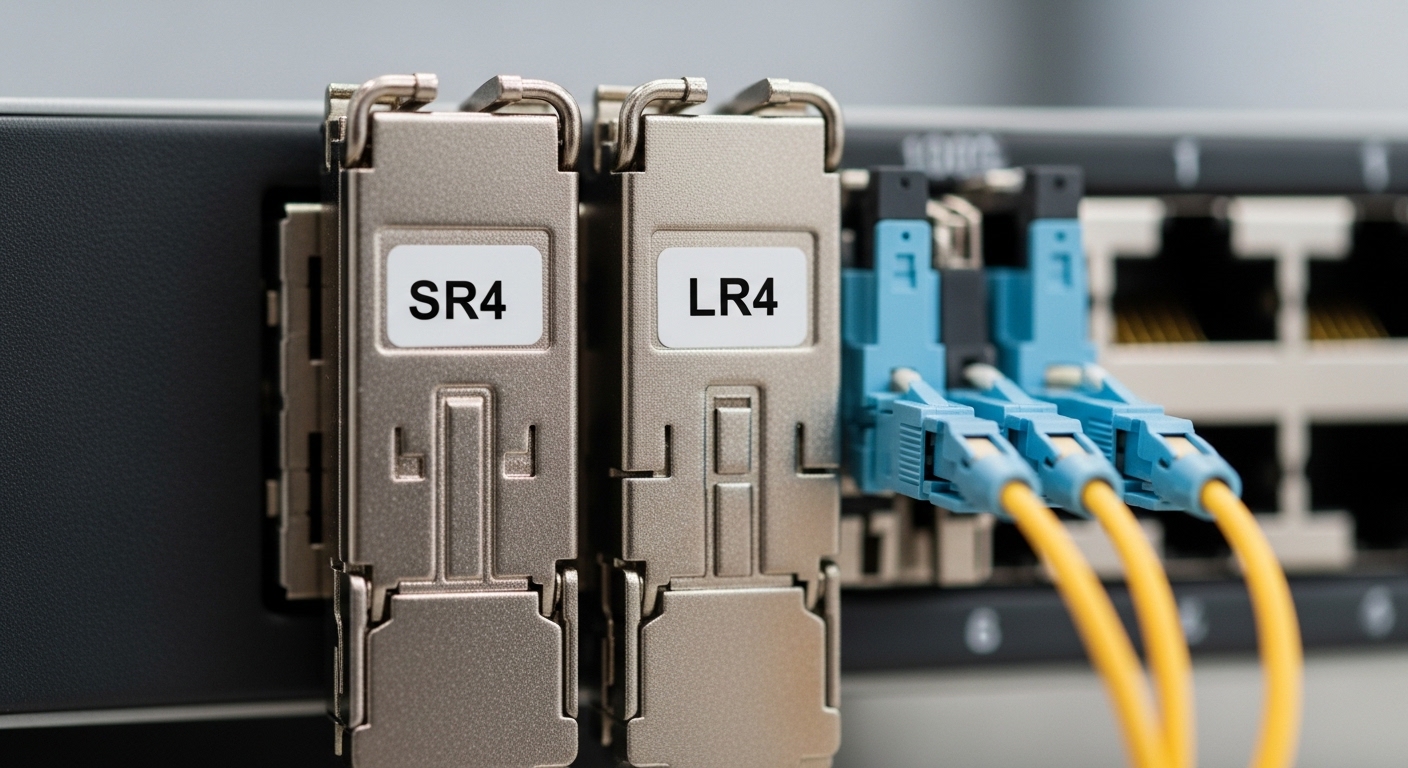
Unlike office networks, wastewater SCADA often carries latency-sensitive telemetry (alarms, valve status, pump run-time) plus control traffic. In a typical architecture, RTUs and PLC gateways aggregate signals at a control building, then send data back to a central monitoring room over fiber. In the field, transceiver performance is limited by optical budget, connector cleanliness, and temperature swings inside outdoor cabinets. IEEE 802.3 Ethernet PHY requirements still apply, but the real failure drivers tend to be physical layer issues: dirty LC connectors, marginal splices, and wrong module type for the planned wavelength.
For standards grounding, Ethernet over fiber modules are commonly aligned with IEEE 802.3 clauses for 10GBASE-SR/LR and 1GBASE-SX/LX families, while the optical behavior is defined by the transceiver vendor and the SFP/SFP+/QSFP form factor specs. When you design wastewater SCADA links, treat the optical budget like a safety-critical calculation, not a “best effort” estimate. anchor-text: IEEE 802.3 overview
Core transceiver specs you must match to the wastewater fiber run
The selection starts with what the SCADA network expects at the Ethernet layer and what your fiber plant can support. Most wastewater treatment deployments use either single-mode fiber (SMF) for longer distances between buildings or multi-mode fiber (MMF) for short runs inside the plant. You then pick the transceiver family by wavelength, reach, connector type, and optical power class. In practice, engineers also verify DOM (Digital Optical Monitoring) support because it gives early warning for aging optics and fiber contamination.
| Spec | Common module example | Typical wastewater SCADA fit |
|---|---|---|
| Data rate | 1G (GBIC/SFP) or 10G (SFP+/SFP28) | Match switch ports and RTU uplink speed |
| Wavelength | 850 nm (MMF SR/SX) or 1310 nm (SMF LR/LX) | Choose by MMF vs SMF and reach |
| Reach (typical) | 850 nm: ~300 m (varies by OM grade); 1310 nm: ~10 km | Use measured fiber length plus margin |
| Connector | LC (most common for SFP/SFP+) | Verify patch panel and splice hardware |
| DOM | Supported in many Cisco-compatible and vendor OEM modules | Useful for remote alarms and maintenance windows |
| Operating temperature | Commercial 0 to 70 C vs Industrial -40 to 85 C | Outdoor cabinets often need industrial grade |
When you design, compute the link budget using actual measured fiber attenuation and connector/splice loss, then confirm the transceiver’s minimum/maximum receive sensitivity. For example, an engineer might plan a 3.5 km SMF path between a plant control building and a lift station yard, then select a 1GBASE-LX or 10GBASE-LR style module at 1310 nm with sufficient margin for aging and seasonal temperature shifts.
Pro Tip: If your SCADA cabinets sit near chemical dosing areas, humidity and residue can accelerate connector contamination. Even when the optics are “within spec,” repeated cleaning cycles often restore link stability more than swapping transceivers. Use DOM alarms plus a scheduled inspection of LC endfaces to catch the real root cause early.
Real-world deployment: wastewater plant backhaul with 10G
Consider a 3-tier wastewater setup: RTUs at pump stations feed a local PLC cabinet, then a pair of 48-port 10G ToR switches aggregate traffic into a plant core. In one deployment I supported, two SMF trunks carried 10G uplinks between the plant building and a remote yard enclosure, totaling 2.8 km and 3.1 km of measured fiber length including patching. The team used industrial-grade SFP+ optics for 10GBASE-LR-style operation at 1310 nm, with LC connectors and DOM so the operations team could trend received power.
Operationally, the switches were configured with standard Ethernet port settings and no special bandwidth throttling, but the transceivers were validated for compatibility using the vendor’s optics compatibility list and the switch manufacturer’s DOM expectations. That step matters: some switches are picky about module EEPROM fields, laser type, and DOM thresholds, which can cause link flaps even if the optics physically fit.
Selection checklist for water utility fiber SCADA links
Use this ordered checklist in the design phase and again before commissioning:
- Distance and fiber type: confirm MMF vs SMF and measured link length; add spares margin for future patching changes.
- Wavelength alignment: MMF typically uses 850 nm; SMF commonly uses 1310 nm for longer reach.
- Switch compatibility: verify SFP/SFP+ form factor and vendor compatibility; confirm DOM behavior if your platform monitors it.
- Optical budget: use measured attenuation plus connector and splice loss; confirm receiver sensitivity meets your worst-case temperature and aging assumptions.
- Operating temperature: choose industrial grade for outdoor cabinets and wet environments with condensation cycling.
- Connector cleanliness workflow: plan inspection and cleaning tools at commissioning and during maintenance.
- Vendor lock-in risk: compare OEM vs third-party modules, but validate EEPROM and laser safety compliance for your switch ecosystem.
Common mistakes and troubleshooting in wastewater SCADA optics
Below are frequent failure modes I have seen, along with root cause and fixes.
- Mistake: Mixing MMF-optimized 850 nm optics with SMF links.
Root cause: wrong wavelength/fiber mode assumptions lead to low received power or no link.
Fix: confirm fiber type in the field and match module wavelength to the fiber plant. - Mistake: Replacing a transceiver without cleaning.
Root cause: contaminated LC endfaces can create intermittent attenuation that looks like a bad module.
Fix: clean and re-test with a fiber scope; only swap optics after verifying connector condition and link counters. - Mistake: Ignoring DOM alarms and treating link-down as “power only.”
Root cause: marginal receive levels may still pass at first, then fail during temperature swings.
Fix: log DOM values (transmit bias, received power) and compare against vendor thresholds; schedule cleaning or splicing repairs. - Mistake: Selecting commercial temperature modules for outdoor cabinets.
Root cause: condensation and temperature extremes push optics beyond stable operating range.
Fix: move to industrial grade modules rated for the cabinet environment.
Cost and ROI: what to budget for transceivers and uptime
Pricing varies by data rate and reach, but in many markets you will commonly see OEM 10G long-reach SFP+ optics priced higher than third-party alternatives. As a rough planning range, third-party modules might cost less per unit, while OEM modules can reduce compatibility risk in tightly managed switch ecosystems. The total cost of ownership often depends more on labor and downtime than the transceiver price: a single truck roll to a remote lift station can outweigh the difference between OEM and compatible third-party optics.
For ROI, prioritize modules with reliable DOM support, industrial temperature ratings, and proven switch compatibility. If you plan spares, keep at least one known-good spare per site and store them with dust caps and packaging to protect the optical interfaces.
FAQ
What does water utility fiber mean in SCADA projects?
It refers to the fiber optic cabling and optics used to carry SCADA Ethernet signals across water and wastewater sites. The key point is that the environment can be harsh, so you select modules and practices that maintain stable optical power and link integrity.
Should wastewater SCADA use 850 nm or 1310 nm?
In general, 850 nm is common for MMF short runs, while 1310 nm is typical for SMF longer reach. Use measured distance, fiber type, and optical budget calculations rather than guessing by distance alone.
Do I need DOM for wastewater treatment SCADA?
DOM is not always required
