
Manufacturing automation networks fail in predictable ways: noisy industrial environments, long fiber runs that drift out of spec, and switch port compatibility surprises. This article uses use case analysis to help automation, OT, and network engineers select optical transceivers that will survive real factory conditions. You will get concrete distance and temperature constraints, a compatibility decision checklist, and troubleshooting patterns pulled from field deployments.
Why optical transceivers matter in manufacturing OT networks
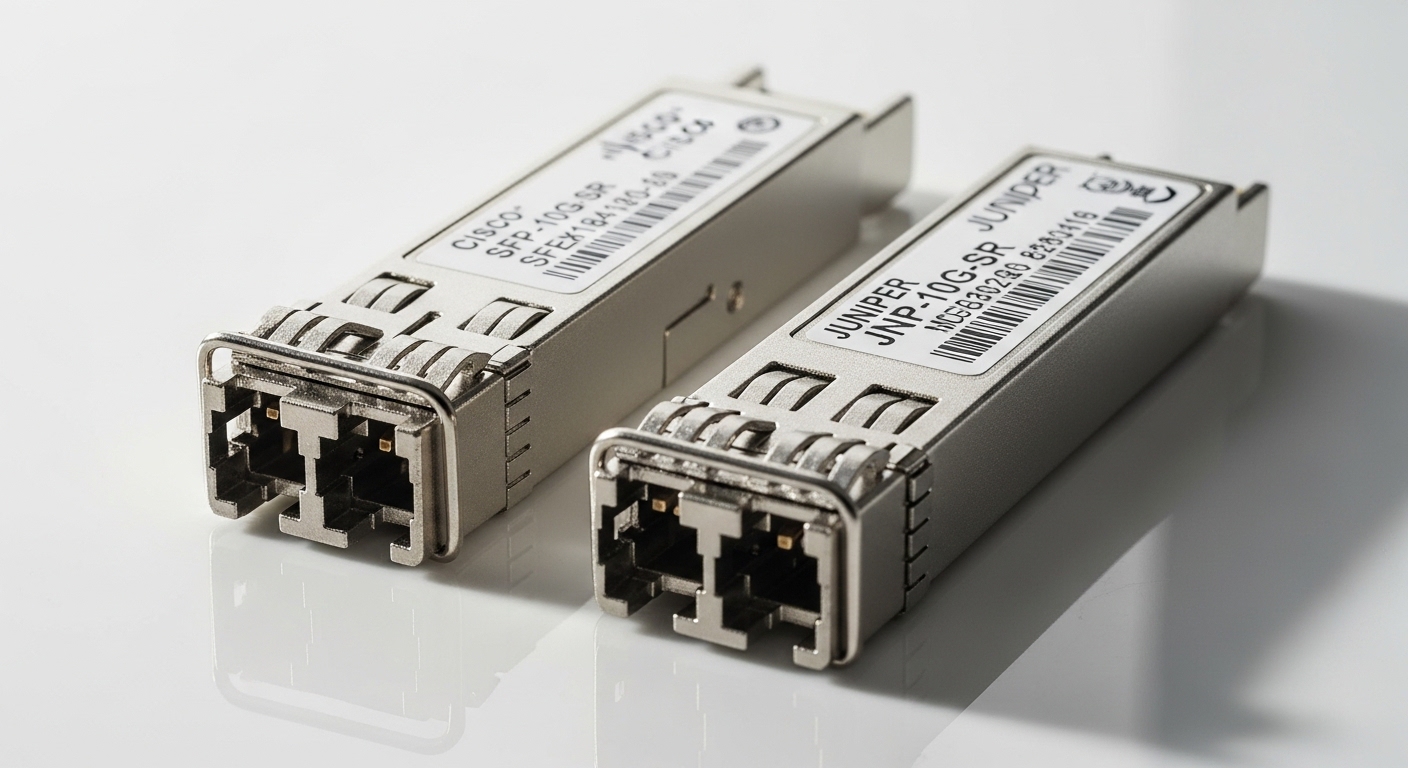
In a factory, control traffic (PLC, motion control, vision systems) often shares infrastructure with monitoring and historian data. Copper can be attractive for short runs, but industrial EMI, ground potential differences, and lightning transients make optical links more reliable over time. IEEE 802.3 Ethernet PHYs expect specific electrical and optical operating windows, so an SFP or SFP+ module that works on a bench can still fail when temperature, dust, or link budget changes in production.
Optical transceivers also reduce the risk of common OT outage patterns. If you isolate noisy machinery cabinets and route the uplink over fiber, you limit conducted interference and improve deterministic latency by avoiding retransmits. Still, you must account for fiber type, connector cleanliness, and DOM (Digital Optical Monitoring) behavior, especially when you plan to automate alarms for aging optics.
use case analysis: factory link patterns and target specs
Below are three real-world automation link patterns and what engineers should target when selecting optical modules. The goal is not “maximum reach,” but a stable link under temperature extremes and realistic optical budgets. Most factories also run patch panels and mixed connector types, so connector loss and cleaning discipline become part of the selection process.
Pattern A: Cell-level uplink (10G over multimode fiber)
Typical scenario: A production cell has a top-of-rack switch feeding a small aggregation block. If you use 10G Ethernet to reduce head-of-line blocking during vision bursts, multimode fiber is common because it is easier to terminate and patch. For instance, a 10G SR transceiver (nominal 850 nm) is designed around OM3 or OM4 multimode fiber and a typical link reach that supports short-to-mid spans.
Pattern B: Line-level distribution (10G over single-mode fiber)
Where conveyors, painting lines, or separate buildings force longer runs, single-mode fiber becomes the default. Single-mode optics reduce modal dispersion and give you margin for losses from splices, trays, and future rework. In practice, you select a 10G LR (1310 nm) style module when you need a larger reach budget and better tolerance for uneven cabling layouts.
Pattern C: Deterministic plant backbone (25G or 40G aggregation)
As plants consolidate monitoring and higher-resolution inspection, 25G or 40G uplinks become common. Some engineers try to “reuse” existing fiber by choosing the lowest-cost module, but that often creates intermittent link flaps once optics warm up. For backbone segments, you should validate link budget using vendor worksheets, then monitor DOM thresholds and error counters.
| Module example | Data rate | Wavelength | Typical reach target | Fiber type | Connector | DOM | Operating temperature |
|---|---|---|---|---|---|---|---|
| Cisco SFP-10G-SR | 10G | 850 nm | ~300 m on OM3 / up to ~400 m on OM4 class | Multimode | LC | Supported on most vendor variants | Typically industrial ranges available by SKU |
| Finisar FTLX8571D3BCL (10G SR) | 10G | 850 nm | Up to ~300 m class (depends on OM3 grade) | Multimode | LC | Commonly supported | Commercial or industrial grade options |
| FS.com SFP-10GSR-85 (10G SR) | 10G | 850 nm | OM3/OM4 reach per spec sheet | Multimode | LC | Varies by product line | Varies by grade |
| 10G LR class SFP+ (1310 nm) | 10G | 1310 nm | ~10 km typical class | Single-mode | LC | Often supported | Commercial or industrial grade options |
Selection should follow IEEE 802.3 PHY requirements for optical interfaces and the transceiver vendor datasheet for optical power, receiver sensitivity, and maximum link loss. For standards context, see [Source: IEEE 802.3] for Ethernet optical interface definitions and [Source: ANSI/TIA-568] for cabling loss and installation practices.
Selection criteria checklist for OT-ready transceivers
Engineers in manufacturing rarely get a clean “greenfield” fiber plant. The selection checklist below is designed for the real constraints you face during acceptance testing and later maintenance.
- Distance and fiber type: Confirm OM3 vs OM4 grade, single-mode core specs, and total measured link loss including patch cords and jumpers.
- Link budget margin: Use vendor receiver sensitivity and transmitter launch power, then subtract documented connector and splice losses. Leave headroom for aging and cleaning variability.
- Switch compatibility and optics constraints: Verify the exact transceiver form factor (SFP vs SFP+ vs QSFP+) and supported vendor/part lists where applicable. Some platforms enforce strict digital diagnostics thresholds.
- DOM support and alerting: Ensure the module supports DOM and that the switch reads temperature, bias current, and optical power so you can alarm on degradation before link failure.
- Operating temperature and thermal behavior: OT cabinets can exceed typical office ranges. Choose an industrial-grade module if your cabinet environment approaches datasheet limits.
- Connector strategy and cleaning plan: LC connectors with APC polish on some single-mode links require correct mating. Dust on connectors is a top cause of “works sometimes” behavior.
- Vendor lock-in risk: OEM-only support can simplify acceptance, but third-party options can reduce cost if compatibility is proven. Plan for long-term spares and firmware interactions.
Pro Tip: In field triage, the fastest predictor of future outages is not link up/down history; it is DOM trends. If you see received optical power drifting toward the switch’s warning thresholds while error counters slowly rise, schedule a fiber cleaning and transceiver swap before the link fully drops. This pattern is especially common after cabinet thermal cycling in summer shutdowns.
Cost and ROI note: what you should budget for
Typical pricing varies by brand and grade, but for planning purposes many teams see OEM 10G SR or LR transceivers costing roughly $80 to $250 per module, while third-party options may land around $30 to $120. QSFP and higher-speed modules can be more expensive, and industrial-grade SKUs usually cost more than commercial-grade parts.
TCO matters more than purchase price. If a module fails in a running production cell, the downtime cost can dwarf the transceiver cost. Also include labor for spares stocking, cleaning consumables, and the time to validate compatibility during change windows. When you compare OEM vs third-party, focus on acceptance test pass rate, DOM telemetry reliability, and warranty terms, because those directly affect maintenance effort and mean time to repair.
Common pitfalls and troubleshooting tips in OT deployments
Even when the module model number “matches,” factory conditions can break the assumptions. The scenarios below reflect common failure modes I have seen during cutover and post-install validation.
Pitfall 1: Link flaps caused by connector contamination
Root cause: Micro-dust on LC connectors or improper cleaning between re-patching cycles increases insertion loss and causes marginal receiver operation, leading to CRC errors and link renegotiation. Solution: Implement a cleaning workflow using lint-free wipes and approved cleaning tools, inspect with a fiber microscope, then re-test with an OTDR or optical power meter. After cleaning, verify DOM RX power and error counters remain stable for at least one full thermal cycle.
Pitfall 2: “Works in the lab, fails in the cabinet” due to temperature grade mismatch
Root cause: A commercial-grade transceiver might pass bench tests at room temperature but exceed transmitter or receiver operating limits in a hot enclosure. Solution: Confirm the module’s full operating temperature range from the datasheet and compare it to measured cabinet temperatures at the switch faceplate and transceiver cage. If needed, replace with an industrial-grade SKU and re-run link stability tests under worst-case conditions.
Pitfall 3: Distance overshoot from unaccounted patch cords and splices
Root cause: Teams often estimate distance by “cable run length” while ignoring patch panel jumpers, coupler losses, and extra splices from rework. Solution: Build a complete loss budget: include every connector pair, every splice, and every patch cord. Validate with measured optical power at installation. Use vendor link budget worksheets and maintain margin for aging and cleaning variability.
Pitfall 4: Compatibility issues from transceiver generation differences
Root cause: A switch may support a certain transceiver standard but enforce additional constraints, such as specific speed modes, DOM thresholds, or vendor-coded calibration data. Solution: Check the switch vendor’s transceiver compatibility list and confirm the exact interface type (for example, SFP vs SFP+, or QSFP28 vs QSFP+). During change control, validate with a controlled rollout and monitor interface counters for at least 24 hours.
FAQ: use case analysis questions engineers ask before ordering
Which optical transceiver type is best for a plant with mixed cable lengths?
Start with a use case analysis by segment: short cell links often fit 10G SR over multimode, while line-level or inter-building links typically fit 10G LR-style single-mode. Then validate each segment’s measured loss including patch cords and splices. If you cannot measure fiber loss reliably, choose conservative reach targets with added margin.
How do I confirm switch compatibility without buying every transceiver option?
Use the switch vendor’s documentation and compatibility list, then perform a pilot with a small batch in the target cabinet. Confirm that the switch reads DOM values and that interface counters remain stable under load. Track pass/fail results across at least one thermal cycle to catch temperature-sensitive issues.
What DOM metrics should I watch in manufacturing automation?
Focus on received optical power (RX power), transmitter bias current, module temperature, and any vendor-specific diagnostic flags. The best practice is to set warning thresholds that trigger before link loss, then correlate with interface error counters. If you see gradual drift toward warning thresholds, plan cleaning or replacement.
Is multimode still acceptable for OT if I already have single-mode in some areas?
Yes, multimode can be a cost-effective choice for short-to-mid distances if you select the correct OM grade and keep within link budget. The key is measured loss and disciplined connector cleaning. Mixed media can also increase operational complexity, so standardize patching practices where possible.
What is the most common reason links drop after an outage or maintenance event?
In many plants, the top trigger is re-patching with dirty connectors or mis-mated polarity. A second frequent cause is a transceiver that is near its optical margin due to earlier loss creep. Combine fiber inspection with DOM trend review to avoid repeating the same failure pattern.
How should I plan spares for production-critical segments?
Stock spares for the exact module part numbers that passed acceptance, and include one extra for high-risk segments like vision uplinks. Validate that spares are stored in appropriate packaging and remain within spec upon installation. Use DOM to quickly confirm that a replacement module is operating in a healthy window.
If you want fewer production surprises, treat optical transceivers as part of a system: fiber loss, temperature behavior, DOM telemetry, and switch compatibility all belong in your use case analysis. Next, map your plant segments and run a measured link budget workflow with link budget for optical transceivers so every order has quantifiable margin.
Author bio: I deploy and troubleshoot optical Ethernet in industrial and data center environments, validating link budgets, DOM alarms, and switch compatibility during cutovers. I write from field experience with acceptance testing, fiber hygiene, and OT maintenance workflows.
