
When an SMB is planning an 800G upgrade, the first question is rarely “Can it work?” It is “Will the optics decision pay back before the gear becomes obsolete?” This article helps network owners and field engineers model ROI optics using real deployment constraints: power, optics reach, switch compatibility, temperature, and failure domains. You will also get a decision checklist and troubleshooting patterns that prevent expensive re-cabling and repeated RMAs.
Why 800G upgrades stress optics ROI in SMB networks
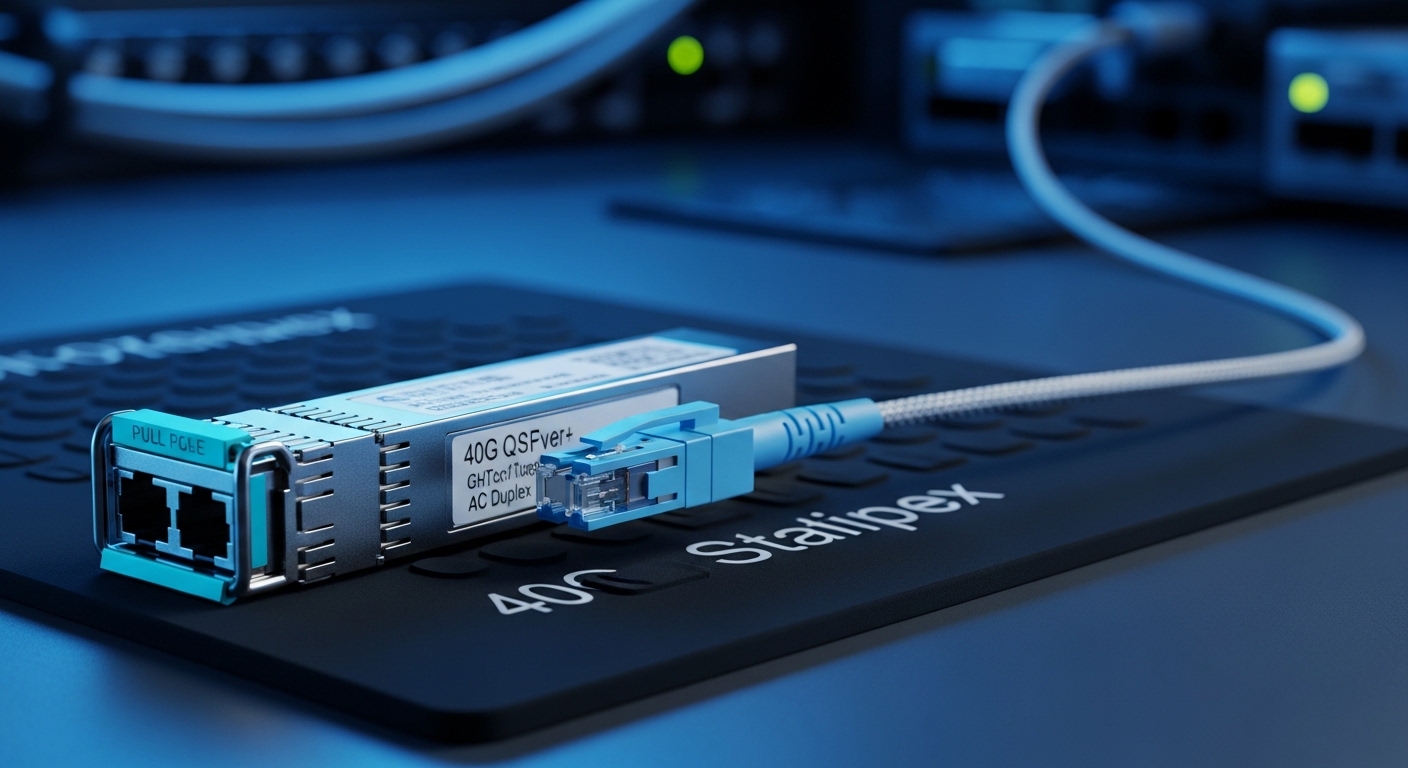
In many SMBs, 800G is introduced as a capacity step: more east-west throughput, fewer oversubscription bottlenecks, or a faster migration from 100G/200G aggregation. The optics layer becomes a budget hotspot because 800G typically increases the number of optics positions and the total optical link count, even when the number of switches stays stable. In practice, ROI optics is driven by three levers: link reach efficiency (avoiding longer-than-needed optics), power per port (reducing cooling and electrical costs), and operational risk (compatibility, DOM monitoring, and failure rate).
Think of optics selection like choosing tires for a delivery fleet. Buying premium tires may increase the purchase price, but if they reduce breakdowns and improve fuel efficiency, the total cost over the service life goes down. Similarly, in 800G deployments, the “tire choice” is the transceiver type (for example, 400G/800G-class coherent vs direct-detect, and the corresponding fiber plant design). For SMBs, where change windows are short, reliability and interchangeability can dominate the ROI calculation.
Field reality: what changes when you jump to 800G
- More optics per rack: higher port density often means more transceivers, more DOM telemetry points, and more inventory SKUs.
- More thermal sensitivity: higher-speed optics can become more sensitive to airflow, cage cleanliness, and dust loading.
- More strict compatibility: vendor-specific transceiver qualification can affect whether third-party optics are “plug-and-monitor” or “plug-and-pray.”
Pro Tip: Before you price optics, confirm whether your switch platform supports DOM telemetry and vendor-validated optics for 800G-class interfaces. I have seen cases where the optics worked electrically, but the switch refused to display DOM alarms, turning a minor degradation into an outage during a maintenance window.
Optics fundamentals for 800G: reach, wavelength, and power
To evaluate ROI optics, you must map the optics type to the physical fiber link budget and the expected power profile. Most SMB 800G rollouts are either intra-rack and short-reach for leaf-spine fabrics, or inter-rack with carefully managed cabling paths. The key parameters are wavelength band (commonly 850 nm for short reach multimode, and 1310/1550 nm for longer reach single-mode, depending on system design), supported data rate, reach, transmitter optical power, receiver sensitivity, and connector type.
In Ethernet contexts, the underlying electrical/optical interfaces are standardized, but vendors still implement specific receive/transmit margins, FEC behavior, and thermal derating curves. For grounding, engineers often reference IEEE 802.3 for Ethernet PHY families and vendor datasheets for exact optics requirements. Authority references are included below for standards context.
Quick comparison table: common 800G-adjacent optics choices
The table below is a practical comparison of representative optics options you will encounter in 800G upgrade planning. Exact values vary by vendor, but the ranges reflect typical short-reach and medium-reach deployment envelopes.
| Optics category | Typical wavelength | Target reach | Connector | Data rate class | Typical DOM support | Operating temperature | Notes for ROI optics |
|---|---|---|---|---|---|---|---|
| Short-reach direct-detect (SR class) | 850 nm | ~70 m to 100 m (MMF, depends on OM grade) | LC | 400G lanes aggregated toward 800G | Yes (2-wire or I2C via cage) | 0°C to 70°C typical | Best ROI when cabling is already MMF and path lengths fit |
| Longer-reach single-mode (LR class) | 1310 nm (common) | ~2 km to 10 km depending on design | LC | 400G lanes aggregated toward 800G | Yes | 0°C to 70°C typical | Higher optics cost; use when fiber plant requires it |
| Coherent optics (platform-dependent) | C-band or L-band (varies) | 10 km+ possible | LC or proprietary interface | Often supports higher aggregate rates | Yes, richer telemetry | 0°C to 70°C typical | Often overkill for SMB intra-data-center links; cost and power can dominate |
For standards grounding, see IEEE 802.3 and for practical optics guidance, vendor datasheets such as Cisco SFP and QSFP documentation. Example transceiver part numbers you may encounter in vendor ecosystems include Cisco Cisco SFP-10G-SR (for 10G reference only), Finisar/II-VI families like FTLX8571D3BCL (10G-class reference), and FS.com entries such as FS.com SFP-10GSR-85 (10G-class reference). For 800G-class optics, the part numbers are typically QSFP-DD or OSFP form factors and must be validated against your specific switch model.
Cost analysis model: when ROI optics improves or collapses
Let’s build a realistic SMB model. Assume a 3-tier data center leaf-spine topology where the SMB runs 48-port ToR switches feeding a spine layer. The upgrade target is adding 800G capacity between tiers to reduce oversubscription. If the SMB currently uses 100G optics and wants to increase throughput by 8x on selected uplinks, the optics plan must consider how many physical ports change and how many fibers must be re-terminated.
Example assumptions (you can adjust to your environment): each ToR has 4 uplinks that will be upgraded from 100G to 800G class interfaces. Over a small footprint of 12 ToR switches, that is 48 uplink ports total. If each 800G uplink uses a set of lanes implemented by the chosen optics form factor, your optics bill will scale with the number of cages and spares you buy. In my experience, SMBs typically purchase 10% spares for rapid swaps, which can meaningfully affect ROI optics.
Deployment scenario with measured operational details
Consider a medium SMB facility with hot-aisle containment and measured rack inlet temperatures around 23°C to 30°C. The link distance between leaf and spine is 35 m across cable trays. The facility already has OM4 multimode fiber in place, with recent certification showing attenuation under 2.5 dB/km and patch panel insertion losses within spec. In this case, short-reach optics (SR class) can be the ROI-optimal choice because you avoid single-mode re-cabling and the optics cost premium of LR-class modules. The operational win is also faster maintenance: field techs can swap optics and patch quickly without re-engineering the fiber plant.
Typical ROI optics pricing and TCO expectations for SMBs
Exact pricing varies by region and vendor contracts, but SMBs often see optics costs in these broad bands for compatible, qualified modules: third-party optics can be materially cheaper per module, while OEM optics can carry higher unit cost but may reduce compatibility risk. In total cost of ownership (TCO), include: installation labor, change-window downtime risk, and the cost of maintaining spares. A realistic SMB expectation is that if third-party optics reduce purchase price by 15% to 30% but increase failure or compatibility incidents, the ROI optics can swing negative due to labor and downtime.
Also account for power. Even if an optics module’s incremental power seems small, aggregated across many ports it can affect cooling load. If your 800G optics selection reduces average port power by a few watts per module, across dozens or hundreds of modules the savings can be meaningful over a 3 to 5 year lifecycle, especially in energy-constrained SMB environments.
Selection criteria checklist engineers use before ordering optics
To make ROI optics decisions repeatable, engineers typically use a structured checklist. The goal is to prevent “spec-sheet alignment” that later fails during switch bring-up, optical power margin checks, or DOM/telemetry mismatch.
- Distance and fiber plant reality: confirm exact link length, patch panel counts, and fiber type (OM3/OM4/OS2). Use certification results, not estimates.
- Switch compatibility: verify the switch model and port type accept your intended optics form factor and vendor qualification. Check for supported transceiver lists.
- Optics reach class fit: choose the shortest reach class that meets the certified link budget to avoid paying for unused margin.
- DOM telemetry and alarm behavior: ensure the switch can read temperature, bias current, and optical power. Validate alarm thresholds and whether the platform logs DOM events.
- Operating temperature and airflow: confirm the optics and switch cage thermal requirements. If your rack inlet exceeds optics derating thresholds, ROI optics can collapse due to early aging.
- Vendor lock-in risk: evaluate OEM-only constraints versus interoperable third-party options. Consider how quickly you can source replacements during an incident.
- Spare strategy: decide whether you buy spares per port or per cabinet. For SMBs, spares reduce downtime risk, but they increase working capital.
Pro Tip: When planning spares, prioritize optics that match the most failure-prone path: links routed through high-vibration zones, frequently re-patched patch panels, or racks with marginal airflow. That small operational targeting can improve ROI optics more than buying “cheaper everywhere.”
Common mistakes and troubleshooting patterns during 800G optics upgrades
Even when the optics are “correct” on paper, real deployments fail in predictable ways. Below are concrete pitfalls I have seen in field work, with root cause and corrective action.
Reach class mismatch masked by optimistic cable estimates
Root cause: Teams estimate distance from tray routing drawings rather than certified link length, then choose SR optics assuming typical attenuation. The reality is extra patch panels, connector contamination, or unexpected splices add loss.
Solution: Run fiber certification for every upgraded path. Validate that the optics budget covers worst-case insertion loss and connector reflectance. Clean connectors and re-test after cleaning.
DOM telemetry incompatibility leading to “silent degradation”
Root cause: Third-party optics may electrically link but not expose DOM data in the expected way for the switch. You lose visibility into bias current drift or optical power trending.
Solution: In the lab or during staging, confirm that the switch reports DOM fields and alarms. Verify that monitoring tools trigger on DOM events, not only link state changes.
Thermal derating ignored during staged rollout
Root cause: Optics are installed, tested at room conditions, then placed into a hot aisle with higher inlet temperatures. Bias current rises, margin shrinks, and link flaps appear later.
Solution: Measure rack inlet and cage airflow during peak load. Confirm optics operating temperature range and any vendor derating curves. Add or adjust airflow baffles before large-scale rollout.
Connector contamination causing intermittent link drops
Root cause: Repeated handling during installation introduces dust or micro-scratches, especially on high-density LC terminations. Intermittent errors may look like “bad optics.”
Solution: Use an inspection scope, follow a strict cleaning workflow, and replace suspect jumpers. In troubleshooting, swap the jumper first before swapping optics to isolate the failure domain.
FAQ on ROI optics for 800G upgrades in SMBs
What does ROI optics mean in an 800G upgrade?
It is the cost-benefit outcome of choosing the optics that meet your certified reach and platform compatibility while minimizing lifecycle costs. Engineers typically model unit cost, spares, power and cooling impacts, and downtime risk across the equipment lifecycle. The best ROI optics choice is not always the cheapest module; it is the one that reduces operational friction.
Should an SMB choose OEM optics or third-party optics?
OEM optics can reduce compatibility and support risk, which matters when you have limited maintenance windows and fewer spare parts. Third-party optics can lower purchase price, but only if your switch platform fully supports the module, including DOM telemetry and alarm behavior. Validate using your exact switch model and run a staging test before ordering at scale.
How do I estimate link budget without guessing?
Use fiber certification results for each path: measured attenuation, insertion loss, and connector quality. Then compare those values against the optics vendor’s link budget and receiver sensitivity requirements. If you cannot certify every path, treat the plan as a pilot and keep more spares.
Why do optics failures show up after the upgrade, not during initial testing?
Common reasons include thermal drift under peak load, gradual connector contamination, or DOM telemetry gaps that prevent early detection. Another factor is that staging conditions often differ from production airflow and utilization. Add peak-load tests and monitor DOM trend data during the first days post-install.
What are the most important compatibility checks for SMBs?
Confirm switch model qualification, supported form factor (QSFP-DD, OSFP, or platform-specific cages), and DOM telemetry behavior. Also verify that your monitoring stack expects the DOM fields the optics will provide. If any one of these fails, ROI optics can collapse due to troubleshooting time and delayed detection.
Can better optics reduce cooling costs?
Potentially. If optics have different power draw profiles or if better thermal behavior reduces derating-induced retransmissions, you can see small but real impacts on rack power and cooling. However, measure rack inlet temps and power before assuming savings; optics power is only one part of the thermal equation.
Choosing ROI optics for an 800G upgrade is a disciplined exercise: certify fiber paths, validate switch compatibility and DOM visibility, and price spares and downtime risk alongside module cost. Next, review your migration planning assumptions with fiber plant certification best practices to ensure your 800G capacity gains do not get blocked by avoidable cabling and operational issues.
Author bio: I have deployed and troubleshot high-speed Ethernet optics in production data centers, including staged rollouts with DOM monitoring and fiber certification workflows. My work focuses on measurable operational outcomes: link stability, thermal margins, and total cost over 3 to 5 year lifecycles.
