
Small to medium businesses face a painful choice when network traffic grows: keep paying for capacity upgrades, or migrate to 400G and redesign for scale. This guide helps IT leaders and field engineers estimate ROI for a 400G migration using practical cost-benefit analysis, module/switch compatibility checks, and deployment lessons from real data center and campus environments. You will also get a selection checklist, a troubleshooting section, and a compact spec comparison table for common 400G optics options.
Why 400G ROI looks great on paper, then breaks in the field
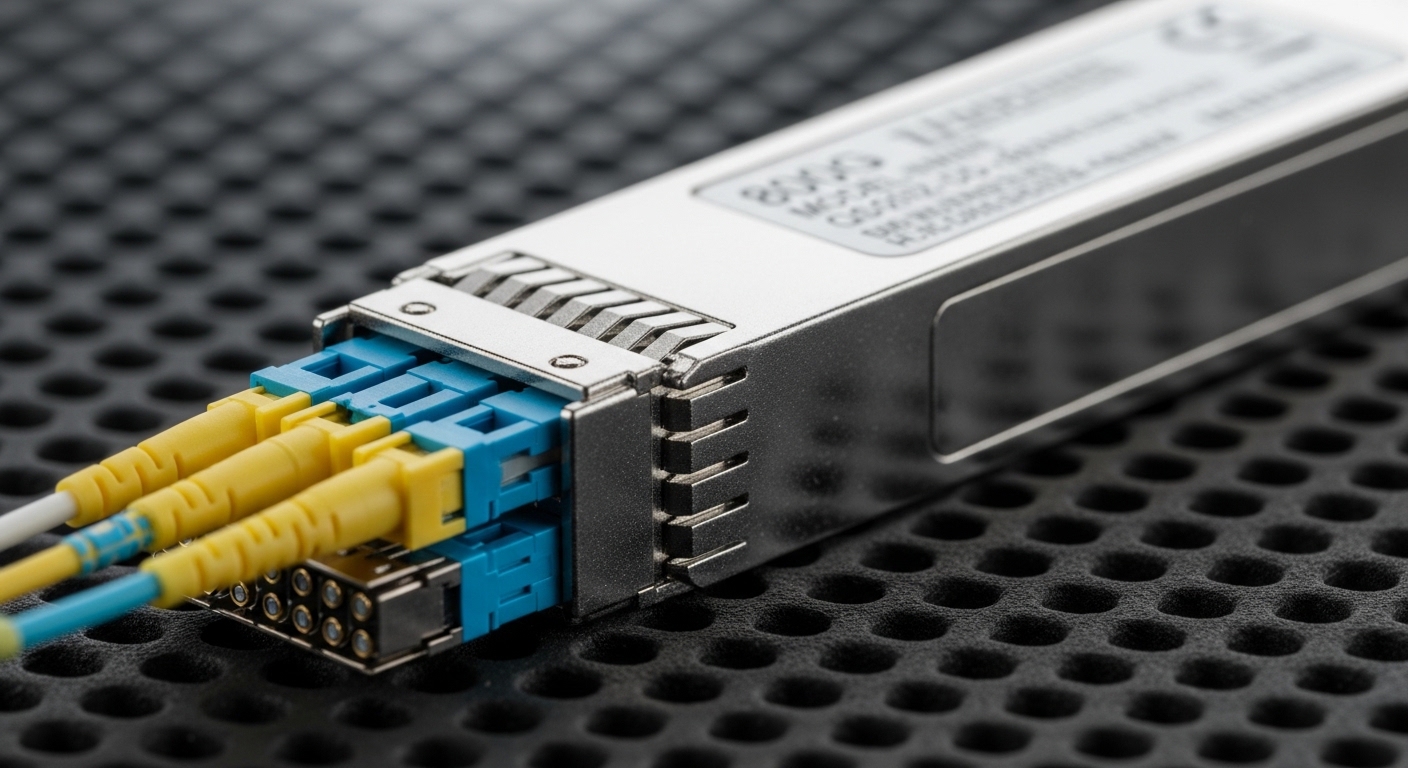
On spreadsheets, 400G migration often shows strong ROI because it reduces the number of uplinks and spares required per unit of bandwidth. In practice, ROI can shrink if you underestimate optics cost, power draw, optics aging, or transceiver compatibility constraints. Vendor lock-in risk matters too: some platforms demand specific DOM firmware behavior and strict optical power levels. The goal is to model the migration as an engineering project with measurable inputs, not as a one-time purchase.
Start with a simple ROI framing: compare annualized costs (CAPEX + OPEX + labor + downtime risk) against annualized benefits (capacity relief, reduced hardware count, fewer truck rolls, and lower energy per usable bit). For SMBs, the biggest “hidden line items” are usually labor, test time, and transceiver rework when optics do not pass switch acceptance tests.
Quick ROI model inputs you should actually measure
- Traffic growth: measure 95th percentile utilization on core uplinks (SNMP/telemetry) and project 12 to 36 months.
- Port density plan: count how many 10G/25G/100G ports are being consolidated into 400G optics and the expected oversubscription ratio.
- Energy: use rack-level PDU readings; estimate incremental power for new line cards and optics.
- Labor: include change window setup, fiber patching, transceiver qualification, and post-change verification.
- Failure risk: include DOA/early-life failure probability and mean time to repair for optics and line cards.
Pro Tip: In many SMB migrations, the ROI swing comes from the optics acceptance gate. If you skip vendor-qualified optics validation and DOM/EEPROM checks, you can lose a full change window to link flaps or “unsupported transceiver” errors, turning a planned ROI-positive rollout into a schedule and labor cost overrun.
400G migration architecture choices that drive ROI
400G ROI depends on whether you are upgrading access, core, or leaf-spine uplinks. A campus distribution upgrade may consolidate many 10G links into fewer 400G uplinks, while a small data center may shift from 100G spines to 400G spines to reduce hop count and cabling complexity. The best ROI usually comes when you pair the migration with a topology cleanup: disciplined fiber labeling, consistent patching patterns, and a clear optics standard for each distance class.
Most SMBs land in one of two patterns: (1) consolidation of existing uplinks, or (2) greenfield expansion where 400G is deployed only on bottleneck paths first. The second approach often produces faster ROI because you avoid replacing stable links and you limit rework to the highest-impact corridors.
Distance class and optics pairing
Before you buy transceivers, map each link to a fiber distance class and connector type. 400G optics typically target either short-reach multimode (often OM4) or longer-reach single-mode paths. If your fibers are already installed, measure actual attenuation and verify whether they meet the transceiver power budget with margin.
- Short reach: prefer multimode when you have OM4 and a short patch-run design.
- Long reach: prefer single-mode for campus spans, cross-building links, and older fiber that may have higher loss.
- Connector reality: confirm whether you have LC or MPO/MTP and whether polarity/cleanliness practices are in place.
Specs that matter: a practical 400G optics comparison
400G optics are not interchangeable even when the “rate” matches. Engineers evaluate wavelength band, reach, optical power limits, connector style, and environmental range. For ROI, the key is to avoid buying optics that are over-specced (unnecessary cost) or under-specced (early failures, retransmits, and maintenance overhead).
| Optics Type (Example Part) | Data Rate | Typical Wavelength | Reach Target | Fiber Type | Connector | Operating Temperature | Power/Notes (Engineer view) |
|---|---|---|---|---|---|---|---|
| QSFP-DD 400G SR8 (e.g., Finisar FTLX8571D3BCL class) | 400G | Multi-lane short-reach | ~70 m (typical SR8 OM4) | OM4/OM5 multimode | MPO/MTP (8-fiber array typical) | 0 to 70 C (common datasheet range) | Higher lane count; sensitive to MPO cleanliness and polarity |
| QSFP-DD 400G LR8 (single-mode long reach family) | 400G | Single-mode long wavelength set | ~10 km (typical LR8) | OS2 single-mode | LC (common) | -5 to 70 C (varies by vendor) | Lower fiber sensitivity to local patch loss; needs accurate budget alignment |
| QSFP-DD 400G DR4/FR4 class (single-mode reach variant) | 400G | Single-mode reach variant | ~2 km to 5 km (variant-dependent) | OS2 single-mode | LC (common) | -5 to 70 C (varies by vendor) | Useful for campus-to-campus or cross-floor runs; verify exact reach and power budget |
Compatibility caveat: even within the same optics family, vendors implement DOM behaviors differently. Always confirm your switch platform supports the transceiver type and that it passes the vendor’s acceptance tests for optics vendor IDs. For protocol and PHY expectations, align your design to the Ethernet physical layer framework described in IEEE 802.3 and the platform’s optics implementation guidance. [Source: IEEE 802.3 Ethernet standards portal] IEEE 802.3 standards portal
Selection criteria checklist for SMB ROI (use this before purchase)
Use this ordered checklist to protect ROI. It is designed for the reality that SMB change windows are short and staff time is constrained.
- Distance and fiber certification: verify actual measured loss (OTDR or certified test results), not just cable length.
- Switch compatibility: confirm exact switch model and transceiver form factor support (QSFP-DD vs QSFP56, etc.).
- Connector and polarity plan: validate MPO/MTP polarity rules and LC connector cleanliness workflow.
- DOM and diagnostics support: ensure the platform reads DOM correctly (temperature, bias, received power) and triggers sane alarms.
- Operating temperature and airflow: check transceiver temperature range against measured exhaust temps near the port.
- Vendor lock-in risk: decide between OEM-only, vendor-qualified third-party, or multi-source options based on your spares strategy.
- Power and cooling impact: estimate incremental wattage and verify rack cooling capacity and PDU headroom.
- Lifecycle and warranty terms: compare warranty length and RMA turnaround; early-life failure risk changes expected TCO.
How to calculate ROI with realistic labor and spares
For SMBs, a common ROI model looks like this:
- CAPEX: switch line cards (if needed) + optics + cabling accessories.
- OPEX: incremental power cost + support contracts + replacement transceivers over time.
- Labor: internal hours or integrator time, including testing and documentation updates.
- Downtime risk: include a conservative estimate for change window overrun (even if you do not “pay” downtime, it affects delivery).
Then annualize CAPEX over a 3 to 5 year horizon and compare against measurable benefits like reduced number of ports, reduced oversubscription penalties, and fewer maintenance events tied to legacy gear.
Cost & ROI expectations: what SMBs typically pay and where TCO hides
Pricing varies by region, volume, and optical reach. As a practical range for budgeting: OEM 400G QSFP-DD optics often cost several hundred to over a thousand USD per module, while vendor-qualified third-party optics can be meaningfully lower but may require extra qualification time. For SMBs, the ROI win comes from selecting the right reach class and avoiding unnecessary replacement cycles.
TCO drivers that frequently surprise SMB buyers:
- Qualification time: third-party optics may require longer burn-in and acceptance testing to reduce link flap risk.
- Spare strategy: buying fewer spares reduces CAPEX but increases repair turnaround risk during warranty lapses.
- Cooling upgrades: 400G gear can increase local heat density; if you need additional fans or airflow changes, ROI can dip.
- Transceiver mismatch: buying the wrong fiber type (OM4 vs OS2) or connector type can cause rework that wipes out savings.
Recommendation: treat optics as an engineered component, not a commodity. Build a qualification plan: label fibers, clean connectors, run optical diagnostics, and document thresholds for “acceptable received power” based on your switch telemetry.
Common mistakes and troubleshooting tips that protect ROI
These are recurring failure modes that directly affect ROI through downtime, rework, and replacement costs.
Link comes up intermittently or flaps under load
Root cause: dirty MPO/MTP interfaces or incorrect polarity mapping on 8-lane arrays. SR optics are particularly sensitive to contamination and polarity errors. Solution: clean with approved techniques, verify polarity using a polarity tester or vendor guidance, and re-seat the MPO with proper end-face inspection.
Switch rejects the transceiver or shows “unsupported module”
Root cause: transceiver vendor ID/DOM behavior not accepted by the switch’s optics policy, or mismatched module type (e.g., optics family not supported for that port). Solution: confirm exact switch SKU compatibility, update switch software/firmware if your vendor recommends it, and use vendor-qualified optics lists. [Source: Cisco NX-OS / IOS-XE optics compatibility guidance] Cisco support portal
You see high error counters but link stays up
Root cause: marginal optical power budget due to excessive patch loss, aging fiber, or too many connectors/splits. For LR/DR, budget errors can be less obvious until utilization rises. Solution: check DOM received power (Rx) and compare to the platform’s recommended thresholds; reduce patch loss, re-terminate connectors, and validate with certified fiber test results.
Temperature alarms during peak hours
Root cause: insufficient airflow, blocked front-to-back paths, or transceiver operating outside its specified temperature envelope. Solution: measure inlet/outlet temps near the switch, improve airflow management (cable routing, blanking panels), and ensure the rack cooling plan supports the new load.
Pro Tip: When troubleshooting 400G, do not rely solely on “link up.” Use DOM telemetry plus interface error counters together; a marginal optical budget can show low-level errors long before the link drops, and catching it early protects ROI by preventing repeated truck rolls.
FAQ: ROI-focused questions SMB buyers actually ask
How do I estimate ROI for a 400G upgrade when traffic is uncertain?
Use measured 95th percentile utilization and apply conservative growth assumptions (for example, 20 percent annual growth) rather than best-case projections. Then include a labor and qualification buffer; the ROI that survives uncertainty is the one you can defend in change planning.
Are third-party 400G optics worth it for SMB ROI?
They can improve ROI, but only if they are vendor-qualified and you execute acceptance testing. If your team has limited time, OEM optics plus a smaller spare strategy can be cheaper in TCO even when the unit price is higher.
What is the biggest compatibility risk during 400G migration?
Transceiver policy enforcement tied to DOM behavior and switch optics support. Mitigate it by checking the exact switch SKU compatibility list and validating in a staging environment before committing to the production change window.
How can I prevent transceiver-related downtime after migration?
Implement strict fiber hygiene (inspection and cleaning), enforce correct MPO polarity, and monitor DOM thresholds post-change. Keep at least one known-good spare per optics type and reach class, especially for SR in high-density racks.
Should I migrate to 400G everywhere at once?
For ROI, it is usually better to migrate first on bottleneck paths and consolidate uplinks gradually. A phased approach reduces rework and limits the number of optics types you must qualify at the same time.
Which standards should I reference for planning?
Use IEEE 802.3 as the baseline for Ethernet PHY expectations, and rely on the switch vendor’s optics guidance for implementation details. For practical acceptance, your vendor’s compatibility documentation matters more than generic “works with 400G” claims.
Bottom line: ROI for 400G migration is won or lost during optics qualification, fiber validation, and operational readiness—not just on module price. If you want the next step, review fiber hygiene and MPO polarity practices for high-speed optics and build a repeatable acceptance test workflow.
Author bio: I have deployed 100G/400G optical migrations in SMB and mid-market data closets, running acceptance tests with DOM telemetry and fiber certification workflows. I write ROI-driven network plans that field engineers can execute under real change-window constraints.
