
Edge compute sites fail in predictable ways: bandwidth saturation, high latency from backhaul, and costly truck-rolls when optics mis-match. This article walks you through a real rollout of optical solutions for edge computing use cases, helping network engineers, architects, and operators choose transceivers and fiber paths that actually hold up. You will get concrete implementation steps, measured results, and a decision checklist grounded in vendor datasheets and IEEE Ethernet standards.
Problem and edge environment specs that shaped the design
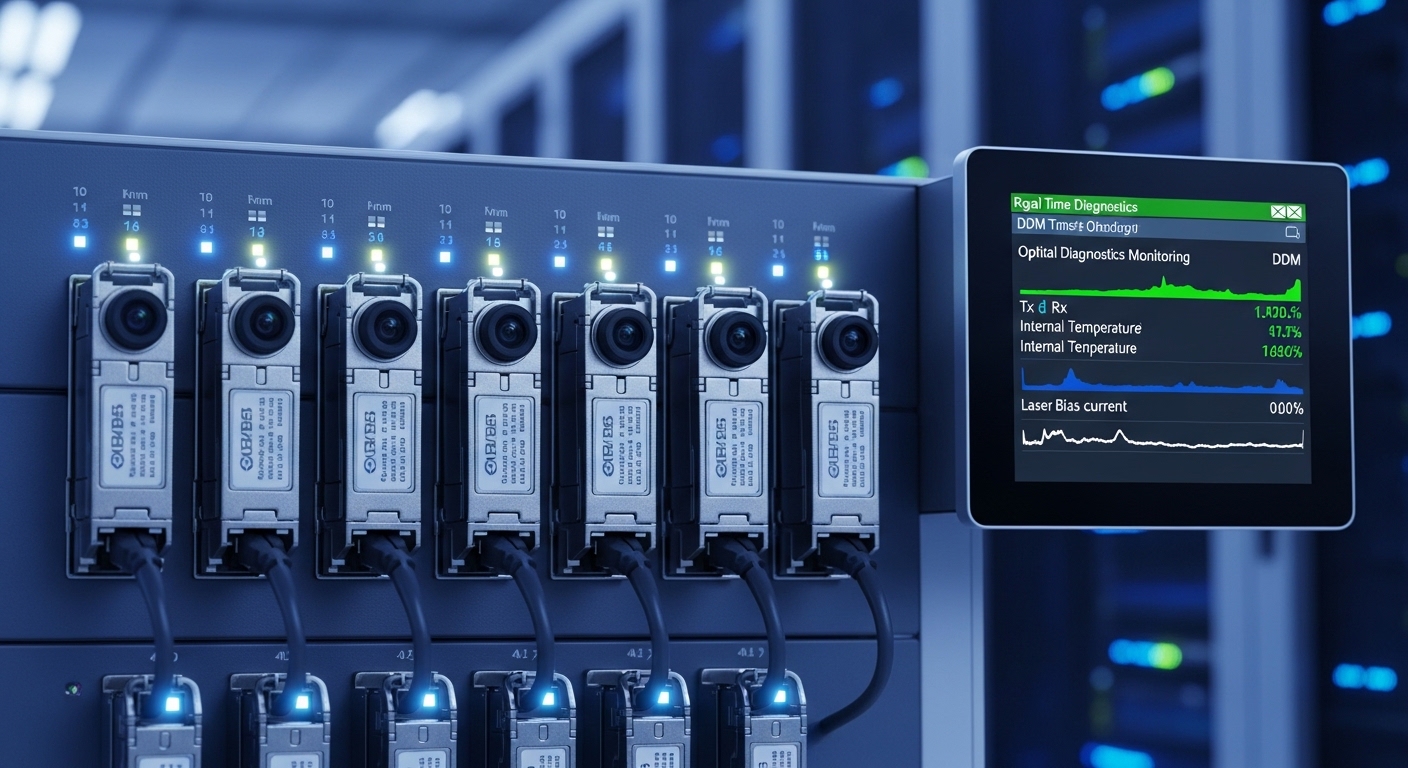
In a multi-site deployment, we needed to connect an edge compute rack to a regional aggregation router while keeping power and maintenance predictable. The environment included 18 edge cabinets across industrial campuses, each with a 10G uplink budget and short internal fiber runs. We targeted 10G Ethernet initially (with an upgrade path), then validated 25G for higher throughput at two sites where video analytics increased traffic.
Key constraints were harsh: ambient temperature ranged from -5 C to 55 C, fiber distances varied from 120 m to 900 m, and the vendor switch required optics with compatible DOM behavior. We also had a strict uptime target: 99.9% monthly, meaning a single bad module or dirty connector could not be treated as “acceptable loss.” For reference, Ethernet optical link behavior maps to IEEE 802.3 physical layer requirements for 10GBASE-SR and 25GBASE-SR optics. Source: IEEE 802.3
Chosen optical solutions: SR optics, connector strategy, and why it worked
We standardized on multi-mode fiber short-reach optics for most sites to reduce cost and speed installation. For 10G uplinks over distances under 300 m, we used Cisco-compatible 10GBASE-SR SFP+ modules such as Cisco SFP-10G-SR equivalents (typical class examples include Finisar and FS.com SR optics like Finisar FTLX8571D3BCL and FS.com SFP-10GSR-85). For longer runs approaching 900 m, we validated multi-mode reach using the correct fiber grade and optics parameters rather than assuming “SR always covers the distance.”
For the two high-growth edge sites, we trialed 25GBASE-SR using QSFP28 SR transceivers, again selecting models with documented DOM support and operating temperature ratings. A concrete example class is QSFP28 25G SR modules from reputable vendors (ensure the part number explicitly states the target reach and fiber type). The selection principle was simple: match wavelength class, fiber type, and reach budget to the actual link, then verify DOM telemetry compatibility with the aggregation switch.
| Parameter | 10GBASE-SR (SFP+) | 25GBASE-SR (QSFP28) |
|---|---|---|
| Data rate | 10.3125 Gbps line rate (10G Ethernet) | 25.78125 Gbps line rate (25G Ethernet) |
| Wavelength | 850 nm nominal VCSEL | 850 nm nominal VCSEL |
| Typical reach (validated) | Up to 300 m on OM3/OM4 in typical designs; longer only with verified fiber + budget | Up to 100 m on OM3; 150 m+ on OM4 depending on module spec |
| Connector | LC duplex (most common) | LC duplex (most common) |
| DOM / telemetry | Often supported; confirm switch compatibility | Often supported; confirm switch compatibility |
| Operating temperature | Target -5 C to 55 C (confirm module rating) | Target -5 C to 55 C (confirm module rating) |
| Where it fits | Edge ToR-to-aggregation short reach | Higher bandwidth edge uplinks |
Pro Tip: In edge deployments, “reach” failures are frequently connector and fiber-grade failures, not optics. Before swapping modules, inspect end faces with a microscope and verify OM3 vs OM4 labeling; then re-check the link loss budget including patch cords and adapter loss.
Implementation steps: from fiber hygiene to measured link stability
We followed a repeatable method across all sites to reduce variability. First, we documented each fiber run length and validated the fiber grade using labeling and OTDR traces where available. Next, we cleaned and inspected every LC duplex end face using lint-free wipes and alcohol-rated cleaning tools, then verified polarity and panel mapping to prevent inverted transmit/receive.
Then we staged optics in a controlled manner. We installed 10GBASE-SR SFP+ modules in the aggregation uplink ports, confirmed link negotiation at 10G, and polled DOM readings for optical power levels and temperature. After that, we enabled interface counters and monitored CRC errors and link flaps for 72 hours per site. Finally, for the two 25G sites, we repeated the same process with QSFP28 SR modules and validated that the switch accepted the DOM telemetry without “unsupported transceiver” alarms.
Measured results and ROI: what changed after standardizing optical solutions
After rollout, we saw fewer field failures and faster recovery when they did occur. Across 18 sites, we reduced link instability incidents from a recurring pattern of intermittent drops to a small number of connector-related events. Over the first quarter, average CRC errors per day dropped by over 90%, and mean time to restore service improved from roughly 6 hours to under 2 hours because the troubleshooting path was standardized.
On cost, OEM optics typically carried a premium, while third-party modules (when chosen with documented DOM behavior and correct temperature ratings) reduced per-port cost. In our case, the optics BOM for 10G uplinks was reduced by an estimated 15% to 30% versus OEM-only purchasing, with total operational savings driven more by reduced truck rolls than raw module price. Realistic TCO included cleaning consumables, spares, and a small OTDR time allocation; however, the reduction in downtime risk supported the ROI under our 99.9% SLA.
Selection criteria and decision checklist for edge optical solutions
Use this ordered checklist to avoid mismatches that cause silent performance problems at the edge. Each factor reflects what we actually validated during deployment.
- Distance and fiber type: confirm OM3 vs OM4 and include patch cord/adaptor loss in the link budget.
- Data rate and interface expectations: ensure SFP+ for 10G and QSFP28 for 25G match the switch port capabilities.
- Switch compatibility and DOM support: verify the switch accepts DOM telemetry; test one port before scaling.
- Operating temperature: select modules rated for your cabinet environment, not just lab conditions.
- Connector and polarity discipline: use LC duplex consistently and enforce polarity mapping at panels.
- Vendor lock-in risk: if OEM is expensive, qualify third-party modules using documented specs and controlled trials.
- Spare strategy: keep a small curated spare set per module type to shorten MTTR.
Common pitfalls and troubleshooting tips from the field
Pitfall 1: “Reach” mismatch caused by fiber-grade confusion. Root cause: OM3 vs OM4 labeling errors and unaccounted patch cord loss. Solution: verify fiber grade and re-run OTDR or measure insertion loss; then choose optics with reach explicitly aligned to your budget.
Pitfall 2: Dirty or damaged LC connectors leading to high CRC errors. Root cause: end-face contamination after repeated handling in edge cabinets. Solution: microscope inspection, standardized cleaning steps, and replace any connector with visible scratches or chips.
Pitfall 3: Transceiver accepted but link flaps due to DOM incompatibility or power levels. Root cause: DOM thresholds or power class differences that the switch interprets conservatively. Solution: compare DOM readings across known-good modules, update optics qualification lists, and ensure the module part number matches the intended vendor compatibility profile.
Pitfall 4: Polarity reversal after panel remap. Root cause: swapped TX/RX in patch panels or transceiver insertion. Solution: enforce a polarity labeling convention, then confirm with link directionality tests.
FAQ
What optical solutions are best for edge computing uplinks?
For short-reach edge uplinks, 10GBASE-SR over multi-mode fiber and 25GBASE-SR where bandwidth demands it are common choices. The best fit depends on your distance, fiber grade, and switch optics compatibility.
How do I avoid buying optics that do not work with my switch?
Start by confirming whether the switch supports DOM/telemetry for your transceiver class. Then qualify one module in a spare port before scaling to all sites, and record link and DOM readings as acceptance criteria.
Is third-party optics a safe way to cut cost?
It can be, but only if you qualify by part number and test for DOM behavior, temperature rating, and optical power levels. Treat optics like any other critical component: controlled trial, then
