
Edge computing only feels “real time” when the network path is engineered for low latency end to end. This article helps network and infrastructure leaders choose fiber optic transceivers and design edge-to-core links that meet application timing budgets, especially for industrial control, AR/VR, and real-time analytics. You will get concrete module examples, operational constraints, and governance checkpoints so deployments stay predictable under load.
Why optical modules matter for low latency at the edge
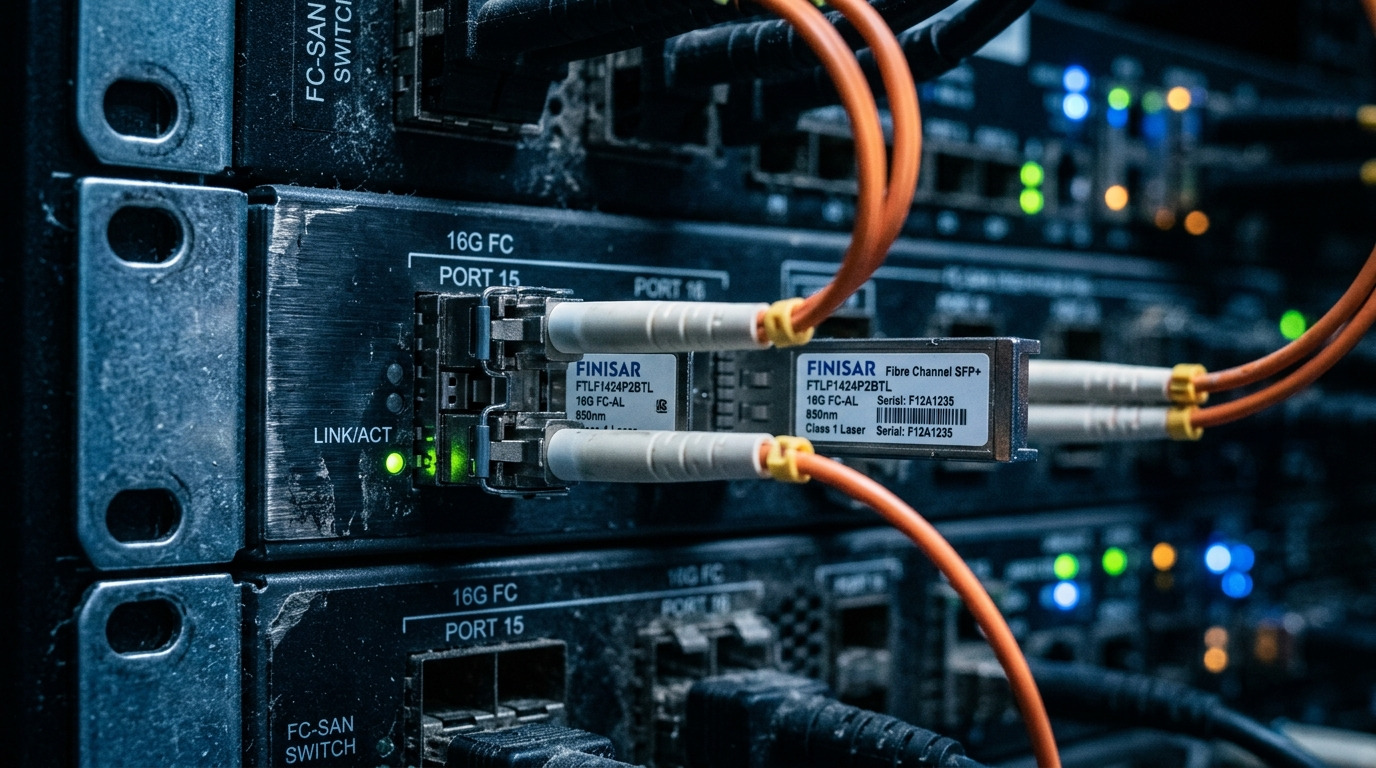
Latency is not just propagation delay; it is also serialization, link training behavior, and worst-case switching under congestion. In edge deployments, you typically connect ruggedized compute at the curb, in a factory cell, or in a micro data center to an aggregation switch over short to medium fiber runs. Optical transceivers reduce electrical signal conditioning delay and help maintain stable link characteristics across temperature swings and EMI-heavy environments.
From an architecture lens, you are optimizing the critical path: application to NIC to switch fabric to uplink to aggregation, then back to orchestrators or storage. Fiber plus modern transceiver optics typically improves determinism versus copper in noisy industrial zones, and it supports higher throughput per lane, reducing queueing time when bursts occur.
Pro Tip: If your edge workload is sensitive to jitter, validate link bring-up stability and DOM telemetry behavior after power cycling. We have seen “works on bench” modules cause renegotiation storms in field cabinets due to marginal optics or DOM firmware quirks, inflating tail latency during recovery windows.
Specs that determine low latency: distance, optics, and power
Optical choice is a mix of reach, wavelength, connector standard, and whether the module supports Digital Optical Monitoring (DOM) for governance and incident response. Engineers usually start with IEEE 802.3 link requirements for reach classes, then map the physical plant (fiber type, loss budget, and connector polishing state) to transceiver optics.
Below is a practical comparison using common 10G and 25G families you will encounter when modernizing edge uplinks. Always confirm exact compatibility with your switch vendor’s transceiver support list.
| Module example | Data rate | Wavelength | Typical reach | Connector | DOM | Operating temp |
|---|---|---|---|---|---|---|
| Cisco SFP-10G-SR | 10G | 850 nm | Up to 300 m (OM3) | LC | Supported (model dependent) | Industrial options vary by SKU |
| Finisar FTLX8571D3BCL | 10G | 850 nm | Up to 300 m (OM3) | LC | Supported | Commercial range |
| FS.com SFP-10GSR-85 | 10G | 850 nm | Up to 300 m (OM3) | LC | Supported | Varies by product grade |
Latency-relevant operational details
- Optical power and receiver sensitivity: If power margin is low, you will see increased bit errors and retransmissions at higher layers, which manifest as tail latency spikes.
- Temperature range: Edge cabinets can exceed spec during summer sun load; choose industrial-grade optics when the enclosure is not climate controlled.
- Connector hygiene: Dirty LC endfaces can produce intermittent link flaps that trigger reconvergence and queue buildup.
Edge-to-core use cases where low latency is measurable
Consider a city-wide traffic analytics deployment with edge inference boxes at intersections. In a 3-tier design, each intersection node connects to a nearby aggregation switch using 10G SR optics over 120 m of OM3 fiber, then uplinks to a regional core using higher-speed optics. The application target is <5 ms one-way budget for sensor-to-action, including local compute and network transit.
In practice, engineers measure latency under burst conditions by correlating switch queue depth counters, interface error counters, and application traces. When the fiber plant is stable and error-free, the dominant contributor becomes serialization and switch scheduling. When optics are marginal, you see CRC errors, link resets, and elevated retransmissions that blow the tail budget.
AR/VR and real-time rendering at the curb
For AR/VR kiosks, you might run 25G links to reduce congestion and keep frame delivery consistent. Even if the raw propagation is small, jitter from congestion queues is what breaks user experience. Optical transceivers that maintain stable receive power and support DOM-based alerting help you prevent “invisible” degradation before it becomes user-visible latency.
Selection criteria checklist for engineering low latency links
Use this ordered checklist to reduce trial-and-error and avoid governance surprises during rollout.
- Distance and fiber type: Map OM1/OM3/OM4 to the reach class for the wavelength you plan to use (often 850 nm for SR).
- Budget and margin: Calculate worst-case link loss including patch cords, connectors, and aging. Ensure receive power margin is comfortable under temperature drift.
- Switch compatibility: Verify transceiver part numbers against the switch vendor interoperability list to avoid DOM or rate-limiting behavior.
- DOM support and telemetry: Require DOM for optical power, temperature, and bias current so you can implement alerting and post-incident forensics.
- Operating temperature: Select industrial-grade optics for cabinets without HVAC; confirm transceiver temperature range matches the site profile.
- Vendor lock-in risk: Decide whether you accept OEM-only modules or allow third-party optics with tested profiles and a documented risk acceptance.
- Power and TCO: Compare not only purchase price but also failure rates, warranty terms, and expected replacement intervals.
Common pitfalls and troubleshooting for low latency optics
Most low latency failures in edge links are not “mystery latency”; they are side effects of link instability, congestion, or marginal optics.
Pitfall 1: Intermittent link flaps causing tail latency spikes
Root cause: Dirty or damaged LC connectors, or high-loss splices in field fiber. The transceiver may still link up, but error bursts trigger higher-layer retransmissions.
Solution: Inspect with fiber microscope, clean with approved lint-free methods, replace patch cords, and re-test with an optical power meter and OTDR for hotspots.
Pitfall 2: DOM telemetry mismatch leading to false alarms or missing alerts
Root cause: Third-party modules without full DOM support or with different threshold behaviors than your monitoring system expects.
Solution: Validate telemetry fields in a staging environment, align alert thresholds to measured baselines, and log DOM changes during link resets.
Pitfall 3: Temperature-driven degradation in non-HVAC edge cabinets
Root cause: Selecting commercial-grade optics for cabinets that exceed spec; laser bias and receiver sensitivity drift increase error rates.
Solution: Use industrial-grade transceivers, add cabinet cooling or airflow where feasible, and monitor temperature plus optical power trends over weeks, not hours.
Pitfall 4: Underestimating queueing delay from oversubscribed uplinks
Root cause: Even with perfect optics, a congested uplink can dominate tail latency. Engineers often blame the transceiver first.
Solution: Measure queue depth, buffer drops, and ECN/RED behavior on the edge uplink; then tune QoS and bandwidth allocation before swapping optics.
Cost and ROI: where savings help and where they backfire
Typical street pricing varies by grade and brand, but in many markets you will see 10G SR SFP modules in a broad range (OEM often higher than third-party). OEM modules may cost ~2x to 3x more in some catalogs, yet they can reduce operational risk through tighter compatibility testing and warranty support.
ROI should be modeled as: (1) reduced downtime from fewer link instability incidents, (2) reduced mean time to repair via DOM visibility, and (3) lower planned replacement costs. If you deploy industrial sites with uncontrolled temperature and frequent field maintenance, the cheaper module can become expensive quickly due to higher failure probability and slower root cause analysis.
FAQ on low latency edge optical modules
What optical type best supports low latency for edge links?
For short to medium runs, 10G SR (850 nm) over OM3/OM4 is common because it is cost-effective and easy to deploy with LC connectors. The latency impact is indirect: stable, error-free links prevent retransmissions and queue growth, which protects tail latency.
Should I standardize on OEM or allow third-party transceivers?
Standardize based on your governance tolerance. OEM-only reduces compatibility surprises, while third-party can lower CapEx if you enforce interoperability testing, require DOM support, and maintain an approved parts list.
How do I verify the fiber plant will not harm low latency?
Use a loss budget with margins for connectors and patch cords, then validate with optical power measurements at install time. For ongoing assurance, track DOM receive power and error counters so you can detect degradation before it becomes user-visible latency.
What monitoring signals correlate with low latency failures?
Look for CRC errors, interface resets, DOM receive power drops, and temperature excursions. Pair network telemetry with application traces to confirm whether the tail latency is caused by link instability or by congestion and scheduling.
Can the transceiver choice affect jitter even if throughput is sufficient?
Yes. Marginal optics can cause sporadic errors that trigger retransmissions, and intermittent link behavior can cause microbursts during recovery. Even when average latency looks fine, tail metrics degrade.
How should I roll out new modules safely?
Start with a pilot site that matches your worst-case environment (temperature, fiber quality, and utilization). Compare DOM baselines and error rates against the current standard, then expand using a controlled change window.
If you want low latency you can defend in audits and postmortems, treat optical modules as part of your architecture and governance, not just line items. Next, review edge QoS for deterministic latency to align transceiver stability with scheduling and queue management.
Author bio: I have designed and operated edge-to-core fiber networks with field-tested transceiver policies, DOM telemetry baselining, and incident playbooks. I evaluate deployments through ROI, interoperability risk, and measurable latency outcomes in production environments.
