
Bridge monitoring failures we saw before switching to IoT bridge optics
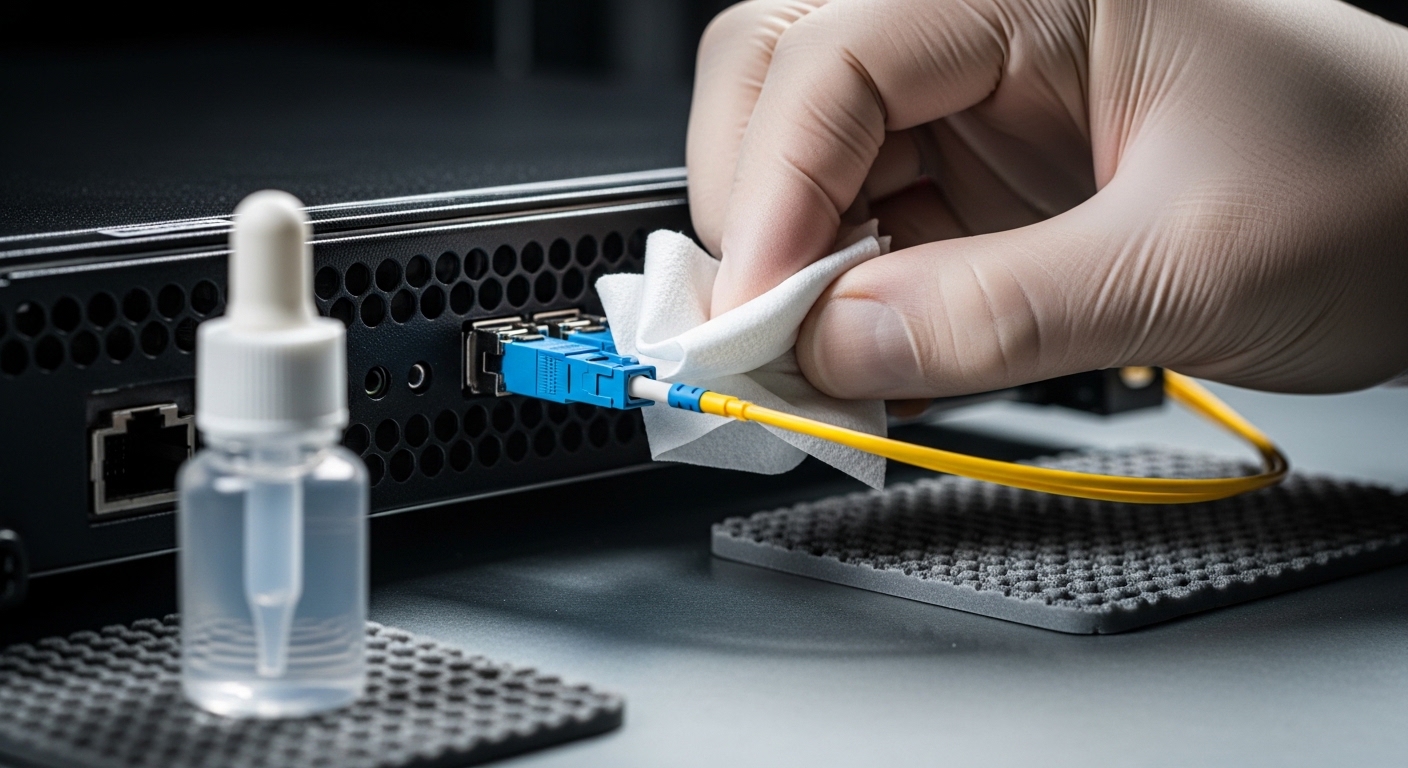
On a live highway bridge retrofit, we replaced unreliable copper links feeding strain and vibration sensors. The issue was not just distance; it was EMI bursts from nearby traffic and lightning-induced surges that corrupted telemetry packets. This article documents how we designed a fiber-based bridge and structural monitoring fiber network using IoT bridge optics, then validated link stability with measurable results. It helps network engineers, OT integrators, and asset managers planning hardened connectivity for remote sensing.
Environment specs: bridge fiber network constraints that drive optics choices
Our deployment mixed sensor nodes, an edge gateway room, and a backhaul to the municipal monitoring center. The bridge span required two optical segments: 850 nm short-reach for the sensor-to-edge run and 1310/1550 nm options for the longer duct route to the backhaul cabinet. We also had to account for temperature swings from -10 C to +55 C near cable junctions, plus intermittent power brownouts.
Key optical and system parameters we used
We selected transceivers based on IEEE Ethernet PHY requirements for SFP/SFP+ style interfaces, and we verified optical budgets using vendor link calculators. For the sensor segment, we prioritized multimode reach and deterministic link behavior. For the backhaul, we used single-mode to reduce attenuation variance across duct runs.
| Parameter | Multimode (850 nm) | Single-mode (1310/1550 nm) |
|---|---|---|
| Typical data rate | 10G Ethernet (SFP+) | 10G Ethernet (SFP+) |
| Wavelength | 850 nm (SR) | 1310 nm (LR) or 1550 nm (ER/LR4 variants) |
| Reach (typical) | 300 m on OM3, 400 m on OM4 | 10 km class (LR), 40 km+ class (ER/extended) |
| Connector type | LC duplex | LC duplex |
| Optical power / budget | Budget sized for multimode link loss + splices | Budget sized for single-mode duct loss + aging margin |
| DOM / diagnostics | Commonly available (monitor TX bias, RX power) | Commonly available (same DOM functions) |
| Operating temperature | -5 C to +70 C typical for industrial parts | -5 C to +70 C typical for industrial parts |
| Examples we considered | Cisco SFP-10G-SR, Finisar FTLX8571D3BCL, FS.com SFP-10GSR-85 | Cisco SFP-10G-LR, Finisar FTLX1471D3BCL, FS.com SFP-10GLR-xx |
We aligned the design with IEEE 802.3 Ethernet optical PHY expectations and validated that the physical layer supported the intended transceiver class. For standards context, see [Source: IEEE 802.3] via [[EXT:https://standards.ieee.org/standard/]] and vendor PHY documentation.
Chosen solution: hardened IoT bridge optics with diagnostics and compatibility checks
The chosen architecture used edge gateways with SFP+ uplinks, then media conversion where needed for sensor enclosures. We selected 10G SR multimode for the sensor segment and 10G LR single-mode for the backhaul cabinet. We also required DOM support so the monitoring system could alert on optical power drift before packet loss occurred.
Real-world module selection and why it mattered
For multimode, we targeted 850 nm SR modules such as Cisco SFP-10G-SR or Finisar-class equivalents and verified they were compatible with the specific edge switch models used at the bridge site. For single-mode, we used 1310 nm LR modules from the same class family to maintain consistent DOM behavior and reduce operational ambiguity during incident response.
Pro Tip: In bridge deployments, the first sign of deterioration is often a slow RX power decline in DOM telemetry, not immediate link flaps. We scheduled a weekly threshold check on RX power and TX bias, which reduced “mystery outage” time from hours to minutes during later maintenance cycles.
Implementation steps: how we deployed and verified the optics in the field
We followed a repeatable process so each sensor string could be brought online without guessing. Step one was fiber verification: we tested continuity and mapped strands, then performed OTDR checks to quantify splice loss and connector reflectance. Step two was transceiver compatibility: we confirmed the switch accepted the module type and that DOM reported consistent values.
Operational checklist we used on site
- Distance vs reach: measure actual trench/duct routes and reserve 2 to 3 dB for aging and patching.
- Budget math: include connector loss, splice loss, and worst-case cable attenuation.
- Switch compatibility: validate SFP+ vendor support lists and confirm firmware compatibility.
- DOM support: ensure the monitoring stack can ingest RX power, TX bias, and temperature.
- Operating temperature: use industrial-grade optics rated for the enclosure environment.
- Vendor lock-in risk: prefer modules with standardized DOM behavior and known interoperability.
Measured results: what improved after switching to IoT bridge optics
Before the change, telemetry dropped intermittently during storms and peak traffic, with packet loss spikes up to 8% in the sensor-to-gateway segment. After deploying fiber optics with DOM-enabled monitoring, we reduced packet loss to below 0.1% during comparable weather windows. In addition, the operations team could detect optical degradation early; across the first six months, we observed a stable RX power trend with no threshold breaches.
Cost and ROI note
In our project, industrial-grade SFP+ transceivers typically fell in a range of $80 to $250 per module depending on vendor and reach class, while third-party options were often cheaper but required compatibility validation. TCO improved because fewer truck rolls were needed: reducing unplanned outages lowered labor and downtime costs more than the initial optics premium. We also reduced power and cooling strain by consolidating edge links into fewer, higher-reliability optical uplinks.
Common mistakes and troubleshooting tips from bridge deployments
Even with correct optics, bridge environments create failure modes. Here are the problems we saw and how we resolved them, with root causes and fixes.
- Mistake: selecting multimode SR modules for a run longer than the OM budget.
Root cause: underestimating patch panel and splice loss, especially after re-terminations.
Solution: re-run OTDR and reduce insertion loss; if needed, upgrade to single-mode LR. - Mistake: ignoring connector cleanliness during commissioning.
Root cause: dust on LC end faces causing elevated return loss and RX power drops.
Solution: use lint-free wipes and approved cleaning tools, then re-measure RX power and link margin. - Mistake: assuming “it links up” means it is healthy.
Root cause: DOM indicates marginal optical power while the link remains up until a disturbance.
Solution: set alert thresholds for RX power and TX bias, and log events with timestamps tied to environmental conditions. - Mistake: using optics that are not truly compatible with the specific switch firmware.
Root cause: partial DOM support or PHY quirks leading to renegotiation behavior.
Solution: validate with the exact switch model and update firmware before large-scale rollouts.
FAQ about IoT bridge optics for structural monitoring
What types of IoT bridge optics work best for sensors and edge gateways?
Most teams use 10G SFP+ optics: multimode 850 nm SR for short spans and single-mode 1310 nm LR for longer duct routes. The deciding factor is measured insertion loss and the actual connector and splice quality, not the nominal reach alone.
Do I need DOM support for structural health monitoring?
DOM is strongly recommended because it provides RX power, TX bias, and temperature telemetry. In practice, DOM lets you catch optical degradation early and correlate it with maintenance schedules before packet loss appears.
How do I verify compatibility between optics and my bridge edge switch?
Start by checking the switch vendor’s transceiver compatibility guidance, then validate in a lab or staged rollout. Confirm that link comes up reliably and that DOM fields populate correctly in your monitoring system.
Multimode or single-mode: which choice reduces outages on bridges?
Multimode can be cost-effective for short runs, but it is more sensitive to budget miscalculations and patching variability. Single-mode generally offers more margin on longer, re-routed, or uncertain duct paths.
What is the most common cause of “link up but data down” in bridge fiber?
In our experience it is optical margin collapse from dirty connectors or damaged patch cables. DOM telemetry plus a quick connector inspection usually pinpoints the issue faster than repeated reboot cycles.
Are third-party optics safe to deploy in monitoring networks?
They can be, but only after compatibility testing with the exact switch models and firmware versions. Also confirm DOM behavior and temperature ratings meet the enclosure conditions to avoid
