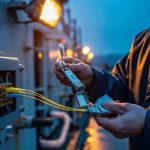
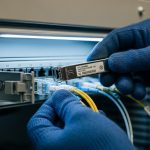
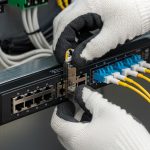
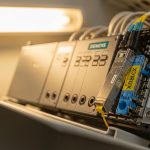
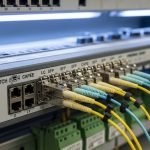
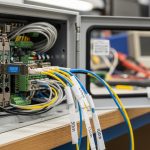
Maritime operators often need a vessel fiber link that stays stable across vibration, salt air, and long runs between ships and port infrastructure. This guide helps network engineers and field technicians choose the right transceivers, validate compatibility, and avoid the common failure modes seen in real deployments. You will get a practical selection checklist, a troubleshooting section, and a spec comparison you can use during procurement and commissioning.
Why a vessel fiber link fails in the field (and what to design for)
Unlike terrestrial links, shipboard and port environments introduce mechanical stress and contamination risks that directly impact optical performance. Typical issues include connector oxidation from humidity and salt mist, micro-bending during cable routing, and thermal cycling inside switch rooms or equipment racks on the quay. Engineers should treat the vessel fiber link as a system: optics, fiber plant (core/cladding and bend radius), connectors, patch panel cleanliness, and the transceiver DOM configuration. For standards grounding, reference IEEE 802.3 for Ethernet PHY behavior and vendor datasheets for optical power and receiver sensitivity.
Operational constraints to capture before ordering
- Distance and fiber type: multimode (OM3/OM4) vs single-mode (OS2), plus actual measured loss.
- Optics form factor: SFP/SFP+/SFP28 for 1G to 25G; QSFP+/QSFP28 for 40G to 100G.
- Switch vendor compatibility: transceiver supported list and DOM interpretation method.
- Environmental limits: temperature range, salt fog exposure, and vibration tolerance for cables and connectors.
- Power and cooling: transceiver power budget and airflow constraints in enclosed racks.
Pro Tip: In maritime commissioning, treat DOM warnings as actionable telemetry, not “informational” logs. If you see repeated receive power alarms during ship motion, the root cause is often a connector contamination or a marginal bend radius, not an optics aging issue. Clean and re-terminate before swapping modules to avoid masking the real defect.
Transceiver choices for port and ship Ethernet: SFP vs SFP28 vs QSFP
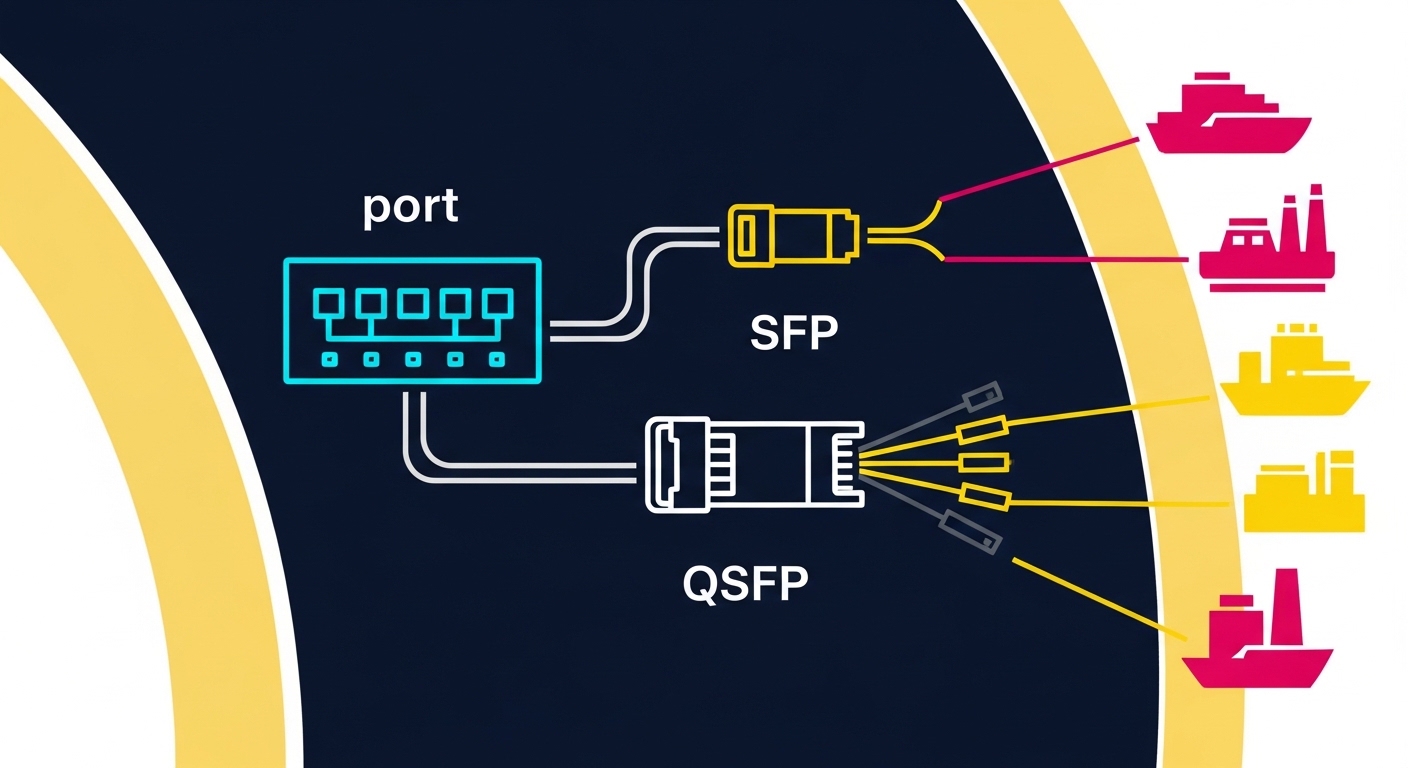
Selection starts with the Ethernet rate and the switch port type. If your uplink is 10G or 25G, SFP+ or SFP28 modules are common; for 40G and 100G, QSFP+ or QSFP28 is typical. For a vessel fiber link that terminates on both sides of a port network, confirm the transceiver mode: SR for multimode short reach, LR/ER for long reach on single-mode, and ZR for extra-long scenarios. Always match the optical standard to the fiber type and budget rather than assuming “same wavelength equals same link.”
Common optical standards you will see
- 10G SR: 850 nm over OM3/OM4 multimode for short reach.
- 25G SR: 850 nm over OM3/OM4 multimode for higher density.
- 10G LR / 25G LR: 1310 nm single-mode for longer runs.
- 40G SR4: 850 nm multimode using four lanes.
- 100G SR4 / 100G LR4: four-lane optics with strict lane-level alignment requirements.
Spec comparison table (use for procurement and link budget)
Below is a practical comparison of representative module families engineers commonly deploy for maritime and port links. Always validate exact parameters against the specific vendor datasheet and the switch compatibility list.
| Module family (example part) | Data rate | Wavelength | Reach target | Fiber type | Connector | Optical class (typical) | Operating temperature |
|---|---|---|---|---|---|---|---|
| Cisco SFP-10G-SR (example SR) | 10G Ethernet | 850 nm | ~300 m (OM3) / ~400 m (OM4) | OM3/OM4 multimode | LC | Class 1 laser product | 0 to 70 C (typical) |
| Finisar FTLX8571D3BCL (example 10G SR) | 10G Ethernet | 850 nm | ~300 m (OM3) / ~400 m (OM4) | OM3/OM4 multimode | LC | Class 1 laser product | -40 to 85 C (typical for extended models) |
| FS.com SFP-10GSR-85 (example extended SR) | 10G Ethernet | 850 nm | ~300 m (OM3) / ~400 m (OM4) | OM3/OM4 multimode | LC | Class 1 laser product | -40 to 85 C (typical) |
| Typical QSFP28 100G SR4 (vendor family) | 100G Ethernet | 850 nm | ~100 m (OM4 typical) | OM4 multimode | LC | Class 1 laser product | 0 to 70 C (typical) |
| Typical QSFP28 100G LR4 (vendor family) | 100G Ethernet | 1310 nm | ~10 km (typical) | OS2 single-mode | LC | Class 1 laser product | -5 to 70 C (varies) |
Sources for standards and vendor behavior: IEEE 802.3 and vendor datasheets such as Cisco SFP product documentation and Finisar/FS transceiver datasheets. [Source: IEEE 802.3; Source: Cisco datasheets; Source: Finisar/Viavi and FS.com transceiver datasheets]
Building the link: distance, power budget, and DOM checks
A reliable vessel fiber link depends on validated optical power budget and correct transceiver configuration. Start with measured fiber attenuation and connector losses, then compare to receiver sensitivity and transmitter launch power from the module datasheet. For DOM, confirm that the platform reads temperature, bias current, transmit power, and receive power, and that alarms are mapped to thresholds you can monitor during sea trials or port operations.
Step-by-step commissioning workflow
- Confirm fiber type (OM3, OM4, OS2) and verify patch panel labeling against test results.
- Measure end-to-end loss using an OTDR or calibrated optical power meter with reference launch/receive conditions.
- Account for worst-case connectors: include insertion loss from LC adapters, patch cords, and any inline couplers.
- Validate bend radius along the entire cable route on the vessel and in the port ducting.
- Check DOM compatibility: verify that the switch accepts the module and that DOM telemetry is readable.
- Run link stability tests: monitor receive power and error counters while simulating vibration and thermal cycling where feasible.
DOM and compatibility caveats you must plan for
- Some switches enforce vendor part-number checks, causing “unsupported transceiver” faults even when optics are electrically standard.
- DOM thresholds may be conservative; extended temperature models might still trigger alarms if the switch expects a narrower range.
- 100G optics using four lanes (SR4/LR4) can fail due to lane-specific oxidation or micro-bending; symptoms can look like intermittent oversubscription or CRC spikes.
Pro Tip: When you see intermittent link flaps during boat movement, log receiver power versus time. If the power dips correlate with motion windows, prioritize connector cleaning and re-termination, then verify cable strain relief. Swapping optics without capturing telemetry often increases downtime.

Selection criteria checklist for a vessel fiber link
Use this ordered decision checklist during design review and procurement. It is tuned for port-to-vessel environments where reliability and maintainability matter as much as link speed.
- Distance and reach: choose SR vs LR/ER/ZR based on measured loss, not nominal reach.
- Fiber plant type: OM3/OM4 for 850 nm SR; OS2 for 1310 nm LR/LR4.
- Budget and margin: ensure you have headroom for connector aging and salt-induced oxidation.
- Switch compatibility: confirm transceiver support list and expected DOM behavior for that switch model.
- DOM support and monitoring: verify telemetry fields your NMS can ingest (rx power, tx power, temperature).
- Operating temperature: select modules with extended ranges when racks can exceed typical office limits.
- Connector and cabling ecosystem: LC vs MTP/MPO, patch cords, strain relief, and dust caps availability.
- Vendor lock-in risk: compare OEM vs third-party, and plan for firmware or EEPROM compatibility requirements.
Cost and ROI note (OEM vs third-party optics)
In many port projects, OEM optics cost a premium but reduce commissioning risk. Typical street pricing ranges can vary widely by region and quantity, but engineers often see OEM 10G SR modules priced roughly in the mid-hundreds USD each, while third-party extended-temperature SR modules may be materially lower. TCO should include not only module price but also spares strategy, expected failure rate in harsh environments, and labor downtime during re-cleaning or re-termination. If your NMS can detect rx power degradation early, you may reduce truck rolls and improve ROI even with third-party optics, provided switch compatibility is confirmed.
Common mistakes and troubleshooting for vessel fiber links
Even when modules are “compatible,” maritime conditions expose failure modes quickly. Below are concrete pitfalls with root causes and practical solutions based on field patterns.
Link works on day one, then flaps during ship motion
- Root cause: connector contamination, inadequate strain relief, or cable bend radius violation causing micro-bending.
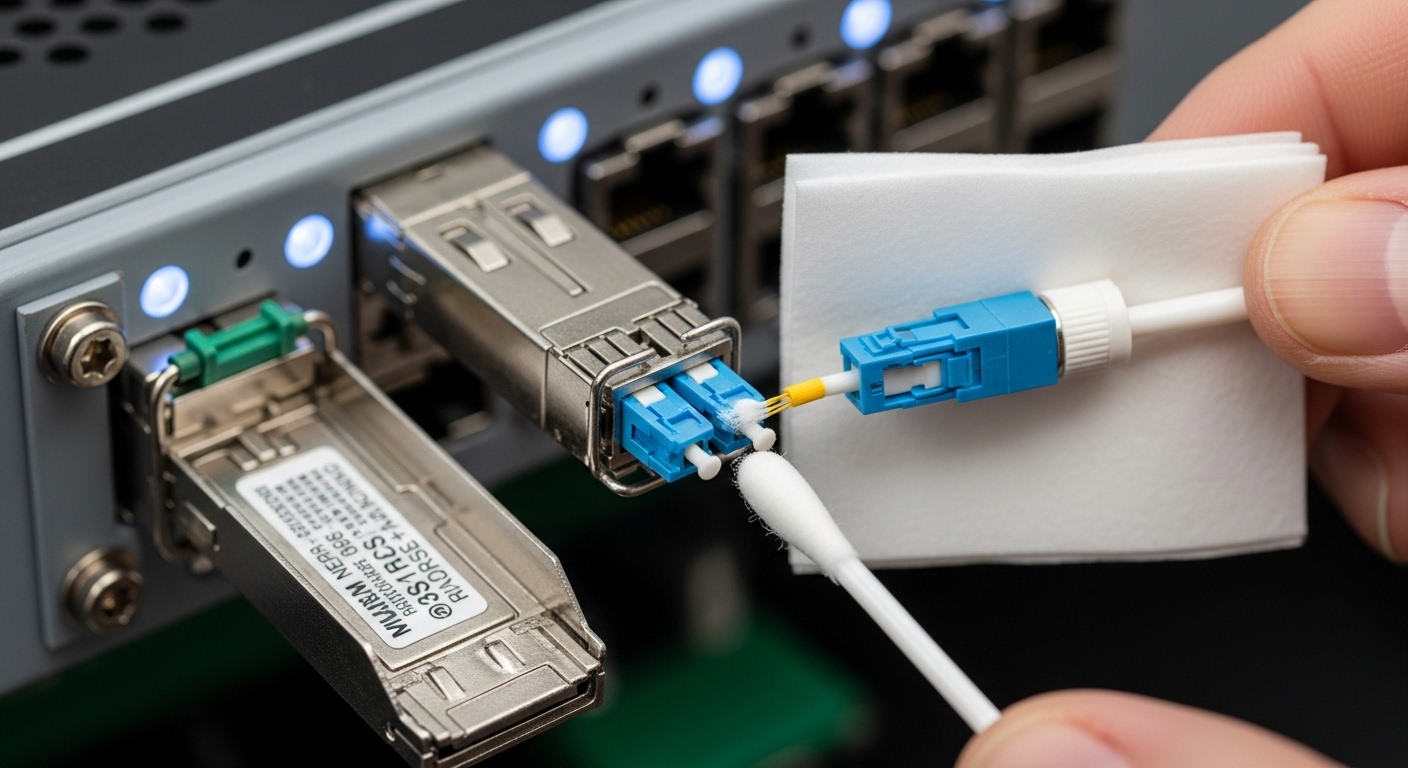
- Solution: clean both ends with proper fiber cleaning tools, re-terminate if needed, and add strain relief and routing changes to respect bend radius.
Receive power is low but no alarms appear until errors spike
- Root cause: link budget too tight; multiple patch cords/adapters add unaccounted loss; transmitter aging not yet reflected in thresholds.
- Solution: measure end-to-end loss with an optical power meter, compare to the exact module receiver sensitivity, and increase margin by replacing highest-loss patch cords or moving to LR variants.
“Unsupported transceiver” or intermittent DOM readings
- Root cause: switch enforces a vendor allowlist, or DOM format/threshold expectations differ between platforms.
- Solution: validate against the switch transceiver compatibility list, update switch software if supported, and test in a staging rack before fleet rollout.
100G SR4 intermittency due to lane imbalance
- Root cause: one lane is more affected by oxidation or a slightly mis-cleaned MPO/MTP endface.
- Solution: inspect and clean MPO/MTP connectors with the correct cassette cleaner, test with a known-good patch cord, and verify link partner optics match the standard.
FAQ: vessel fiber link optics for ports and maritime networks
What is the best transceiver type for a short port run?
For short distances within a port rack or nearby ducted pathways, many teams use SFP+ SR at 850 nm over OM3/OM4 multimode. Choose based on measured loss and ensure the switch supports that specific transceiver family and DOM behavior. If you have tight margins or frequent connector disturbances, consider moving to a single-mode LR option for more stability.
Can I mix OEM and third-party optics on the same vessel fiber link?
Often yes, but only if both ends support the same optical standard and the switch accepts both module types. The bigger risk is DOM compatibility and vendor allowlists that can trigger errors or warnings. Always validate in a staging environment and monitor rx power and error counters during representative motion and temperature conditions.
How do I set thresholds for DOM alarms in harsh maritime conditions?
Start with vendor datasheet recommended operating ranges and then tune thresholds based on your measured baseline during commissioning. Use rx power trends rather than only instantaneous alarms, and alert on sustained deviation that could indicate connector oxidation. If your NMS can correlate alarms with time windows of ship movement, you can reduce false positives.
What fiber connectors are most reliable for a vessel fiber link?
LC is common for SFP/SFP+ links and is manageable for field cleaning and inspection. For high-density 40G/100G, MPO/MTP is typical but demands disciplined cleaning with the correct tools. In all cases, use dust caps and connector covers whenever a patch is disconnected to prevent salt contamination.
When should I switch from SR to LR for maritime deployments?
Switch when you cannot maintain enough optical margin, when connector count is high, or when the cable routing increases bend and micro-bending risk. LR on single-mode typically provides more tolerance for loss variation, especially if the measured loss is near the SR budget. Your decision should be based on measured OTDR/power data, not nominal reach.
Do I need to worry about laser safety on ships and in port workshops?
Yes. Most modern transceivers are Class 1 laser products, but you still must follow safe handling procedures, use proper eyewear when required by your site policy, and prevent fiber end exposure. Ensure your team uses correct cleaning practices to avoid generating contamination that can also degrade safety and performance.
Designing a stable vessel fiber link requires aligning optics to fiber type, validating link budgets with measurements, and enforcing connector cleanliness and DOM monitoring discipline. Next, review the practical network design constraints for maritime environments in maritime network reliability patterns.
Author bio: I have deployed and commissioned transceiver and fiber links in harsh industrial and maritime rack environments, validating DOM telemetry against receiver power and error counters. I write field-first guidance grounded in vendor datasheets and IEEE Ethernet PHY behavior, with an emphasis on measurable commissioning outcomes.