In many data centers, optics are treated like commodity hardware. Then budgets tighten, firmware quirks appear, and suddenly transceiver TCO becomes a line item you can no longer ignore. This article helps network owners, field engineers, and procurement teams compare OEM and third-party transceivers using operational facts, not slogans.
Why transceiver TCO is more than the purchase price
Transceiver TCO includes purchase cost plus engineering time, spares strategy, downtime risk, optical performance drift, and support friction. In practice, the “cheapest” module can become expensive if it triggers frequent reseats, link flaps, or compatibility issues with a specific switch platform. IEEE 802.3 defines electrical and optical behaviors for Ethernet optics, but vendors still implement platform-specific diagnostics and control-plane expectations. That is where OEM vs third-party differences show up in real operations.
When you model TCO, separate costs into three buckets: CapEx (module price, labor for install), OpEx (monitoring, replacement labor, power/thermal impacts), and Risk-adjusted costs (outage probability and escalation time). A field pattern I have seen: organizations buy third-party optics at 20%–40% lower unit price, then lose that savings to extra troubleshooting hours when DOM readings or temperature thresholds behave differently.
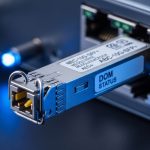
Pro Tip: Treat DOM behavior as part of TCO. Two optics can meet the same IEEE reach, yet one vendor’s DOM implementation reports thresholds that trigger alarms earlier in your monitoring stack, creating avoidable “incident churn.”
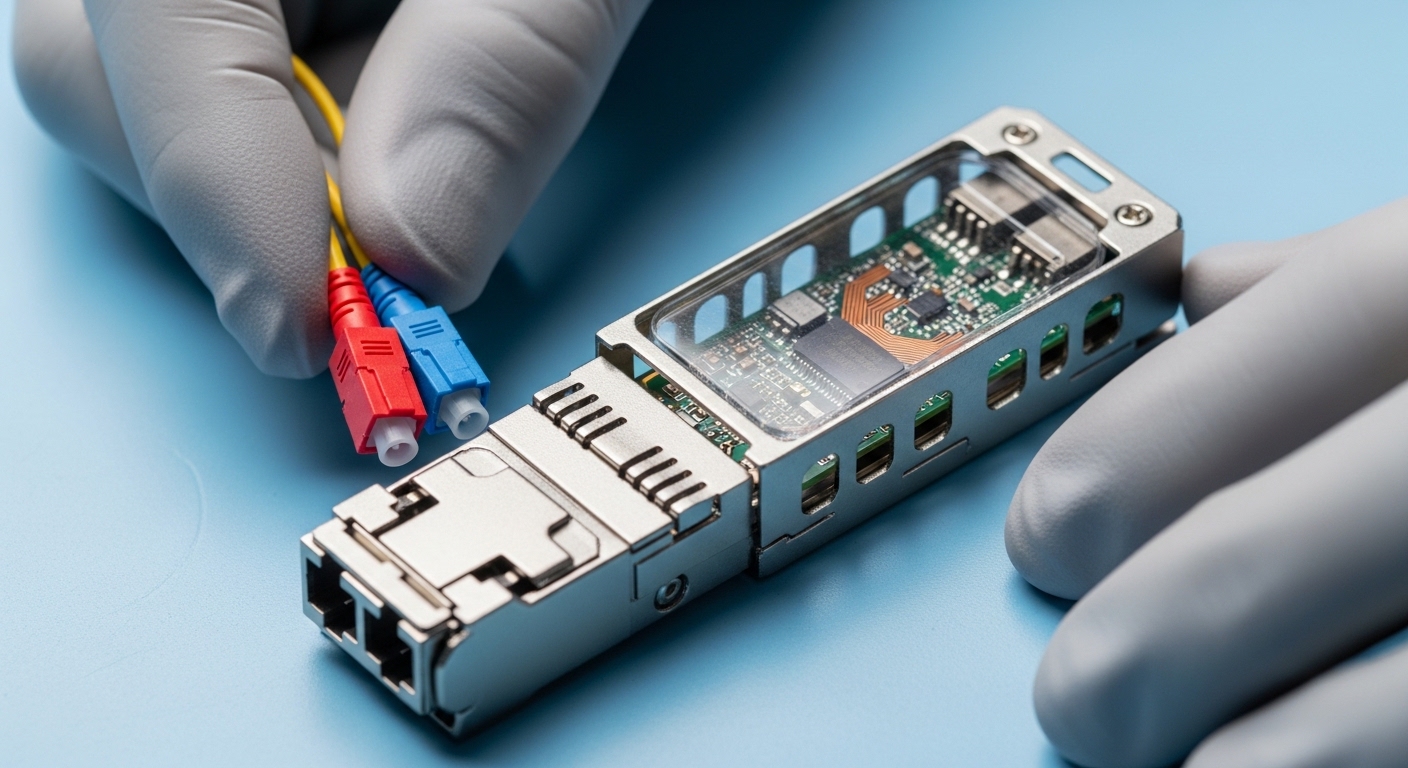
OEM vs third-party: what changes in engineering terms
OEM optics are typically sourced and validated by the switch vendor, with documented compatibility matrices and support pathways. Third-party optics can be fully standards-compliant, but their validation may target fewer platforms or rely on broader interpretive compatibility. For Ethernet optics, the underlying physical layers are governed by IEEE 802.3 for link rates and optics classes, while the transceiver management interface is commonly based on SFF specifications (for example, SFP/SFP+/QSFP form factors) including digital optical monitoring (DOM). In the field, the differences you notice are often in DOM scaling, alarm thresholds, and how the switch handles transceiver resets.
Common module types you will compare
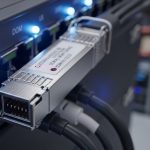
Most TCO debates happen around high-volume links: 10G SFP+ (SR/LR), 25G SFP28, 40G QSFP+, and 100G QSFP28. For example, a common enterprise/server uplink uses 10G SR optics such as Cisco-compatible SFP-10G-SR variants and Finisar/FS.com class optics. In 100G data centers, 100G QSFP28 SR optics are frequently used with OM4 or OM5 fiber, and the operational sensitivity to temperature and cleanliness becomes more visible.
Specs and compatibility: a comparison table that matters to TCO
Below is a practical comparison of typical optics you may deploy. Use it as a starting point, then validate against your switch model and the vendor’s transceiver compatibility list.
| Transceiver type | Example part numbers | Wavelength / Mode | Reach (typical) | Connector | DOM | Operating temp | Notes for TCO |
|---|---|---|---|---|---|---|---|
| 10G SFP+ SR | Cisco SFP-10G-SR, Finisar FTLX8571D3BCL, FS.com SFP-10GSR-85 | 850 nm MM | Up to 300 m (OM3) / 400 m (OM4) | LC | Yes (vendor-specific thresholds) | 0 to 70 C (typical for many) | Large deployment volume; cleaning and reseat labor dominate |
| 25G SFP28 SR | Common vendor OEM/third-party SR modules | 850 nm MM | ~100 m on OM4 (typical class) | LC | Yes | -5 to 70 C (varies) | Higher sensitivity to link margin and transceiver aging |
| 100G QSFP28 SR | Common OEM and third-party SR options | 850 nm MM | ~100 m on OM4 (typical class) | LC | Yes | 0 to 70 C (varies) | Front-panel port density makes troubleshooting time costly |
Even when reach and wavelength match, the link budget and margin depend on fiber quality (OM4/OM5), patch panel cleanliness, and aging over time. OEM modules often come with tighter validation for a switch line, which can reduce time-to-troubleshoot. Third-party modules can still deliver excellent results, but you must account for how quickly you can identify whether a failure is fiber, optics, or platform negotiation.

Real deployment math: where TCO swings in practice
Consider a 3-tier data center leaf-spine fabric: 48-port 10G ToR switches at 30 racks, each ToR with 48 active 10G SR links to aggregation, plus server NICs and patching. That is 1,440 active optics pairs (counting one module per link end; the exact number depends on whether you count both ends). If you replace 10% annually as spares due to churn and moves, you might cycle through 144 modules per year. Assume an OEM 10G SR module costs $180 and a third-party costs $110.
At face value, the savings per module is $70, or about $10,080 per year. However, field experience shows the TCO swing often comes from troubleshooting labor. If third-party optics trigger an extra 2 hours per 20 replacements due to compatibility or alarm threshold noise, and your on-site engineer rate is $120/hour fully loaded, that adds 2 hours * (144/20)=14.4 hours per year, or about $1,728. If downtime risk is managed with good spares and maintenance windows, the risk cost might be small; if not, it can dwarf the unit savings quickly. The result: your transceiver TCO advantage may shrink from $10k to $8k or less—unless you standardize and validate thoroughly.
Selection criteria checklist for OEM vs third-party optics
Use this ordered checklist before you commit to a procurement change. It is designed to reduce “surprise costs” that show up months later.
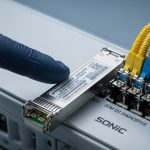
- Distance and fiber type: confirm OM4/OM5 assumptions and connector cleanliness; match IEEE optics class expectations for your link rate.
- Switch compatibility: verify against the switch vendor’s transceiver compatibility list, including DOM alarm behavior and supported form factors.
- DOM support and monitoring mapping: confirm that vendor DOM readings (temperature, laser bias, received power) align with your monitoring thresholds and alert logic.
- Operating temperature and airflow: compare the module’s rated range to your rack thermal profile; measure inlet temperatures at the switch and near the optics cage.
- Budget and spares strategy: price modules plus spares required to cover failure and maintenance windows; do not treat spares as optional.
- Vendor lock-in and supply risk: evaluate lead times, RMA friction, and whether you can source alternates without re-validation.
- Warranty and replacement process: check whether replacements are cross-shipped, turnaround time, and whether the vendor requires specific serial number logs.
Common pitfalls and troubleshooting tips
Here are failure modes I have seen in the field that directly affect transceiver TCO by increasing labor and replacement frequency.
-
Pitfall 1: Link flaps only on one switch platform
Root cause: platform-specific transceiver diagnostics or DOM threshold interpretation causes the switch to reset the module during marginal conditions.
Solution: confirm compatibility for that exact switch model; compare DOM alarm events; test with a known-good OEM module to isolate platform behavior. -
Pitfall 2: “Working” links that fail performance tests
Root cause: fiber patch panel or connector cleanliness issues reduce optical power margin; third-party modules may have slightly different transmitter/receiver characteristics under temperature drift.
Solution: clean all end faces using proper fiber cleaning tools, then re-measure receive power; validate with link margin and error counters after thermal stabilization. -
Pitfall 3: Unexpected alarms from monitoring
Root cause: DOM scaling differences or threshold defaults create noisy alerts even when the link is stable.
Solution: map vendor DOM fields to your monitoring system; adjust thresholds using baseline data from a controlled pilot. -
Pitfall 4: Thermal mismatch in high-density ports
Root cause: incorrect airflow or module operating range violation leads to gradual degradation and higher error rates.
Solution: measure inlet temps and verify the optics module temperature rating; improve airflow or reduce port density where possible.
Cost and ROI note: modeling TCO with realistic assumptions
In many markets, OEM optics commonly price 20%–60% higher than third-party equivalents, depending on speed (10G vs 100G), reach class, and warranty terms. The ROI hinges on your failure rate, your engineering time, and your downtime tolerance. If your team can run a structured pilot with DOM threshold validation and fiber hygiene controls, third-party optics can produce meaningful transceiver TCO reductions. If you cannot standardize monitoring and compatibility checks, the hidden costs of incident churn can erase savings.
For authoritative baseline standards, consult IEEE 802.3 for Ethernet PHY definitions and SFF committee documents for transceiver management behavior. For vendor-specific operational details, rely on the individual switch vendor’s transceiver compatibility guidance and the optics datasheets. [Source: IEEE Standards Association] [[EXT:https://www.snia.org/|[Source: SNIA] for operational best practices in storage and networking management patterns]]