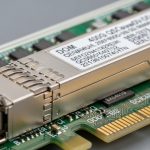
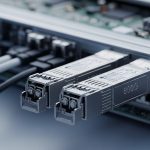
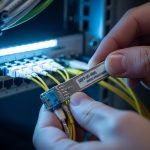
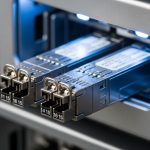
If you are planning the 800G transition, you are probably juggling three things at once: switch compatibility, fiber reach, and power budgets that actually show up on your bill. This article helps network and data center teams choose high-speed transceivers for 800G rollouts without getting burned by DOM mismatches, temperature derating, or “it worked in the lab” optics. You will get a field-style checklist, a specs comparison table, and troubleshooting patterns I have seen during leaf-spine upgrades.
What changes in 800G optics: lane math, reach, and power
Moving from 400G to 800G is not just “double the speed.” Most 800G solutions rely on multi-lane optics and packaging that behave differently under thermal load, especially in high-density switch ports. In practice, you will see higher total optical module power draw, stricter transmitter/receiver optical budgets, and tighter requirements on fiber plant cleanliness and patching discipline.
On the standards side, the industry is grounded in Ethernet physical layer specifications, including the IEEE 802.3 family for optical Ethernet and vendor implementation details for module management. For compatibility, the switch vendor typically enforces supported module part numbers and will validate DOM behavior (manufacturer ID, vendor revision, and alarms) before letting ports come up reliably. If you are mixing OEM and third-party optics, plan for a validation step and a documented rollback path.
Real-world spec reality: your fiber budget is the constraint
Even when the transceiver datasheet advertises a reach like 100m or 500m, your usable budget depends on fiber type, patch cord loss, connector cleanliness, and splices. In a busy data center, it is common to lose several dB just from patch cords and a few “mystery” bends. For 800G, those losses matter more because you are operating close to the receiver sensitivity limits.
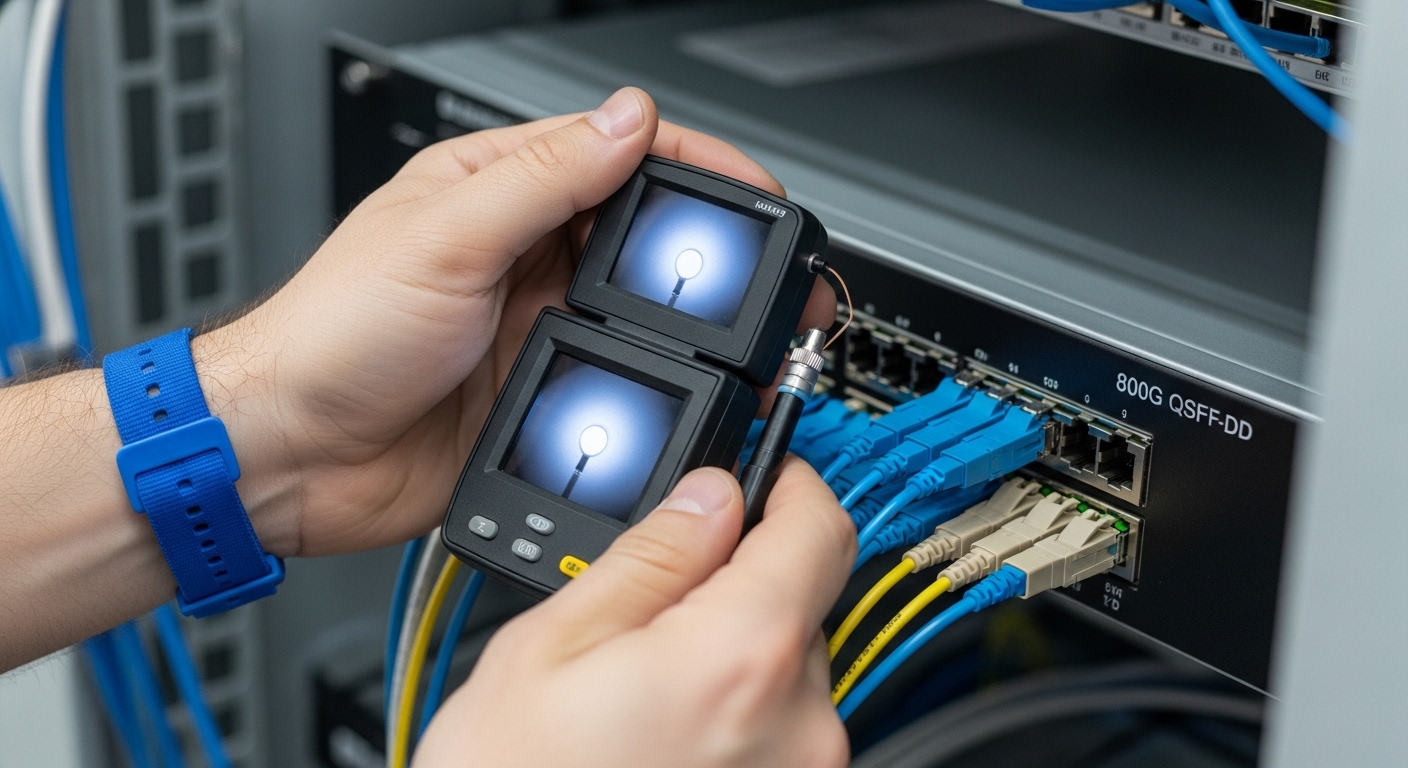
Pro Tip: Before you order hundreds of 800G optics, measure your installed link loss with a handheld optical power meter and a continuity check. If you cannot account for patch cord loss and connector cleanliness, you will eventually “solve” the problem by swapping optics, when the real fix was cleaning or re-terminating the fiber.
Key high-speed transceiver types for 800G deployments
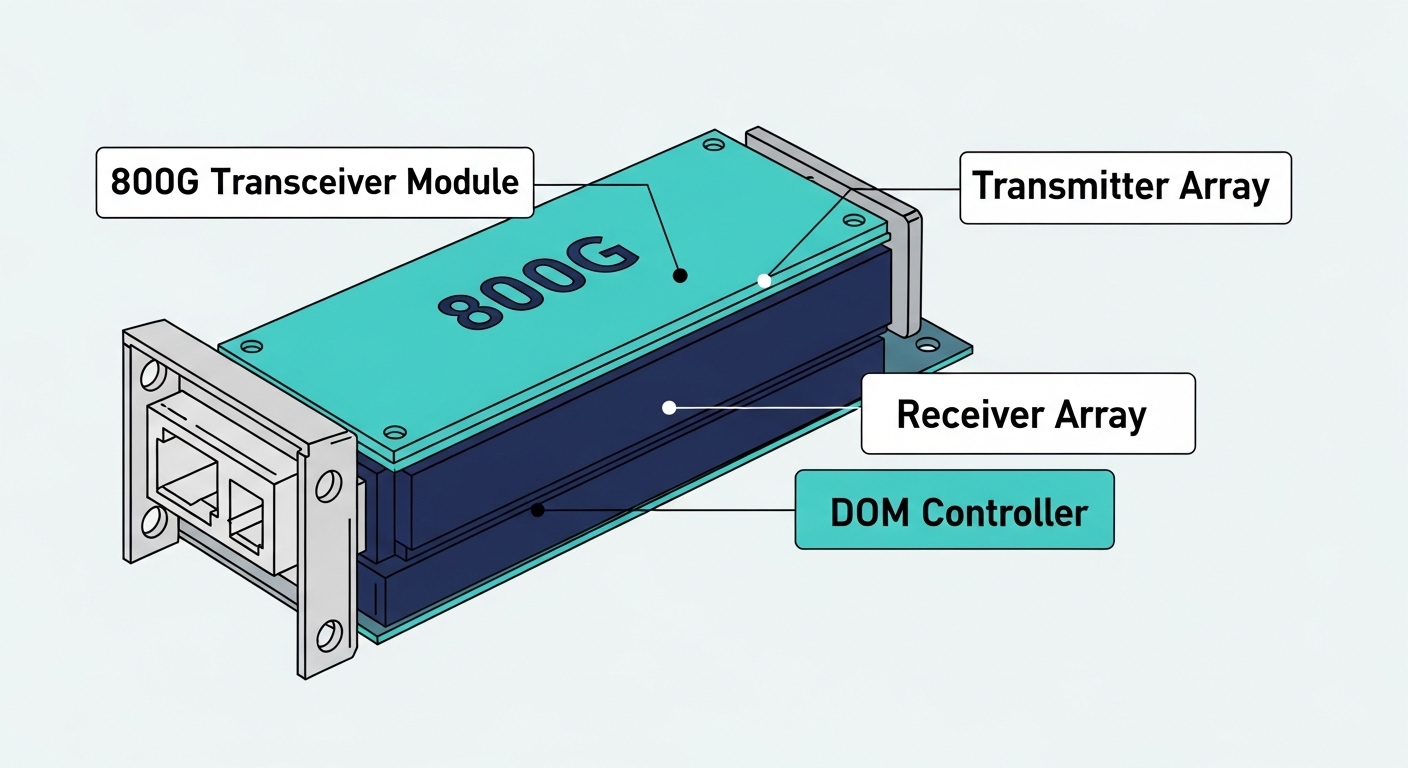
For 800G, you will mainly encounter coherent vs direct-detect architectures depending on distance and cost targets. Most enterprise rollouts for intra-data-center connectivity lean toward direct-detect multi-fiber approaches where optics are simpler and power is easier to manage. Your switch form factor also dictates the module type: common options include QSFP-DD, OSFP, or vendor-specific high-density cages.
Direct-detect vs coherent: how to choose quickly
Direct-detect is typically the path for short to medium reach in data centers, where you want predictable latency and lower complexity. Coherent optics can support longer reaches and flexible bandwidth, but they usually introduce higher module cost and more operational considerations (tuning, optics management, and sometimes different licensing or configuration workflows).
For enterprise transitions, the most common pattern is to start with direct-detect for the majority of leaf-spine and top-of-rack links, then revisit coherent for longer aggregation paths or when you must span multiple buildings.
Comparison table: common 800G-ready optics specs
| Module example (form factor) | Typical data rate | Wavelength / type | Connector | Reach (typical) | DOM / management | Operating temp | Notes |
|---|---|---|---|---|---|---|---|
| Cisco SFP-10G-SR is not 800G; use 800G direct-detect optics per switch vendor | Varies by switch | Varies | LC or MPO | Depends on fiber plan | Usually supported | 0 to 70C or extended variants | Always match switch validated list |
| Finisar FTLX8571D3BCL is an example of vendor optics naming; validate 800G equivalent | Varies | Multi-lane direct-detect | MPO/MTP | Short reach tiers | DOM supported | 0 to 70C (typical) | Part number must match 800G lane format |
| FS.com SFP-10GSR-85 is for 10G; use 800G-rated transceivers only | Varies | Direct-detect or coherent | MPO/MTP | Short to medium or long haul | DOM varies by vendor | Commercial or industrial | Verify DOM alarms and thresholds |
Note: 800G module naming and exact part numbers are tightly coupled to the switch’s port architecture and lane mapping. Your best source is the switch vendor’s compatibility matrix and the module datasheet for the exact 800G form factor your cage supports.
If you need a standards anchor for Ethernet optical behavior, start with IEEE 802.3 optical Ethernet work and the vendor datasheets that describe electrical lane mapping, DOM interface behavior, and optical budget assumptions. [Source: IEEE 802.3 Working Group] [Source: vendor optics datasheets]
Selection criteria checklist: what engineers verify before ordering
When you buy high-speed transceivers for 800G, the selection criteria are mostly operational. You are trying to avoid surprise port flaps, optics not coming up, or silent performance degradation due to thermal stress. Use this ordered checklist to keep your rollout predictable.
- Switch compatibility and validated list: confirm the exact module part number is supported for your switch model and software release. Many ports will not initialize if the module fails DOM checks.
- Form factor and cage type: ensure the module matches the physical cage (QSFP-DD, OSFP, or vendor-specific). A “similar-looking” module can still fail electrically.
- Distance tier and optical budget: map your link length plus worst-case patch cord loss, connector loss, and splices against the module’s stated receiver sensitivity and transmit power. Plan for margin.
- Fiber type and polarity requirements: verify OM4 vs OM5 vs OS2, and confirm whether the module expects specific polarity or polarity-reversal accessories.
- DOM support and thresholds: confirm DOM is implemented correctly for your switch. Validate that alarms (RX power, temperature, laser bias current) trigger meaningful events without causing port disable.
- Operating temperature and airflow: check module and switch airflow assumptions. In dense racks, a few degrees of extra inlet temperature can push modules toward derating.
- Vendor lock-in risk and warranty terms: OEM optics may be pricier but can reduce downtime during validation. Third-party optics can work well, but require a testing window and clear RMA process.
- Power and thermal impact: compare estimated module power draw and ensure your switch power budget and cooling plan can handle full populating.
How to validate in a controlled way
Before a full cutover, validate with a small pilot: a single line card, a few representative link lengths, and both clean and “typical messy” patching. Record optics initialization behavior, link error counters, and temperature telemetry under normal load. If your switch supports it, log DOM readings at intervals to detect early thermal or optical drift.
Pro Tip: During pilots, watch for “link up but errors rising slowly” instead of only checking link state. That pattern often points to marginal fiber cleanliness or a budget that barely clears under ideal conditions.

Common mistakes and troubleshooting patterns during the 800G transition
Even experienced teams can stumble when moving to 800G. Below are failure modes I have seen in the field, including root causes and what to do next.
Port stays down or repeatedly flaps after inserting a new module
Root cause: The transceiver is not on the switch’s validated list for that exact software version, or the module’s DOM identifiers do not match what the switch expects. Some vendors enforce strict checks for module vendor ID or revision fields.
Fix: Confirm the switch model, software release, and module part number. Update switch software if the release notes mention optics compatibility. If using third-party optics, test a single module with the same part number across multiple ports to isolate whether it is a compatibility vs a specific unit issue.
Link comes up, but you see rising CRC or RX/TX errors within hours
Root cause: Marginal optical budget due to patch cord loss, dirty connector endfaces, or fiber bends beyond the recommended minimum radius. 800G direct-detect links can be less forgiving when you add extra patching layers.
Fix: Clean connectors and re-inspect endfaces using a scope. Measure optical power and re-check link loss. If errors correlate with time, also check airflow: confirm the switch inlet temperature and verify that the rack is not obstructing fan paths.
Thermal derating: performance drops only when racks are fully populated
Root cause: Modules run hotter with full port population, and the switch cooling profile changes when airflow is blocked by cable management or blanking panels. Some transceivers have operating ranges like 0C to 70C but may derate earlier depending on vendor implementation.
Fix: Verify rack airflow, remove obstructions, add blanking panels where needed, and compare module temperature telemetry across partially vs fully populated states. If inlet temperatures exceed the vendor guidance, adjust fan curves or relocate hot exhaust paths.
Polarity or mapping mismatch on multi-fiber links
Root cause: MPO/MTP polarity handling is wrong, or the patching scheme does not match the module’s expected transmit/receive lane mapping. This can manifest as “no light” or intermittent link establishment.
Fix: Follow the polarity guideline for the module and fiber plan. Use polarity adapters (or re-terminate) to enforce correct transmit-to-receive pairing. Document the patching map so the next tech does not redo it differently.
Cost and ROI: what to budget for high-speed transceivers
Pricing varies widely by vendor, reach tier, and whether the module is OEM or third-party. In many enterprise quotes, 800G optics can cost several hundred to over a thousand USD per module, and the total cost becomes significant when you multiply by port counts across leaf-spine and ToR tiers. TCO is not just purchase price: it includes validation labor, spares strategy, downtime risk, and warranty handling.
OEM optics often reduce the probability of “it will not come up” events, which matters when you are scheduling maintenance windows. Third-party optics can be cost-effective, but you should assume a higher upfront validation effort and require a clear RMA turnaround time. If power draw is higher than expected, your cooling and power costs also move, so it is worth comparing module power figures from datasheets rather than guessing.
For ROI, the best pattern I have seen is to standardize on one or two validated module families for each distance tier, then keep small spares on-site for fast swaps. That approach reduces both downtime and troubleshooting time during cutovers.
IEEE 802.3 optical Ethernet standards context
Switch vendor compatibility and release notes
Optical component and transceiver ecosystem context
FAQ: buying high-speed transceivers for 800G rollouts
What should I check first: reach or switch compatibility?
Check compatibility first. Even if a module claims the right reach, the switch may refuse to initialize it if DOM identifiers or lane mapping do not match its validated list.
Can I mix OEM and third-party high-speed transceivers in the same switch?
Often yes, but only after validation. Test both module types on a pilot, confirm stable DOM telemetry, and verify error counters under load.
How do I confirm my fiber plant will support 800G?
Measure installed loss end-to-end with a meter and clean/inspect connectors. Then compare your worst-case loss to the module datasheet optical budget with margin for patch cords and aging.
What happens if DOM alarms show warnings but the link stays up?
Do not ignore them. Warnings like elevated temperature or low RX power can precede failures, especially during full-population thermal stress.
Are coherent optics better for enterprise 800G?
Coherent can be great for longer reach, but it is usually more expensive and may add operational complexity. For many intra-data-center links, direct-detect optics deliver the best balance of cost, simplicity, and predictable performance.
How many spare modules should we keep?
A common starting point is to keep a small on-site pool per distance tier and per module family. The exact number depends on your risk tolerance, lead times, and your historical failure rate from prior generations.
Choosing the right high-speed transceivers for the 800G transition is mostly about compatibility, optical budget discipline, and thermal reality—not just advertised reach. If you want the next step, review your platform’s verified optics list and build a pilot plan before you place the bulk order using high-speed transceivers compatibility and validation workflow.
Author bio: I have deployed Ethernet optics in leaf-spine and ToR upgrades, handling DOM compatibility checks, fiber validation, and staged cutovers under tight maintenance windows. I write practical workflows that field engineers can execute without guesswork.