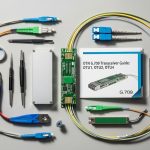
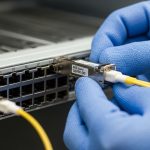
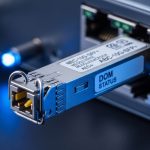
When a Carrier Ethernet design targets MEF service models, the optical layer can make or break the EVC experience. I have watched an otherwise clean provisioning plan fail because the wrong transceiver reach, DOM behavior, or fiber type slipped through. This guide helps engineers and network operators choose an EVC optical module that matches MEF expectations and real switch compatibility, with practical deployment notes, failure modes, and a decision checklist.
How MEF EVC requirements translate into optics reality
MEF focuses on end-to-end service attributes for Carrier Ethernet, often expressed via Ethernet Virtual Connection (EVC) constructs. In practice, that means your physical layer must deliver stable link performance so timing, frame transparency, and service continuity align with the service intent. From the field, the biggest optics-related risks are reach mismatch, connector/fiber type errors, and transceiver vendor behavior that triggers interface flaps.
MEF implementations commonly rely on Ethernet PHY compliance and deterministic behavior from the access and aggregation edges. That is why your data rate, wavelength, optical budget, and transceiver management (DOM, alarms, thresholds) matter as much as the raw fiber distance. For standards grounding, I align designs to IEEE 802.3 transceiver electrical/optical requirements and vendor datasheets for optical power, receiver sensitivity, and temperature limits. [Source: IEEE 802.3 Ethernet Working Group]
What to verify against MEF-aligned deployment assumptions
- Service reach planning: ensure the optical module meets the deployed fiber span plus patch cords, splitters (if any), and aging margin.
- Link stability expectations: confirm the module supports the switch’s lane mapping and signaling mode (for example, 10GBASE-SR vs 10GBASE-LR).
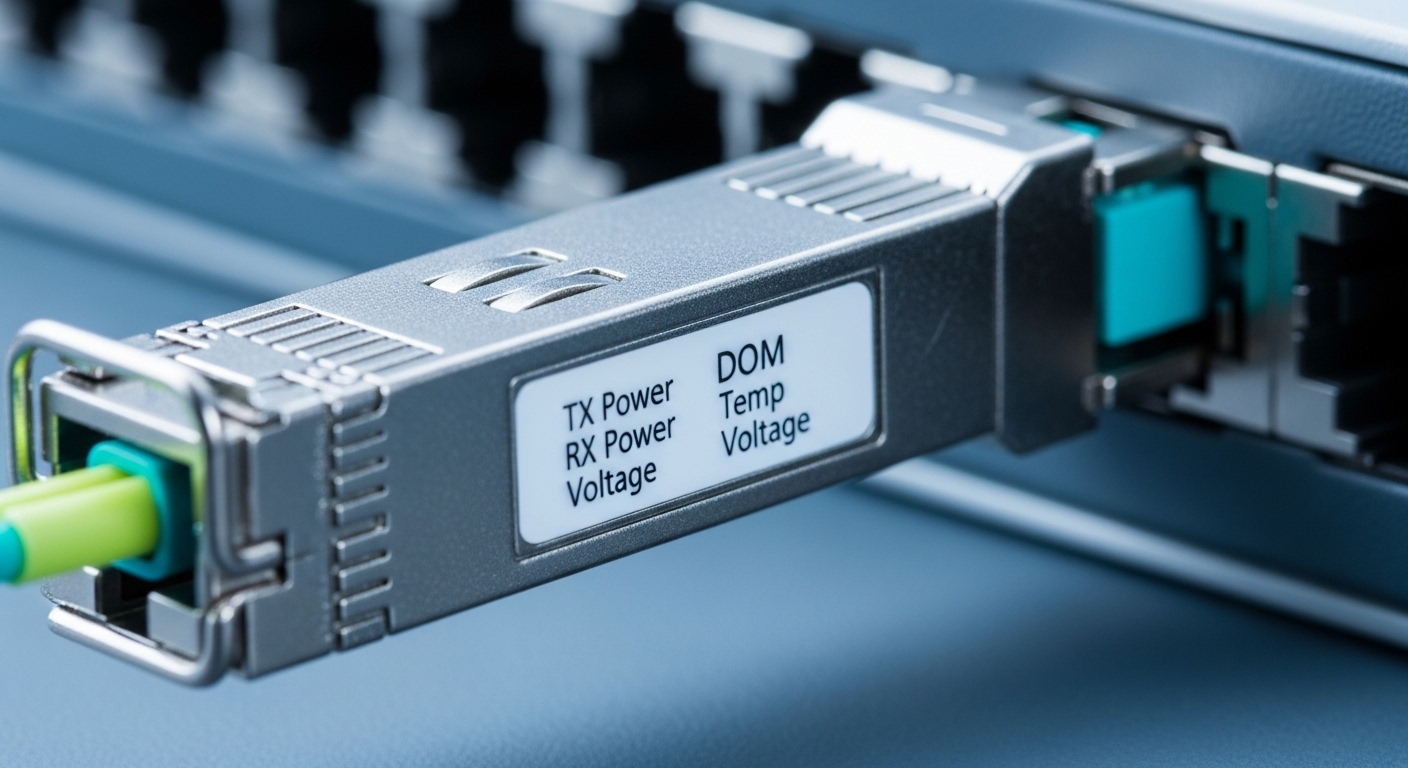
- Operational monitoring: confirm DOM works with your platform and that alarms map correctly to your NMS.
- Temperature and power behavior: carrier sites see wide temperature swings; validate the module’s operating range.
Pro Tip: In Carrier Ethernet rollouts, the “it links up” moment is not the acceptance test. I routinely validate DOM high/low thresholds and error counters after 30 to 60 minutes of real traffic, because marginal optical budgets often show up first as rising BER, not as link-down events.
Carrier-grade optics: key specs that decide whether an EVC stays stable
Selection starts with the IEEE-defined physical layer and then narrows to the exact module variant. For EVC services, engineers typically deploy short-reach multimode on metro access and use long-reach single-mode where distance and availability drive design. Below is a practical spec comparison I use when drafting bills of material for MEF-aligned carrier Ethernet projects.
| Spec | 10GBASE-SR (MMF) | 10GBASE-LR (SMF) | 25GBASE-SR (MMF) | 100GBASE-LR4 (SMF) |
|---|---|---|---|---|
| Typical wavelength | ~850 nm | ~1310 nm | ~850 nm | ~1310 nm (4 lanes) |
| Typical reach | Up to 300 m (MMF OM3) | Up to 10 km (SMF) | Up to 100 m (MMF OM4) | Up to 10 km (SMF) |
| Connector | LC | LC | LC | LC |
| DOM / monitoring | Commonly supported | Commonly supported | Commonly supported | Often supported (platform dependent) |
| Operating temperature | Vendor dependent (often industrial or extended) | Vendor dependent (often industrial or extended) | Vendor dependent (often industrial or extended) | Vendor dependent (often industrial) |
| Where it fits in EVC | Access aggregation, metro short spans | Metro links, distant aggregation | Higher density metro access | High-capacity metro trunking |
When I specify modules, I treat the reach rating as a starting point, not a guarantee. Patch cords and splices can quietly consume the optical budget. For example, a typical 10G SR design assumes clean OM3/OM4 cabling and correct polarity, while a LR design demands careful fiber type management and connector cleanliness.
Concrete module examples engineers actually deploy
- Cisco SFP-10G-SR for 10GBASE-SR multimode use cases (platform compatibility required).
- Finisar FTLX8571D3BCL class optics for 10GBASE-SR style deployments (verify exact part number and compliance).
- FS.com SFP-10GSR-85 style third-party 10G SR optics (confirm DOM compatibility and vendor validation on your switch).
Always cross-check the vendor datasheet for optical output power, receiver sensitivity, and OMA or equivalent parameters, then confirm the switch’s transceiver support list. [Source: Vendor datasheets for specific transceiver families]
Real deployment scenario: metro access with EVC handoff and mixed optics
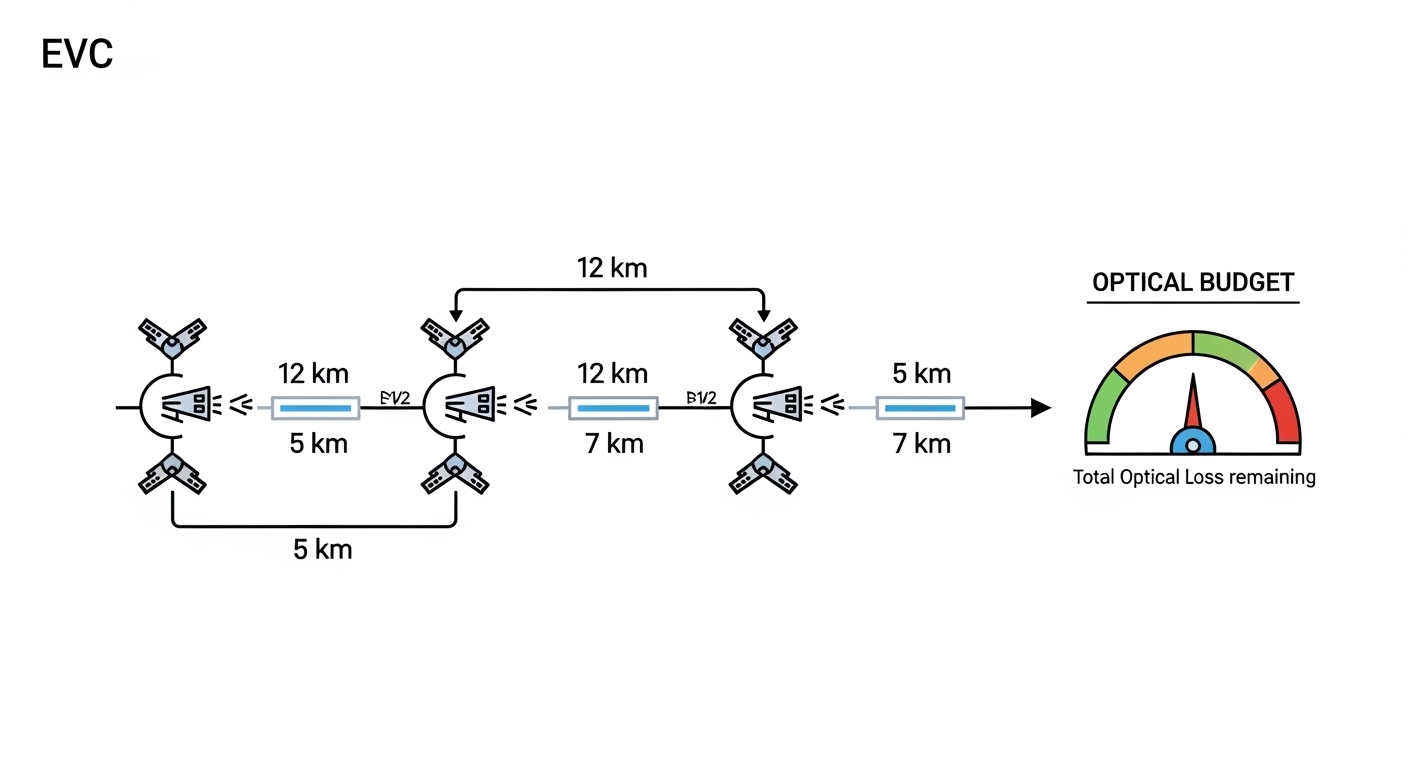
In one 3-tier metro design I supported, we used a leaf-spine access concept with 48-port 10G ToR switches feeding aggregation. The topology had two aggregation sites connected by 10 km SMF trunks and a set of 300 m MMF access links into customer-adjacent cabinets. We carried EVC services across the aggregation boundary, so stability mattered: a single interface flap would tear down service continuity and complicate MEF service orchestration.
We standardized on 10GBASE-SR for MMF access (LC connectors) and 10GBASE-LR for the 10 km SMF trunks. During commissioning, we validated DOM reporting and ensured the switch’s interface settings matched the transceiver type, then we ran continuous traffic while watching interface CRC/align counters and optical diagnostics. The most common issue we saw was not “bad optics” but connector contamination and one wrong fiber patch cord polarity that caused excessive error bursts before link-down.
Selection criteria checklist for an EVC optical module
Use this ordered checklist before you buy or field-swap optics. It is built around what tends to fail in carrier operations, not what looks good in a catalog.
- Distance vs optical budget: confirm fiber type (OM3/OM4 vs SMF), span length, and include patch cords/splices margin.
- IEEE 802.3 alignment: pick the correct PHY type (SR, LR, LR4, etc.) and verify the module meets the required signaling.
- Switch compatibility: check the vendor compatibility matrix and the exact transceiver form factor (SFP+, SFP28, QSFP+, QSFP28, CFP2).
- DOM support and alarm mapping: validate DOM fields your platform expects (temperature, Tx power, Rx power, alarms).
- Operating temperature and power: confirm the transceiver supports the site’s minimum and maximum ambient conditions.
- Connector and fiber cleanliness workflow: LC/SC type, polish grade, and cleaning SOP availability.
- Vendor lock-in risk: decide between OEM and third-party with a test plan to avoid surprise DOM behavior or unsupported diagnostics.
Common pitfalls and troubleshooting tips (with root causes)
Below are failures I have personally seen during EVC service acceptance. Each item includes a root cause and a practical fix.
Link flaps under load
Root cause: marginal optical budget or slight wavelength/optical power mismatch leading to rising BER that triggers link retraining. Solution: measure Rx power via DOM, re-clean connectors, and verify patch cord loss. If possible, swap with a known-good module from the same PHY family.
Works on one port, fails on another
Root cause: switch port provisioning mismatch (wrong breakout mode, speed setting, or lane mapping) or a platform-specific transceiver whitelist behavior. Solution: confirm the interface configuration matches IEEE PHY expectations and check switch logs for “unsupported module” or diagnostic read failures.
High CRC errors with no link down
Root cause: contaminated connectors, incorrect fiber polarity, or damaged fiber endfaces increasing insertion loss and noise. Solution: clean LC ends using an approved process, inspect with a fiber microscope, then confirm Tx/Rx orientation. Replace patch cords if endface damage is visible.
DOM shows alarms but service seems fine
Root cause: DOM threshold mismatch or interpretation differences between transceiver and platform. Solution: compare vendor datasheet thresholds to platform alarm thresholds, then tune alarm handling in your NMS so you catch real drift without constant false positives.

Cost and ROI note: OEM vs third-party optics for EVC services
In my experience, pricing varies widely by speed and reach. As a realistic planning range, many 10G SR SFP+ optics land roughly in the tens of dollars per unit for third-party and higher for OEM, while higher-speed coherent or long-reach modules can be dramatically more. TCO should include not only purchase price, but also shipping lead times, spares strategy, cleaning consumables, and the engineering time spent on acceptance testing.
Third-party modules can be cost-effective, but the ROI depends on your test discipline. If DOM compatibility and switch validation are not managed, you can lose time during commissioning, which often outweighs the unit cost savings. For carrier-grade EVC work, I recommend budgeting for a small “golden spares” set of optics that are proven on your exact switch models.
FAQ
What is an EVC optical module in Carrier Ethernet terms?
An EVC optical module is the pluggable transceiver that provides the physical layer connectivity supporting an Ethernet Virtual Connection. In MEF-aligned deployments, its role is to keep Ethernet links stable so the EVC service behavior remains consistent. You still must match the correct IEEE PHY and ensure switch compatibility.
Which fiber type should I choose for short metro EVC links?
For short metro links, multimode (OM3/OM4) with SR optics is common because it reduces cost and simplifies cabling in many access environments. Verify the rated reach for your exact module and account for patch cords and splices. If you already have SMF, LR optics can simplify long-term scaling.
Do I need DOM support for MEF EVC operations?
DOM is strongly recommended because it provides actionable diagnostics like Tx/Rx power and temperature. It helps you detect drift before service impact and supports faster troubleshooting during acceptance. However, DOM field compatibility varies by switch platform, so validate in a lab or pilot deployment.
Can I mix OEM and third-party optics on the same switch?
Sometimes yes, but only if the switch platform supports the third-party transceiver family and the DOM/alarm behavior is compatible. I typically standardize per speed and reach within a site to reduce variability. If mixing is required, run a controlled pilot and monitor error counters and optical diagnostics.
What are the fastest troubleshooting steps when an EVC link errors?
Start with connector inspection and cleaning, then verify polarity and fiber type, then check DOM readings for Tx/Rx power and temperature. Next, confirm interface configuration matches the transceiver PHY. Finally, swap optics with a known-good module and re-run traffic while watching CRC and optical alarms.
Where do I find authoritative reach and power specs?
Use the transceiver datasheet for optical output power, receiver sensitivity, and temperature range. Then cross-check the IEEE 802.3 clause relevant to that PHY type for baseline compliance. For switch behavior, rely on the switch vendor’s transceiver compatibility documentation. [Source: IEEE 802.3 and vendor datasheets]
If you want, I can help you turn this into a site-specific bill of materials template for your EVC design. Next step: review optical budget checklist for metro fiber so your module choice matches real patch cord and splice loss budgets.
Author bio: I’m a field-focused travel blogger who documents how network gear behaves in real carrier and enterprise deployments, from DOM alarms to fiber microscope inspections. I write with the same mindset I use on-site: verify compatibility, measure optical margin, and treat acceptance testing as part of the build.