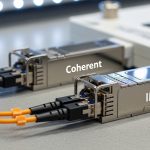
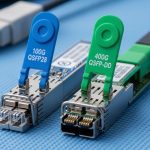
When you need 400G connectivity across dispersed sites, the limiting factor is often not port count but optical reach, dispersion tolerance, and coherent optics interoperability. This article helps field engineers and network architects choose and deploy a ZR coherent SFP for metro and DCI scenarios, with decision criteria grounded in IEEE Ethernet requirements and typical vendor implementation details. You will get a deployment-oriented spec comparison, a selection checklist, and concrete troubleshooting patterns observed in operational environments.
Why a ZR coherent SFP fits 400G DCI and metro topologies
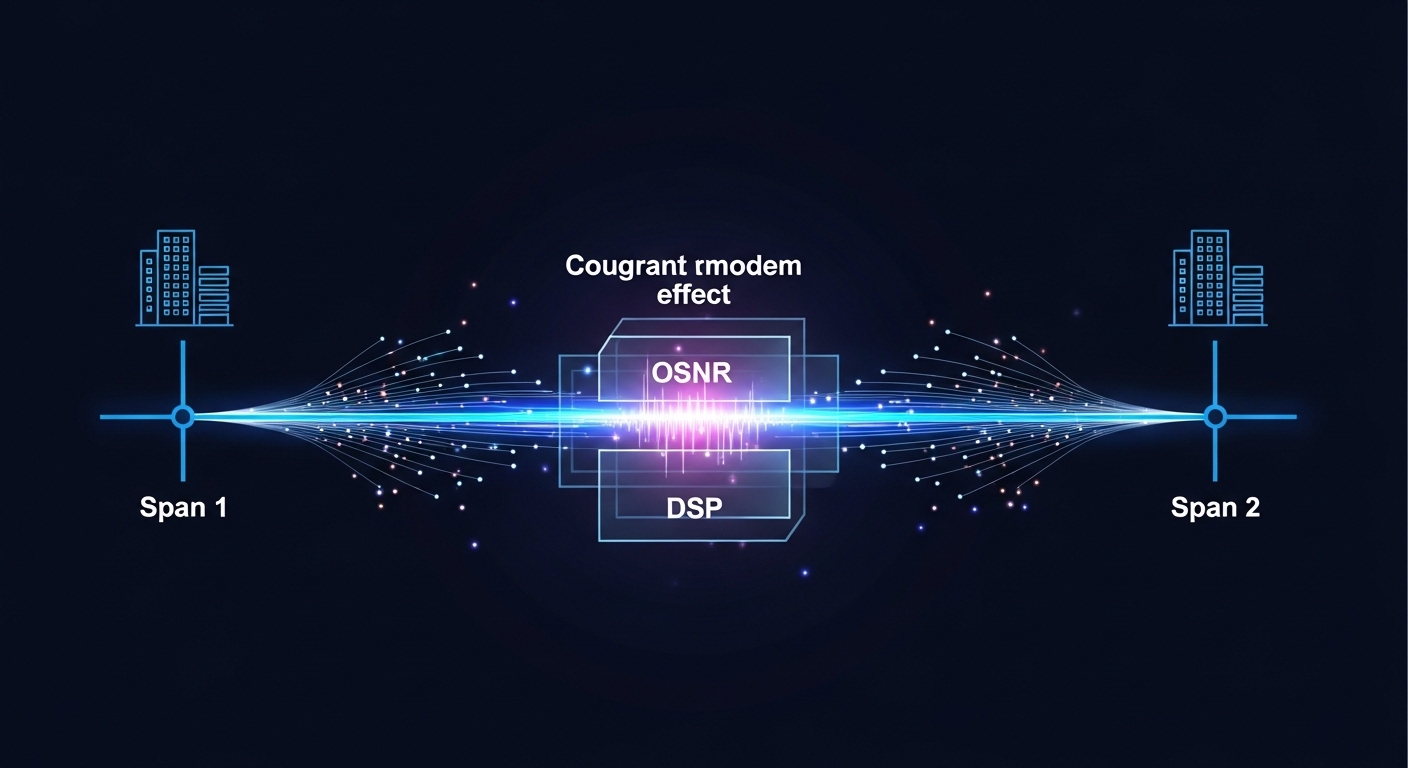
For 400G over long reach, intensity-modulated direct detection (IM-DD) solutions can fail to meet reach after accounting for chromatic dispersion and fiber impairments, especially when the optical path includes aging plant, patch cords, and uneven splice quality. Coherent transport addresses these impairments using local oscillator reception and digital signal processing (DSP), enabling higher spectral efficiency and better performance over distance. A ZR coherent SFP typically targets long-haul-like reach in a compact pluggable form, bridging the gap between traditional ZR optics and modular switch designs. Operationally, the coherent receiver budget is sensitive to OSNR, line rate, and channel plan, so deployment must treat optics configuration as part of the network.
What “coherent ZR” means in practice
“ZR coherent” generally refers to coherent pluggable modules designed for long reach with DSP-based demodulation, commonly using standard single-mode fiber with a defined wavelength plan. Depending on vendor implementation, the module may support flex-grid or fixed-grid channelization and may require control-plane compatibility with the host (e.g., vendor-specific configuration hooks). In day-to-day operations, the coherent module behaves like an optical modem: it needs stable power, correct wavelength/channel mapping, and an optical path that meets fiber impairment assumptions. This is why provisioning and optical validation are as important as selecting the module SKU.
Where it shows up in real networks
In DCI, you often interconnect data center sites through metro/regional fiber routes with multiple connectors and splices. In metro, you may aggregate traffic from regional distribution to core nodes, where the optical path is longer than typical metro short-reach but shorter than traditional long-haul. A ZR coherent SFP is attractive because it supports modular replacement and staged upgrades without redesigning the transponder layer. However, it is not “plug and forget” in all cases; coherent optics can require careful channel planning and consistent host support for DOM and diagnostics.
Key specifications to compare before you buy
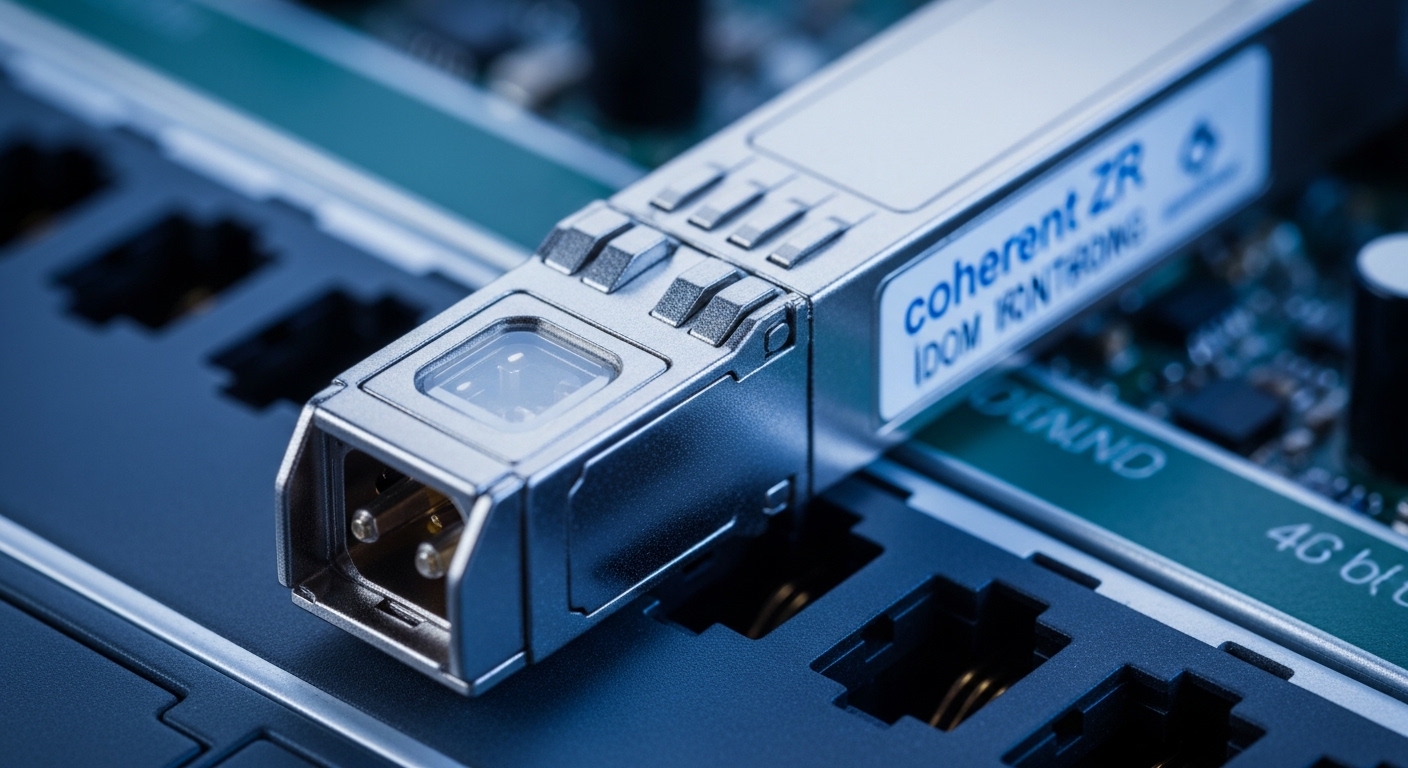
ZR coherent pluggables vary widely by vendor in wavelength, reach targets, power consumption, connector type, and temperature qualification. Some modules are designed for a specific channel plan and may assume a particular grid spacing or center wavelength mapping. To avoid mismatches, compare the module’s optical interface, reach/optical budget claims, and host interoperability notes, not just the advertised distance. The table below lists representative fields you should verify against the exact part number and datasheet revision.
| Spec | What to verify | Typical range for ZR coherent SFP |
|---|---|---|
| Data rate | Host line rate compatibility (e.g., 400G) | 400G per module |
| Wavelength / band | Center wavelength or wavelength plan | Typically C-band |
| Reach | Target distance under defined OSNR and fiber assumptions | Often 80–120 km (datasheet-dependent) |
| Connector | Fiber interface standard | Commonly LC |
| Optical budget | Includes transmitter power, receiver sensitivity, and penalty assumptions | Vendor-defined; confirm with OSNR requirements |
| Power consumption | Switch PSU and airflow impact | Often 5–15 W (verify per model) |
| Temperature range | Deployment environment qualification | Commonly 0 to 70 C or extended options |
| DOM support | Diagnostics and alarm thresholds | Typically supports MDIO/I2C DOM fields per vendor |
| Configuration model | Channel selection and any required host settings | May require standardized or vendor-specific controls |
For authoritative framing, review IEEE Ethernet transport requirements and coherent optics implementation guidance. Relevant background includes IEEE 802.3 specifications for 400G Ethernet and vendor datasheets for the coherent DSP and optical interface. [Source: IEEE 802.3] [Source: vendor datasheets for coherent pluggables]
Deployment workflow: provisioning, validation, and maintenance
A successful ZR coherent SFP deployment depends on treating the optical link as a controlled system rather than a passive cable. Field engineers typically follow a workflow: validate host compatibility, map the channel plan, ensure fiber cleanliness and continuity, then verify optical performance using module diagnostics. The goal is to confirm that the link meets required OSNR and error-rate performance before you push production traffic.
Step-by-step provisioning checklist
- Host compatibility check: confirm the switch model and firmware explicitly support the coherent pluggable, including DOM interpretation and any control-plane hooks.
- Channel and wavelength mapping: verify the module’s configured center wavelength or channel index matches the far-end module configuration plan.
- Fiber path verification: clean and inspect connectors; confirm polarity and end-to-end continuity. Measure insertion loss and reflectance where possible, especially across long patch-and-splice chains.
- Initial bring-up: power on the host, confirm DOM alarms are clear, and check link state transitions (LOS/LOF and link training indicators).
- Performance verification: monitor error counters and optical diagnostics (where exposed). Validate that the link meets target BER or FEC-corrected error thresholds for your Ethernet configuration.
Operational limits you must respect
Coherent links are sensitive to optical impairments beyond simple loss. Even when received power is adequate, OSNR can be degraded by fiber nonlinearities, poor connector quality, or unexpected dispersion conditions. Additionally, coherent modules may assume stable polarization and may exhibit performance variance if the fiber path includes harsh micro-bends. In maintenance windows, you should treat module swaps as configuration events: confirm channel and far-end alignment after replacement.
Selection criteria: an engineer’s decision checklist
Choosing a ZR coherent SFP for DCI or metro involves more than reach. Engineers weigh interoperability, thermal behavior, diagnostics depth, and risk of operational downtime. Use the ordered checklist below to reduce late-stage surprises during procurement or commissioning.
- Distance and impairment profile: confirm the expected span length and fiber type, and estimate connector/splice loss. If you have dispersion or known plant issues, require OSNR assumptions from the vendor.
- Switch compatibility: validate the exact switch and firmware matrix. Coherent pluggables can require specific host support for channel configuration and DOM fields.
- Data rate and coding mode: ensure the module supports your Ethernet mode (e.g., 400G with the switch’s FEC behavior). Misalignment can cause link instability.
- DOM and telemetry requirements: require key diagnostics such as temperature, laser bias, receive metrics, and alarm thresholds. If you rely on automation, ensure DOM fields are consistent.
- Operating temperature and airflow: verify the module temperature range and the switch thermal design margins at your rack airflow conditions.
- Vendor lock-in risk: coherent modules may use vendor-specific configuration or interpretation of diagnostics. If you plan multi-vendor sourcing, insist on interoperability testing.
- Provisioning and maintenance model: confirm whether the module supports standardized management workflows for swaps, and whether firmware updates are required.
Pro Tip: In field deployments, the most common “mystery” failures are not bad optics but mismatched channel plans after a module replacement. Always record the configured channel or center wavelength for both ends in your change ticket, because DOM “link up” can still occur while optical performance remains marginal.
Common mistakes and troubleshooting patterns
Below are concrete failure modes that show up during commissioning of coherent pluggables. Each includes the likely root cause and an action that typically restores service.
Link fails to train or stays in intermittent state
Root cause: far-end channel mismatch (wrong center wavelength/channel index) or inconsistent host configuration between ends. Coherent modules may require precise wavelength alignment even when general connectivity seems present. Solution: verify the configured channel on both modules, confirm switch firmware settings match, and re-run link bring-up after cleaning and re-seating connectors.
Link comes up but error counters climb quickly
Root cause: OSNR degradation from connector contamination, elevated reflectance, or unexpected fiber impairment (e.g., excess loss, micro-bends). Loss-only checks can miss OSNR issues because coherent reception depends on more than power. Solution: inspect and clean both ends, measure end-to-end loss, and if available evaluate reflectance. Replace suspect patch cords and re-check performance under stable traffic.
Persistent alarms after a hot swap or module replacement
Root cause: incomplete change control: channel settings, DOM thresholds, or host-side expectations are not restored. Some systems cache transceiver configuration or require an explicit re-provision step. Solution: perform a standardized swap procedure: confirm module identity, re-apply channel plan, verify DOM alarm baselines, and compare error-rate metrics to the pre-swap reference.
Thermal throttling or unexpected link drops in crowded racks
Root cause: insufficient airflow margin causing the module to operate near upper temperature limits. Coherent DSP power draw can increase with operating conditions, and high-density line cards intensify localized heat. Solution: validate rack airflow (fan speed, temperature at module intake), confirm the module temperature telemetry, and adjust fan profiles or airflow baffles.
Cost and ROI considerations for coherent ZR pluggables
Pricing depends on vendor, volume, and whether you buy OEM-compatible pluggables or third-party optics. In many deployments, coherent ZR pluggables are materially more expensive than short-reach optics, and the ROI comes from fewer intermediate hops and reduced transponder-layer complexity. As a pragmatic planning range, budget roughly several hundred to over a thousand USD per module in single quantities, with lower unit pricing at volume, but always confirm with current quotes. Total cost of ownership should include spares strategy, installation labor, and the operational cost of commissioning time.
Third-party modules can reduce purchase price, but the ROI is only favorable if you avoid downtime from interoperability issues and if DOM telemetry integrates cleanly with your monitoring stack. For coherent optics, compatibility testing is often the hidden cost; allocate time for a pilot link and capture performance baselines. [Source: IEEE 802.3] [Source: vendor interoperability notes and datasheets]

FAQ
What does a ZR coherent SFP actually provide compared with short-reach modules?
A ZR coherent SFP is designed for long-reach metro/DCI connectivity using coherent reception and DSP. Compared with short-reach optics, it tolerates longer fiber paths and impairment profiles, but it requires careful channel planning and host compatibility validation.
How do I confirm reach for my specific fiber route?
Use the vendor datasheet reach assumptions and request OSNR or penalty guidance for the exact fiber type and expected span composition. Then validate with a pilot link using your real patch cords and splice chain, measuring both signal metrics and error-rate performance.
Do I need identical vendors on both ends?
Not always, but compatibility is not guaranteed for coherent optics without interoperability testing. If you plan multi-vendor sourcing, validate the channel plan, FEC/coding behavior, and DOM telemetry mapping in a controlled commissioning environment.
What diagnostics should monitoring collect for coherent ZR links?
At minimum, collect module temperature, laser bias/tx power, rx metrics, and any OSNR-related indicators exposed via DOM. Also monitor Ethernet error counters and link state transitions so you can distinguish optical marginality from higher-layer misconfigurations.
Why does the link sometimes train but still perform poorly?
Channel mismatch, OSNR degradation, or elevated reflectance can allow link establishment while leaving the DSP operating near its margin. Cleaning, connector inspection, and confirming channel configuration on both ends are the first actions before escalating to fiber replacement.
Is ZR coherent SFP suitable for metro aggregation in 400G?
Yes, when you need distances beyond short-reach and want modular optics rather than fixed transponder systems. Ensure your switch supports the coherent pluggable and plan for commissioning time that includes optical validation and telemetry integration.
Update date: 2026-04-30. If you want the next step, compare coherent versus IM-DD optics for your specific distance and risk tolerance using coherent vs IM-DD optics for 400G and run a pilot before scaling.
Author bio: Field-focused network optics researcher with hands-on commissioning experience for coherent pluggables in DCI and metro environments. I document interoperability and failure-mode evidence from switch firmware, DOM telemetry, and measured optical link performance.