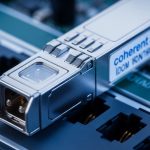
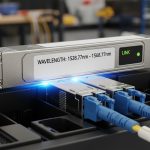
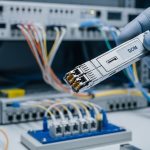
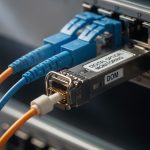
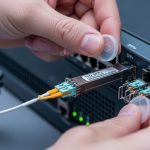
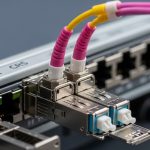
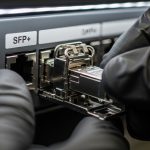
In metro networks, picking the wrong optics can turn a straightforward upgrade into weeks of link hunting, unexpected BER spikes, and costly rework. This article helps network engineers and field teams make a metro transceiver choice between coherent and intensity-modulated direct-detection (IM-DD) with practical decision steps, deployment numbers, and failure-mode troubleshooting. You will leave with a step-by-step implementation plan, a comparison table, and a checklist tailored to real leaf-spine, aggregation, and carrier metro rings.
Prerequisites before you decide coherent or IM-DD
Before selecting a transceiver, gather link facts that directly affect receiver sensitivity, dispersion tolerance, and power budget. You also need to confirm switch or router compatibility, including lane rates, optics form factor, and digital diagnostics support (DOM). Finally, decide what “success” means: target availability, BER, and how fast you must restore traffic after a fiber cut.
What to measure or collect
- Fiber type and plant: SMF-28 class fiber, estimated span loss (dB), and connector/patch panel loss.
- Distance and dispersion class: length in km, and whether you expect dispersion beyond typical metro ranges.
- Traffic and line rate: 10G, 25G, 40G, 100G, or 200G per wavelength; modulation constraints.
- Host platform requirements: QSFP28, CFP2, CFP4, CXP, or pluggables; supported DOM fields; vendor firmware quirks.
- Operational constraints: ambient temperature at the shelf, planned transceiver density, and power envelope.
Expected outcome: A one-page link worksheet with distance, loss budget, and host constraints ready for the next step.
Step-by-step implementation guide: coherent vs IM-DD for metro
Classify your metro link type and constraints
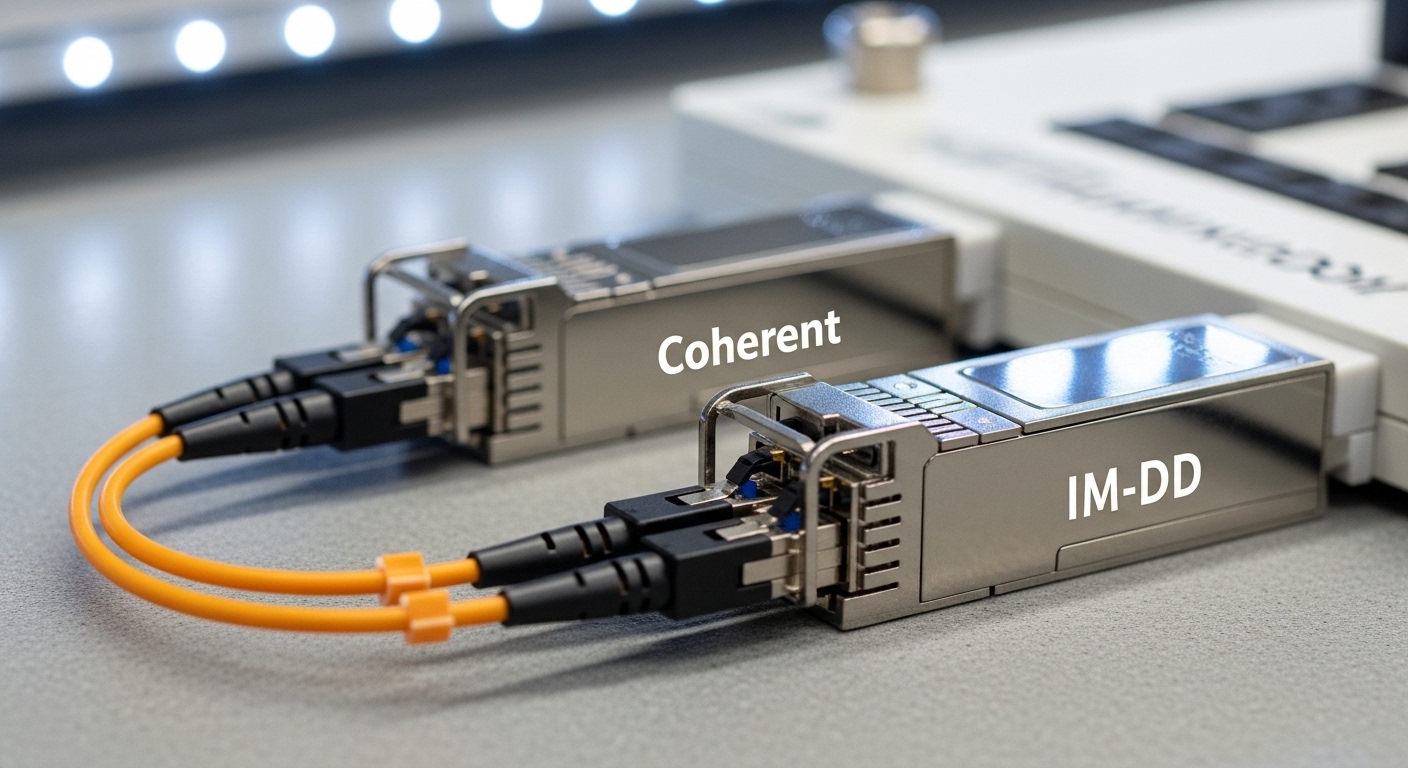
Start by mapping your link into one of three common metro patterns: short-reach data center interconnect, metro aggregation, or carrier-style protected rings. Coherent tends to win when you need reach, spectral efficiency, or tolerance to impairments across multiple spans. IM-DD tends to win when you prioritize simplicity, lower cost per port, and straightforward optics at moderate distances.
Expected outcome: A written link profile: “short metro reach with tight budget” or “longer reach with dispersion and nonlinear risk” or “multi-span with unknown plant variability.”
Run the optical budget and impairment check
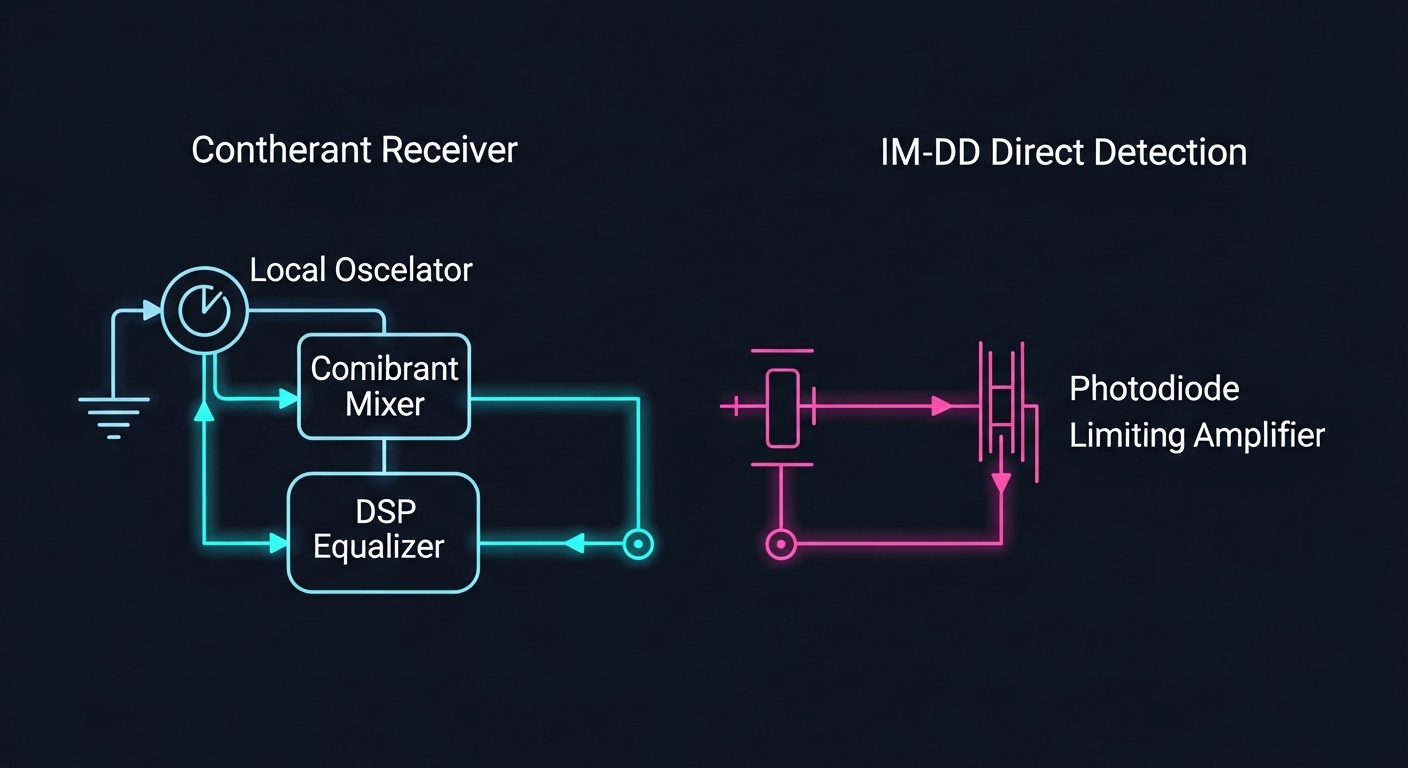
For IM-DD, your key inputs are receive sensitivity and how much margin you have after accounting for fiber attenuation and connector loss. For coherent, you still need optical power budget, but you also benefit from digital signal processing that can compensate for some impairments and support higher-order modulation formats at higher symbol rates.
Practical rule: If your plant variability is high and you need robust performance across spans, coherent can provide margin via DSP equalization and carrier recovery. If your distances are within the vendor’s guaranteed reach for IM-DD and you control connectors and patching, IM-DD usually keeps things simpler.
Expected outcome: A pass/fail on reach for IM-DD and a separate feasibility check for coherent modulation and baud rate.
Confirm host platform compatibility and lane mapping
Even “standard” pluggables can fail interoperability due to lane mapping, forward error correction (FEC) mode, or DOM expectations. Verify the switch or router supports the exact optical type and speed grade you plan to deploy. For coherent, check whether the platform expects specific line coding and FEC settings, and whether it supports the coherent DSP control interface your vendor uses.
Expected outcome: A compatibility confirmation list: form factor, data rate, FEC mode, and DOM fields you will monitor in operations.
Compare specs using a single decision table
Engineers often compare optics using only “reach,” but for metro transceiver choice you also need power, connector type, supported wavelength, and operating temperature. Below is a practical comparison table you can use to normalize vendor datasheets into engineering decisions.
| Category | Coherent transceiver (typical) | IM-DD transceiver (typical) |
|---|---|---|
| Primary tech | Digital coherent detection with DSP (carrier recovery, equalization) | Direct detection of intensity |
| Common metro use | Longer reach, higher spectral efficiency, multi-span tolerance | Moderate reach, simple deployment, lower cost |
| Wavelength bands | C-band or DWDM grid (vendor dependent) | Often 1310 nm (LR/SR variants) or C-band variants for metro DWDM |
| Connector | LC/UPC or industry DWDM interface (vendor specific) | LC/UPC or MPO (form factor dependent) |
| Data rates | Coherent 100G/200G/400G per wavelength class (vendor specific) | 10G/25G/40G/100G classes (form factor dependent) |
| Reach (typical planning ranges) | Multi-span metro and beyond planning (tens of km to 100 km class, depends on modulation and vendor) | Often single-span metro ranges (device dependent; verify datasheet) |
| Power consumption | Higher (coherent DSP and local oscillator) | Lower to moderate |
| Operating temperature | Typically industrial or extended ranges; confirm exact spec | Typically 0 to 70 C for many pluggables; confirm exact spec |
| Diagnostics | DOM-like telemetry varies by vendor; coherent control telemetry may be richer | Standard DOM (per vendor) with optical power, bias, temp, voltage |
| Standards alignment | Coherent implementations align to optical transport requirements; check vendor interoperability | IM-DD aligns to IEEE 802.3 and vendor optics profiles for form-factor behavior |
Expected outcome: A normalized view of tradeoffs for your exact data rate and reach target.
Pro Tip: In metro deployments, teams often underestimate the operational value of coherent DSP telemetry. When links degrade due to plant changes, coherent transceivers can provide earlier warning via constellation quality or equalization metrics (vendor specific), while IM-DD may only show power and basic error counters. That earlier signal can cut mean time to repair during scheduled maintenance windows.
Validate reach with a field-style test plan
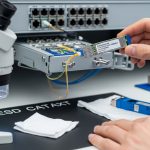
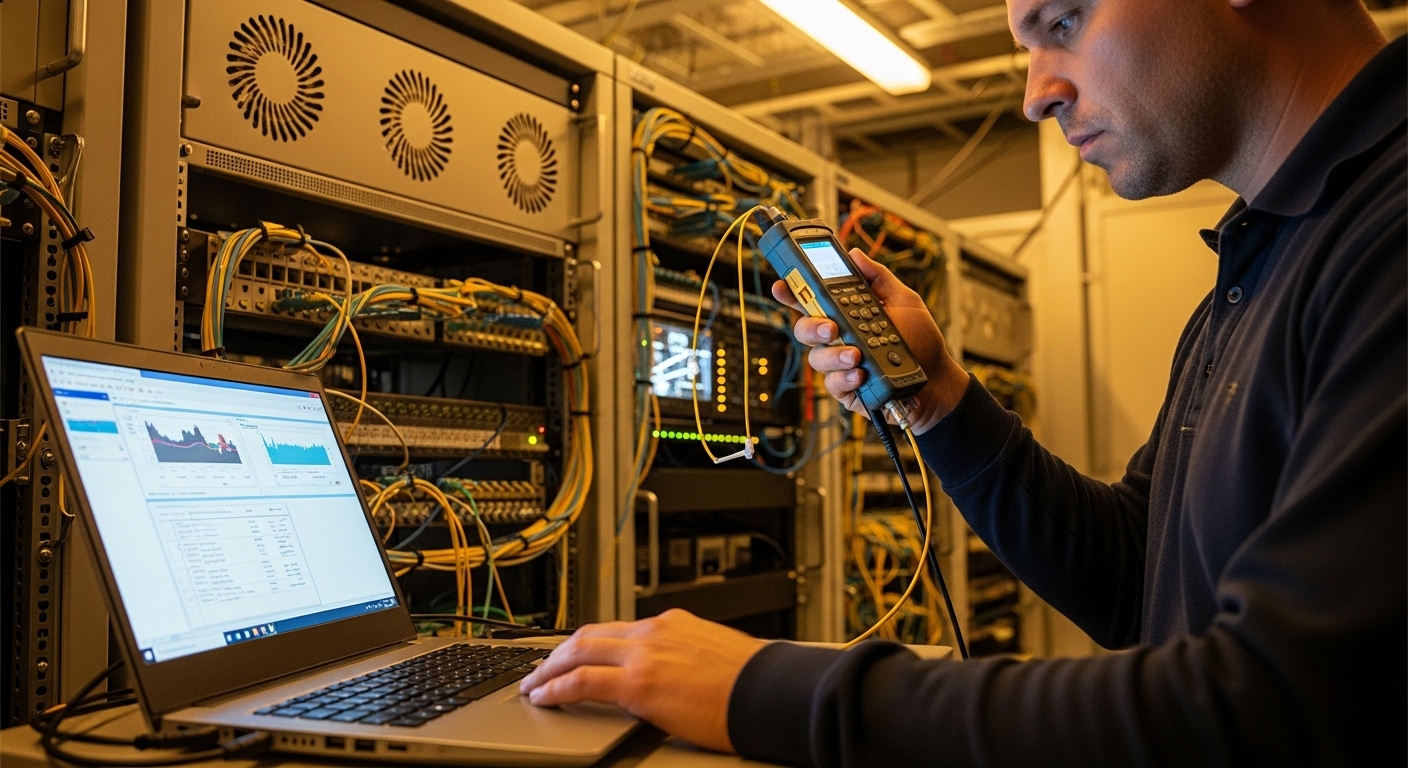
For IM-DD, validate with an optical power meter and a bit error rate test (BER) during acceptance. For coherent, validate with both optical-level checks (power, connector cleanliness) and link-level performance metrics (FEC counters, error bursts, and any vendor-provided quality indicators). Use the same fiber patch cords and patch panel path you will deploy, because a “lab-clean” fiber route can hide connector contamination issues that show up after maintenance.
Expected outcome: Acceptance results with documented margins: optical power margin, BER at target rate, and stability over a defined hold time.
Decide on procurement strategy and spares
Coherent optics can be more expensive and may require careful vendor pairing with host platforms. IM-DD optics are typically cheaper and have more straightforward spares logistics, but you still need to manage DOM compatibility and ensure the same vendor optics profile across a site when possible. Plan spares by site criticality, not just overall port count, and keep at least one pre-validated spare per type for fastest recovery.
Expected outcome: A procurement list with spares count, vendor part numbers, and a deployment order that reduces outage risk.
Selection criteria checklist engineers use for metro transceiver choice
- Distance and reach margin: confirm datasheet reach for your exact wavelength and rate, then add margin for connectors and aging.
- Budget and power envelope: coherent often increases power and chassis thermal load; IM-DD usually stays lower.
- Switch or router compatibility: confirm form factor (QSFP28/CFP2/CFP4), lane mapping, and supported FEC modes.
- DOM and telemetry support: ensure you can monitor optical power, temperature, and error counters; coherent may add quality metrics.
- Operating temperature and airflow: verify transceiver temperature range and whether it matches your shelf airflow profile.
- Vendor lock-in risk: coherent ecosystems can be more vendor-tied due to DSP/control expectations; plan for multi-vendor testing if required.
- Fiber plant uncertainty: if patching, aging, or rework is frequent, coherent DSP tolerance can be worth the extra cost.
Expected outcome: A scored decision that explains why you chose coherent or IM-DD beyond “reach seems fine.”
Common mistakes and troubleshooting for metro transceiver choice
Failure point 1: Reach looks correct on paper, but BER spikes after patching
Root cause: Connector contamination or added patch panel loss not included in the original spreadsheet. IM-DD is especially sensitive because it relies on clean intensity detection and limited equalization.
Solution: Inspect connectors with a scope, clean using approved methods, then re-test BER. Recalculate your link budget using measured insertion loss per jumper, not only fiber label lengths.
Failure point 2: Transceiver is detected, but link never comes up (or flaps)
Root cause: Host optics compatibility mismatch: unsupported transceiver type, incorrect FEC setting, or lane mapping differences. This happens during migrations when firmware defaults change.
Solution: Confirm platform optics compatibility matrix, set FEC mode explicitly to match the optics profile, and check DOM alarms for laser bias or temperature out-of-range.
Failure point 3: Works initially, then degrades over weeks
Root cause: Thermal stress, marginal airflow, or aging-related connector loss growth. Coherent often masks some impairments early via DSP, but you can still see error counter growth as margins shrink.
Solution: Track optical power and temperature continuously via telemetry. Add a maintenance threshold (example: alarm when receive power drops by a defined dB amount or when error bursts exceed a baseline) and schedule connector re-cleaning before hard failure.
Cost and ROI note: what you should expect in TCO
Real-world pricing varies by rate, reach, and whether the optics support advanced DSP features, but engineering teams commonly see coherent optics priced at a significant premium versus IM-DD. IM-DD pluggables (for example, vendor models like Cisco SFP-10G-SR, Finisar FTLX8571D3BCL, or FS.com SFP-10GSR-85) are typically cheaper per port and easier to standardize, which helps TCO when you have many short or moderate reach links.
Coherent can still be ROI-positive when it reduces truck rolls and rework by tolerating impairment variability across multi-span metro paths, especially when uptime requirements are strict. However, include the cost of higher power draw, potential chassis thermal upgrades, and the operational overhead of coherent-specific telemetry and configuration. For budgeting, treat TCO as: optics cost + installed power/thermal cost + acceptance test time + spare inventory + expected mean time to restore during incidents.
FAQ
How do I decide coherent vs IM-DD for metro transceiver choice when distances are around 40 to 80 km?
Use the vendor reach spec as a baseline, then apply measured optical margin from your actual fiber path. If you have high plant uncertainty or dispersion sensitivity, coherent can provide a reliability advantage via DSP compensation, even when IM-DD might pass initial tests.
Will IM-DD work in a DWDM metro ring, or do I need coherent?
IM-DD can work in some DWDM metro designs depending on wavelength plan, spacing, and link impairments, but it is more sensitive to power variations and dispersion. If you expect multiple spans, aging, and variable insertion loss, coherent is often chosen to keep performance stable.
What telemetry should I monitor day one?
At minimum, monitor receive optical power, transmit bias/temperature, and link error counters. For coherent, also track vendor quality metrics related to DSP equalization and error bursts, because they often signal degradation earlier than generic link errors.
Are there standards that govern these optics choices?
IEEE 802.3 covers Ethernet PHY behavior and optical interfaces for many IM-DD pluggable use cases. For coherent systems, behavior is more dependent on the optical transport and vendor DSP implementation, so always validate interoperability against the host platform and vendor datasheets.
What is the fastest troubleshooting path when a metro link won’t come up?
Start with compatibility: confirm exact form factor, data rate, and FEC mode settings. Then validate fiber cleanliness and measured insertion loss, and finally compare DOM telemetry against known-good baselines from a working port.
Should I standardize on one vendor for coherent optics?
Standardization reduces configuration variance and speeds troubleshooting, but it increases vendor lock-in. If you must support multi-vendor, do a structured interoperability test plan first, including long-duration BER and thermal cycling checks.
If you want a confident metro transceiver choice, treat it as an engineering workflow: collect link facts, normalize specs, validate with acceptance tests, then monitor telemetry with clear thresholds. Next, review How to size an optical power budget for metro links to tighten your reach and margin calculations before you purchase optics.
Author bio: I have deployed and troubleshot metro and data center optics in live carrier and enterprise environments, including BER acceptance testing and DOM-driven incident response. I focus on practical decision-making that reduces outage risk and improves mean time to restore.
Sources: [Source: IEEE 802.3 Ethernet standard family]; [Source: Vendor transceiver datasheets and DOM documentation for coherent and IM-DD optics]; [Source: ANSI/TIA-568 and related cabling practices for connector performance and testing].