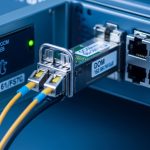
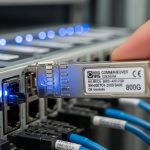
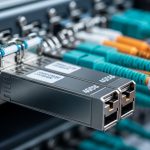
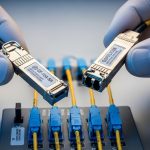
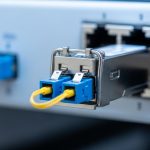
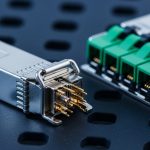
Enterprises are increasingly buying optics from more than one source to manage price pressure, avoid supply shocks, and reduce procurement cycle times. This article helps network and procurement teams calculate transceiver ROI across multi-vendor strategies, including compatibility, diagnostics, and supply chain risk. You will get a practical spec comparison table, a decision checklist, and troubleshooting patterns that field engineers see during outages.
Why transceiver ROI changes when you split vendors
When you use a single vendor, you can standardize firmware behavior, interpret DOM (Digital Optical Monitoring) consistently, and reduce validation effort. However, that approach often concentrates risk: if one supplier faces yield issues, component shortages, or logistics delays, your lead time can jump from typical factory-to-DC schedules to emergency shipments. In contrast, a multi-vendor policy can improve price competitiveness and sourcing flexibility, but it adds hidden costs: cross-vendor compatibility testing, operational runbook updates, and increased attention to optical and electrical tolerances.
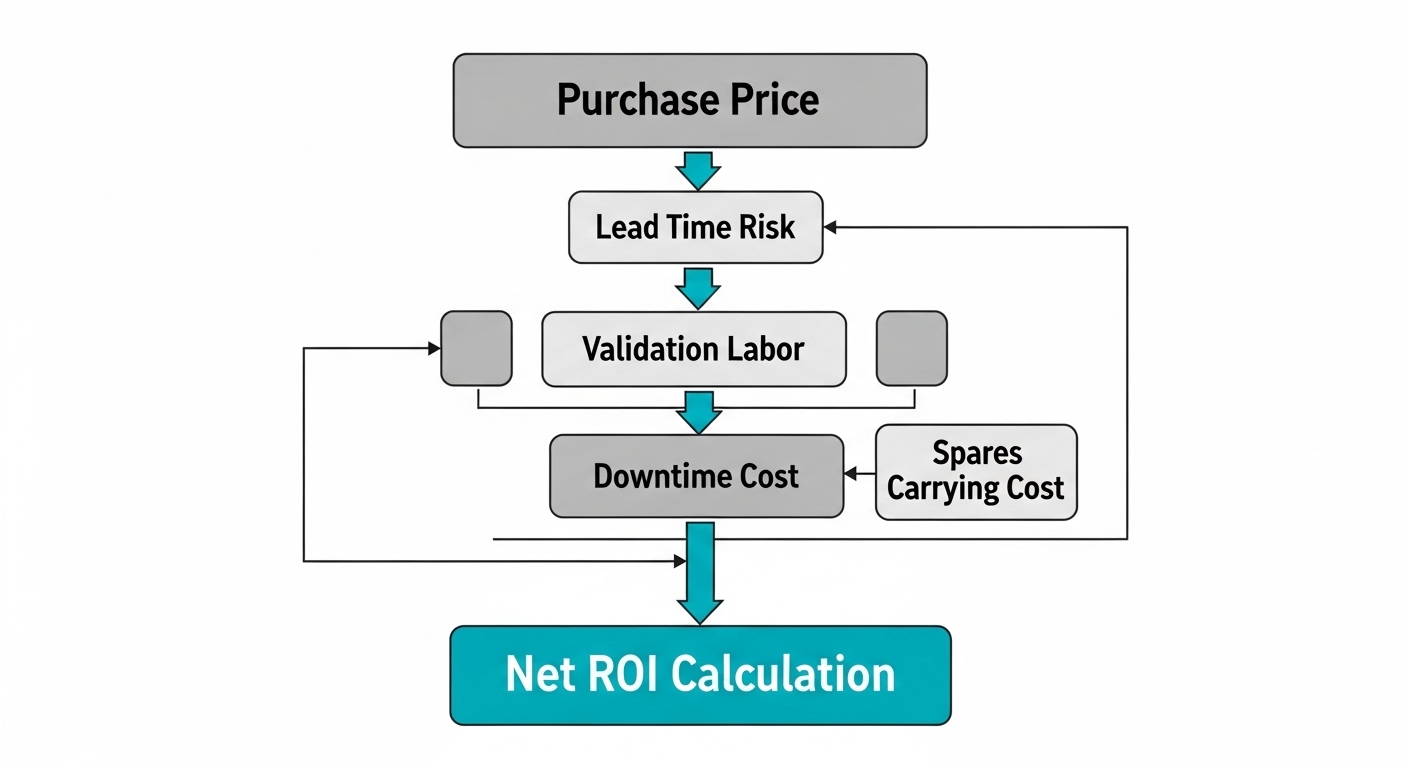
ROI is not just purchase price. A realistic model includes total cost of ownership (TCO) factors such as expected failure rate by vendor/lot, labor hours to troubleshoot mismatched optics, spares inventory carrying costs, and the cost of downtime measured in lost transactions or SLA penalties. IEEE 802.3 defines Ethernet physical layer behaviors, but vendors implement optics and management details differently, especially around DOM thresholds, vendor-specific alarm interpretation, and how they handle link retraining events. For baseline technical coverage, see [Source: IEEE 802.3].
Procurement teams also need to consider supply chain lead time variance. If your primary vendor lead time is 6 to 10 weeks and secondary is 2 to 6 weeks but requires extra validation, the ROI depends on how often you reorder and how costly it is to miss an install window. In many enterprises, transceivers behave like “commodity with operational consequences”: cheap optics can be expensive when they trigger repeated RMA cycles or cause intermittent link instability.
Spec reality check: compare optics by wavelength, reach, and power
Before you calculate transceiver ROI, align the technical requirements on the link budget: wavelength, modulation format, reach, and transceiver power consumption. The most common ROI killer is “spec mismatch” that passes a basic compatibility check but fails under temperature swings, marginal fiber plant, or switch port tolerances. For example, a 10G SR module (850 nm) can be correct for distance but still exhibit higher error rates if the fiber is dirty or if the transceiver’s transmitter bias stability differs from your expected vendor.
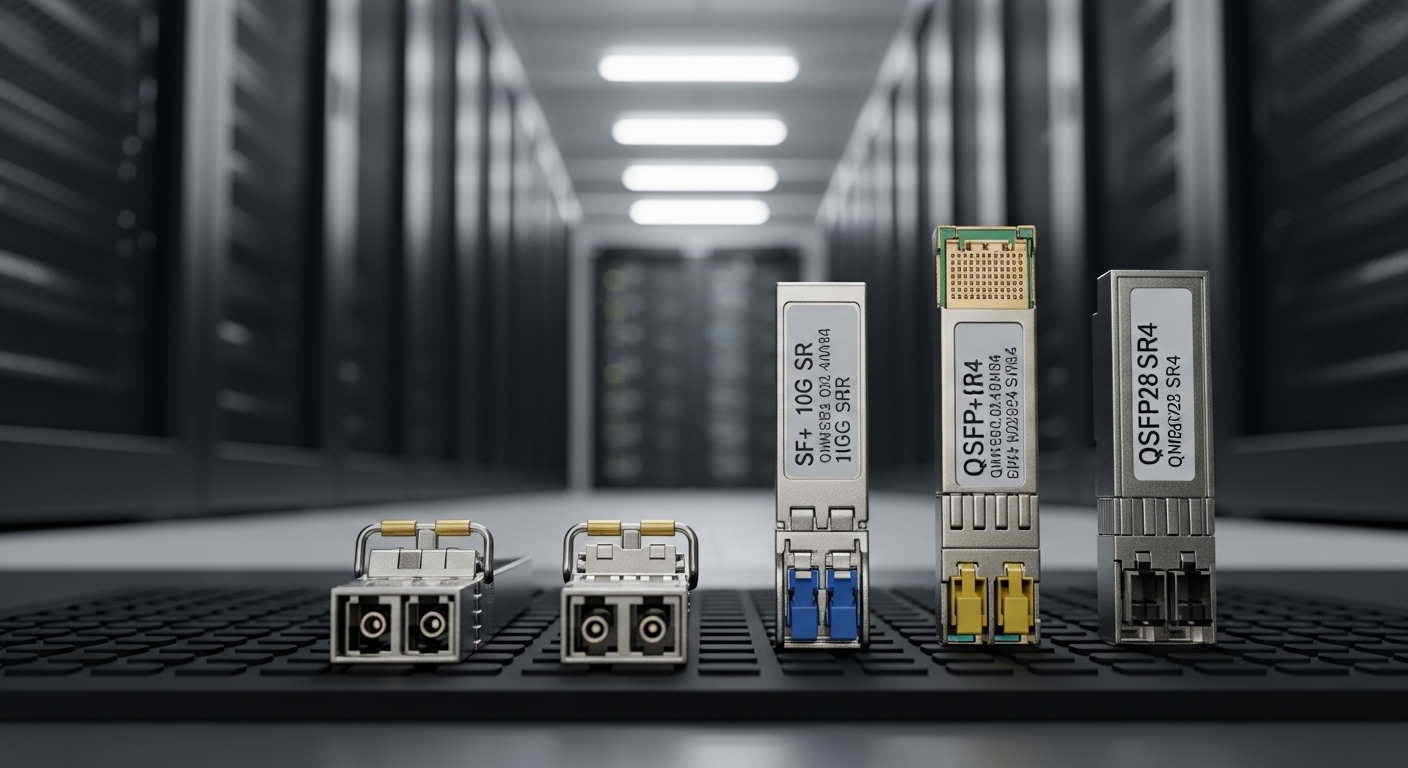
Below is a practical comparison of common 10G short-reach optics that many enterprises standardize across leaf-spine and ToR-to-aggregation links. Use this as a template for your own SKU mapping; always confirm exact vendor datasheets and switch vendor interoperability guidance.
| Example transceiver type | Wavelength | Target reach | Connector / interface | Data rate | Typical DOM support | Operating temperature | Power (typ.) |
|---|---|---|---|---|---|---|---|
| SFP+ 10G SR (850 nm) | 850 nm | Up to 300 m (OM3) / 400 m (OM4) typical | Duplex LC | 10.3125 Gb/s | Vendor-dependent; alarms for Tx power, Rx power, temp | 0 to 70 C (commercial) or -40 to 85 C (extended) | ~0.8 to 1.5 W typical |
| QSFP+ 40G SR4 | 850 nm | Up to 100 m (OM3) / 150 m (OM4) typical | MPO/MTP (12-fiber) | 40 Gb/s (4 lanes) | Often full DOM; lane-level diagnostics vary | 0 to 70 C or -40 to 85 C | ~2.5 to 4 W typical |
| QSFP28 100G SR4 | 850 nm | Up to 100 m (OM3) / 150 m (OM4) typical | MPO/MTP (12-fiber) | 100 Gb/s (4 lanes) | DOM support varies by vendor | 0 to 70 C or -40 to 85 C | ~4 to 7 W typical |
For switch compatibility, check the transceiver’s electrical interface and how the switch validates it. Many modern switches rely on a combination of the standard serial ID, EEPROM data, and optical performance expectations. DOM support is usually present, but the mapping of alarm thresholds and units can differ, which affects your monitoring accuracy and alert fatigue. For optical and interface fundamentals, refer to [Source: IEEE 802.3] and vendor datasheets such as Cisco SFP-10G-SR (for reference) and common third-party equivalents like Finisar and FS.com SR models. Example datasheet references include [Source: Cisco SFP-10G-SR datasheet] and [Source: Finisar FTLX8571D3BCL datasheet].
Model the ROI: cost, uptime, labor, and inventory risk
A multi-vendor transceiver ROI model should be built around measurable inputs. Start with annual demand by site and media type, then map each transceiver SKU to lead time and expected failure behavior. If your environment is a typical enterprise data center, you might have 10G SR optics used on leaf-spine links and 25G or 100G optics used on aggregation. Each adds different power draw and different operational patterns during fault isolation.
Step-by-step ROI inputs
- Purchase price per module by vendor and channel (OEM, authorized reseller, third-party compatible).
- Lead time and variability: not just average weeks, but standard deviation based on past POs and supplier communications.
- Validation labor: hours to run port bring-up tests, optical checks, and monitoring validation for DOM alerts.
- Downtime cost: estimate per incident using SLA penalties or internal revenue impact; even short link flaps can affect distributed storage and microservices.
- Spare strategy: holding cost for inventory and the probability you will need a replacement before next procurement cycle.
- Failure and RMA rate: include observed field returns by vendor family and lot, not only advertised warranties.
What multi-vendor changes in the model
Multi-vendor strategy often reduces worst-case procurement risk. In practice, teams use vendor diversity for at least three purposes: price hedging, supply continuity, and regional logistics resilience. The trade-off is that your operational team must handle “diagnostic heterogeneity.” For instance, one vendor might report Tx power in dBm with consistent alarm thresholds, while another uses slightly different scaling or triggers alarms earlier, which can lead to unnecessary swaps and labor.
Pro Tip: Treat DOM thresholds like part of your monitoring contract. Before scaling a new vendor, run a controlled lab test where you compare DOM readings and alarm behavior under the same fiber and transceiver temperature conditions. Many “mystery flaps” blamed on the fiber plant are actually threshold interpretation differences between vendors.
For authority on Ethernet physical layer behaviors, use [Source: IEEE 802.3] as the baseline. For how DOM is implemented and interpreted, rely on vendor datasheets and your switch vendor’s compatibility notes, typically published in optics guidance documents. External references are best kept to vendor-specific interoperability pages, because switch vendors may update port validation behavior over time.
Procurement decision checklist for multi-vendor transceiver ROI
Use this ordered checklist during spec approvals and PO planning. It is designed to keep procurement, network engineering, and operations aligned so the ROI math matches real operational constraints.
- Distance and media match: confirm OM grade, connector type (LC vs MPO), and target reach margins. Do not rely on “it worked once” if link budget margin is thin.
- Switch compatibility: verify interoperability for your exact switch model and software version. Some platforms enforce strict EEPROM checks or have optics lists that evolve.
- DOM and monitoring integration: confirm that your NMS reads and interprets DOM fields correctly, including unit scaling and alarm thresholds.
- Operating temperature and derating: ensure the transceiver is rated for your enclosure airflow and ambient conditions. If your aisles hit 35 to 45 C during peak load, validate at that point.
- Fiber plant quality: include a connector cleanliness program and test results (loss, return loss, and inspections). A cheaper transceiver cannot compensate for dirty connectors.
- Vendor lock-in risk: evaluate how easily you can pivot if a vendor lead time stretches. Multi-vendor only helps if you can actually qualify and procure quickly.
- Lead time and escalation path: define what happens when your primary vendor misses the schedule. ROI depends on response time, not just supplier averages.
- Warranty and RMA terms: compare cross-vendor RMA turnaround and shipping responsibilities. TCO is impacted by who pays freight and how fast you get replacements.
When you apply this checklist, you will likely find that “compatible” third-party optics can be a strong ROI lever for low-risk segments, while OEM or authorized modules may be better for critical paths where validation overhead is costly. The optimal strategy is usually tiered: diversify for availability and price, but keep strict validation for high-impact links.

Common mistakes and troubleshooting tips that break transceiver ROI
Even when ROI spreadsheets look good, failures in execution can erase savings. Here are common pitfalls, with root causes and practical solutions.
-
Mistake 1: Buying by reach label only
Root cause: “Up to X meters” is conditional on OM grade, connector quality, and link margin. Some deployments run near the limit due to patch panel losses.
Solution: Require measured fiber loss documentation and enforce a margin policy (for example, keep measured loss well below the vendor-defined budget). Re-clean and re-test connectors before swapping optics. -
Mistake 2: Assuming DOM fields are interchangeable across vendors
Root cause: DOM alarm thresholds and scaling can differ; monitoring may flag false positives or miss early degradation signals.
Solution: Update your NMS parsing rules and validate alarm behavior for each vendor family. Use a staged rollout: one rack, then expand after confirming alert quality. -
Mistake 3: Skipping firmware and software compatibility checks
Root cause: Switch software updates can change transceiver validation logic or link training behavior. A module that worked on version A might behave differently on version B.
Solution: Tie optics qualification to switch software baselines. During upgrades, run a pilot with representative optics from each vendor tier. -
Mistake 4: Underestimating temperature and airflow constraints
Root cause: In dense racks, module temperature can exceed what the lab environment assumed, especially with blocked airflow or high fan curve delays.
Solution: Measure ambient and module temperatures during peak load. If you see sustained high values, adjust fan profiles or relocate optics to better-cooled bays.
If you need a structured troubleshooting approach, align with your vendor’s optical troubleshooting guide and use standard link verification steps: interface status, DOM readings, error counters, and optical power levels. Keep in mind that many intermittent issues are fiber cleanliness or patch panel geometry problems, not the transceiver itself.
Real deployment scenario: multi-vendor optics in a leaf-spine data center
Consider a 3-tier data center with leaf-spine architecture: 48-port 10G ToR switches connect to 2 aggregation layers and then to spines. The environment uses 10G SFP+ SR for ToR-to-aggregation and 40G QSFP+ SR4 for aggregation-to-spine. Over a year, the team replenishes about 1,200 optics across two regions, and they see seasonal demand spikes when expansion racks are installed.
Initially, the team buys OEM modules for all links, with an average lead time of 8 weeks and a per-module price premium of 20 to 35 percent. They switch to a tiered approach: OEM for high-impact spine uplinks and a qualified third-party vendor for ToR downlinks. Validation takes 3 engineer-days per vendor family to confirm DOM parsing, error counters under load, and alarm consistency. After rollout, procurement lead time variability drops, and they avoid two emergency shipments during peak season, reducing expedited freight and overtime labor. The result is a measurable transceiver ROI improvement driven more by risk reduction and labor avoidance than by pure unit price.
Cost and ROI expectations: what buyers typically see
In many enterprise purchasing cycles, OEM optics carry a premium that can range from 10 to 40 percent over authorized alternatives, depending on volume and market conditions. Third-party compatible modules can sometimes be 15 to 50 percent lower than OEM, but ROI depends on your validation cost and your observed field reliability. TCO can shift quickly if a vendor introduces higher failure rates, increases RMA turnaround time, or triggers more troubleshooting labor due to DOM differences.
A practical way to estimate TCO is to combine: (1) module price plus (2) expected replacement cost based on your failure history plus (3) labor hours to investigate link issues plus (4) downtime cost probability-weighted by your incident rate. If you hold spares, also include carrying costs and the risk of obsolete SKUs when you change switch generations. In practice, the best ROI comes from combining multi-vendor sourcing with strict qualification and monitoring integration, not from “buying the cheapest module.”
FAQ
How do I calculate transceiver ROI for a new vendor?
Start with unit price, then add labor for validation, expected RMA and replacement effort, and the cost of downtime incidents. Include lead time variability and spare inventory carrying costs, because those often dominate ROI when demand spikes happen.
Will multi-vendor optics work with my existing switch model?
Usually yes if the module type matches the Ethernet standard and the switch supports the transceiver’s EEPROM identification. However, switch software versions can change validation behavior, so confirm compatibility with your exact switch model and software baseline using vendor interoperability guidance.
Do DOM alarms differ between OEM and third-party modules?
Yes. DOM support may exist, but alarm thresholds, scaling, and field naming conventions can vary by vendor. Validate DOM interpretation in your NMS before scaling, otherwise you may get false alarms or miss early degradation signals.
What is the biggest hidden cost in multi-vendor transceiver strategies?
Operational cost from troubleshooting and monitoring integration. If your team cannot quickly correlate DOM readings to known-good behavior, you may spend more time swapping modules, checking fiber cleanliness, and escalating to vendors.
How many modules should I test before scaling?
Use a staged rollout: start with a pilot in one rack or one line card per switch model, covering both normal and marginal conditions (temperature, typical traffic, and representative fiber runs). Expand after confirming error counters, link stability, and alarm quality for each vendor family.
When is OEM-only sourcing the better ROI?
OEM-only can win when downtime cost is extremely high, when your monitoring integration is strict and costly to adjust, or when your environment has tight qualification gates. It can also be preferable for high-speed optics where validation effort is higher and the operational consequences are larger.
Multi-vendor transceiver ROI is achievable, but it depends on disciplined qualification, monitoring alignment, and realistic TCO modeling that includes labor and uptime risk. If you want the next step, align your optics decision with your broader asset strategy using transceiver procurement strategy and standardize validation across sites.
Author bio: I have managed enterprise optics procurement and qualification for high-density Ethernet deployments, including DOM monitoring integration and field failure analysis. I write from hands-on experience with switch compatibility testing, fiber plant validation, and supply lead time risk controls.