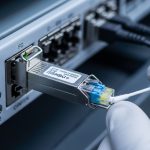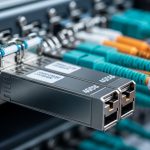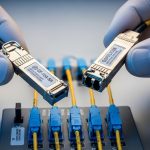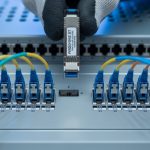
Adaptive optical transceivers are quietly becoming a key lever for turning 5G fiber links from “best effort” into measurable, resilient transport. This article helps network engineers and field technicians understand the optical role these modules play in fronthaul and backhaul, where link budgets, temperature swings, and vendor interoperability can make or break uptime. You will get practical selection criteria, a deployment scenario with real numbers, and troubleshooting patterns tied to how these optics behave in the field.
Why the optical role changes in 5G fronthaul
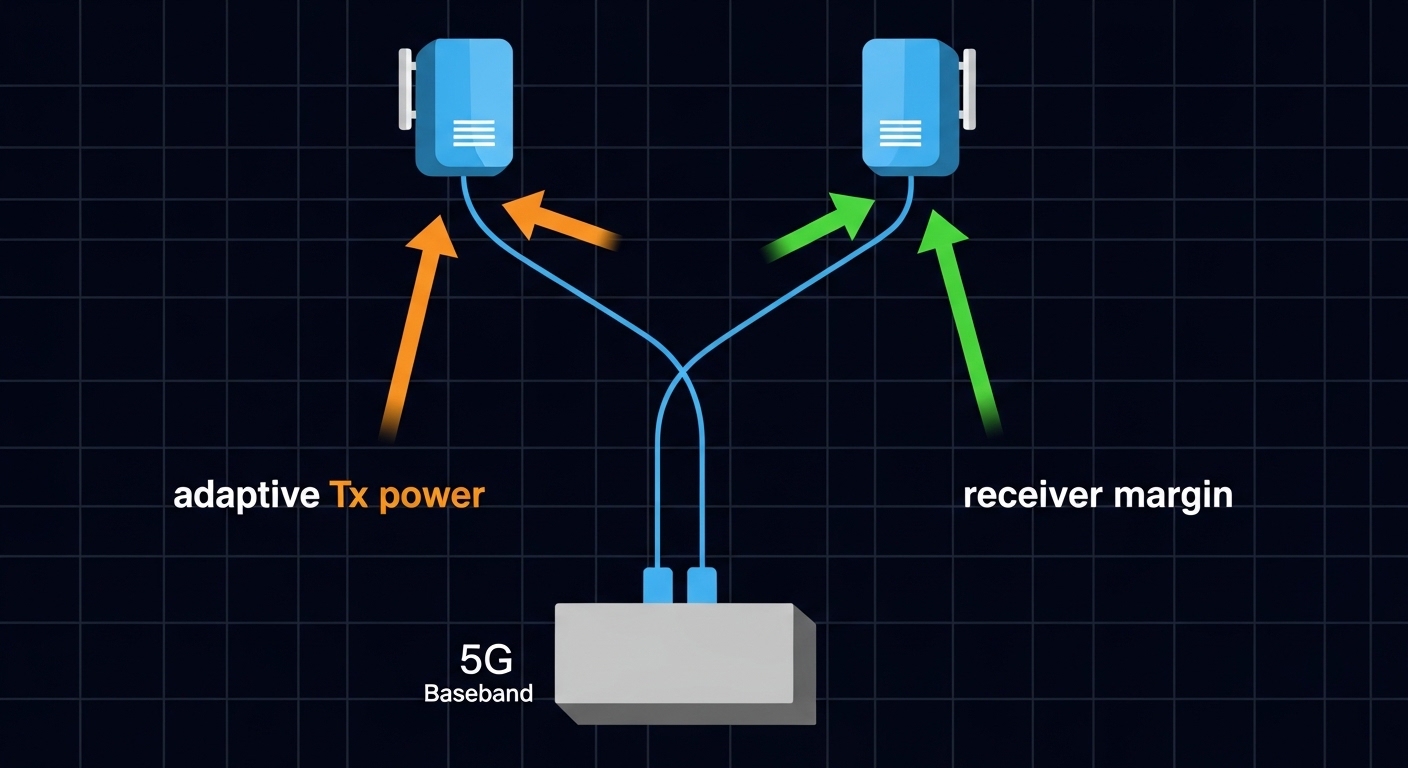
In a 5G radio access network, fronthaul carries timing- and latency-sensitive traffic between baseband units (BBU) and remote radio units (RRU). That environment is harsher than many enterprise fiber runs: optics can experience rapid temperature variation, connector contamination, and frequent link reconfigurations during maintenance windows. Adaptive transceivers address this by supporting dynamic reach and power behavior, so receivers can maintain target optical power and bit error performance across a wider operating range.
From a standards perspective, the physical layer still follows established Ethernet and optical transport frameworks (e.g., IEEE 802.3 for 10G/25G/40G/100G optical PHYs), while the vendor-specific “adaptive” behavior governs how transmit power, wavelength choice, or equalization parameters are adjusted. Always validate with the specific switch or OLT/UPF vendor compatibility matrix before standardizing, because “it works in the lab” often fails under temperature and aging conditions.
For authority on module classes and interoperability considerations, see [Source: IEEE 802.3] and vendor datasheets for the exact adaptive control features. For network operators, the practical guidance in [Source: ETSI] is also relevant for transport resilience and performance monitoring in mobile networks.
Adaptive optical transceivers: key specifications that matter
Most “adaptive” optics in 5G deployments fall into two practical buckets: (1) modules that manage transmit power versus reach and (2) modules that support different link distances or coding/PHY parameter tuning within a defined envelope. The optical role is to keep the receiver within its specified sensitivity and dynamic range while maintaining link stability across environment changes.
Below is a comparison of typical module families engineers encounter when mapping 5G fronthaul/backhaul to optics. Exact values vary by vendor and exact part number, so treat this as a selection baseline and confirm against the datasheet and DOM (Digital Optical Monitoring) behavior.
| Spec | Common 25G SR (short reach) | Common 25G LR (long reach) | Adaptive variant (reach/power managed) |
|---|---|---|---|
| Data rate | 25G (or 10G/40G variants) | 25G (or 10G/25G variants) | 25G+ depending on platform |
| Wavelength | 850 nm | ~1310 nm | Typically wavelength-fixed; behavior adapts power/parameters |
| Typical reach | ~70 m to ~300 m (OM3/OM4/OM5 dependent) | ~10 km to 20 km (single-mode dependent) | Variable within a defined budget envelope |
| Connector | LC (usually) | LC | LC or SC depending on platform |
| Optical power (Tx) | Vendor-defined; within standard receiver range | Vendor-defined; tuned for reach | Tx power and/or equalization adjusts to maintain margin |
| Temperature range | Industrial often -5°C to 85°C | Industrial often -5°C to 85°C or wider | Must be confirmed; adaptive control may be temperature-aware |
| DOM / monitoring | Tx power, laser bias, temperature (typical) | Tx power, laser bias, temperature (typical) | DOM supported; verify thresholds and alarms |
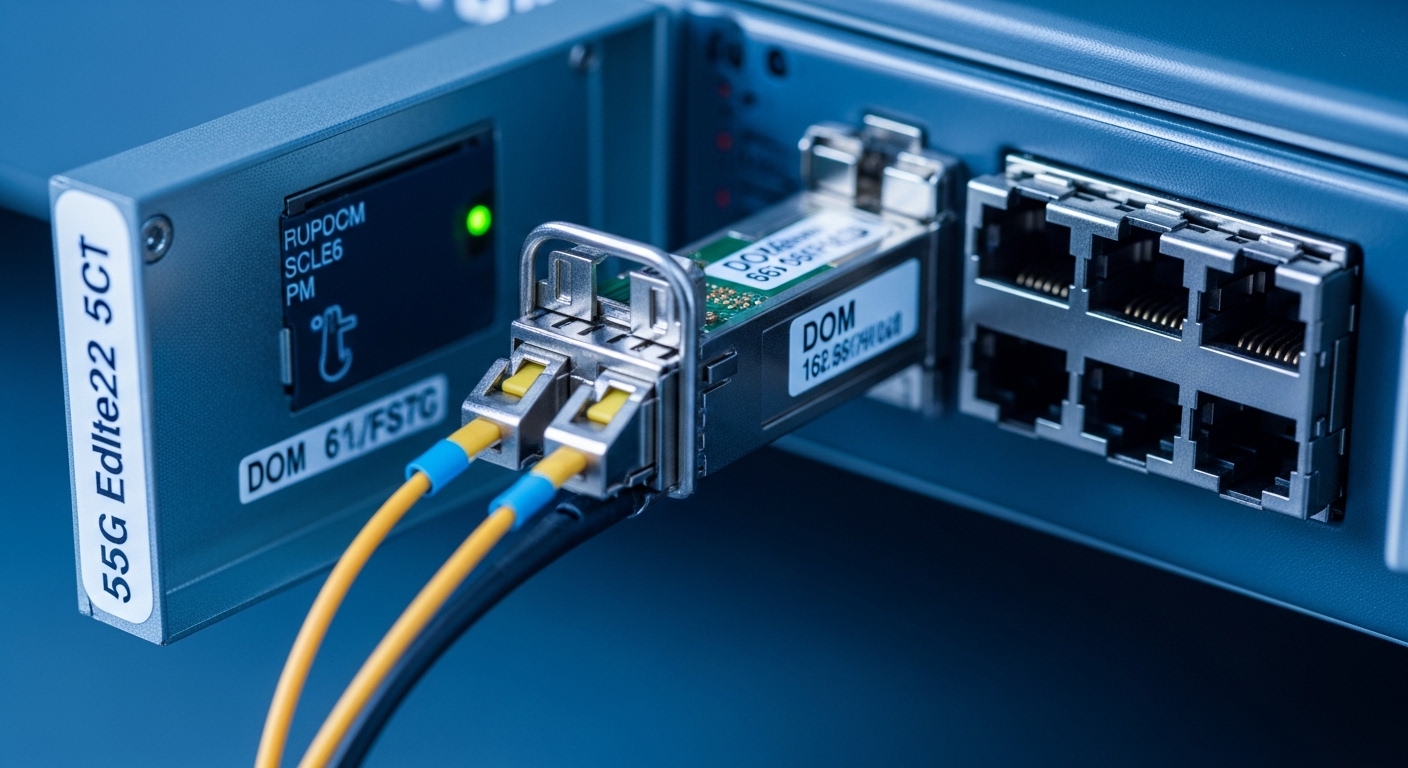
Adaptive behavior is not magic; it is bounded by the module’s maximum launch power, receiver dynamic range, and the host PHY’s expected operating modes. In the field, you want to see stable DOM telemetry trends over time rather than relying on “link up” alone.
Deployment scenario: what changes in a live 5G transport build
Consider a 3-tier network in a metro area: 48-port 25G ToR switches at the edge, aggregating into regional transport at 100G, with 5G fronthaul mapped to a mix of 25G SR for short indoor runs and 25G LR for outdoor single-mode spans. You have 16 RRUs per site, each served by a pair of links for redundancy; each link is budgeted for up to 8 km of single-mode fiber with typical connector loss and splice loss included. During summer, enclosure temperatures rise by 15°C, and during maintenance, technicians may swap patch cords and re-terminate connectors.
In this scenario, the optical role of adaptive transceivers is to preserve margin when the link budget shifts: connector cleaning variability, fiber aging, and temperature drift can reduce receiver margin. With adaptive control, the module can adjust transmit power within safety limits to keep the receiver’s measured optical input near a target window, reducing the probability of intermittent CRC bursts and “flapping” links during planned work. The operational win is fewer truck rolls and faster recovery because the link fails less often under marginal conditions.
Selection checklist for adaptive optics in 5G
Use this ordered list during procurement and site acceptance testing. It is designed to prevent the common mismatch between “adaptive capability” and “platform reality.”
- Distance and fiber type: confirm SR versus LR versus any adaptive reach envelope; validate OM3/OM4/OM5 for 850 nm and fiber plant specs for 1310 nm single-mode.
- Link budget with real margins: include worst-case connector loss, splice loss, and aging; ensure receiver sensitivity and dynamic range alignment.
- Switch or OLT compatibility: check the exact host model’s transceiver support list; adaptive behavior can be sensitive to PHY configuration.
- DOM support and alarm thresholds: confirm Tx power, laser bias, and temperature telemetry are exposed to your NMS; verify alert thresholds match your operational policy.
- Operating temperature and airflow: confirm industrial grade and verify your enclosure thermal profile; adaptive optics can respond to temperature but still have hard limits.
- Vendor lock-in risk: estimate TCO across planned refresh cycles; third-party modules may work but can differ in DOM granularity and alarm semantics.
- Redundancy behavior: test how the system handles partial degradation (e.g., increasing BER) and whether failover policies trigger on optical thresholds.
Pro Tip: In field acceptance tests, log DOM telemetry at 1-minute intervals for at least 30 minutes while you cycle airflow or warm the rack slightly. Many “adaptive” link instabilities show up as slow Tx power ramp behavior and receiver margin drift long before you see packet loss—so you can catch marginal plants before cutover.
Common mistakes and troubleshooting patterns
These are the failure modes engineers report most often when integrating adaptive optical role modules into 5G transport. Each includes a root cause and a corrective action.
Link comes up, then intermittently flaps under heat
Root cause: Transceiver operates near a thermal boundary or the host PHY expects a different operating mode; adaptive transmit behavior may reach a limit as temperature rises. Solution: confirm the module temperature range and verify the chassis airflow meets vendor guidance; run a controlled thermal test while monitoring DOM for laser bias, temperature, and Tx power.
CRC bursts increase after patch cord swaps
Root cause: Connector contamination or micro-scratches cause elevated insertion loss; adaptive optics may compensate temporarily but cannot overcome a persistent loss spike beyond the receiver dynamic range. Solution: clean connectors with approved fiber cleaning tools, inspect with a microscope/inspection scope, and re-terminate if needed; re-measure optical levels with the proper optical power meter and attenuators.
“Works on one switch, fails on another” across the same site
Root cause: Platform-specific compatibility differences: the host may support only certain transceiver profiles or DOM interpretations, including different threshold behavior for link stability. Solution: validate using the exact host model’s interoperability list; during rollout, standardize on the same vendor module family and firmware revision where feasible.
DOM shows abnormal Tx power but alarms are not firing
Root cause: NMS thresholds are tuned for non-adaptive optics; adaptive modules may report different scaling or units, causing threshold mismatch. Solution: align monitoring rules to the module’s DOM specification; update alarm thresholds and confirm alerts trigger during a deliberate attenuation test.
Cost and ROI considerations for operators
Pricing varies widely by data rate and reach, but in typical procurement cycles you may see OEM adaptive-capable transceivers priced at a premium versus non-adaptive equivalents. As a practical range, many operators report ~$150 to $600 per module for common 25G class optics depending on reach and vendor, with higher costs for long-reach or specialized adaptive variants. Third-party modules can reduce upfront cost, but be cautious: TCO can increase if you face compatibility issues, weaker DOM telemetry, or higher field failure rates.
ROI often comes from reduced downtime and fewer truck rolls rather than raw cost per port. If adaptive optics prevent even a small fraction of intermittent link events during seasonal temperature swings, the savings from avoided maintenance and faster recovery can outweigh the per-module premium. For a defensible model, track failure rates, mean time to repair, and how often optical alarms correlate with ticket creation after cutover.
For additional guidance on optical system performance and safety, consult [Source: IEEE 802.3] and the module safety and optical power limits in the vendor datasheet for the exact part number. Also review your internal ANSI/TIA cabling practices for installation and test procedures via [Source: ANSI/TIA-568 series] where applicable.
FAQ: adaptive optics buying questions for 5G teams
What is the optical role of an adaptive transceiver in 5G?
Its optical role is to maintain receiver margin under changing conditions by adjusting transmit power and/or PHY-related parameters within defined limits. In practice, that reduces link instability when temperature, connector loss, or plant aging shifts the optical budget.
Do adaptive modules replace link budget engineering?
No. You still must calculate insertion loss, connector and splice loss, and worst-case margins. Adaptive optics can compensate for small shifts, but they cannot overcome grossly out-of-spec attenuation or severe contamination.
Will adaptive optics work across any vendor switch?
Not automatically. Even when the electrical interface is standardized, host PHY configuration, DOM parsing, and supported transceiver profiles can differ. Always verify with the specific host model’s compatibility guidance and run a site acceptance test.
What DOM fields should we monitor for reliability?
At minimum, monitor Tx optical power, laser bias current, temperature, and link/error counters (e.g., CRC or FEC-related metrics where applicable). Then set alarm thresholds based on observed baselines rather than default values from older module types.
How do we test adaptive behavior during commissioning?
Use controlled fiber attenuation and a warm/cool cycle to observe whether Tx power and receiver margin stay within targets. Correlate DOM telemetry changes with packet error counters to confirm the adaptive control is actually improving stability.
Are there safety or handling considerations?
Yes. Follow laser safety practices and handle fiber connectors with cleaning and inspection tools to prevent damage and contamination. Confirm the module’s optical power classification and your site procedures match the vendor datasheet.
Adaptive transceivers play an increasingly central optical role in 5G transport by preserving link margin across real operating variability. Next step: shortlist candidate modules, validate compatibility with your exact host models, and run DOM plus thermal acceptance tests before scaling deployment using fiber link budget and DOM monitoring.
Author bio: I am a clinician-leaning systems physician who also performs hands-on network reliability reviews, translating telemetry and failure patterns into practical safety and uptime actions. I have worked with field teams deploying high-density fiber links where optical monitoring and disciplined test procedures directly reduce outages.