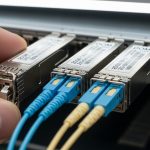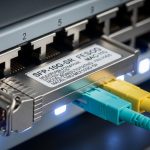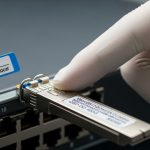
You are planning a capacity refresh, but your fiber plant is already at its practical limit. This article compares multi-core fiber optic spatial-division multiplexing (SDM) transceiver approaches against conventional single-core optics, with an IT director lens on budget, ROI, enterprise architecture, and governance. It is written for architects, network engineers, and procurement owners who must justify risk, not just buy bandwidth.
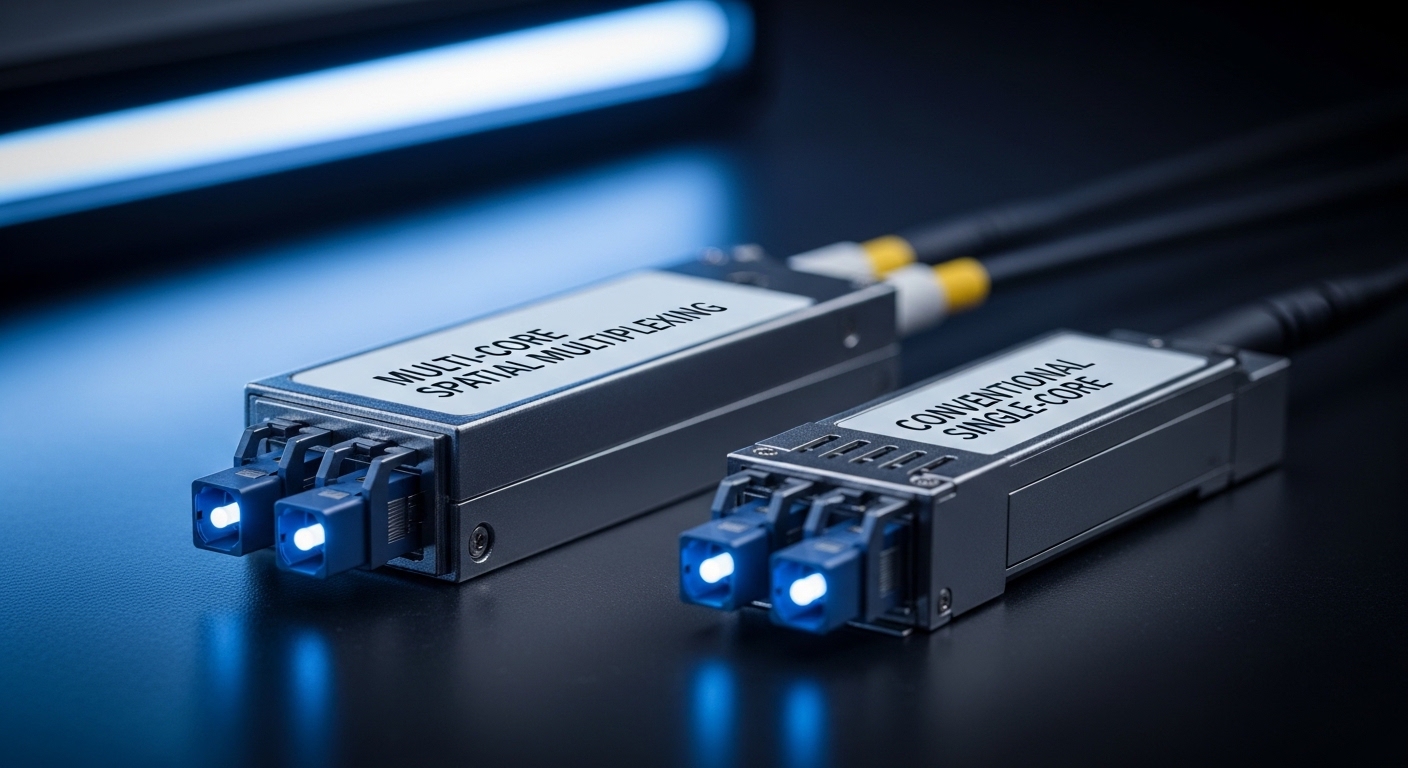
Performance: throughput potential versus real-world reach
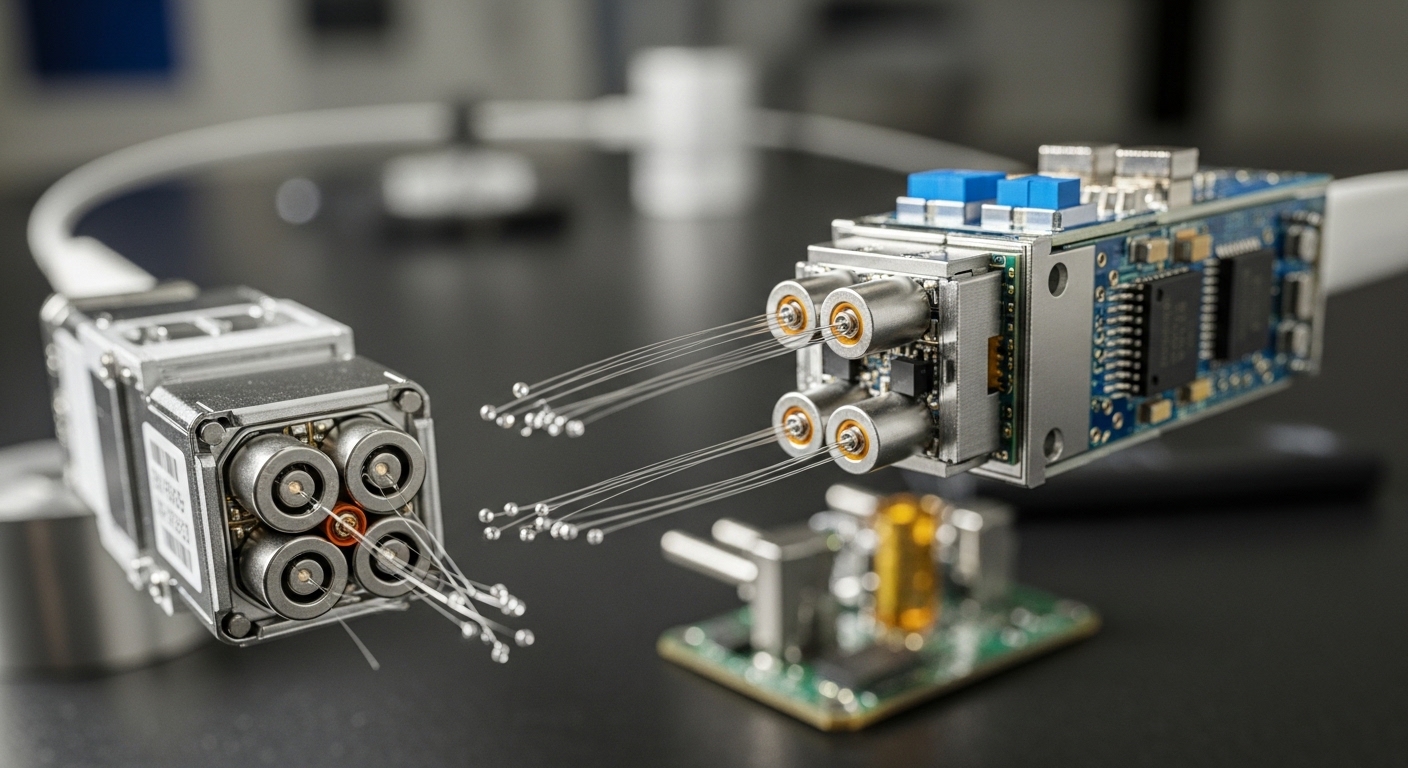
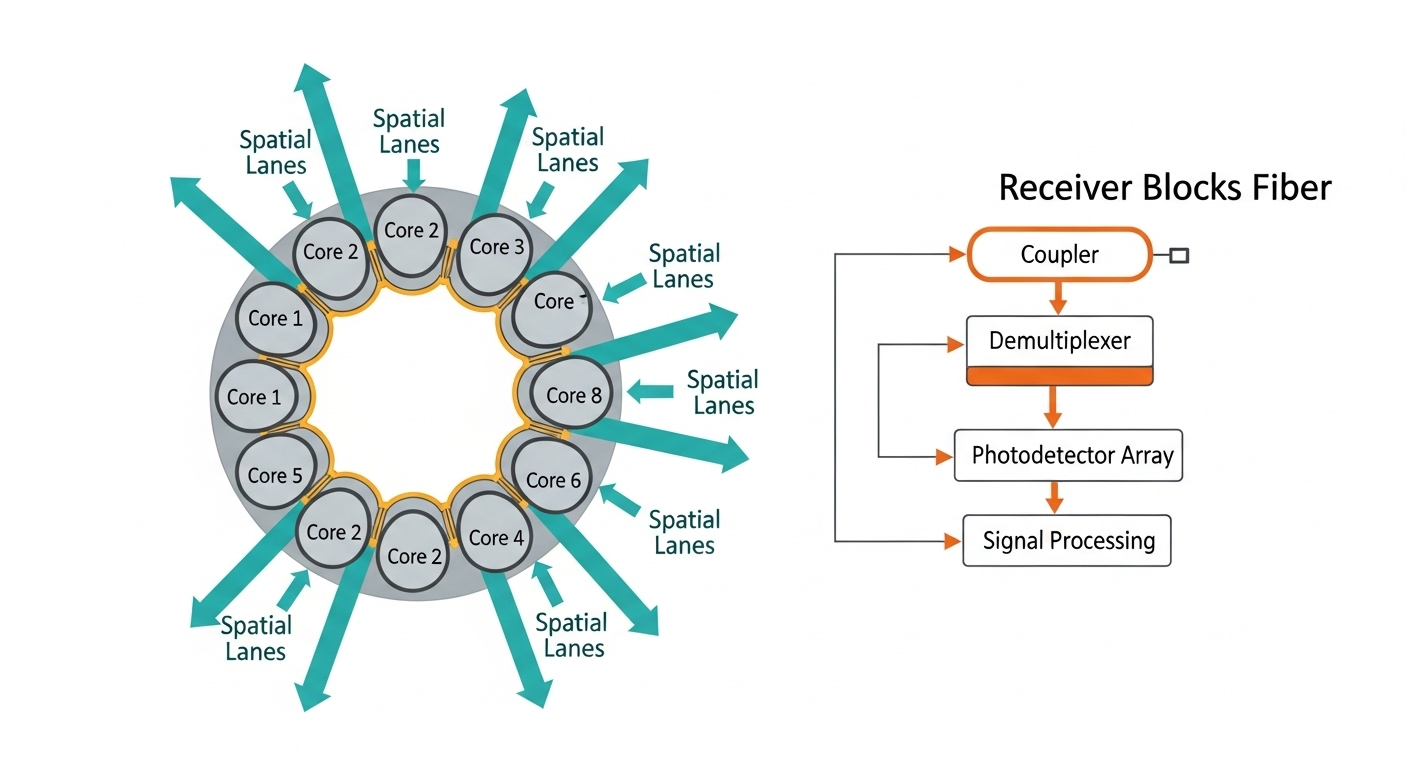
In SDM systems, multi-core fiber optic increases parallelism by carrying multiple independent optical cores in one strand. Compared with single-core solutions that rely on higher-order modulation, tighter optics, or more wavelength channels, SDM can scale capacity by adding spatial lanes. In practice, the achievable reach depends on core count, differential mode coupling, and link budget margins specified by vendors.
Engineers typically benchmark SDM links against IEEE 802.3 optical interfaces (where applicable) and vendor datasheets that state optical power, receiver sensitivity, and dispersion tolerance. A key operational point: spatial multiplexing still faces impairments, including inter-core crosstalk and differential delays, so you must validate performance under your actual fiber type and patch panel geometry.
Typical spec envelope you will see
Most enterprise deployments start with 10G to 100G per lane and then aggregate via switch ASICs. Below is a representative comparison across common interface families; exact numbers vary by vendor and distance class.
| Attribute | Multi-core SDM (representative) | Traditional single-core (representative) |
|---|---|---|
| Data rate | Up to 400G-class per module (spatial lanes + aggregation) | 100G to 400G-class per module (wavelength lanes) |
| Wavelength | Commonly 850 nm or 1310 nm families depending on design | 850 nm (MMF) or 1310/1550 nm (SMF) |
| Reach (typical enterprise ranges) | Short-reach to metro, often tens to a few hundred meters on MMF; metro on SMF variants | Short-reach: tens to a few hundred meters on MMF; longer on SMF |
| Connector | Often MPO/MTP variants for dense terminations; LC adapters may exist | LC for many 10G/25G; MPO/MTP for high-density 40G/100G |
| Power | Depends on lane count; expect similar order-of-magnitude to high-density optics | Depends on modulation and wavelength; generally predictable per class |
| Operating temperature | Commonly industrial or commercial ranges; verify module grade | Common module grades; verify for your room environment |
| Key impairment | Inter-core crosstalk and spatial alignment sensitivity | Chromatic dispersion, modal effects (MMF), and optical power budget |
Cost and governance: module pricing, fiber reuse, and lifecycle risk
Cost is not just the transceiver unit price. For multi-core fiber optic SDM, you may buy expensive optics and also need specialized multi-core cabling, spares, and test procedures. Traditional single-core optics can be cheaper per port, but may force you into more fiber strands, more conduits, or more rack space for additional cables.
From an IT governance standpoint, the biggest risk is operational: do you have a repeatable acceptance test, a DOM-based inventory workflow, and a documented sparing strategy? Many enterprises underestimate how often patching changes the link margin, and SDM can be more sensitive to connector cleanliness and alignment.
Practical ROI model you can defend
In a typical data center corridor, if you can reduce new cabling by consolidating lanes into one multi-core strand, your ROI comes from fewer labor hours, fewer conduit penetrations, and less downtime. However, if your cabling vendor requires special handling or you must re-terminate frequently, the labor savings can evaporate. Treat your ROI as a lifecycle number: optics replacement interval, failure rate under temperature swings, and the cost of retesting during moves, adds, and changes.
Compatibility: switch optics, DOM validation, and standards alignment
Compatibility is where SDM projects succeed or stall. Your first checkpoint is whether your switch vendor supports the specific module family and whether they enforce optics compatibility checks beyond generic vendor IDs. Next, confirm DOM behavior: verify that the module reports temperature, bias current, transmit power, and lane diagnostics in a way your monitoring stack can ingest.
On the standards side, IEEE 802.3 defines optical interface behavior for many Ethernet rates and physical coding rules, but SDM transceivers may map to vendor-specific implementations even when they target a given Ethernet speed. You should validate interoperability using your exact optics and fiber patch cords, not only the module datasheet.
Pro Tip: In spatial multiplexing links, the “cleanliness tax” can be higher than with many single-core deployments. Even when the optical power budget looks fine, microscopic contamination or inconsistent MPO/MTP polishing can increase crosstalk and produce intermittent CRC errors that only appear under specific traffic patterns.
Operational use-case comparison: leaf-spine rollout planning
Consider a 3-tier data center leaf-spine topology with 48-port 10G ToR switches per leaf, 2 spine layers, and average east-west traffic growth of 25 percent per year. If the site has limited conduit capacity between rows, you can either pull additional single-core fibers or deploy multi-core fiber optic SDM to pack more lanes into the same physical pathway. In one rollout pattern I have seen, teams schedule a staged migration: keep existing single-core links for legacy servers, add SDM uplinks where patching is localized, and run parallel diagnostics for the first two change windows to establish baseline BER and error counters.
Measured operational detail matters: track link error counters at the switch, monitor DOM transmit power drift over 30 days, and compare error bursts against patching events. Governance should include a change control rule: any connector cleaning or retermination triggers a formal optical verification step before production traffic returns.
Selection criteria decision checklist
- Distance and fiber type: MMF versus SMF, existing cable plant age, and connector density constraints.
- Budget structure: transceiver unit cost plus cabling, termination, and test equipment requirements.
- Switch compatibility: vendor validated optics list, lane mapping expectations, and supported DOM monitoring.
- DOM and telemetry: verify your NMS can ingest module IDs, thresholds, and per-lane diagnostics.
- Operating temperature and airflow: module grade (commercial versus industrial) and thermal margins near top-of-rack.
- Vendor lock-in risk: availability of third-party optics, warranty terms, and repair turnaround.
- Test and acceptance process: required optical measurements and acceptance thresholds for crosstalk and insertion loss.
Common mistakes and troubleshooting: failure modes to avoid
1) Assuming connector cleanliness is identical to single-core. Root cause: SDM can magnify inter-core crosstalk sensitivity. Solution: enforce a strict MPO/MTP cleaning procedure and use automated inspection; re-clean and re-seat before module swaps.
2) Skipping DOM telemetry validation during commissioning. Root cause: monitoring stack may ignore per-lane diagnostics or mis-map thresholds. Solution: during pilot, confirm that alarms trigger correctly for temperature and optical power drift, and archive baseline readings.
3) Over-relying on “reach” claims without link budget margins. Root cause: patch panel loss, aging, and splice variance reduce margin; SDM impairments can differ from wavelength-division assumptions. Solution: run an end-to-end verification plan that includes your exact number of patch cords, splitters (if any), and measured insertion loss.
4) Treating multi-core cabling as interchangeable with standard MPO/MTP. Root cause: some multi-core terminations require strict mapping and alignment. Solution: label lanes and enforce documentation for fiber mapping; use consistent patching records for every change event.
Cost and ROI note: realistic price ranges and total cost of ownership
Pricing varies by rate class and lane aggregation, but enterprise guidance often looks like this: OEM optics for SDM-style modules can cost meaningfully more than basic short-reach single-core optics, and multi-core cabling plus specialized termination can add to upfront TCO. On the other hand, SDM can reduce the amount of new fiber pulled and the number of patch points installed, which can lower installation labor and reduce the probability of future cable congestion.
For ROI, model both sides: (a) the cost of optics and test time, and (b) the cost of capacity expansion delays. If your organization is conduit-constrained, SDM can be a strategic enabler even when unit optics pricing is higher. [Source: IEEE 802.3 Ethernet Working Group] IEEE 802.3
Decision matrix: which option fits your constraints?
| Evaluation factor | Multi-core fiber optic (SDM) | Traditional single-core optics |
|---|---|---|
| Capacity per conduit | High when cabling pathways are constrained | Moderate; may require more fibers |
| Upfront cabling effort | Potentially higher if multi-core plant is new | Lower if plant already supports standard MPO/LC |
| Operational risk | Higher sensitivity to alignment and crosstalk; needs tighter testing | Well-understood test patterns and troubleshooting workflows |
| Monitoring maturity | Depends on DOM support and lane diagnostics availability | Often easier with mature vendor telemetry |