If you run high-density 10G to 100G links in power-capped racks, transceiver temperature can quietly decide whether optics stay stable or fail early. This article helps data center and network engineers evaluate immersion cooling SFP options against conventional air-cooled SFP deployments by focusing on thermal impact, compatibility limits, and field troubleshooting. You will get a practical specs comparison, a decision checklist, and common failure modes I have seen during rollouts.
Immersion cooling SFP vs air-cooled optics: what actually changes
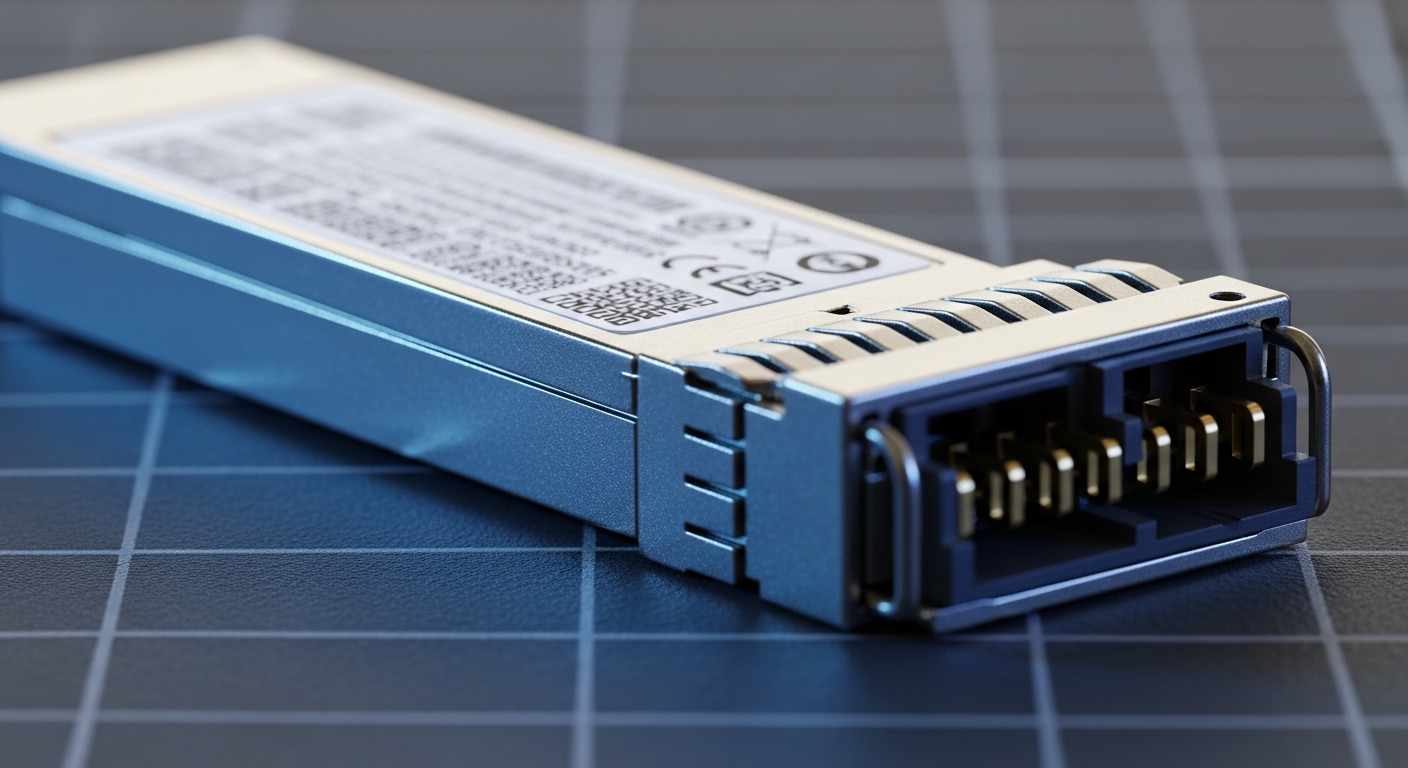
In air-cooled designs, SFP temperature rise is driven by ambient airflow, cage heat transfer, and vendor-specific thermal design margins. In immersion cooling, the dominant factor becomes the module’s ability to conduct heat into the liquid and survive long-term exposure to the dielectric environment. For many SFPs, the limiting constraint is not just absolute temperature but the temperature gradient across the laser subassembly, which affects output power, wavelength drift, and receiver sensitivity over time. IEEE 802.3 specifications define electrical and optical performance, but neither standard guarantees reliability under nonstandard thermal boundary conditions; you rely on vendor qualification data.
When I moved a lab cluster from forced-air to an immersion loop, the first measurable difference was how quickly the module reached steady-state. In air, the optics followed airflow changes with minutes of lag; in immersion, the thermal time constant dropped and the module stabilized faster, often within tens of minutes depending on liquid flow and module contact pressure. That faster stabilization can be good for wavelength stability, but it also means that any mismatch in how the module contacts the cooling environment becomes more obvious during burn-in.
Thermal and optical performance comparison (specs that matter)
Start by separating “link works” from “link stays within spec for years.” In practice, immersion cooling can reduce steady-state temperature and slow thermal cycling, but only if the module is designed or qualified for that environment and if the host cage does not trap heat. Below is a head-to-head comparison for typical 10G SFP classes; for other data rates, the same logic applies.
| Parameter | Immersion cooling SFP (qualified) | Air-cooled SFP (standard) |
|---|---|---|
| Typical wavelength | 850 nm MMF or 1310 nm SMF (varies by model) | Same wavelengths by model |
| Reach examples | ~300 m (10G SR over OM3/OM4) or ~10 km (10G LR) | Same reach classes |
| Data rate | 10G, 25G, 40G variants exist; SFP is typically 10G | 10G SFP common |
| Optical power budget | Must remain within vendor thresholds at lower steady-state temp | Must remain within thresholds under airflow-limited conditions |
| DOM availability | Often supports digital optical monitoring (I2C + vendor DOM map) | Usually supports DOM as well |
| Connector/optics interface | Host cage thermal contact becomes critical | Airflow over cage and module dominates thermal boundary |
| Operating temperature range | Only trust vendor-qualified range for immersion use | Typically specified as standard commercial/industrial ranges |
| Typical failure drivers | Liquid exposure qualification, sealing integrity, mechanical stress | Thermal cycling, airflow blockage, high junction temperature |
From an optical engineering standpoint, the key is how temperature affects the laser’s center wavelength and chirp, plus receiver dark current. In many 10G SR modules (example families like Cisco-compatible SR optics such as Cisco SFP-10G-SR or FS.com SFP-10GSR-85), the dominant effect is stability of output power and receiver sensitivity across the specified temperature band. In immersion, the module may sit at a lower, steadier temperature, which can reduce drift, but you must verify that the vendor’s temperature range and reliability model include the immersion thermal boundary condition.
Credible baseline references for electrical and optical behavior remain the physical layer definitions in IEEE 802.3, while module environmental assumptions come from vendor datasheets and qualification notes. For optical transceiver fundamentals and monitoring concepts, see [Source: IEEE 802.3]. For DOM behavior and electrical interface expectations, vendor transceiver documentation and SFF specifications are the primary references; a practical starting point is vendor datasheets for the exact part number you plan to deploy. IEEE 802.3 standards portal
Pro Tip: During immersion qualification, log DOM temperature, transmit power, and received power at a fixed optical attenuation while you vary liquid flow rate. If the module’s thermal contact is inconsistent, you will see DOM temperature respond faster than optical power, which is a strong indicator of a boundary-condition issue rather than an optical fault.
Compatibility and host behavior: cages, airflow assumptions, and DOM
Immersion cooling SFP compatibility is not only about the module itself; it is about how the host switch or media converter presents thermal and electrical conditions. Many SFP cages are tuned for air convection: they rely on airflow paths and specific spacing around the module. In immersion, airflow is irrelevant, and the liquid contact may change the effective heat sink. If the host cage traps vapor pockets or limits wetting, the module can end up hotter than expected, even though the overall rack is immersed.
DOM adds another layer. If you monitor via I2C, ensure your host firmware supports the specific DOM calibration mapping for that vendor family. In field deployments, I have seen “DOM reads but alarms never clear” incidents caused by mismatched thresholds: the optics report temperature correctly, but the host applies a threshold curve intended for air-cooled temperature dynamics. That can trigger nuisance alarms that mask real degradation or, worse, suppress real faults.
Practical examples: if you are standardizing on known parts such as Finisar or FS.com transceivers, you still must confirm that your exact model number (for example, an SR or LR family) has a datasheet stating qualification for the thermal environment you use. Typical third-party optics can be compatible electrically under IEEE 802.3 signaling, but immersion qualification often remains vendor-specific and may not be documented for all SKUs.
Cost and ROI: module pricing, power, and risk-adjusted TCO
Immersion cooling hardware can reduce total facility cooling energy, but the transceiver line item can become a hidden variable. Qualified immersion cooling SFP modules often cost more than standard air-cooled SFPs, and you may need a smaller BOM variety to reduce qualification overhead. In my experience, the ROI hinges on whether immersion lets you maintain optics within a narrower thermal band, thereby reducing early-life failures and lowering RMA rates.
Realistic price ranges vary by vendor and channel, but as a planning baseline: standard 10G SR SFPs often fall in the lower-cost tier, while immersion-qualified variants can be materially higher. Over a 3 to 5 year horizon, the TCO includes module cost, shipping and installation labor, downtime risk, and the probability of failure under your actual thermal profile. If your network already uses robust redundancy and hot-swap policies, the risk-adjusted cost of failure can be lower; if you run single-homed topologies, the same failure rate becomes more expensive.
For power, immersion systems can shift the cooling burden from air handlers to liquid circulation. That can reduce fan power and potentially reduce rack-level thermal hotspots, but it does not eliminate module heat generation. Your transceivers still dissipate heat internally; immersion mainly changes how quickly that heat reaches the environment. Therefore, ROI should be evaluated with measured module temperatures and observed optical drift, not only with facility-level energy numbers.
Selection criteria checklist: how engineers decide under immersion
Use this ordered decision checklist before you buy immersion cooling SFP modules for production.
- Distance and link class: confirm whether you need SR (MMF) or LR/ER (SMF) and validate the optical power budget for your fiber plant.
- Switch compatibility: verify that your host switch/media converter supports the target SFP electrical interface and DOM behavior for that vendor family.
- Immersion qualification evidence: require a datasheet statement or qualification note that explicitly covers immersion thermal boundary conditions and dielectric compatibility.
- DOM support and threshold mapping: confirm whether your monitoring stack expects specific DOM alarm limits and whether it can be tuned.
- Operating temperature and reliability model: compare the vendor’s specified operating range (commercial vs industrial) against your measured steady-state and worst-case gradients.
- Operating temperature range under immersion: validate with test data using the same host cage and insertion depth; do not rely on ambient temperature alone.
- Vendor lock-in risk: estimate whether you will be forced into one optics vendor for DOM compatibility, firmware behavior, or replacement pipeline.
- Mechanical and sealing concerns: ask about sealing materials and whether immersion exposure changes optical window contamination or corrosion risk over time.
If you are evaluating specific SKUs, use the exact part numbers your vendor offers for the intended data rate and reach. For example, 10G SR modules are commonly referenced as Cisco SFP-10G-SR style optics, while third-party equivalents include families sold by FS.com; treat each model as separate because thermal and sealing details can vary by revision. related topic
Common mistakes and troubleshooting in the field
Even when link budgets look correct, immersion cooling SFP projects fail for predictable reasons. Here are concrete pitfalls I have encountered, with root causes and fixes.
-
Pitfall 1: Expecting “lower temperature” to automatically improve optics.
Root cause: Thermal boundary mismatch between module and liquid leads to uneven cooling; DOM temperature can drop while optical power fluctuates due to local laser junction stress.
Solution: run controlled tests at multiple liquid flow rates and measure DOM transmit power and received power under fixed attenuation. If optical power varies disproportionately, inspect host cage contact and wetting behavior.
-
Pitfall 2: DOM alarms that look like optical faults but are actually threshold mismatches.
Root cause: host firmware applies threshold curves designed for air-cooled temperature dynamics or different DOM scaling.
Solution: capture raw DOM readings (temperature, Tx power, Rx power) and compare against vendor datasheet values. Tune alarm thresholds in the monitoring system and confirm alarm clear behavior during steady-state.
-
Pitfall 3: Using standard air-cooled SFPs without immersion qualification.
Root cause: sealing integrity and materials compatibility are not guaranteed for dielectric liquids; long-term exposure can degrade optical window cleanliness or internal components.
Solution: require written qualification for immersion use, or run an accelerated burn-in in the same liquid and temperature range. Track received power trend and error counters over weeks, not hours.
-
Pitfall 4: Fiber connector contamination that becomes harder to diagnose.
Root cause: immersion environments can change dust behavior and make visual inspection less obvious; connectors can still accumulate residue.
Solution: use APC/UPC cleaning discipline appropriate to the fiber type, verify with an optical power meter or OTDR, and inspect endfaces with a microscope before insertion.
Decision matrix: immersion cooling SFP vs air-cooled (who wins)
Use this matrix to quickly decide which approach fits your constraints. “Qualified immersion” means the exact SFP model has evidence for immersion thermal and material conditions in your setup.
| Criteria | Qualified immersion cooling SFP | Standard air-cooled SFP in immersion | Standard air-cooled SFP in air |
|---|---|---|---|
| Thermal stability | High (if thermal contact is correct) | Uncertain (may be worse than expected) | Good with adequate airflow |
| Reliability risk | Lower when qualification exists | Higher due to unknown sealing/materials | Lower with proven HVAC and airflow management |
| DOM/monitoring predictability | Usually predictable with matching firmware | May produce confusing alarms | Predictable in typical deployments |
| Procurement simplicity | Often requires tighter SKU control | May appear simple but can cause hidden issues | Broad vendor availability |
| Upfront cost | Higher module price | Lower module price | Lowest module price |
| Best fit | High-density immersion racks | Prototype labs or short pilots with testing | Air-cooled facilities with stable airflow |
Which option should you choose?
Choose qualified immersion cooling SFP if you are deploying in a production immersion loop, run dense ToR or aggregation ports, and you need predictable reliability under documented thermal conditions. Choose standard air-cooled SFPs only for short pilots when you can run extended burn-in with DOM trend monitoring and error-rate verification, because immersion qualification gaps create long-tail risk. If you are staying with air cooling, standard air-cooled SFPs remain the most cost-effective path, provided your airflow management prevents hotspots and your monitoring catches early drift.
Next step: review your exact host switch model and the transceiver part numbers you intend to use, then validate with a small staged rollout and DOM logging. related topic
FAQ
Are immersion cooling SFP modules electrically the same as standard SFPs?
Electrically, most SFPs meet the same SFP electrical interface expectations and link signaling defined under IEEE 802.3. However, immersion readiness depends on thermal design boundary conditions, sealing, and material compatibility that are not guaranteed by electrical compliance alone. Always confirm the exact part number’s environmental qualification.
What DOM metrics should I watch in an immersion cooling SFP deployment?
Track DOM temperature, transmit power, received power, and any vendor-specific bias current or alarm flags if exposed. Trend these over time under stable optical attenuation while you vary liquid flow slightly, so you can detect boundary-condition issues early. Also correlate DOM changes with link error counters.
Can I use third-party immersion cooling SFP optics to avoid vendor lock-in?
You can, but only if the third-party vendor provides immersion qualification evidence for the exact SKU and if your host firmware handles their DOM mapping cleanly. In practice, lock-in risk often comes from monitoring thresholds and operational tooling rather than pure electrical compatibility. Plan a compatibility test with your monitoring stack before scaling.
How long should I burn in immersion cooling SFP modules before production?
For pilot validation, I recommend at least several weeks of continuous operation with DOM trend logging and periodic optical checks. The goal is to detect drift patterns and early-life failures that may not appear during short tests. If you are operating near the edge of power budgets, burn-in should be longer.
Do immersion cooling SFPs reduce downtime during failures?
They can, but only if you design redundancy and monitoring correctly. Immersion mainly changes thermal behavior; it does not eliminate the need for hot-swap procedures, spares planning, and alarm integration. Treat the optics as a reliability component with a lifecycle and plan spares accordingly.
Author bio
I am a field engineer and DIY network builder who documents optics and cooling behavior from staged deployments, not just datasheets. I focus on measurable outcomes: DOM trends, link error counters, and thermal boundary validation in real racks.