CPO vs pluggable: choosing the right path for 800G and beyond
Operators upgrading to 800G and planning for 1.6T capacity often hit the same wall: pluggable optics work, but complexity and power budgets keep getting tighter. This article helps network architects and field engineers compare CPO vs pluggable with practical selection criteria, deployment math, and troubleshooting patterns. It is written for teams validating optics in live racks, not for spec-sheet browsing.
Why the industry is debating CPO vs pluggable now
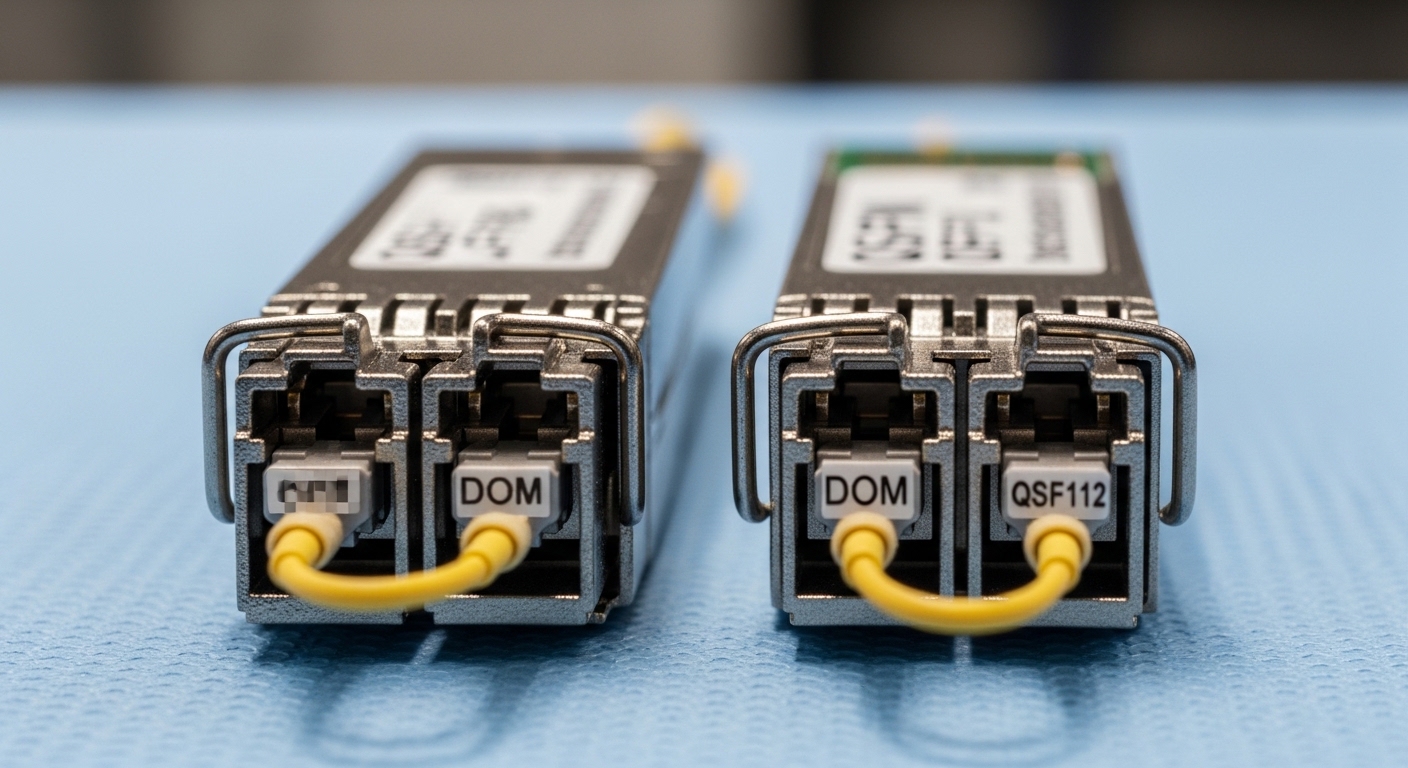
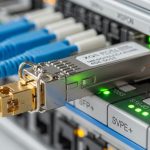
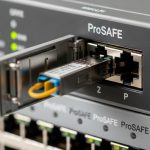
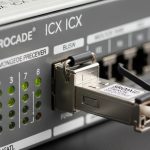
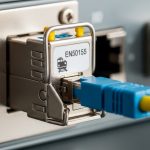
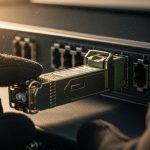
Pluggable transceivers move the optical engine into an interchangeable module, which simplifies logistics and enables multi-vendor sourcing. Co-Packaged Optics (CPO) moves multiple optical functions closer together on a common package, reducing electrical and optical interconnect distance and enabling higher system integration. IEEE and industry groups continue to define interfaces, but vendors implement packaging and signal paths differently, so “compatibility” is not only about form factors.
In field terms, the question is less “which is faster?” and more “which is easier to operate at scale.” With pluggables, you manage optics inventory, DOM/EEPROM behavior, vendor-specific diagnostics, and link bring-up variance. With CPO, you manage platform-level integration, thermal behavior of a more tightly packed photonic assembly, and vendor-specific board-level optics mapping.
For authority on Ethernet PHY and optical link concepts, see Source: IEEE 802.3. For packaging and system-level optical integration discussions, consult vendor platform documentation and optics vendor application notes, since CPO implementations are not uniform across OEMs.
What changes technically: packaging, power, reach, and connectors
The engineering differences show up in how signals travel from the ASIC to the optical output, and how thermal and optical alignment tolerances are managed. Pluggables typically use a standardized module interface and then implement the optical path inside the module can. CPO uses a co-packaged photonic structure where multiple lanes and optical functions are integrated nearer the switching silicon, often reducing module-to-board electrical trace length and potentially lowering energy per bit.
Representative specs you will compare during procurement
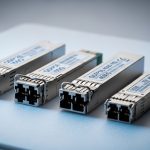
Because CPO is platform-integrated, its “connector” may be a board-level optical interface rather than a universally swappable cage. Pluggables are usually standardized by interface class (for example, CFP2/CFP8, QSFP-DD, OSFP, or SFP variants depending on speed). The table below compares typical characteristics you will see in real evaluations; exact values vary by vendor and generation.
| Spec category | Pluggable optics (typical) | CPO (typical platform-integrated) |
|---|---|---|
| Packaging | Module with optical engine inside | Co-packaged photonics on common substrate |
| Optical I/O | Standard optical connector on module (varies) | Board-level optical interface, often not field-swappable |
| Data rates | Commonly 25G to 400G per module; 800G via multi-module aggregation | Designed for 800G-class and beyond system architectures |
| Wavelengths | Usually single-mode 1310 nm/1550 nm for long reach; short reach uses other bands depending on vendor | Depends on platform photonics; often optimized for datacenter distances |
| Reach | Short reach to extended reach depending on module type | Optimized for the target datacenter span; verify with platform reach tables |
| Power | Module-level power varies widely by speed and vendor; management via module telemetry | Potentially lower energy per bit due to reduced interconnects; system-level power must be measured |
| Temperature range | Often specified to commercial or industrial ranges; verify with module datasheet | Thermal design is board-level; verify with platform airflow and thermal margins |
| Field replacement | Swap module in minutes; maintain spares per port | Replacement usually requires platform service action; spares are at board/optics assembly level |
| Diagnostics | DOM/EEPROM telemetry (vendor-specific mapping); standardized alarms vary by interface | Telemetry depends on platform; may expose fewer module-level counters |
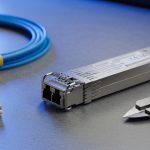
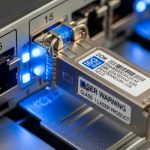
For concrete pluggable examples you may encounter in migration labs, many teams test 10G and 25G transceivers such as Cisco SFP-10G-SR or Finisar/FiNisar-class optical modules (for example, FTLX8571D3BCL appears in some 10G SR deployments). For 10G SR optical performance and typical connector expectations, cross-check with the specific module datasheet you plan to buy. Source: Cisco SFP-10G-SR datasheet
Pro Tip: In lab bring-up, do not rely only on “link up” LEDs. Validate that the platform’s transceiver management correctly reads DOM fields (or CPO telemetry equivalents) and that your monitoring system maps alarms to the correct port. I have seen outages where the optics were fine, but the monitoring stack mis-associated lane counters after a firmware update, delaying root-cause detection by hours.
Real-world deployment: how this decision plays out in a live rack
Consider a 3-tier data center leaf-spine topology with 48-port 10G/25G ToR switches at the leaf and 100G/400G uplinks to spine in an enterprise campus expansion. The team is adding two additional leaf rows and must increase uplink bandwidth by ~20% within a quarter. They standardize pluggables for 25G short reach to keep spares and reduce downtime risk, using OM4 multimode fiber in existing trays with measured insertion loss below the planned budget. For the next refresh cycle, they pilot an 800G-class leaf model with CPO-enabled optics to reduce power draw and simplify board routing.
In that pilot, the field reality is that pluggables allow fast rollback: if you see higher BER or marginal signal integrity under a particular patch panel, you swap modules and verify with optical power readings. With CPO, the failure domain is larger: you may need to replace a board or optics assembly, and you validate thermal performance by checking real sensor values at the photonic package during sustained load. In practice, you plan CPO as a platform-wide operational change, not a “per-port” swap.
Selection criteria checklist: what engineers should score before ordering
Use this ordered checklist during design review and during the vendor compatibility call. The goal is to avoid surprises in the first 30 days after installation.
- Distance and fiber type: confirm OM3/OM4/OS2, measured link loss, and connector end-face cleanliness. Match reach requirements to the exact transceiver or CPO platform reach table.
- Speed and lane mapping: verify the expected Ethernet PHY mode and lane aggregation behavior at your target data rate (for example, 800G-class mapping versus multi-lane pluggables). Confirm with the platform’s interface guide.
- Switch and platform compatibility: for pluggables, check vendor compatibility lists and tested module part numbers. For CPO, confirm board-level optical support and whether the platform requires a specific optics generation.
- DOM or telemetry support: ensure your network management stack can read alarms, temperature, bias current, and optical power. For CPO, confirm what telemetry is exposed and how it is labeled per port.
- Operating temperature and airflow: validate thermal headroom with your measured inlet temperatures and fan profiles. For pluggables, verify module temperature specifications; for CPO, validate board-level thermal design margins.
- Budget and total cost of ownership: include not only module price, but spare strategy, service time, and potential platform service actions for CPO.
- Vendor lock-in risk: assess whether you can source multiple vendors for pluggables, or whether CPO optics are limited to platform OEM supply. Evaluate lead times and qualification effort.
- Firmware and interoperability cadence: plan for optics management changes with platform firmware updates. Test on a staging network before mass rollout.
Common mistakes and troubleshooting patterns in the field
Even experienced teams run into predictable failure modes during optics upgrades. Below are concrete pitfalls with root cause and mitigation steps.
Link up but high error rate after patch panel changes
Root cause: patch cords or connectors introduce excess loss or micro-bends; pluggable optics may still negotiate link, but margin collapses under traffic bursts. Solution: measure optical power at both ends using calibrated meters, clean connectors, and re-seat fibers. If available, check per-lane error counters rather than only aggregate interface counters.
DOM/telemetry misalignment after firmware upgrade
Root cause: platform firmware changes the mapping of DOM fields or lane counters, and monitoring assumes old port labeling. Solution: after upgrades, run a scripted validation: read module temperature and optical power per port, trigger known thresholds in a test environment, and confirm alarms map to correct interfaces.
Thermal throttling or intermittent drops under higher fan curves
Root cause: airflow direction or target inlet temperature differs from what the optics qualification assumed; CPO platforms are especially sensitive to board-level thermal distribution. Solution: compare measured inlet and optics-adjacent sensor values during load tests. Adjust fan profiles within approved platform limits and ensure cable routing does not block airflow.
Buying third-party pluggables that are “electrically compatible” but not operationally identical
Root cause: third-party optics may meet electrical signaling but differ in DOM alarm thresholds, supported diagnostics, or slight timing behavior. Solution: qualify exact part numbers against the platform’s compatibility guidance. In procurement, require documentation for DOM field mapping and supported alarms, not only “works on my switch” claims.
Cost and ROI: how to estimate the business case without guessing
Pluggable optics typically have a lower upfront qualification barrier because you can swap modules and reuse the same operational playbook. Market pricing varies by speed and reach, but in many datacenter programs, third-party pluggables can reduce per-port optics spend while keeping spares manageable. However, the total cost depends on how often you replace optics, how long downtime lasts, and whether your monitoring and support contracts cover third-party modules.
CPO can offer ROI through potential reductions in power consumption and system-level efficiency, plus board routing simplification. But CPO may increase operational cost if a failure requires board service rather than a minute-scale module swap. A practical approach is to model TCO across a 3 to 5 year horizon: include expected failure rates, average repair time, labor costs, and the cost of spares. For procurement, request vendor estimates of failure analysis process and warranty handling for the integrated optics assembly.
On cost, avoid relying on a single “module price.” Compare: (1) per-port optics cost, (2) platform delta cost for CPO-enabled models, (3) power cost using your local $/kWh and cooling PUE, and (4) service cost using your mean time to repair. This is the most defensible ROI method during budget cycles.
FAQ on CPO vs pluggable for 800G and beyond
Is CPO always better than pluggable for 800G?
No. CPO can improve system integration and potentially reduce energy per bit, but it is platform-specific. Your decision should be based on measured thermal behavior, vendor compatibility, and serviceability in your environment.
Can I mix CPO and pluggable optics on the same switch?
Usually not in a simple “same port type” way. CPO is often tied to a specific platform optics architecture, while pluggables follow defined module interfaces. Confirm the platform hardware options and port wiring before assuming interoperability.
What should I test during a pilot rollout?
Test link stability under sustained traffic, verify telemetry and alarm mapping, and run thermal validation at your real inlet temperatures. Also test failure handling: simulate a bad patch cord, confirm alarms, and validate your runbooks.
Do pluggables offer better operational flexibility?
Often yes, because you can swap modules per port and keep spares at module level. That said, you must manage compatibility qualification and monitoring correctness, especially when using third-party optics.
How do I reduce vendor lock-in risk?
For pluggables, qualify multiple vendors and standardize on tested part numbers. For CPO, negotiate support terms, warranty coverage for the integrated assembly, and lead-time commitments for replacements.
What standards or documents should I reference?
Use IEEE 802.3 for Ethernet PHY and optical link framing concepts, then rely on vendor platform interface guides and optics datasheets for exact reach, temperature, and diagnostics behavior. Source: IEEE 802.3
If you are planning an upgrade path, treat CPO vs pluggable as an architecture decision with operational consequences, not just a module selection task. Next, review your existing fiber plant and port mapping assumptions using optical link budget and fiber testing checklist.
Author bio: I have deployed and troubleshot datacenter optics across leaf-spine fabrics, including BER margin validation, DOM telemetry integration, and upgrade rollback procedures. I write from field experience coordinating vendor qualification, thermal verification, and monitoring alignment during high-speed Ethernet migrations.