SFP Transceivers for OTN and SONET Networks: Precision Connectivity for High-Speed Transport
As enterprises and service providers scale their optical transport networks, the choice of transceiver technology becomes a critical determinant of performance, reliability, and cost. Small Form-factor Pluggable (SFP) transceivers are a versatile family of optical modules that have evolved to meet the exacting demands of Optical Transport Network (OTN) and Synchronous Optical Network (SONET) ecosystems. This article explores how SFP transceivers support OTN and SONET, the key specifications to consider, practical deployment guidance, and best practices to future-proof your network.
Understanding the Role of SFP Transceivers in OTN and SONET
OTN and SONET provide structured, scalable, and fault-tolerant frameworks for transporting diverse data types over optical fiber. SFP transceivers serve as the physical interface between equipment and the fiber, converting electrical signals into optical signals (and vice versa) for transmission. In OTN, SFPs enable efficient payload carriage, forward error correction (FEC), and optical channel monitoring, while in SONET networks they support standardized framing, multiplexing, and low-latency regeneration. Modern SFPs often come with enhanced features such as extended reach, higher data rates, and diagnostic capabilities that align with the stringent timing and performance requirements of OTN/SONET infrastructures.
Key SFP Technologies for OTN and SONET
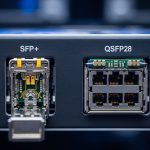
- SFP/SFP+ modules at 2.5 Gbps to 11.95 Gbps (SFP) and up to 16 Gbps (SFP+), commonly used for OC-48/OC-192 SONET and OTU3/OTU2 OTNs. They provide hot-swappable, pluggable interfaces for compact line cards and switches.
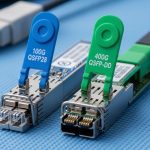
- QSFP/QSFP+ and Beyond higher-density variants often interface with OTN/SONET edge devices, aggregating multiple SFP links or delivering 40 Gbps and 100 Gbps transport, with fiber compatibility and management features designed for carrier deployments.
- Single-Mode vs Multi-Mode compatibility is dictated by distance and fiber plant. Single-Mode (e.g., LC connectors on SMF) supports long-haul OTN/SONET links with lower attenuation, while Multi-Mode is suitable for shorter metro or data-center interconnects.
- CWDM/DWDM SFPs enable wavelength division multiplexing at the transceiver level, increasing capacity over existing fibers without new dark fiber, which is highly desirable in metro OTNs and SONET rings.
- Bi-Directional (BiDi) SFPs leverage a single fiber for bidirectional traffic, reducing fiber plant complexity in some OTN/SONET deployments and simplifying enterprise campuses.
Crucial Specifications for OTN and SONET Compatibility
- Data Rate Ensure the SFP supports the required SONET rate (OC-48: 2.488 Gbps, OC-192: 9.953 Gbps, OC-768: ~40 Gbps) or OTN payload rates (OTU2/OTU3, OTU4 at 11.3 Gbps/40/100 Gbps family). Matching the core network’s timing and framing is essential.
- Wavelength Align with fiber plant and DWDM plans. Typical densities include 1310 nm and 1550 nm for SMF, with possible DWDM channel spacings (100 GHz, 50 GHz) for long-haul OTNs.
- Reach and Dispersion Long-reach SFPs incorporate dispersion management and robust FEC to sustain signal integrity over hundreds to thousands of kilometers in OTN/SONET rings.
- Encoding and FEC OTN often uses forward error correction (e.g., Bent-Predicted or Reed-Solomon codes) to improve BER. SFPs should advertise FEC support and compatible line-side interfaces.
- Diagnostics and Management features like Digital Diagnostics Memory (DOM), SFP MSA standard compliant, and remote loopback/testing capabilities facilitate proactive maintenance in large OTN/SONET deployments.
- Power Budgets and Optical Power Ensure transmit power and receive sensitivity match link budget calculations, including margin for connectors, splices, and DWDM components.
- Temperature Range and Reliability Carrier-grade SFPs often specify extended temperature ranges (-40°C to 85°C) and enhanced MTBF suited for 24/7 operations.
Practical Deployment Considerations
- Link Budget Assessment Before deployment, calculate the end-to-end link budget considering transceiver optical power, fiber loss, DWDM components, and connectors. Select SFPs with sufficient headroom for aging and potential future upgrades.
- DWDM Alignment When integrating with DWDM networks, verify channel compatibility, ITU-T DWDM grid alignment, and filter tolerances. Ensure SFPs support the intended wavelength and channel spacing.
- Compatibility Across Vendors In multi-vendor environments, adhere to SFP MSA standards and consult interoperability matrices. While SFPs are generally interoperable, subtle firmware and management differences can affect performance.
- Redundancy and Protection Plan for optical protection switching (OPS) and line-switchable redundancy. SFPs on ring topologies should be chosen with deterministic protection switching support.
- Monitoring and Diagnostics Enable DOM data collection for proactive fault isolation. Regularly poll temperature, laser bias current, output power, and LOS/LOF indicators to prevent unexpected outages.
- Security and Firmware Keep transceiver firmware up to date and from trusted sources. Some networks implement certificate-based authentication for transceiver modules to prevent tampering.
Choosing the Right SFP for Your OTN and SONET Network
- Assess your distance needs Short metro links may rely on SFPs with 2-10 km reach or CWDM SFPs, while long-haul or cross-border connections require single-mode SFPs with DWDM compatibility and robust FEC.
- Plan for density If you need to maximize port density on a line card, consider SFP+/QSFP+ options or multi-rate modules that can adapt to evolving network speeds.
- Prioritize spectral efficiency In DWDM-enabled networks, select SFPs with precise wavelength control and low relative intensity noise (RIN) characteristics to improve channel performance.
- Factor in management Choose modules with strong diagnostics, remote management capabilities, and clear vendor support for lifecycle management in enterprise or carrier networks.
- Future-proofing Opt for SFPs that support higher-rate upgrades, such as 40G or 100G via modular line cards, to extend the life of the network without frequent hardware changes.
Best Practices for Maintenance and Troubleshooting
- Regular health checks Schedule DOM data reviews to detect gradual performance degradation. Track transmit power, receive power, and BER trends to anticipate failures.
- Clean and inspect connectors Contaminated connectors are a leading cause of signal loss. Use proper fiber cleaning kits and inspection tools before hot-plugging SFPs.
- Document configurations Maintain up-to-date inventory with module part numbers, firmware levels, supported wavelengths, and compatibility notes for rapid recovery during faults.
- Test in segments When integrating new SFPs, perform end-to-end testing in a controlled segment before full-scale deployment to identify compatibility issues early.
- Redundancy drills Periodically simulate failover scenarios to confirm that protection switching and restoration procedures meet service-level agreements (SLAs).
Conclusion: SFP Transceivers as the Linchpin of OTN and SONET Transport
In OTN and SONET networks, SFP transceivers are more than just physical interfaces—they are pivotal components that influence capacity, reach, reliability, and total cost of ownership. By understanding the compatibility requirements, carefully selecting transceivers with appropriate data rates, wavelengths, reach, and management features, and following practical deployment and maintenance best practices, you can unlock robust, scalable, and future-ready optical transport. Whether upgrading existing links or building new metro to long-haul paths, well-chosen SFP transceivers enable precise networking, efficient