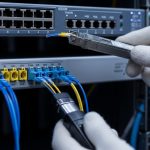
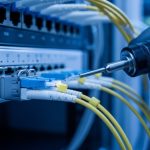
In a Fiber Channel SAN, the wrong `storage network optics` choice can turn a stable replication window into intermittent link resets. This article helps storage and network engineers validate optics for FCP traffic with practical selection criteria, compatibility checks, and field troubleshooting. You will leave with a repeatable way to pick wavelength, reach, and module variants before you touch production.
Why Fiber Channel optics fail in the real world
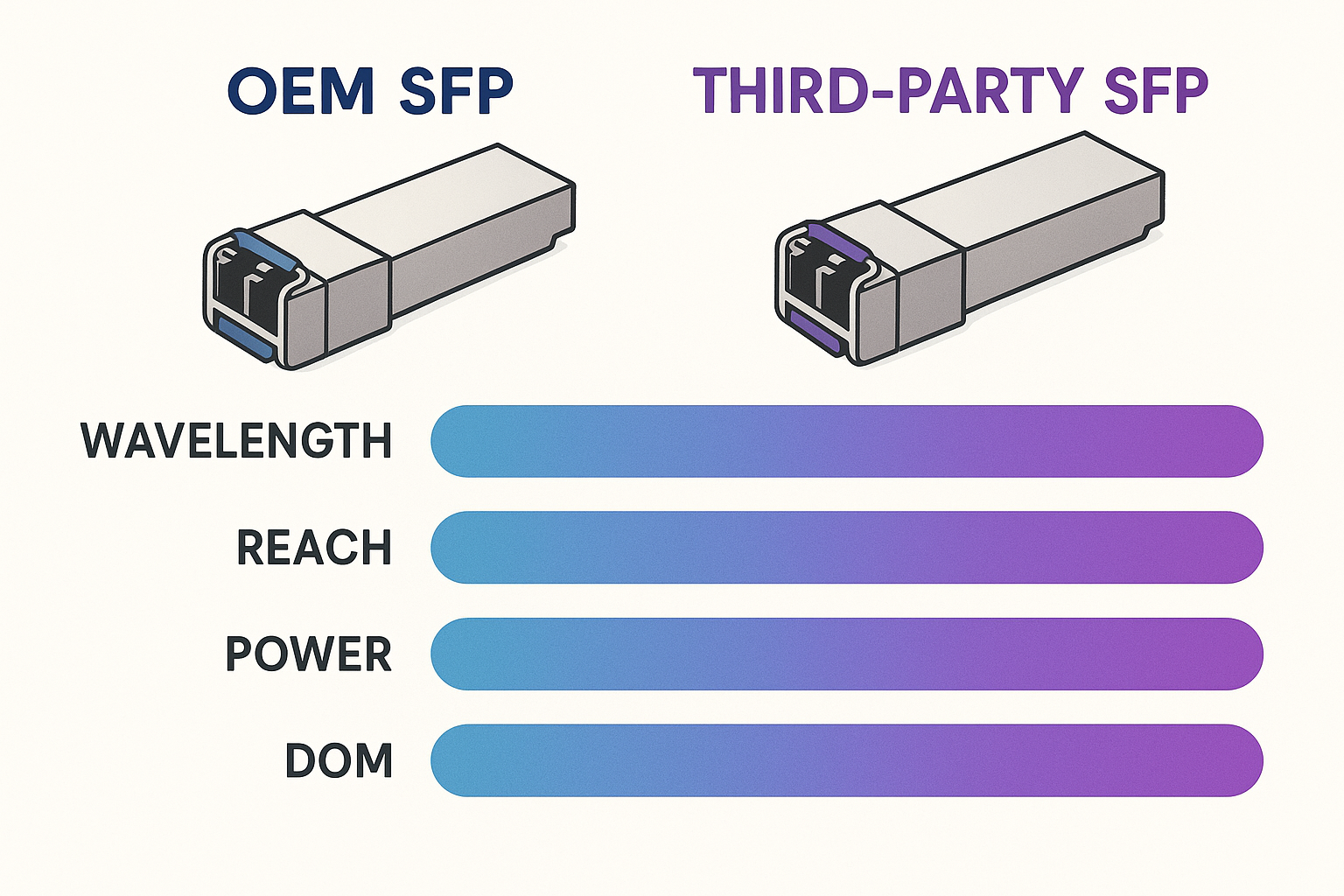
Fiber Channel is unforgiving about optics and physical layer margins: link bring-up depends on laser wavelength accuracy, receiver sensitivity, and link budget across fiber plant quality. In storage network optics deployments, the most common surprises are not “dead” modules, but modules that negotiate poorly due to vendor-specific tolerances, wrong speed class, or dirty connectors. When you are running 8G/16G FC, optics are typically SFP+ for 8G/16G FC, or QSFP variants depending on the switch and backplane design. Always treat DOM telemetry and vendor datasheets as first-class inputs, not optional details.
What the standards expect
Fiber Channel over optical interfaces is defined by IEEE 802.3 for Ethernet optics, but FC transceivers are governed by FC-Specs and vendor implementation details; in practice you validate against your switch vendor’s supported optics list and the module’s compliance statements. For electrical and optical safety, follow laser class guidance from the transceiver datasheets and site practices. For optical performance and link budgeting, use vendor “link loss” guidance and measure actual fiber attenuation at the wavelengths involved. [Source: Brocade/Extreme Networks SFP/QSFP compatibility documentation] [Source: Finisar/Fiber optical transceiver datasheets]
Key specs that decide reach, compatibility, and risk
Before you buy, map your SAN topology to the optics class: short-reach (SR) for data center racks, long-wave (LW) for longer runs, and extended reach (ER) where your fiber and budget allow. The selection hinges on wavelength, reach rating, data rate class, and connector type (commonly LC duplex for FC). You also need to verify that the module’s transmitter power and receiver sensitivity align with your link budget and aging expectations for the fiber.
| Spec (storage network optics) | Common 8G FC SR | Common 16G FC SR | Example module models |
|---|---|---|---|
| Data rate | ~4.25 Gbaud | ~14.025 Gbaud class | Cisco SFP-10G-SR is Ethernet; for FC use FC-specific modules like Finisar FTLX8571D3BCL |
| Wavelength | ~850 nm (multimode) | ~850 nm (multimode) | Finisar FTLX8571D3BCL (FC 850 nm class) |
| Reach rating | ~300 m typical on OM3/OM4 | ~100-150 m typical on OM3; higher on OM4 depending on budget | Vendor-specific link budgets apply |
| Connector | LC duplex | LC duplex | Most FC SFP+ use LC duplex |
| DOM support | Yes (temperature, voltage, bias, power) | Yes (same telemetry types) | DOM availability varies by OEM |
| Operating temperature | 0 to 70 C (commercial) or -5 to 70 C (varies) | 0 to 70 C or wider industrial options | Check exact datasheet |
Note: Ethernet part numbers like Cisco SFP-10G-SR are not interchangeable with Fiber Channel requirements. For FC, use modules explicitly labeled for FC rates and wavelengths, such as Finisar FTLX8571D3BCL or equivalent FC 850 nm SFP+ modules listed by your SAN switch vendor. [Source: Finisar transceiver datasheets]
Decision checklist for selecting storage network optics
If you want repeatable outcomes, use a strict ordering: verify the SAN switch compatibility first, then confirm distance and fiber type, then validate DOM and power levels. This prevents the “it lights up but flakes under load” scenario that wastes maintenance windows.
- Distance and fiber type: Confirm OM3 vs OM4, measured attenuation, and patch panel losses; do not rely on label-only estimates.
- Data rate and FC generation: Match 8G vs 16G (and any 32G variants if applicable) to the switch port capability.
- Switch compatibility list: Use the SAN vendor’s supported optics matrix to reduce firmware and negotiation issues.
- Wavelength and reach class: Ensure the module’s nominal wavelength matches your fiber plant and the rated reach (SR vs LW/ER).
- DOM and monitoring: Confirm the SAN OS reads DOM; validate threshold behavior (temperature and optical power alarms).
- Operating temperature: Match your enclosure thermal profile; hot aisles can push modules into marginal operation.
- Vendor lock-in risk: For third-party optics, check return policies and vendor certification; plan for spares and cross-compatibility testing.
Pro Tip: In FC SANs, the “link up” event can pass even when optical power is near the vendor’s receiver sensitivity edge. The real failures often surface during traffic bursts or after connector re-mating; build a habit of cleaning and then validating with a sustained port test, not just initial login.
Common mistakes and how to troubleshoot fast
Most optic incidents trace back to predictable failure modes. Below are the ones I have seen derail migrations and expansions, along with field fixes.
Wrong module family for the port class
Root cause: Installing a module that is physically similar but not FC-rate compatible (common with Ethernet-looking optics or mismatched generation). Solution: Verify the switch port’s FC speed capability and use only FC-labeled optics from the SAN vendor’s compatibility list.
Dirty or damaged connectors
Root cause: LC duplex contamination (dust film) causing elevated insertion loss and intermittent CRC-like symptoms at the FC link layer. Solution: Clean with approved lint-free methods and inspect with a fiber microscope; replace damaged ferrules before retesting.
Overstated reach assumptions
Root cause: Using vendor “typical” reach without accounting for patch panel loss, splitters, aging, and worst-case attenuation. Solution: Calculate a conservative link budget using measured fiber attenuation and include margin; if you are near the limit, move to OM4-rated runs or a longer-reach optics class.
DOM alarm thresholds ignored
Root cause: Operators treat DOM telemetry as informational and do not wire alarms into the monitoring system. Solution: Configure SAN telemetry thresholds for optical power and temperature; quarantine optics that show drift after a few days.
Cost and ROI: OEM vs third-party optics
In practice, OEM optics often cost more up front but reduce operational churn when compatibility is strict. Typical street pricing for FC-capable SFP+ modules varies widely by reach class and OEM status; budget third-party modules may be 20% to 40% cheaper, but you must account for testing time, return shipping, and potential incompatibility surprises. TCO improves when you standardize on a validated set of optics and maintain clean, documented fiber patching procedures. Also factor spares: if you need next-day replacement, the “cheapest” module can become expensive after downtime and expedited shipping.
For your next procurement sprint, start by building a small validation matrix: two optics models per reach class, tested on one representative switch and one representative fiber run. Then lock the bill of materials with a compatibility memo and a cleaning SOP. If you are planning broader transceiver choices beyond FC, see storage network optics for related guidance on optical interface selection.
FAQ
Q: What exactly should I verify first when buying storage network optics for Fiber Channel?
Verify the SAN switch’s supported optics list for the exact port speed and transceiver form factor, then confirm wavelength and reach against your fiber type (OM3 vs OM4) and measured attenuation. DOM support matters too, because monitoring gaps can hide early degradation.
Q: Are third-party Fiber Channel optics safe to deploy?
They can be safe if the vendor provides FC-specific compliance and you validate on your switch model before scaling. Use a controlled rollout, track DOM telemetry trends, and keep clear return pathways.
Q: How do I calculate whether SR optics will really work?
Start with measured fiber attenuation plus patch panel insertion loss, then subtract from the module’s rated link budget with conservative margin. If you are near the limit, plan for OM4 upgrades or a different reach class.
Q: What symptoms indicate an optics problem vs a fiber problem?
Optics drift often shows rising temperature or optical power warnings in DOM before failures. Fiber issues frequently correlate with connector events (re-mating) or consistent failure on one side of a patch path.
Q: How often should we clean LC connectors in a SAN?
At minimum,