
Telecom teams are under pressure to modernize radio access networks without locking budgets into single-vendor upgrades. This guide translates the rise of Open RAN into an actionable engineering and investment lens: what to buy, how to validate interoperability, and how to estimate ROI. It is written for operators, systems integrators, and field teams rolling out multi-vendor radio, transport, and orchestration stacks.
Why Open RAN is reshaping telecom CapEx and vendor strategy
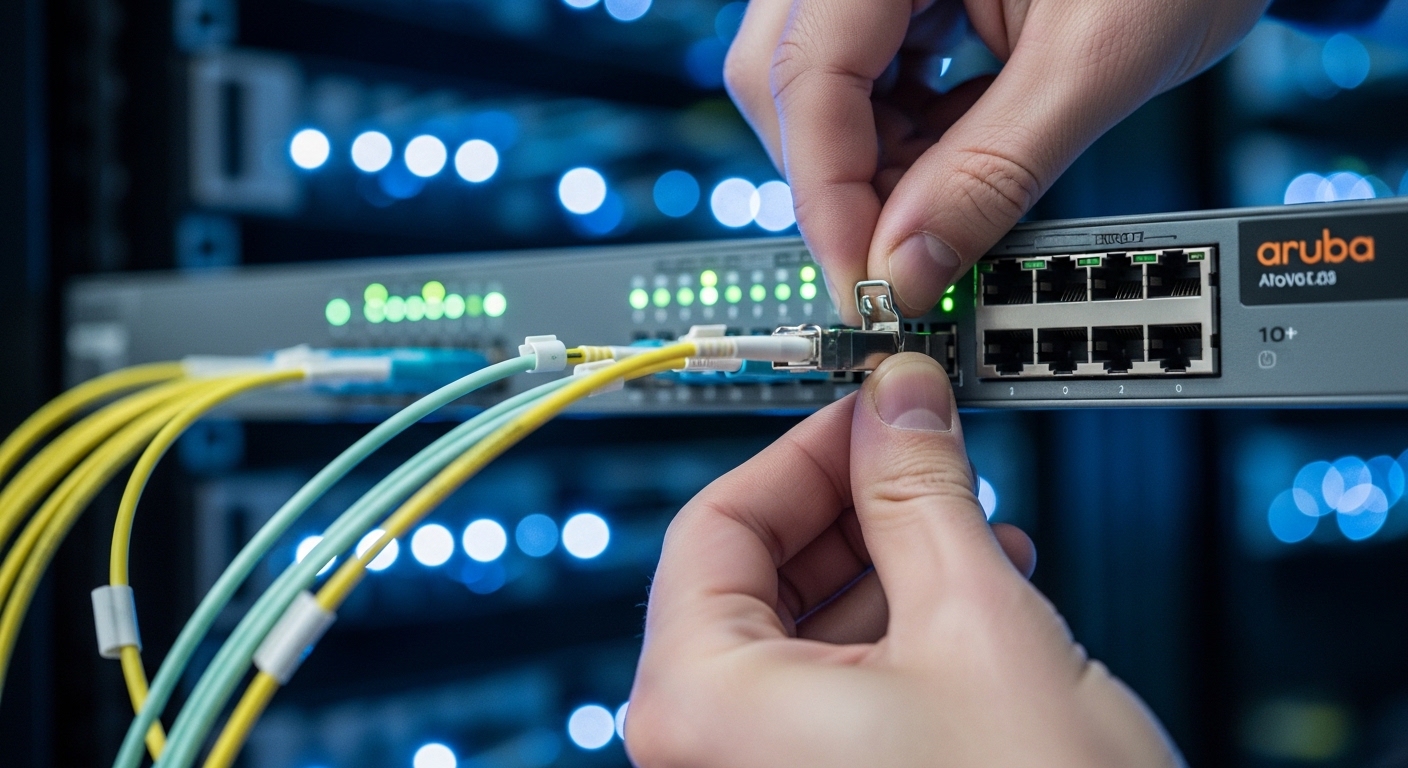
Open RAN reframes the telecom stack into modular components: radio units, distributed units, centralized units, near-real-time RAN control, and software orchestration. For investors and operators, the market implication is a shift from “box-to-box procurement” to “interface-to-interface” procurement, where ecosystem breadth can reduce renewal costs and speed feature delivery. However, the moat moves toward teams that can prove end-to-end performance under real RF, fronthaul, and traffic conditions.
From a practical telecom deployment viewpoint, the critical change is interoperability discipline. You are no longer just validating RF coverage; you must validate timing, transport behavior, and control-plane stability across vendor boundaries. The open interfaces are typically aligned to industry efforts around disaggregated RAN and transport requirements; you can use IEEE standards hub as a reference starting point for Ethernet behaviors relevant to fronthaul and timing in packetized networks. transport network planning
Core telecom technical constraints: timing, fronthaul, and interfaces
Open RAN deployments are often bottlenecked by fronthaul and synchronization rather than raw compute. Many architectures use CPRI-like concepts mapped into packet transport, with strict latency and jitter constraints. Even when the radio and baseband are “open,” your transport must preserve scheduling determinism, packet loss bounds, and clock alignment.
Technical specs you should compare before procurement
Use the table below as a quick telecom-facing checklist for optical transceivers commonly used in fronthaul and aggregation. Even if your baseband is open, optics still need to meet reach and thermal requirements for field reliability.
| Parameter | Example Optic Class | Typical Spec Target | Why it matters in Open RAN telecom |
|---|---|---|---|
| Data rate | 10G SFP+ or 25G SFP28 | 10G–25G | Matches uplink/downlink transport bandwidth to reduce buffering |
| Wavelength | SR (850nm) | 850nm | Short reach for site-to-site and patch-panel runs |
| Reach | SR multimode | ~100m–400m (OM3/OM4 dependent) | Impacts whether you need fiber plant upgrades |
| Connector | LC | LC duplex | Operational compatibility with common telecom patch panels |
| Power | Optics module budget | ~0.6W–2W | Thermal load affects dense racks and remote huts |
| Operating temperature | Industrial | 0°C to 70°C (check datasheet) | Remote telecom sites often exceed “office” assumptions |
When selecting optics, verify vendor datasheets for DOM support (digital optical monitoring), laser safety class, and supported fiber type (OM3 vs OM4). In field audits, teams often standardize on specific part families to reduce variance. Examples of commonly deployed optics in telecom contexts include Cisco SFP-10G-SR and Finisar FTLX8571D3BCL, plus third-party options like FS.com SFP-10GSR-85; treat these as reference points, not universal approvals. transceiver selection
Moat and market sizing cues for telecom investors and operators
For telecom deployments, the “moat” is not just open licensing; it is performance proof and operational maturity. Look for suppliers that demonstrate deterministic latency under load, stable handover behavior, and measurable reductions in time-to-site or time-to-upgrade. In practice, teams evaluate how quickly the stack recovers from link flaps, how it handles packet reordering, and whether alarms map cleanly into existing OSS workflows.
Market sizing signals often come from the gap between planned capacity growth and the cost of forklift upgrades. If your network has aging baseband hardware and you expect multi-year traffic growth, disaggregation can shift CapEx toward incremental software and standardized servers. But caution: if integration effort is high, you may pay more in labor and downtime than you save in hardware refresh cycles.
To ground expectations, align your roadmap to international guidance on telecom performance and interworking where applicable. For example, you can consult ITU materials as a reference for telecom system considerations and terminology via ITU portal. network modernization ROI
Selection criteria checklist: how teams should decide in telecom RAN
Use this ordered decision checklist during vendor shortlisting and lab-to-field validation. It reduces “demo success” risk.
- Distance and reach: map fronthaul and aggregation distances to optic reach budgets and fiber type (OM3/OM4). Include connector losses and patch panel count.
- Switch and transport compatibility: validate that your leaf-spine or transport switches support required QoS queues, buffering behavior, and telemetry visibility for the specific packetized transport profile.
- Timing and synchronization plan: confirm clocking method (GNSS, PTP profile choices, boundary clock behavior) and document failover behavior during GPS loss.
- DOM and monitoring: ensure optics expose DOM readings that your NMS can ingest; verify alarm thresholds and log retention.
- Operating temperature and power: remote sites need industrial-grade modules and predictable airflow; check thermal derating curves.
- Interoperability test plan: require at least one cross-vendor interoperability test with realistic traffic (not only link bring-up).
- Vendor lock-in risk: define which layers are truly open (APIs, orchestration, telemetry) and which remain proprietary (specific optimizations, closed firmware paths).
Pro Tip: In field trials, teams often underestimate “queue interaction.” Even when latency looks fine in isolation, mixing traffic classes (sync, fronthaul, backhaul, and management) can cause microbursts that trigger retransmissions or control-plane instability. Validate with production-like congestion profiles and confirm that alarms correlate to the exact queue and interface counters.
Common mistakes and troubleshooting in telecom Open RAN deployments
Below are failure modes that repeatedly show up when teams move from lab proofs to live telecom sites.
Optical reach miscalculation
Root cause: budgets ignore patch panel count, connector contamination, or OM3 vs OM4 mismatch. Some teams also use vendor “typical” reach instead of worst-case link budgets.
Fix: measure with an OTDR and power meter, clean connectors with approved procedures, and document worst-case margins. If you see intermittent CRC/FEC errors, treat it as a physical layer issue first.
Timing drift and sync instability
Root cause: PTP boundary clock behavior differs across switch models, or GNSS holdover is insufficient for your outage duration. Misconfigured profiles can pass basic sync but fail during load changes.
Fix: run long-duration soak tests (hours, not minutes), record sync offset and frequency error histograms, and validate failover by simulating GNSS loss.
“Interoperable” but not operationally stable
Root cause: control-plane and telemetry mappings do not match across vendors, so the system looks up but lacks correct alarm handling and automated recovery.
Fix: require an integration test focused on OSS/NMS workflows: alarms, performance counters, log correlation, and rollback procedures. Ensure your orchestration can execute safe restart sequencing across DU/CU and radio units.
Thermal and power surprises in telecom racks
Root cause: optics and server NICs can run hotter than expected in enclosed telecom huts, leading to DOM warnings and gradual degradation.
Fix: implement thermal mapping during commissioning, enforce airflow direction, and set NMS thresholds aligned to the module datasheets.
Cost and ROI note: where savings appear and where they vanish
Typical optic pricing ranges roughly from $50 to $200 per module depending on brand, reach, and whether you choose OEM or third-party. In telecom optics, OEM parts often reduce compatibility friction and warranty disputes, while third-party can lower unit cost but increases validation work and RMA tracking overhead.
For total cost of ownership, factor labor: integration, interoperability testing, and commissioning time can outweigh hardware savings if your team lacks repeatable test automation. A realistic ROI model should include failure rates, mean time to repair, expected field returns, and the cost of truck rolls. If Open RAN reduces upgrade cycles from, say, multi-year forklift events to smaller software and component refreshes, the savings can compound, but only when operational tooling is mature. telecom maintenance strategy
FAQ
What does Open RAN change for telecom operators on day one?
It changes how you procure and validate the stack: you focus on interfaces, interoperability, and end-to-end performance rather than only vendor-specific “known good” bundles. On day one, the biggest practical shift is integration testing across vendors for timing, transport, and operational telemetry.
How do we verify fronthaul readiness in a telecom Open RAN trial?
Run link-level and system-level tests with realistic traffic mixes and congestion. Measure latency, jitter, packet loss, sync offsets, and error counters for the entire path, including optics and switch queue behavior.
Are 10G SR or 25G optics enough for telecom fronthaul?
It depends on your transport mapping, bandwidth requirements, and aggregation design. Many deployments use a combination of rates, but you must validate with the specific fronthaul profile and confirm reach with a full link budget and fiber measurements.
What is the biggest hidden risk in telecom multi-vendor Open RAN?
Operational stability. Even when interfaces interwork, alarm mapping, recovery sequencing, and telemetry semantics can differ, which can slow incident response or cause unsafe restarts.
Can we avoid vendor lock-in with Open RAN?
You can reduce lock-in at the hardware and interface layers, but orchestration tooling and certain optimizations may still be proprietary. Mitigate this by demanding clear API coverage, telemetry standards, and documented upgrade and rollback procedures.
How long should telecom interoperability testing take?
At minimum, plan for multi-day system soak tests plus longer regression cycles that cover mobility events, link flaps, and sync failover. Short bring-up tests are not sufficient to uncover queue interaction and recovery edge cases.
Open RAN can improve telecom agility, but only when you treat interoperability, timing, and operational tooling as first-class requirements. Next, use transceiver selection and transport network planning to align optics and switch behavior with your disaggregated architecture before scaling beyond the first site.
Author bio: I have hands-on experience deploying disaggregated RAN and packet fronthaul in carrier and enterprise telecom environments, including optics commissioning and switch queue verification. I write from the field perspective, focusing on measurable performance, interoperability evidence, and costed operational plans.


