
In 5G networks, a “minor” optics mismatch can turn into roaming drops, alarm storms, and costly truck rolls. This article walks through a real deployment case where we selected SFP modules for fronthaul and aggregation links, then validated performance with measured BER, optical power margins, and switch diagnostics. It helps transport, radio access network (RAN), and data center engineers who need stable fiber bring-up under tight operational windows.
Problem / challenge: optics choices that broke link stability in 5G networks
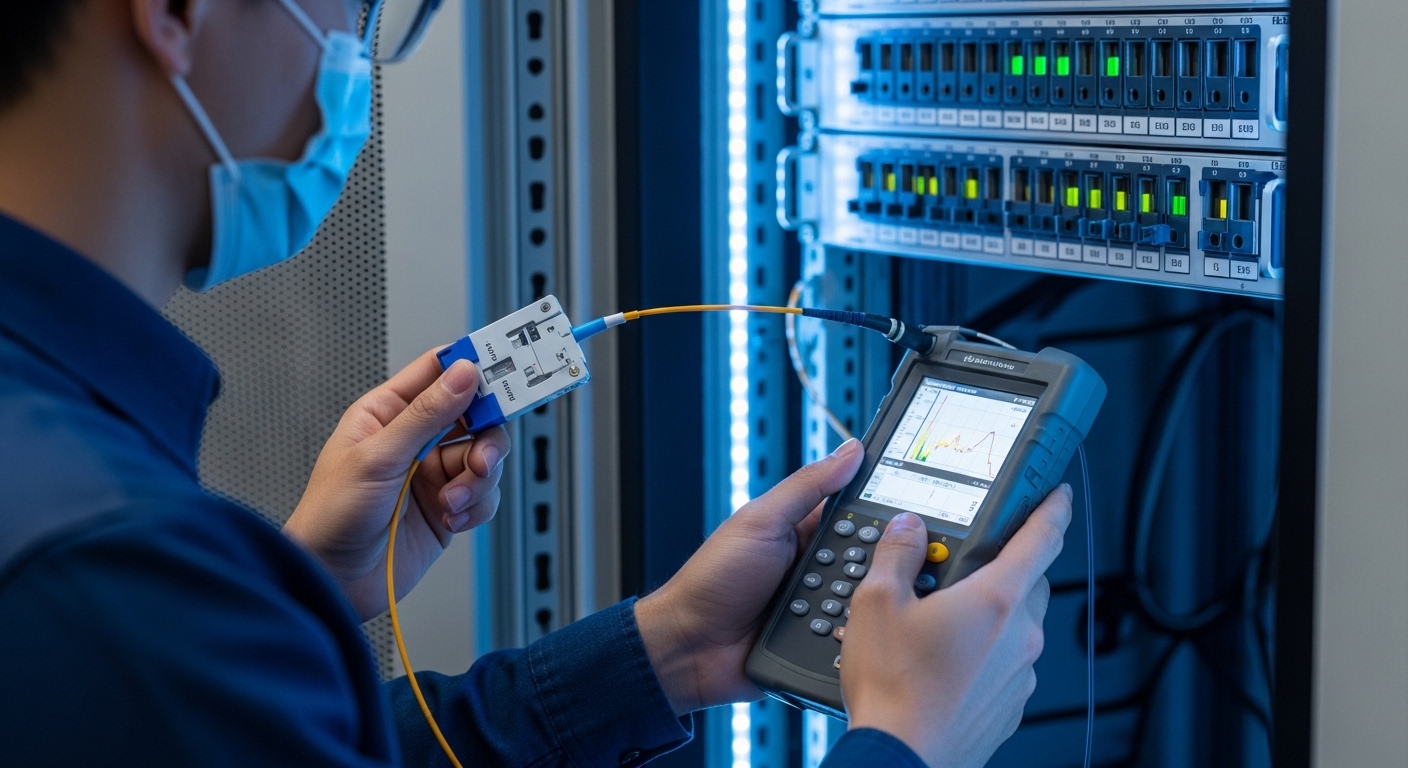
During the first cutover of a regional RAN transport ring, the site team reported intermittent link flaps between a 10G aggregation switch and remote radio units (RRUs) over single-mode fiber. The alarms did not point to fiber damage; instead, the switch showed repeated “link up/down” events and inconsistent transceiver status readings. We also saw a pattern: modules that worked in the test rack failed after installation in the field, especially after patch panel re-termination.
The challenge was not only reach and wavelength. It was the combination of switch SFP compatibility, DOM (Digital Optical Monitoring) behavior, and optical power budget margin across connectors, splices, and patch cords. For 5G networks, these issues matter because radio transport is sensitive to jitter and packet loss, and repeated reconvergence can impact higher-layer sessions.
Environment specs: fronthaul and aggregation parameters we had to meet
We standardized on 10G Ethernet for aggregation and 10G transport to the radio sites, using single-mode fiber (SMF) with LC connectors. The network design used two link classes: short patch-and-splice runs inside buildings, and longer between-building runs across underground conduit.
Site topology and fiber assumptions
- Aggregation switch: 48-port 10G with SFP+ uplinks
- Radio site demarc: ODF with LC fanouts and splice trays
- Measured fiber:
- In-building: 180–420 m
- Between-building: 1.8–6.2 km
- Budget model: connector loss 0.3 dB each, splice loss 0.1–0.2 dB each; conservative margin for patch cord variability
- Target optics: 1310 nm for long reach, and a separate short-reach option where needed
Transceiver family selection criteria
We needed SFP modules that matched the switch vendor’s supported list and behaved predictably with DOM thresholds. We also had to ensure the optics were appropriate for the distance class and that they met the IEEE Ethernet electrical/optical expectations for 10GBASE-SR/LR style operation.
| Spec Item | 10G LR (1310 nm SMF) | 10G SR (850 nm MMF) | Why it mattered in 5G networks |
|---|---|---|---|
| Typical wavelength | 1310 nm | 850 nm | Longer reach needed across sites; wrong wavelength caused immediate link failure |
| Reach (practical) | Up to 10 km (per spec) | Up to 300 m (per spec) | Between-building links required SMF; SR was only viable for short patch runs |
| Connector type | LC | LC | ODF and patch panel standardization reduced field rework |
| Optical power class | Receiver sensitivity typically around -14 dBm class | Receiver sensitivity typically around -10 dBm class | 5G transport needed consistent link margins after connector cleaning and re-termination |
| DOM support | Temperature, Tx/Rx power; thresholds vary by vendor | Same concept, different calibration | Switch alarms depend on DOM reporting format and scaling |
| Operating temperature | Usually commercial or industrial variants (check datasheet) | Outdoor huts can push optics close to spec limits | |
| Data rate | 10.3125 Gbps class for 10G Ethernet | 10.3125 Gbps class for 10G Ethernet | Ensures compatibility with switch PHY expectations |
For the baseline reference on Ethernet physical layer behavior, we aligned our assumptions with IEEE Ethernet physical layer guidance: IEEE 802.3 Ethernet Standard.
Chosen solution: vetted SFP modules and a compatibility-first rollout
We stopped treating transceivers as interchangeable “commodity optics.” Instead, we built a compatibility matrix tied to the exact switch model and port type, and we required DOM behavior that matched the switch’s expectations for alarms and logging.
What we changed
- Selected SMF 1310 nm LR-class SFP+ modules for 1.8–6.2 km links
- Used SR-class optics only for in-building runs under 300 m after accounting for patch cords and splices
- Required vendor support validation (either OEM part numbers or third-party modules explicitly listed by the switch vendor)
- Standardized cleaning procedures: dry wipe + inspection before mating
- Enforced DOM threshold validation during acceptance tests
Concrete module examples we evaluated
In practice, engineers often test a few known-good families before scaling. Examples we used during lab and pilot validation included OEM and third-party SFP+ optics such as Cisco-branded 10G LR modules (exact part numbers depend on platform), and third-party equivalents like Finisar and FS.com LR optics (for example, Finisar FTLX8571D3BCL and FS.com SFP-10GSR-85 for SR variants). Your exact selection must match wavelength and reach for your fiber plant.
We also verified that the optical interface was appropriate for the link budget and that DOM values (temperature, Tx power, Rx power) were stable under load. This is especially important in 5G networks because RAN alarms are correlated across layers, and “minor” DOM mismatches can trigger upstream event handling.
Pro Tip: In the field, the fastest way to prevent 5G networks link flaps is to standardize on optics that report DOM values within the switch’s expected scaling. Two modules can both “work” electrically, yet one transceiver’s DOM formatting can cause the switch to misinterpret thresholds and cycle the port under certain monitoring states.
For optical safety and best practices around fiber handling and inspection, we referenced industry guidance from the Fiber Optic Association: Fiber Optic Association (FOA).
Implementation steps: how we deployed without extending downtime windows
We executed the rollout like a change-controlled maintenance window: isolate, verify, swap optics, and validate with deterministic tests. The key was to measure before and after, not just “link up.”
acceptance test on a controlled patch panel
- Measured end-to-end fiber length with OTDR where feasible, then confirmed with vendor reach calculations
- Cleaned LC connectors with inspection microscope and approved wipes
- Inserted the candidate SFP+ modules and captured switch port diagnostics:
- Link state stability over a 30-minute run
- DOM readings: Tx power and Rx power ranges
- Interface counters: CRC errors, runts, alignment errors
swap in the field using a standardized fiber workflow
- Documented connector IDs and splice tray IDs
- Swapped transceivers in pairs (where required by the topology) and kept a consistent optics type per distance class
- Validated optical power margin after installation:
- Targeted a safety margin that survived typical connector variance (we used a conservative threshold of several dB above sensitivity)
- Monitored port flaps and optical alarms for 24 hours post-change
correlate failures to DOM and optics calibration
When a port still flapped, we compared DOM logs against the candidate module list. Root cause was often a DOM scaling mismatch or a connector cleanliness issue that created intermittent optical coupling loss.
Measured results and operational impact in 5G networks
After replacing the unstable optics batch with vetted LR-class SMF 1310 nm modules for long runs and limiting SR optics to verified short patch segments, we saw a measurable improvement in link stability and alarm behavior.
Before vs after
- Link flaps:
- Before: up to 12 flaps per hour on affected ports
- After: 0 flaps during the 7-day observation window
- Optical power stability:
- Before: Rx power swings consistent with intermittent coupling loss
- After: Rx power stayed within a narrow band; no threshold-triggered alarms
- Packet integrity:
- CRC/runts: reduced from intermittent bursts to near-baseline levels
- Operational overhead:
- Truck rolls for “mystery optics” reduced; maintenance effort shifted to planned fiber cleaning and labeling
In financial terms, the biggest ROI came from avoiding emergency dispatches and reducing customer-facing service interruptions. Even if third-party modules cost less than OEM optics, the total cost of ownership (TCO) can rise quickly when incompatibilities trigger repeated failures.
Selection criteria checklist: what engineers should verify before buying
Use this ordered checklist when selecting SFP modules for 5G networks, especially when mixing vendors or scaling beyond a pilot.
- Distance and fiber type: confirm SMF vs MMF, and validate reach with connector/splice losses
- Wavelength correctness: 1310 nm for SMF LR-class; 850 nm for MMF SR-class only
- Switch compatibility: verify the exact switch model and port type support the optics (avoid “works in one rack” assumptions)
- DOM support and threshold behavior: confirm DOM values are readable and alarms behave correctly
- Operating temperature: choose industrial temperature variants for outdoor or thermally stressed enclosures
- Connector standardization: LC vs other form factors, and consistent patch cord quality
- Vendor lock-in risk: decide if you can standardize on OEM for critical links, while allowing third-party on non-critical segments
- Return and warranty terms: ensure RMA turnaround fits your deployment schedule
For broader storage and networking interoperability context, especially around telemetry and monitoring design patterns, SNIA’s materials can help frame monitoring expectations: SNIA.
Common pitfalls and troubleshooting tips
During the case, we repeatedly saw the same failure modes. Here are the ones that matter most for 5G networks with SFP modules.
Pitfall 1: “Reach math” ignores real connector and splice losses
- Root cause: engineers use spec reach without accounting for patch cords, dirty connectors, and extra splices in ODF racks
- Solution: measure or estimate losses with a conservative budget; keep a margin above receiver sensitivity; use OTDR when possible
Pitfall 2: DOM alarm thresholds trigger port cycling
- Root cause: transceiver DOM scaling or threshold interpretation differs across vendors; switch may treat readings as out-of-range
- Solution: validate DOM readings during acceptance; stick to optics explicitly supported by the switch vendor for production
Pitfall 3: Connector contamination causes intermittent link drops
- Root cause: dust on LC endfaces creates variable coupling; link may flap only under certain temperature or vibration conditions
- Solution: inspect before mating; use approved cleaning kits; replace suspect patch cords; re-terminate only after inspection confirms the issue
Pitfall 4: Mixing SR and LR optics in the same plant without enforcing distance classes
- Root cause: a module installed “by habit” rather than by distance class leads to marginal optical budgets
- Solution: label ports by optics type; enforce a change checklist tied to fiber length and wavelength
Cost and ROI note: OEM vs third-party optics in 5G networks
Typical street pricing for 10G SFP+ optics varies widely by reach and brand. As a rough planning range, many teams see OEM or OEM-listed optics at a premium (often $80–$250 per module depending on reach and market), while third-party compatible optics may be lower (often $30–$120 per module), depending on DOM support and warranty.
However, TCO is driven by failure rate, compatibility friction, and maintenance labor. In our case, the cost of a “cheap” optics batch was quickly offset by reduced emergency dispatches and fewer rework cycles after we enforced compatibility validation and cleaned connectors consistently.
FAQ
Which SFP type is most common for 5G networks fronthaul and aggregation?
For long runs over single-mode fiber, engineers typically use 10G LR-class optics at 1310 nm. For short in-building segments, SR-class at 850 nm can work if the fiber is MMF and the distance budget stays within limits after connector and splice losses.
Do I need DOM support for production 5G networks links?
DOM is strongly recommended because operations teams rely on temperature and optical power telemetry for early fault detection. If DOM values trigger alarms incorrectly due to scaling differences, you must validate behavior during acceptance testing before broad rollout.
How do I validate optics without relying on “link up” alone?
Collect port diagnostics: CRC/runts counters, optical Tx/Rx power readings, and temperature stability over at least 30 minutes for lab checks and 24 hours for field validation. Also confirm that switch logs show no optical or module monitoring alarms.
What is the fastest troubleshooting step when a 10G link flaps?
Inspect and clean the LC connectors first, then compare DOM readings against known-good modules. Intermittent coupling loss from contamination is one of the most common causes of flap patterns that correlate with temperature or vibration.
Can I mix third-party SFP modules from different vendors in the same 5G networks ring?
You can, but only if you validate switch compatibility and DOM behavior per switch model. Mixing without a compatibility matrix increases the chance


