
Scaling optical networks for 5G: a field checklist for transport
When 5G traffic shifts from pilots to sustained throughput, optical networks often become the tightest constraint: distance budgets, transceiver compatibility, and thermal headroom. This article helps enterprise transport engineers and field deployers plan upgrades across backhaul and fronthaul segments with measurable constraints. You will get a top-items selection checklist, a specs comparison table, and troubleshooting patterns seen during rollouts.
optical transceiver compatibility
10G to 100G migration
link budget
DOM monitoring
Top 8 transport decisions when scaling optical networks for 5G
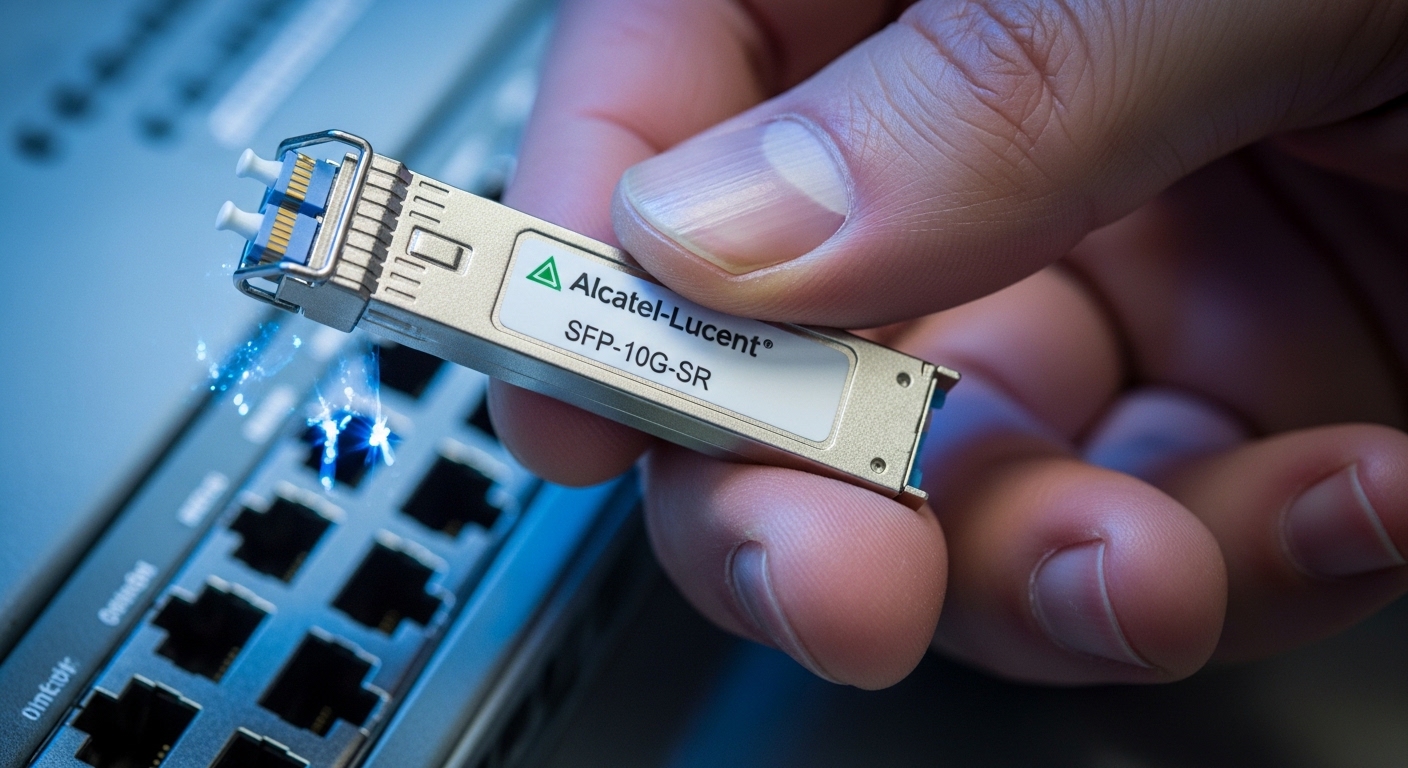
In practice, scaling optical networks is less about picking a single transceiver and more about orchestrating reach, optics type, and operational telemetry across the entire chain. Engineers typically start with the IEEE-aligned Ethernet rate plan and then validate optics, fiber plant, and switch port behavior. For Ethernet-based transport, confirm the port requirements against the relevant Ethernet standard base and optics expectations, such as IEEE 802.3 for 10G to 400G families. IEEE 802 Ethernet Standard
Lock your 5G segment: fronthaul, midhaul, or backhaul
First separate where the traffic lands: fronthaul is often latency-sensitive and may require specific functional splits, while backhaul is more tolerant and usually optimizes for cost per bit and availability. For each segment, define throughput targets and oversubscription assumptions, then map them to line rates on the leaf/spine or aggregation layers. In deployments, a common pattern is upgrading aggregation uplinks to 25G or 100G while keeping access at 10G until demand stabilizes.
Field notes for sizing
During a typical 5G rollout, you may provision two 10G links per sector during early phases and later converge to a single 25G or 50G uplink as radio resource usage becomes predictable. That change affects optics counts, spares strategy, and switch port availability more than it affects the radio side. Use this step to set your transceiver density plan and transceiver form factor (SFP28, SFP56, QSFP28, QSFP-DD).
- Best-fit scenario: Segment-based rate planning avoids stranded port capacity.
- Pros: Clear latency and availability requirements drive the correct optics class.
- Cons: Misclassification forces re-cabling or costly optics swaps.
Choose optics type by distance and fiber quality
Scaling optical networks for 5G typically means balancing reach, dispersion tolerance, and cost. Short reaches in enterprise and campus environments often use MMF 850 nm with OM3/OM4 fiber, while longer metro distances lean toward SMF 1310/1550 nm optics. For each link, translate your planned span lengths and connector counts into a link budget and then validate against the transceiver reach specification.
Practical reach budgeting
Even if the transceiver advertises “up to” reach, field-installed loss is rarely ideal. Include patch panel losses, connector insertion loss variability, and margin for aging. For example, a 300 m OM4 link can fail if multiple angled physical connectors and extra patch cords add loss beyond the module’s receiver sensitivity margin.
- Best-fit scenario: Use 850 nm MMF for dense data center and campus runs under a few hundred meters.
- Pros: Lower cost per port and higher density.
- Cons: MMF reach is sensitive to plant quality and bends.
Compare transceiver candidates with a specs table before you buy
When scaling, you need a consistent selection method across vendors. Below is a representative comparison of common 25G and 10G optics used in enterprise optical networks. Use this table to structure a purchase decision, then validate exact compatibility with your switch vendor’s QSFP/SFP support list and DOM behavior.
| Optics example | Data rate | Wavelength | Typical reach | Fiber type | Form factor | Connector | DOM/telemetry | Operating temp (typ.) |
|---|---|---|---|---|---|---|---|---|
| Cisco SFP-10G-SR | 10G | 850 nm | ~300 m (OM3) | MMF | SFP+ | LC | Yes (SFF-8472) | 0 to 70 C |
| Finisar FTLX8571D3BCL | 10G | 850 nm | ~300 m (OM3) | MMF | SFP+ | LC | Yes | 0 to 70 C |
| FS.com SFP-10GSR-85 | 10G | 850 nm | ~400 m (OM4) | MMF | SFP+ | LC | Yes | 0 to 70 C |
| Common 25G SR QSFP28 class | 25G | 850 nm | ~100 m (OM3) to ~150 m (OM4 class) | MMF | QSFP28 | LC | Yes (vendor varies) | 0 to 70 C |
For governance, treat the table as a starting point and then pull the exact datasheet for each SKU you deploy. Field operations depend on DOM granularity (temperature, laser bias current, received power) and on whether your switch expects specific thresholds. For standards context on optical module management and parameters, use SFF and related industry guidance via Fiber Optic Association learning materials and vendor datasheets as practical references. Fiber Optic Association learning resources
- Best-fit scenario: You are standardizing optics for a multi-site 5G transport program.
- Pros: Faster procurement with consistent performance targets.
- Cons: DOM and compatibility vary by switch OS and optics vendor.
Validate switch compatibility and transceiver control behavior
Scaling optical networks fails most often at the control plane boundary: the switch port refuses an unsupported optics, or the optics reports DOM values outside the vendor’s accepted ranges. Before broad rollout, test with your exact switch models, firmware versions, and optics SKUs in a lab loopback or a controlled field trial. This includes verifying whether the switch supports vendor-agnostic optics and whether it enforces transceiver authentication.
What to test in the lab
Confirm link bring-up time, error counters stability, and whether the switch logs “unsupported module” events. In deployments, we have seen “link up but high BER” behavior caused by a mismatched optics class for the fiber type, not by cabling faults. Ensure your monitoring stack can read DOM via your network telemetry method so that received power and laser bias drift are visible before failures.
- Best-fit scenario: You use mixed-vendor optics to control cost.
- Pros: Prevents mass outages from incompatibility.
- Cons: Adds upfront validation effort and requires firmware discipline.
optical network monitoring
Engineer power, thermal margin, and fan airflow with module density
Optics selection is constrained by heat. Higher port density and higher line rates increase thermal load, and 5G sites often have constrained HVAC. Use vendor datasheets for power consumption and operating temperature ranges, then validate airflow paths and verify that optics do not exceed safe internal temperatures during peak load. For example, if your rack exhaust runs near the upper limit, a “0 to 70 C” optics rating can still be risky when the actual module housing is warmer than ambient.
Operational measurement approach
Deploy a thermal check during the first week of operation using the switch chassis sensors and, where available, optics DOM temperature. Compare those values to your optics operating range and to the switch vendor’s recommended ambient envelope. This is especially important when you add ports during a growth phase and do not redesign fan curves.
- Best-fit scenario: You are expanding from 10G to 25G or 100G in the same chassis.
- Pros: Reduces “intermittent link down” incidents from thermal stress.
- Cons: Requires site survey and sometimes HVAC changes.
Use standards-aligned link budgeting for deterministic acceptance tests
Scaling optical networks demands repeatable acceptance tests. Establish a method that includes transmitter launch power, receiver sensitivity, fiber attenuation, connector/splice loss, and a margin for handling variation. While vendor datasheets provide baseline parameters, your acceptance criteria should be site-specific and conservative.
Acceptance testing checklist
Perform continuity and polarity checks, then measure end-to-end optical power with calibrated test equipment. Use OTDR for longer SMF spans and for identifying macro-bends or unexpected loss segments. Tie thresholds to your DOM telemetry so that the monitoring system alerting aligns with physical test results.
- Best-fit scenario: Multi-site deployment where you need consistent pass/fail criteria.
- Pros: Faster troubleshooting because alarms correlate to physical measurements.
- Cons: Requires calibrated test gear and disciplined documentation.
For a standards reference point on optical network performance objectives and optical transport considerations, consult ITU recommendations relevant to optical transport and performance evaluation. ITU recommendations and standards portal
Pro Tip: In field audits, the most reliable early-warning signal for “will fail soon” optics is not the module temperature alone, but the combination of received optical power trend and error counter slope after small connector re-matings. Track those two together and you will catch connector contamination or marginal fiber endfaces before the link fully drops.
Build an operations model: monitoring, alarms, and spare strategy
Scaling optical networks should include an operations model, not just hardware. Define which DOM attributes trigger proactive service calls (for example, low received power, rising error counts, or temperature excursions). Also define spare strategy: keep at least a minimal pool of optics per site per wavelength and per form factor to avoid waiting on lead times during outages.
Telemetry integration
Use your network management system to ingest DOM telemetry. If you use streaming telemetry, ensure sampling intervals are frequent enough to catch fast drift but not so frequent that polling load becomes an issue. In a 5G transport roll, we typically align DOM polling to a 30 to 60 second cadence and alert on thresholds that correspond to your acceptance test margin.
- Best-fit scenario: You run many sites with centralized NOC operations.
- Pros: Reduces mean time to repair and prevents repeat failures.
- Cons: Requires telemetry validation across vendors and firmware.
Control cost and ROI with realistic TCO math
Optics pricing varies widely by vendor, form factor, and whether you choose OEM or third-party modules. In enterprise scaling projects, third-party optics can reduce acquisition cost, but you must budget for compatibility validation time and potential higher failure rates if quality control is inconsistent. A realistic TCO model should include installation labor, spare inventory carrying cost, and the operational cost of troubleshooting time.
Example cost framing
As a rule of thumb, OEM 10G SR SFP modules often cost more per unit than third-party equivalents, while QSFP28 25G SR modules typically carry a larger premium. Your ROI increases when optics standardization reduces operational complexity and when monitoring lowers outage duration. Also include power usage: higher port counts can increase rack power draw, and thermal constraints can force HVAC upgrades.
- Best-fit scenario: You need predictable scaling across multiple sites under procurement constraints.
- Pros: Better cost per port and faster rollout when standardized.
- Cons: Compatibility and warranty terms can shift total cost upward.
Common mistakes / troubleshooting patterns in optical networks scaling
Link up but performance is unstable (high errors)
Root cause: Fiber polarity mismatch, dirty connectors, or using an optics class intended for a different fiber type (for example, MMF assumptions on a plant with higher attenuation). High BER can also occur with marginal received power just inside the “up to reach” envelope.
Solution: Clean and inspect connectors, verify polarity with proper fiber mapping, then measure received optical power against your acceptance margin and check DOM alarms for laser bias and RX power.
“Module not supported” or frequent port flaps
Root cause: Switch firmware enforces optics validation, or the optics reports DOM fields outside the vendor’s acceptable range. This is common when mixing OEM and third-party modules across different firmware revisions.
Solution: Pin firmware versions during rollout, test optics SKUs in a lab with the target switch model, and keep an internal compatibility matrix per chassis and OS release.
Intermittent outages during hot hours
Root cause: Thermal margin is insufficient due to higher density optics, blocked airflow, or HVAC undersizing. Even when ambient looks acceptable, module housing temperature can exceed safe operating bounds.
Solution: Validate airflow paths, check switch and optics temperature telemetry, and if needed adjust fan profiles or relocate intake/exhaust to reduce recirculation.
OTDR shows unexpected loss spikes after installation
Root cause: Excessive bending during cable management or connector endface damage during patching. Loss spikes can be localized but still cause receiver sensitivity failure.
Solution: Re-terminate affected connectors, enforce bend radius practices, and re-run OTDR to confirm the loss profile returns to baseline.
FAQ
Which optics are typically best for enterprise optical networks supporting 5G?
Most enterprise deployments use 850 nm SR optics for short MMF runs and 1310/1550 nm optics for longer SMF spans. The best choice depends on measured link loss, connector quality, and whether you need higher reach with lower sensitivity to installation variation.
How do I set acceptance thresholds for a new 5G transport link?
Base thresholds on receiver sensitivity and your measured link loss, then enforce a conservative margin that matches your real connector and patch cord practices. Correlate OTDR or power meter results with switch DOM telemetry so alarms reflect physical risk, not just nominal specs.
Can I use third-party optics to reduce cost in optical networks?
Yes, but only after compatibility testing with your exact switch models and firmware. Validate DOM telemetry behavior and error counters, and confirm that your switch supports the optics vendor class without authentication or restrictive policy failures.
What telemetry should I monitor first when scaling optical networks?
Start with received optical power, module temperature, and error counters (BER or equivalent). Add laser bias current trend when available, because it often changes before received power drops significantly.
What is the most common cause of early failures after rollout?
The most frequent pattern is connector contamination or connector damage during re-patching, leading to marginal received power and rising errors. A structured cleaning and inspection process, plus quick post-install power checks, prevents many of these issues.
How should I plan spares for 5G transport expansions?
Keep spares by form factor and wavelength class per site, not just per project. For fast recovery, align spare quantities with your mean time to repair targets and typical lead times for the optics SKUs you deploy.
Scaling optical networks for 5G succeeds when you treat optics as an engineered system: segment classification, link budgeting, compatibility validation, thermal margin, and operational telemetry. Next, map your current plant and run the selection checklist in link budget to produce a site-by-site optics bill of materials.
Author bio: Field-focused transport engineer who has deployed multi-vendor optical links in enterprise and carrier-adjacent environments, with hands-on acceptance testing and DOM-based monitoring. Researcher who documents reproducible rollout methods and failure analyses aligned to IEEE Ethernet interoperability and vendor optical module specifications.

