Smart city programs fail to scale when network costs and outage risk are underestimated. This guide helps network owners and integrators quantify the ROI of optical transceivers using measurable inputs: link budgets, power draw, failure modes, and operational labor. It is written for engineers running real deployments across street cabinets, campus backbones, and metro aggregation, where optics compatibility and temperature margins decide whether you hit service targets or burn budget.
Prerequisites to run an ROI model for smart city optics
Before you touch BOMs, you need the minimum dataset to turn “optics choice” into a financial model. Your goal is to estimate total cost of ownership (TCO) across 3 to 7 years, not just unit price.
Inputs you must collect
- Topology and oversubscription: leaf-spine, ring, or hub-and-spoke; traffic rates per segment; expected utilization (e.g., 30% day, 60% peak).
- Distance and fiber type: core vs single-mode, typical link length distribution (median and 95th percentile), connector style (LC/SC).
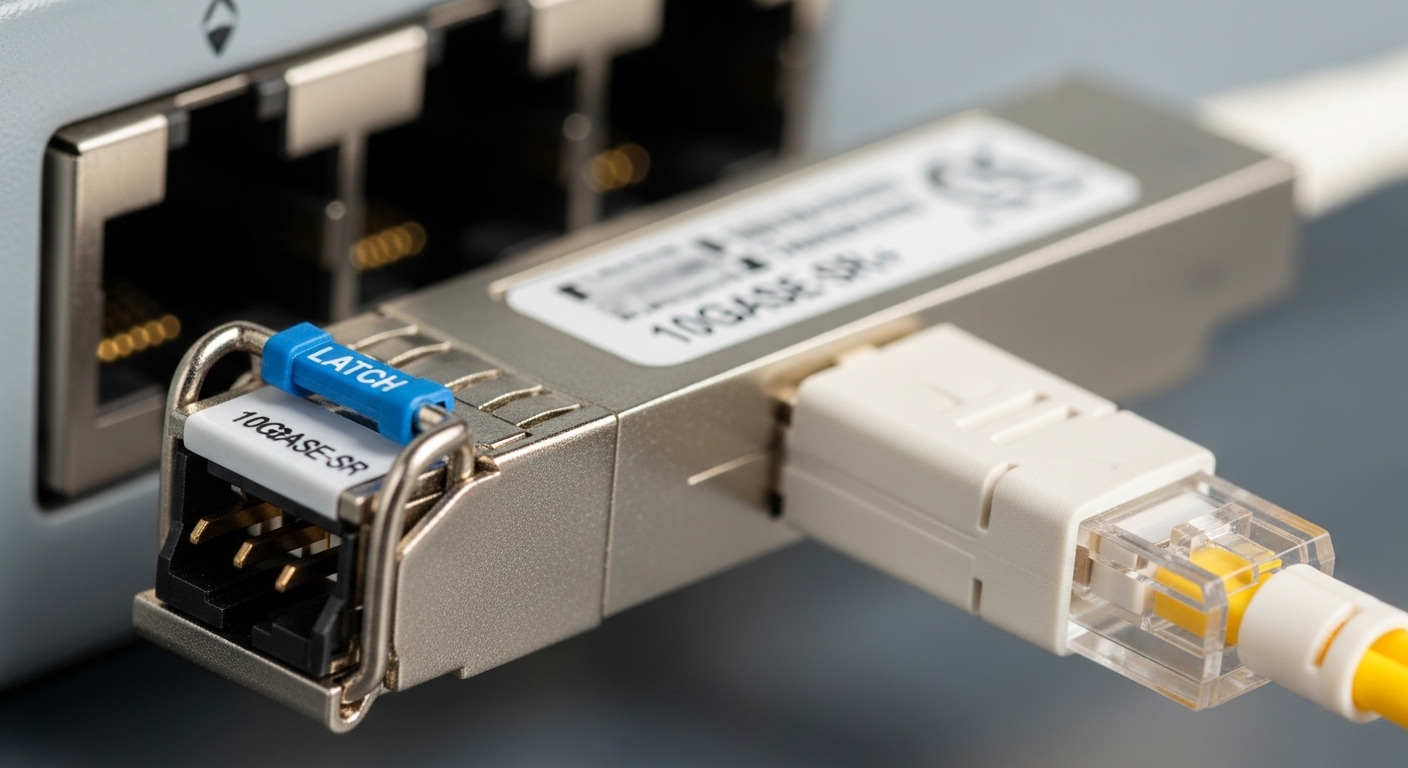
- Switch platform compatibility: transceiver form factor (SFP/SFP+/SFP28/QSFP+/QSFP28/OSFP), vendor part compatibility lists, and DOM requirements (Digital Optical Monitoring).
- Environmental profile: cabinet ambient temperature ranges (e.g., -10 C to 55 C), airflow assumptions, and vibration exposure.
- Operational burden: mean time to repair (MTTR), spares lead time, and on-site replacement labor rate.
For standards grounding, start from Ethernet optical PHY expectations in IEEE 802.3 and the vendor-specific electrical/optical compliance of your chosen module family. IEEE 802.3 Ethernet Standard
Step-by-step: compute optics ROI for smart city rollouts
This section turns engineering metrics into finance outcomes. If you run this as a repeatable spreadsheet workflow, you can validate PMF for your network design faster by reducing ambiguity in procurement and deployment.
Normalize your link requirements (distance, rate, BER margin)
Define the candidate transceiver set by rate (10G/25G/40G/100G), reach (SR/LR/ER), and the fiber plant. Compute or request link budget components: fiber attenuation, splice loss, connector loss, and any patch panel overhead. Then add a safety margin for aging and cleaning variability.
Use IEEE-consistent performance targets for Ethernet links, but rely on vendor datasheets for the actual optical power, receiver sensitivity, and recommended launch power ranges. In smart city cabinets, the biggest real-world swing is not the fiber spec; it is cleaning and handling during maintenance.
Expected outcome: a shortlist of transceiver types that can close the link at the 95th percentile distance, not just the average.
Model power and thermal impact across the entire network
ROI improves when optics reduce energy use and prevent thermal derating. For each link, estimate module power from datasheets (or vendor typical consumption). Then multiply by port count and duty cycle. If your cabinets are power-constrained, even small savings matter.
Example input for modeling: a 10G SR SFP+ module might draw roughly ~1.0 W to ~1.8 W depending on vendor and temperature grade; a 25G SFP28 module can be higher. Validate exact numbers per part number, because “same reach” does not imply identical power.
Expected outcome: annual energy cost delta between your baseline optics and the proposed optics family.
Quantify reliability and replacement cost using MTTR and failure rate assumptions
Optics ROI is often dominated by operational risk. Build a simple expected-cost model: expected replacements per year times labor and truck roll costs. If your smart city deployment has street-level assets, assume higher MTTR due to access delays. Create two scenarios: optimistic (fewer failures) and conservative (more replacements due to harsh cleaning and handling).
Vendor-backed reliability claims are useful, but you should still treat them as priors and refine based on your own pilot run. For procurement, require a clear RMA process and documented temperature operation ranges.
Expected outcome: expected annual replacement and service cost for each optics option.
Include spares strategy and inventory carrying cost
In production, you will not replace optics instantly. Determine how many spares you need for each transceiver SKU to meet your MTTR target. Then include inventory carrying cost (capital cost plus storage plus obsolescence risk). Third-party optics can reduce unit price, but lock-in and DOM compatibility issues can increase spares complexity.
Expected outcome: a spares-adjusted TCO that accounts for both price and operational friction.
Compute ROI and break-even year
Use a standard TCO model:
- TCO = CapEx + (energy cost) + (service cost) + (spares carrying cost) + (risk-adjusted downtime cost)
- ROI = (TCO_baseline – TCO_proposed) / TCO_proposed
Downtime cost is difficult but not optional for smart city services. If optics failures cause partial outages in traffic control, surveillance backhaul, or municipal Wi-Fi, the cost may be measured in SLA credits, reputational impact, and emergency response overhead.
Expected outcome: a break-even year you can defend in a procurement meeting.
Optical transceiver choices that change ROI in smart city deployments
ROI sensitivity is not evenly distributed across optics parameters. In smart city networks, the biggest ROI levers are reach class selection, power draw, DOM visibility, and temperature operating grade. Compatibility with switch vendor diagnostics affects operational labor and MTTR.
What to compare between module families
- Wavelength and reach class: SR (850 nm multimode) vs LR/ER (1310/1550 nm single-mode). Wrong reach class forces patching or short-link workarounds that inflate CapEx.
- Connector type: LC vs SC affects field handling and patch panel standardization.
- Power consumption: lower power reduces cabinet HVAC load and power distribution overhead.
- DOM support: better telemetry reduces “blind” troubleshooting and shortens service windows.
- Temperature range: modules with extended temperature grades reduce derating risk in sealed cabinets.
For interoperability and management expectations, DOM behavior is typically described in vendor documentation and aligned with transceiver digital interfaces. Also ensure your platform supports the module’s diagnostic interface without falling back to “unsupported module” states.
Technical specifications comparison (example candidate set)
The following table illustrates typical parameters you can use to start your ROI model. Always verify exact specs for the specific part numbers you plan to deploy.
| Spec | 10G SR SFP+ (850 nm MMF) | 25G SFP28 (850 nm MMF) | 10G LR SFP+ (1310 nm SMF) | 100G QSFP28 (SMF) |
|---|---|---|---|---|
| Typical data rate | 10.3125 Gbps | 25.78125 Gbps | 10.3125 Gbps | 103.125 Gbps |
| Wavelength | ~850 nm | ~850 nm | ~1310 nm | ~1310/1550 nm (varies) |
| Reach (typical) | 300 m (OM3/OM4 class dependent) | 100 m to 400 m (OM4 typical) | 10 km (SMF) | 10 km (typical single-mode profile) |
| Connector | LC | LC | LC | LC (varies by vendor) |
| DOM / telemetry | Often supported | Often supported | Often supported | Supported on most platforms |
| Typical power | ~1.0 W to ~1.8 W | ~1.5 W to ~2.5 W | ~1.2 W to ~2.2 W | ~4 W to ~7 W (varies) |
| Operating temperature | Commonly commercial: 0 C to 70 C | Commonly commercial or extended | Commonly commercial or extended | Often commercial or extended |
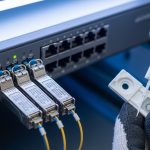
Field examples you may see in smart city pilots include Cisco SFP-10G-SR and Finisar FTLX8571D3BCL-class optics for SR, plus FS.com SFP-10GSR-85 style modules for cost-optimized SR deployments. Even if the reach is “close,” ROI can diverge due to power, DOM behavior, and compatibility testing outcomes.
Decision checklist: how engineers pick optics to protect ROI
Use this ordered checklist during design review and before procurement. It is optimized for smart city constraints where field access and environmental stress drive real TCO.
- Distance and reach percentile: confirm link closure at the 95th percentile fiber length, not the average.
- Budget vs reach trade: if you can move from MMF SR to SMF LR, you may reduce cabinet count and patching work; that can beat small unit price savings.
- Switch compatibility: validate module support with your exact switch models and firmware. Watch for “DOM not supported” or “transceiver type mismatch” alarms.
- DOM and monitoring integration: require telemetry fields your NOC can alert on (Tx bias, Rx power, temperature). If you cannot alert, MTTR increases.
- Operating temperature grade: ensure the module can operate safely in the cabinet ambient profile with realistic airflow assumptions.
- Connector and patch panel standardization: standardize on LC and consistent cleaning practices to reduce connector-related failures.
- Vendor lock-in risk: third-party optics can work, but plan for compatibility testing cost and spares diversification. Consider a “dual-sourcing” plan if your timeline allows.
- Warranty and RMA SLA: define acceptable replacement lead time for field failures.
For structured guidance on fiber handling and connector hygiene, use industry best practices from organizations that specialize in fiber and cabling education. Fiber Optic Association
Common mistakes and troubleshooting that quietly destroy ROI
Most smart city optics failures are avoidable. The key is to treat optics not as “plug and forget,” but as a controlled subsystem with measurable telemetry and disciplined fiber hygiene.
Failure mode 1: Link flaps due to connector contamination
Root cause: dirty LC endfaces or damaged polish after repeated field servicing. This produces intermittent Rx power drops and link retrains.
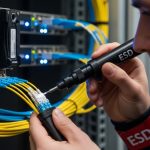
Solution: enforce a connector cleaning workflow (inspection with microscope, cleaning tape/cassette, and endface reinspection). Add Rx power thresholds to alerting so you catch degradation before full outages.
Expected outcome: fewer intermittent outages and lower MTTR during night maintenance windows.
Failure mode 2: “Works in lab, fails in cabinet” thermal derating
Root cause: modules rated for 0 C to 70 C installed in cabinets that experience excursions near the upper bound due to poor airflow or sun exposure. Laser bias and receiver margins degrade.
Solution: instrument cabinet temperature with a calibrated sensor, then validate module operation in the real thermal envelope. Prefer extended temperature grades when ambient can exceed typical assumptions.
Expected outcome: stable link behavior across seasons and reduced warranty RMA rates.
Failure mode 3: DOM alarms cause false positives and operational thrash
Root cause: telemetry fields differ across vendors or firmware interpretations. NOC teams may treat benign DOM changes as critical, triggering unnecessary field visits.
Solution: baseline DOM readings for each transceiver type on first deployment, then tune alert thresholds and suppression windows. Maintain a mapping from DOM vendor fields to your monitoring system’s expected schema.
Expected outcome: fewer “truck rolls” and better alignment between telemetry and actual physical failures.
Cost and ROI note: what to expect in real budgets
In smart city deployments, optics costs are usually a minority of the total TCO, but optics failures can dominate service costs. Unit prices vary widely by speed and vendor, but a realistic budgeting approach is to separate CapEx for modules from OpEx for service and energy.
Typical ROI outcomes look like this: third-party optics can reduce per-port CapEx by a meaningful margin, but compatibility testing, spares complexity, and monitoring integration can erode savings. OEM optics often cost more per module, yet can reduce integration churn and improve warranty handling predictability.
On energy, even modest power deltas per module matter at scale. If you deploy thousands of ports and can cut power by 0.5 W per port, annual energy savings can become a non-trivial line item, especially where power distribution and cabinet cooling are expensive.
Bottom line: ROI is most sensitive to MTTR and failure rate assumptions. Treat your pilot as the primary data source, not the datasheet marketing numbers.
Pro Tip: In field operations, “DOM supported” is less important than “DOM usable.” If your monitoring stack can alert on Rx power and Tx bias with stable thresholds, MTTR drops sharply. If DOM exists but your alerts are noisy or mis-scaled, you will burn budget on false positives even when the optics are healthy.
FAQ for buying optics for smart city networks
How do I justify optics ROI when outages are rare?
Use a risk-adjusted TCO model: even low-probability failures can have high impact in traffic control or surveillance backhaul. Include downtime cost via SLA credits, emergency response overhead, and service-window penalties. Then validate failure rate assumptions with pilot telemetry and RMA history.
Should I prefer MMF SR or SMF LR in smart city designs?
MMF SR can be cheaper and simpler for short indoor or near-cabinet runs, but it is sensitive to patching overhead and connector hygiene. SMF LR reduces reach constraints and can simplify cabinet placement, potentially lowering total construction cost. The best choice depends on your fiber plant and how much patching you expect during maintenance.
What DOM fields matter for operational ROI?
Prioritize Rx power, Tx bias/current (or equivalent), temperature, and alarms that your NOC can trend. Then define thresholds per module type and firmware combination. If you cannot trend or alert reliably, DOM does not reduce MTTR.
Are third-party transceivers safe for production?
They can be safe if you run compatibility testing against your switch models and firmware, and if you validate DOM behavior and optical power ranges. The ROI risk comes from increased integration cost and potential monitoring schema mismatches. Use a staged rollout with a pilot group and strict acceptance criteria.
How do I prevent optics issues during field replacement?
Standardize connector cleaning tools, require endface inspection after every cleaning, and log maintenance actions with before/after Rx power readings. Also ensure you stock the correct module SKU for each port type and have a rollback plan if DOM telemetry behaves differently.
Where can I find authoritative guidance for Ethernet optics behavior?
Use IEEE 802.3 for Ethernet PHY baseline expectations and vendor datasheets for the exact optical power and sensitivity parameters. For fiber handling and connector hygiene, rely on fiber education and best-practice references. This reduces guesswork and improves auditability for procurement and compliance.
If you want the next validation step, run a pilot ROI sprint: pick two transceiver families, deploy them in parallel across representative cabinet conditions, and measure Rx power stability, temperature behavior, and replacement lead time. Start with your network design notes and then iterate using smart city fiber backhaul ROI.
Author bio: I build and deploy early-stage field networks where optics, telemetry, and reliability metrics directly drive PMF learning cycles. I focus on measurable TCO drivers: link margin, cabinet thermal envelopes, DOM alert quality, and MTTR outcomes.