
In telecom networks, the decision to finance optical infrastructure is rarely a spreadsheet-only choice. This article helps procurement and reliability teams weigh purchasing versus leasing active optics like transceivers and fiber gear, with a focus on uptime, MTBF, environmental limits, and audit-ready documentation. You will see how field conditions, lead times, and warranty terms turn into measurable operational risk. If you manage access, aggregation, or metro transport, you can use the decision checklist to align procurement with reliability targets.
Lease or purchase: how financing changes reliability outcomes
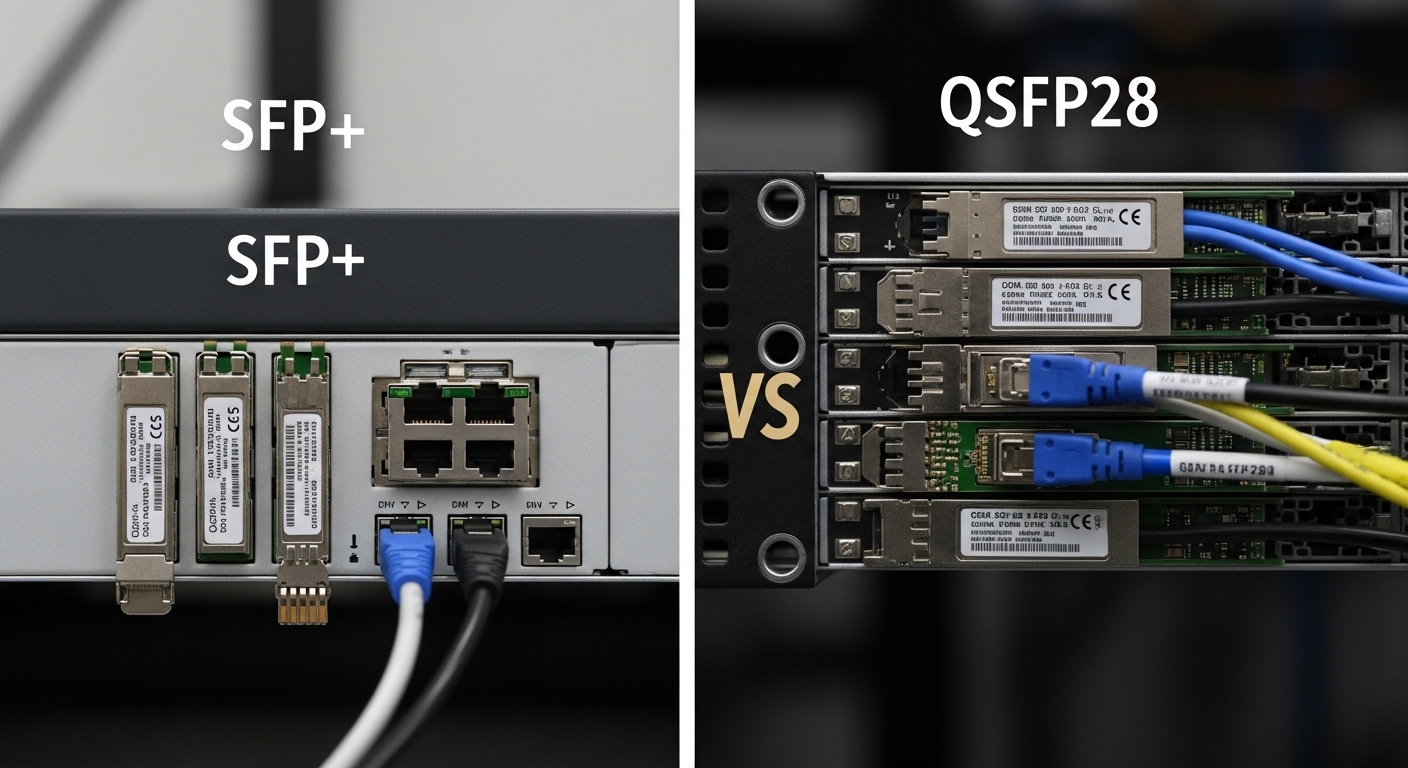
At first glance, leasing looks like a cash-flow smoothing tool, while purchasing looks like asset ownership. In practice, the financing model changes who controls optical configuration, spares strategy, and compliance evidence. A lease may bundle replacements when a module fails, which can improve short-term availability, but it can also constrain part substitutions and optics vendor selection. Purchasing, by contrast, tends to maximize configurability and long-term spares planning, yet it demands disciplined receiving tests and environmental qualification management.
From an ISO 9001 and reliability engineering lens, both paths require traceability: lot codes, DOM readings, firmware compatibility, and temperature/optical power verification. The IEEE 802.3 Ethernet physical layer defines electrical and optical performance requirements, but vendors still vary in implementation details like receiver sensitivity margins and digital diagnostics behavior. For reference, IEEE 802.3 clause-level requirements for transceivers and optical interfaces provide the baseline for conformance expectations. IEEE 802 Ethernet Standard
What changes operationally when you lease
Leasing typically shifts parts of lifecycle responsibility to the lessor: they may provide swappable transceivers, optics, or even fiber routing services. However, the operator still owns the network behavior: optics must match the switch vendor optics support matrix and the link budget must meet design targets. In a metro ring with tight margins, a “replacement module” that is electrically compatible but optically different can reduce safety margin under temperature swings. The result is higher error rates during heat waves or during seasonal dust events.
Leasing terms also affect spares. If the lease assumes “no spares required,” you may end up with fewer local spares, which can extend mean time to repair (MTTR) when a failure occurs outside business hours. The reliability math is blunt: availability depends on both MTBF and MTTR, and financing alters MTTR as much as it alters MTBF. In ISO language, this is a risk control for production readiness, not only a finance decision.
What changes operationally when you purchase
Purchasing gives you control over spares stocking, burn-in, and acceptance testing. You can standardize on specific part numbers, such as Cisco SFP-10G-SR, Finisar FTLX8571D3BCL, or FS.com SFP-10GSR-85 (examples vary by platform and vendor support). That standardization can reduce compatibility variance, which is a direct reliability win. But purchasing also means you must manage end-of-life notices, warranty RMA workflows, and the environmental qualification of stored optics.
For fiber optic links, optical power budgets are unforgiving. You must confirm wavelength, reach, and connector type match the planned fiber plant and patch panel losses. ANSI/TIA documents and related industry practices guide cabling loss expectations and installation considerations, which you should incorporate into link budget checks before committing to any financing plan. ANSI/TIA Standards
Specs that decide purchasing: reach, wavelength, power, and temperature
Whether you lease or purchase, you still buy into physics: reach depends on wavelength and link budget, and compatibility depends on switch interoperability. For procurement, the purchasing decision becomes a specification matching exercise plus a risk management exercise. The table below summarizes common active optics parameters you will validate during purchasing, receiving, and acceptance tests.
| Parameter | 10G SR (example) | 25G SR (example) | 40G SR4 (example) |
|---|---|---|---|
| Typical data rate | 10.3125 GbE | 25.78125 GbE | 41.25 GbE |
| Wavelength | 850 nm | 850 nm | 850 nm |
| Connector | LC duplex | LC duplex | MPO/MTP (4-lane) |
| Reach (typical) | ~300 m to 400 m over OM3/OM4 (design dependent) | ~100 m to 400 m over OM3/OM4 (design dependent) | ~100 m to 150 m over OM3/OM4 (design dependent) |
| Optical class | Class 1 laser product (verify datasheet) | Class 1 laser product (verify datasheet) | Class 1 laser product (verify datasheet) |
| Receiver sensitivity | Vendor datasheet specific; validate with link budget | Vendor datasheet specific; validate with link budget | Vendor datasheet specific; validate with link budget |
| DOM support | Common (verify DDM availability) | Common (verify DDM availability) | Common (verify DDM availability) |
| Operating temperature | Commercial or industrial variants; verify exact range | Commercial or industrial variants; verify exact range | Commercial or industrial variants; verify exact range |
| Power (typical) | ~1 W class (varies by vendor) | ~1.5 W to 2 W class (varies by vendor) | ~3 W class (varies by vendor) |
In purchasing workflows, the reach number is rarely the deciding factor; margin is. Link budget must include fiber attenuation, connector and splice losses, and aging assumptions. If you are financing with a lease, ask the lessor for the exact replacement module part number and the DOM behavior so you can confirm it meets your monitoring thresholds. If you are purchasing, require incoming inspection results that prove optical output and receiver sensitivity are within datasheet tolerance.
Environmental testing reality: temperature and airflow
Optics fail in the seams: connectors, dust, vibration, and thermal stress. Many telecom rooms swing from 20 C office-like conditions to 45 C near hot aisles during peak summer load. Procurement should treat operating temperature range and derating curves as acceptance criteria, not marketing claims. If your deployment includes outdoor cabinets, you may need industrial-grade modules with verified temperature range and robust dust mitigation procedures.
A telecom operator scenario: purchasing decisions under lead time and outages
Consider a regional operator deploying a metro aggregation layer with 48-port 10G access switches feeding a leaf-spine style spine. The network uses LC duplex OM4 patching in data center rows, with a planned expansion of 12 racks in 90 days. The procurement team faces a vendor lead time of 8 to 12 weeks for certain transceiver part numbers, and they need activation by a regulatory service deadline. Reliability targets specify an MTTR of under 4 hours during business hours and under 8 hours after hours.
They choose a hybrid approach: purchase the primary transceiver inventory for in-service links and lease a smaller set of “hot spares” for the first month. The purchased modules are standardized on exact part numbers supported by the switch model, and every unit is tested for DOM thresholds and optical power before racking. The leased units come from a pre-approved catalog, and the contract guarantees replacement within 24 hours. In the first heat wave, the team observes a higher-than-expected error rate on a specific batch, traced to a connector cleanliness issue rather than the financing model; because they had purchasing-based local spares, they restored service faster.
This scenario highlights why purchasing is not just a budget item. Availability is shaped by how quickly you can verify, swap, and monitor optics under real thermal and operational conditions. Leasing can help with replenishment, but purchasing improves control over acceptance evidence and compatibility consistency, which reduces the likelihood of “replacement roulette.”
Selection checklist for purchasing optical gear (lease-aware)
Use this ordered checklist to structure purchasing decisions. It is designed for procurement meetings that also need reliability sign-off and audit readiness.
- Distance and link budget first: confirm wavelength, reach, fiber type, and connector/splice losses; do not rely on a single “max reach” marketing line.
- Switch compatibility matrix: verify the exact transceiver or optical module part number is supported by your switch/line card; confirm firmware behavior for DOM and alarms.
- DOM and monitoring requirements: ensure Digital Optical Monitoring values map to your NMS thresholds; confirm you can read temperature, bias current, and received power.
- Environmental operating range: match the module temperature class to your airflow and ambient conditions; plan for worst-case seasonal peaks.
- Warranty, RMA, and replacement SLA: if leasing, require exact replacement part numbers and define return and escalation paths; if purchasing, verify warranty coverage and RMA turnaround.
- Vendor lock-in risk: assess whether third-party optics are acceptable for your operational model; if leasing, ask how substitution is controlled.
- Spare strategy and MTTR: decide what stays on-site; purchasing typically improves local spare depth, while leasing may reduce it.
- Quality evidence: require incoming inspection results, lot traceability, and acceptance test logs for your ISO 9001 documentation trail.
Pro Tip: In the field, DOM “pass” does not always mean “link margin is safe.” Engineers often discover that a batch can meet minimum optical power at room temperature yet drift toward failure thresholds during sustained high-ambient operation. Treat DOM trends over temperature as the acceptance gate, not a single snapshot reading.
Common mistakes in purchasing optical infrastructure (and how to fix them)
Even careful teams trip over predictable failure modes. Below are concrete pitfalls, their likely root causes, and practical solutions.
Buying for reach on paper, ignoring margin
Root cause: procurement selects modules based on “maximum reach” without including connector contamination, patch panel losses, or aging assumptions. Failure mode: higher bit error rates during temperature extremes; intermittent link flaps. Solution: run a full link budget including worst-case attenuation and connector losses; require pre-racking cleaning verification and post-install OTDR or equivalent validation where feasible.
Assuming compatibility across switches and firmware versions
Root cause: procurement standardizes on a transceiver family but not the exact supported part number for each line card, or ignores firmware behavior for alarms and diagnostics. Failure mode: ports go into error-disabled state, or DOM alarms trigger false positives that mask real faults. Solution: verify compatibility per switch model and software release; pilot in a staging rack and confirm alarm mapping in your NMS.
Neglecting environmental grade selection
Root cause: purchasing selects commercial temperature modules for locations that routinely exceed their operating range during peak load. Failure mode: gradual degradation leading to sudden outages; increased customer-impact events. Solution: map ambient temperature and airflow paths to module temperature class; if necessary, use industrial-grade optics and add airflow management before scaling.
Overlooking connector cleanliness and cleaning workflow
Root cause: patching and rework are done without consistent cleaning tools and inspection; dust becomes an invisible optical attenuator. Failure mode: receive power drops; links become marginal; the symptom looks like an optics problem. Solution: implement standardized cleaning and inspection (microscope checks) before each mating; require a documented cleaning SOP as part of acceptance.
Cost and ROI note: what purchasing changes in total cost of ownership
For budgeting, assume transceivers and optics pricing varies widely by vendor, speed, and grade. In many enterprise and carrier settings, third-party compatible optics can be materially cheaper than OEM modules, but you must account for compatibility assurance, increased testing time, and potential support friction. Typical street-level pricing ranges (illustrative and region dependent) might place 10G SR transceivers in the tens to low-hundreds of dollars each, while higher-speed modules and industrial grades often rise significantly. Leasing can reduce upfront cost but adds recurring fees and may limit configuration control.
From a TCO angle, include the cost of spares, acceptance testing labor, and the cost of downtime. If your MTTR target is strict, purchasing local spares can be a direct ROI driver because it shortens restoration time during failures. If your outage cost is high, a lease that guarantees rapid replacement can be valuable, but only if replacement part numbers are controlled and monitoring behavior is consistent. For storage and data systems, also consider how optics reliability affects replication and backup windows; SNIA’s materials on storage reliability can inform the broader impact of link instability. SNIA
FAQ: purchasing and financing questions telecom buyers ask
Is leasing better than purchasing for improving uptime?
Leasing can improve availability when it includes fast replacement SLAs and controlled part substitution. However, uptime depends on MTTR, local spares depth, and whether replacements match your switch compatibility and monitoring needs. In many deployments, a hybrid model balances both.
What should we require in a purchasing acceptance test?
Require DOM readout verification, optical power confirmation, and documentation of lot traceability. Then validate link stability under your operational temperature profile, not just at room temperature. Keep the test evidence for ISO 9001 audits and for incident reconstruction.
Can we use third-party optics with purchased infrastructure?
Often yes, but only after verifying your switch vendor support matrix and running a pilot. Treat compatibility as a system property: optics, firmware, and monitoring thresholds all interact. If you are using leasing, confirm the lessor will not substitute optics outside your approved catalog.
How do we prevent purchasing the wrong temperature grade?
Map worst-case ambient temperature and airflow patterns for every cabinet and row. Then select industrial-grade optics when your environment exceeds commercial limits or when seasonal peaks are near the boundary. Add airflow improvements before scaling to avoid “it worked in staging” surprises.
What is the most common cause of optical link flaps?
Connector contamination and inconsistent cleaning workflow are among the most common causes. A link that flaps under load can look like an optics failure but actually be an optical budget problem. Pair optics checks with connector inspection and cleaning SOP compliance.
How should we calculate ROI for purchasing spares?
Use outage cost and MTTR targets rather than only unit price comparisons. Estimate restoration time with and without on-site spares, then price the difference using service impact assumptions. Purchasing spares usually pays when failure probabilities are non-trivial and replacement logistics are slow.
Purchasing optical infrastructure is ultimately an engineering discipline disguised as procurement. By treating link budget, environmental conditions, compatibility, and evidence collection as first-class requirements, you can choose lease versus purchase without sacrificing reliability. Next, review purchasing and align your documentation and acceptance workflow with your operational risk controls.
Author bio: A reliability engineer who has field-tested transceivers, validated DOM alarms, and built MTBF/MTTR models for metro and access networks. I write procurement-ready guidance that turns optical specifications into auditable, uptime-focused decisions.


