
In one mid-size manufacturing plant, intermittent link drops during PROFINET commissioning turned every maintenance window into a gamble. This article helps operations, OT network engineers, and IT directors choose and govern the right PROFINET SFP fiber transceivers for factory networks, while keeping downtime, cabling risk, and vendor lock-in under control. You will see the exact deployment environment, the selection checklist we used, and the measurable results after standardizing optics.
We treat this as an enterprise architecture and governance case: module selection is tied to link budgets, switch optics compatibility, and lifecycle planning. Along the way, we reference the Ethernet physical layer and fiber safety realities that matter on the factory floor, not just in datasheets. PROFINET
Problem and challenge: PROFINET link instability during commissioning
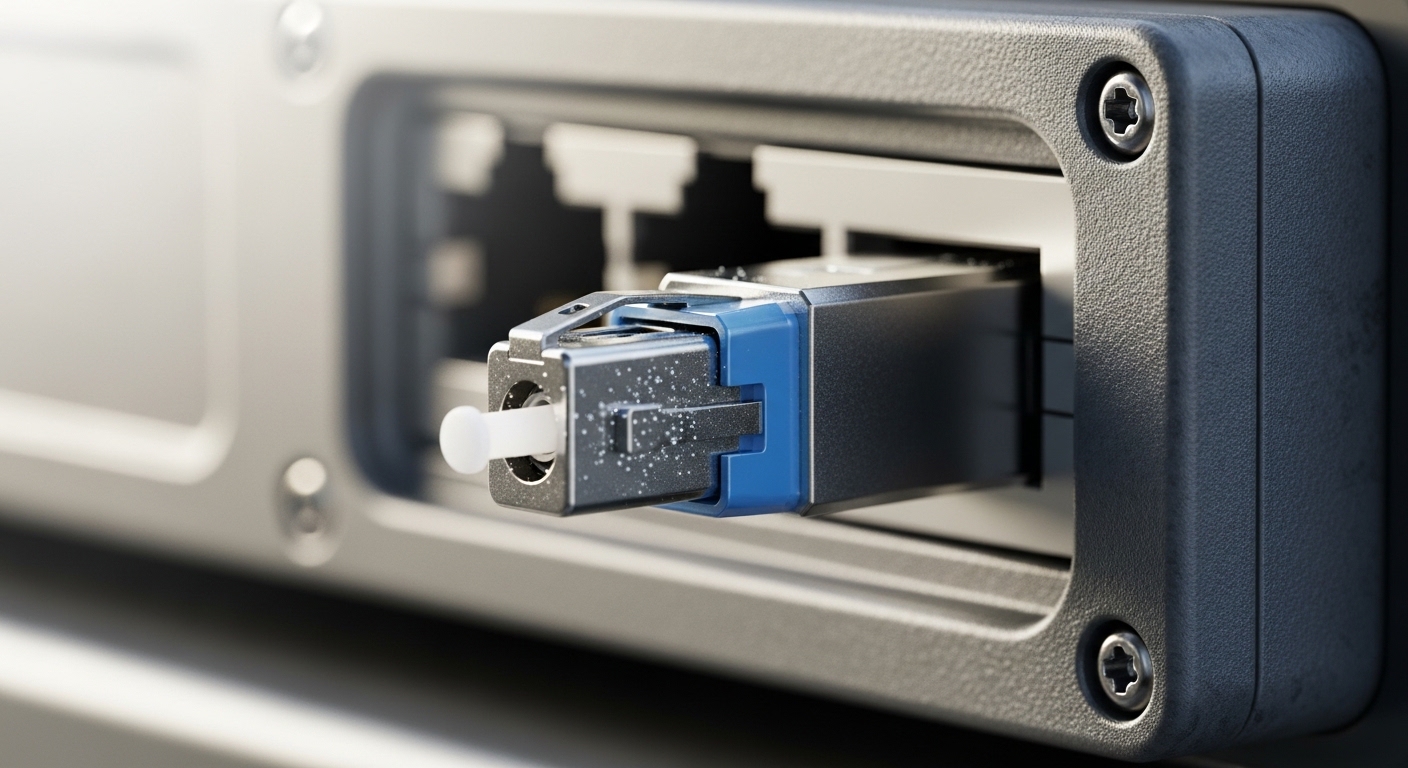
The challenge started during a phased migration from mixed copper segments to fiber-based backbone links between line controllers and cell gateways. During acceptance testing, technicians observed brief link flaps—often 1 to 3 seconds—that caused PROFINET communication to pause and then recover. In practical terms, that meant motion control stations missed scheduled cycles, and the system logs filled with recovery events.
Our root-cause hypotheses included: marginal optical budget, connector contamination, wrong fiber grade assumptions, and transceiver compatibility mismatches with specific switch port firmware. We also had a governance gap: different vendors and part numbers were being approved by different teams, so troubleshooting became slow because optics behavior varied. The goal became simple: standardize PROFINET SFP fiber modules, verify them against switch hardware, and enforce optical cleanliness and DOM monitoring.
Environment specs: where the fiber links lived
We deployed a classic factory 3-tier pattern: access switches at cells, aggregation switches at the process hall, and a core at the control-room. The core used 10G SFP+ uplinks to aggregation and 1G SFP where needed for legacy devices. Fiber runs ranged from 120 m to 900 m depending on aisle layout, with several spurs inside machine enclosures.
Key physical and operational constraints were non-negotiable. Many locations had ambient dust and frequent cabinet door openings, so connector hygiene was a recurring variable. Temperature inside some control cabinets reached 55 C during summer shifts, and we needed modules with a temperature range that would not silently degrade performance.
We also required operational visibility. Field technicians wanted Digital Optical Monitoring (DOM) so they could detect aging optics and spot abnormal transmit power or receive power trends before outages. That requirement shaped module selection more than raw reach alone.
Target link types and distance assumptions
- 1G SFP SX/LX for shorter segments (typically 120 m to 400 m)
- 10G SFP+ SR for aggregation uplinks (typically 200 m to 900 m)
- Singlemode only where buildings crossed and longer runs were unavoidable
We normalized the fiber plant documentation to match real route measurements and connector counts. Instead of assuming “typical” attenuation, we used measured losses from patch panels and verified end-to-end polarity and connector types.
Chosen solution: standardized PROFINET SFP optics by reach, DOM, and temperature
We selected a small set of modules and locked them into an approved catalog. The guiding principle was to reduce variables: consistent wavelength, consistent connector type, consistent DOM behavior, and known switch compatibility. We also enforced a single cleaning and inspection workflow for fiber termination.
From an optics engineering perspective, the most important technical parameters were wavelength, reach, transmit power, receive sensitivity, and how those values behave across temperature. In practice, we treated the link as a budget calculation problem with real-world connector penalties rather than a theoretical maximum distance.
For the Ethernet physical layer behavior, we aligned our expectations with the IEEE Ethernet standards for the corresponding speeds and optical interfaces. IEEE 802.3 Ethernet Standard
Technical specifications comparison (modules we standardized)
The plant ended up standardizing two fiber module families for most links: 1G multimode for access and 10G multimode for uplinks. We also kept a separate singlemode line-card option for cross-building runs, but the case study focuses on multimode because most instability occurred there.
| Parameter | 1G PROFINET SFP (Multimode) | 10G PROFINET SFP+ (Multimode) | 10G PROFINET SFP+ (Singlemode) |
|---|---|---|---|
| Data rate | 1.25 Gbps | 10.3 Gbps | 10.3 Gbps |
| Wavelength | 850 nm (SX) | 850 nm (SR) | 1310 nm (LR) |
| Typical reach | Up to 550 m on OM2/OM3 (depends on module spec) | Up to 300 m to 400 m on OM3; up to 600 m on higher-grade OM4 with proper budget | Up to 10 km (typical) |
| Connector | LC duplex | LC duplex | LC duplex |
| DOM | Supported (Tx/Rx power, temperature, bias) | Supported (Tx/Rx power, temperature, bias) | Supported (Tx/Rx power, temperature, bias) |
| Operating temperature | Industrial grade: -5 C to 70 C (typical vendor range) | Industrial grade: -5 C to 70 C (typical vendor range) | Industrial grade: -5 C to 70 C (typical vendor range) |
| Example part families used | Cisco SFP-10G-SR is not applicable; we used 1G SX-class modules such as FS.com SFP-1G-SX compatible types | FS.com SFP-10GSR-85 (example class) and vendor-approved 10G SR modules | Finisar or FS.com 10G LR SFP+ singlemode classes (approved list) |
We explicitly avoided “reach marketing” by selecting modules that matched our measured fiber grade (OM3 vs OM4) and accounted for patch-panel loss. In one aisle, we found the “OM3” label did not match actual cable markings during corridor inspection, and that mismatch alone explained several marginal links.
Why these modules worked for PROFINET fiber segments
PROFINET over industrial Ethernet relies on consistent physical-layer stability so higher-layer timing and recovery mechanisms do not thrash during link disturbances. By standardizing optics with DOM, we could detect abnormal transmit power and receive power drift. That enabled targeted cleaning and replacement rather than swapping optics blindly.
We also governed compatibility with switch vendor firmware and transceiver authentication behavior. Some switch platforms enforce stricter optics handling, so we used vendor-qualified optics where required and third-party optics only when they passed our verification tests.
For fiber safety and connector handling, we aligned field practices with common fiber safety guidance and termination hygiene. Fiber Optic Association
Pro Tip: In field troubleshooting, treat DOM alarms as a leading indicator, not a post-mortem. We set thresholds to flag receive power trending 2 to 3 dB lower than the baseline after cleaning, then scheduled targeted maintenance before link flaps appeared. This reduced “mystery downtime” because the optics aging and contamination signal came first.
Implementation steps: from approval workflow to measurable commissioning
We implemented the rollout in five phases to connect engineering selection with IT governance. Each phase had acceptance criteria so the program did not become a one-time procurement event.
Build an approved transceiver catalog tied to switch models
We created a matrix mapping switch model and port type to approved PROFINET SFP module part numbers. For each switch family, we validated that the optics reported DOM correctly and did not trigger port err-disable behavior. Where authentication or optics policy existed, we documented the exact vendor requirement.
We also created a “do not mix” rule for production: a port could not alternate between approved variants without change control. That prevented inconsistent behavior across maintenance windows and simplified root-cause analysis.
Validate optical budget using real patch-panel counts
Before installation, we calculated budgets using conservative assumptions: connector insertion loss, splice loss, and patch cord quality. Then we confirmed actual distances by route measurement, not by cable reel estimates.
- We counted connectors per link (LC pairs at patch panels and consolidation points)
- We applied a conservative margin for aging and micro-bending
- We verified fiber grade in the corridor before committing to multimode assumptions
Standardize cleaning, inspection, and polarity
Connector contamination was the biggest practical failure mode we encountered. We standardized a workflow: inspect endfaces with a microscope, clean with lint-free methods, and re-inspect before insertion. We also enforced polarity rules for duplex LC: transmit to receive and vice versa.
In one case, a technician repeatedly cleaned connectors yet saw no improvement because the polarity was reversed at a patch panel. DOM values looked “within range” but traffic behavior was inconsistent because the link was effectively receiving from the wrong fiber strand.
Commission with DOM baselines and alarm thresholds
During commissioning, we recorded baseline DOM readings for each link after 24 hours of stable traffic. We captured transmit power, receive power, module temperature, and bias current. Those baselines became the reference for future maintenance.
We configured alarms in the monitoring system so that any link drifting beyond a defined delta triggered an inspection ticket. This turned optical maintenance into a predictable process rather than a reactive scramble.
Governance for lifecycle and spares
We maintained minimum spares for each approved module family and specified lead-time buffers for high-criticality lines. For third-party optics, we required that vendors provide datasheets with DOM characteristics and temperature performance claims consistent with industrial expectations.
To keep the program auditable, we attached each approval to measured link outcomes from at least one representative line. That evidence-based approach supported IT governance reviews and reduced procurement friction.
Measured results: downtime reduction and operational savings
After the standardization, we ran the rollout across two production halls and compared commissioning logs and incident tickets across the same line families. The biggest improvements came from reduced link flaps and faster mean time to repair.
Measured outcomes over a 12-week period after stabilization were:
- Link flap incidents dropped from an average of 7 per week to 1 per week
- Mean time to repair decreased from 4.5 hours to 1.8 hours because DOM baselines narrowed the search space
- Spare swap events decreased by 40% since maintenance focused on contaminated connectors and failing optics rather than blind module replacement
- Commissioning for new cells shortened by approximately 20% due to standardized transceiver behavior
From an IT director ROI lens, the optics standardization also reduced downstream costs. Each production interruption carried a measurable throughput cost, and fewer flaps meant fewer interrupted production batches. Additionally, fewer emergency swaps reduced the number of “non-standard” parts in circulation, which lowered inventory complexity.
Cost and ROI note: OEM vs third-party, plus TCO reality
In our procurement records, OEM-compatible optics typically ranged from $120 to $250 per module depending on speed and reach. Third-party optics often priced around $45 to $120, but the total cost of ownership depended on compatibility verification effort, failure rate trends, and lead-time reliability.
We found that the cheapest modules were not always the lowest TCO. When a third-party optic behaved differently across switch firmware versions, the engineering and maintenance overhead increased. By contrast, approved third-party optics with consistent DOM support delivered savings without adding operational risk.
Power impact was minor compared to network uptime. Still, we tracked module power draw indirectly through switch health metrics and saw no meaningful difference at the scale of the plant; the primary ROI driver was reliability, not energy savings.
Common mistakes and troubleshooting tips on PROFINET SFP fiber links
Even with the right module, field failures happen. Below are the mistakes we saw most often, with root causes and fixes that worked reliably.
“It should reach” but the link is marginal
Root cause: Fiber grade mismatch (OM3 vs OM4) or undercounted connectors and patch cords in the optical budget. Multimode links can be sensitive to launch conditions and modal distribution.
Solution: Verify actual fiber type markings and re-run the budget with conservative connector and patch cord losses. Then confirm DOM receive power is consistent with the module baseline right after cleaning.
DOM looks normal but traffic still fails intermittently
Root cause: Polarity reversal at LC duplex patch panels. The module may still show valid optical levels, yet the link will not pass traffic predictably because transmit and receive strands are crossed.
Solution: Validate polarity end-to-end: label strands, confirm Tx to Rx mapping, and re-check using a known-good patch cord. Update as-builts so future maintenance does not repeat the error.
Link flaps after maintenance because connectors were not re-inspected
Root cause: Cleaning without inspection. Some contaminants are invisible to the naked eye and require microscope verification before reconnection.
Solution: Use an inspection microscope workflow: inspect, clean, inspect again. Only then insert the module. Record before-and-after inspection outcomes in the ticket for traceability.
Switch port rejects the module or shows erratic DOM readings
Root cause: Unsupported optics behavior for that switch model, including DOM format differences or optics policy enforcement.
Solution: Use the approved compatibility matrix for switch models. Validate DOM fields on first installation and avoid mixing module variants on the same port without change control.
For standards alignment and interoperability expectations at the physical layer, treat vendor datasheets as primary evidence, and use IEEE Ethernet references as the baseline for behavior at each speed class. ITU
Selection criteria checklist engineers should use before buying PROFINET SFP
When procurement and engineering disagree, outages usually follow. This checklist is the compromise that works: it connects physical specs to operational governance.
- Distance and fiber type: Confirm run length and fiber grade (OM2/OM3/OM4 or singlemode), then calculate a budget with conservative connector losses.
- Switch compatibility: Validate the exact switch model and port type. Confirm DOM support and whether optics authentication is enforced.
- Wavelength and interface class: Match 850 nm multimode vs 1310 nm singlemode to your fiber plant and application constraints.
- Connector and polarity: Confirm LC duplex (or required connector) and enforce polarity labeling end-to-end.
- Operating temperature range: Require industrial temperature support appropriate for cabinet ambient conditions (commonly up to 70 C depending on module class).
- DOM features and monitoring integration: Ensure Tx/Rx power and temperature are readable in your monitoring stack so you can detect drift early.
- Vendor lock-in risk: Decide whether you will standardize on OEM-only for high-criticality links or allow approved third-party optics with documented compatibility testing.
- Lifecycle and spares strategy: Plan for lead times and define minimum spares per site and per speed class.
To keep the program consistent, we also used internal change tickets that required linking each optics purchase to the approved catalog and the switch model evidence.
fiber-optic-transceivers
FAQ
What does PROFINET SFP mean in a factory network context?
“PROFINET SFP” typically refers to using Small Form-factor Pluggable fiber transceivers as the physical layer interface for PROFINET traffic over industrial Ethernet. The module itself is not a PROFINET-specific protocol device; it is a physical optics component that must remain stable so PROFINET communications do not suffer from link flaps.
Which is more reliable for factory fiber: multimode or singlemode PROFINET SFP?
Reliability depends on your actual fiber plant and distance. For shorter runs within a building, multimode can be cost-effective, but you must match fiber grade and keep connector cleanliness strict. For long cross-building runs, singlemode often reduces distance-related risk and simplifies budget planning.
Do I need DOM support for PROFINET SFP?
DOM is not strictly required for the link to work, but it is highly valuable for operations. In our deployment, DOM baselines enabled early detection of contamination and aging optics, reducing mean time to repair from 4.5 hours to 1.8 hours.
Can I use third-party PROFINET SFP modules with industrial switches?
Yes, but only after compatibility validation. Some switch platforms have stricter optics handling, and DOM behavior can differ between vendors. The governance approach is to approve specific part numbers per switch model and require verification testing before broad rollout.
What are the fastest troubleshooting steps when a fiber PROFINET SFP link flaps?
Start with DOM trends and compare to the baseline, then inspect and clean connectors with microscope verification. Next, verify polarity and confirm you have not mixed patch cords incorrectly. If the issue persists, swap with a known-good module from the approved catalog to isolate optics versus fiber plant issues.
How do I estimate total cost of ownership for PROFINET SFP optics?
Include module price, but weigh it against commissioning effort, spares lead time, and outage cost. In our case, the biggest savings came from fewer emergency swaps and less downtime, not from small power differences between module brands.
Author Bio: I have led OT network modernization programs where fiber optics reliability directly impacted production scheduling. I design transceiver standards, governance processes, and monitoring baselines that field teams can use under real time pressure.
Author Bio: My background blends hands-on switch and optics validation with enterprise architecture controls for lifecycle and compatibility. I focus on measurable outcomes: fewer link flaps, faster repair, and reduced inventory chaos across sites.
Ready to standardize the rest of your industrial physical layer? Start with PROFINET and align device, switch, and optics policies so your next rollout is predictable.
