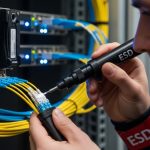
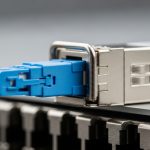
Multi-cloud traffic patterns can turn “we need more bandwidth” into a finance problem fast. This guide helps network and infrastructure teams evaluate ROI for optical network upgrades using the same numbers you would track in a change window: link utilization, latency impact, optics power/heat, cabling lifecycle risk, and failure-domain cost. It is written for engineers and architects planning leaf-spine, metro aggregation, or cloud interconnect refreshes who need a defensible business case.
Start with the ROI model that matches how multi-cloud actually behaves
In multi-cloud environments, traffic is rarely a clean “north-south only” story. It is usually a mix of east-west application replication, north-south ingress/egress, and intermittent bursts tied to deployment cycles, database failover, and data migration jobs. For ROI, that means you should model capacity and reliability together: the upgrade is not only about throughput, but also about avoiding expensive incidents and reducing operational drag.
Field teams often get stuck because they build ROI from total bandwidth purchased rather than from utilization and failure impact. A practical model uses three cost buckets and two benefit buckets.
Cost buckets you can defend in governance reviews
- CapEx: optics, transceiver cages/ports, switch upgrades if port-speed changes are required, fiber plant work (splicing, patch panels, MPO/MTP assemblies), and contractor labor.
- OpEx: power draw (optics + switch line cards), maintenance contracts, truck rolls for failures, and change-control overhead (downtime windows, rollback plans).
- Risk cost: probability-weighted incident cost (downtime minutes, SLA penalties, and reputational impact), plus time-to-repair based on failure domain design.
Benefit buckets that map to measurable outcomes
- Capacity enablement: reduced congestion, higher oversubscription headroom, and fewer forced re-harvest cycles for additional wavelengths or higher port speeds.
- Operational resilience: improved MTTR via hot-swappable optics, better signal margin, and a cabling plan that reduces “unknown unknowns” during migrations.

When you translate this into a spreadsheet, keep it simple enough for procurement to follow. Example: forecast utilization for the next 18 to 36 months by application cohort (databases, caches, object storage replication) and then map that to available headroom after the upgrade. Then add a “failure avoided” term using historical optical-related incidents (even a small sample is better than ignoring it).
Optics and fiber choices that swing both performance and ROI
Optical network upgrades typically fail ROI math when teams underestimate the plant and compatibility constraints. A 10G-to-25G or 25G-to-100G refresh can be straightforward in the switch, but expensive in the fiber plant if you discover mismatched patching, poor polarity discipline, or insufficient spare strands. The ROI sweet spot is often found by selecting optics that match the existing fiber type and reach budget while minimizing transceiver power and thermal load.
Know the reach budget before you buy transceivers
For direct attach and short-reach optics, the limiting factors are usually link attenuation, connector loss, splice loss, and the optical budget for your transceiver family. For long-reach or metro, dispersion and system margin become more important. Use vendor datasheets for Tx/Rx power, receiver sensitivity, and recommended loss budgets, then validate with an OTDR or fiber certifier results.
Technical comparison: common upgrade paths
This table compares typical short-reach optics used in data centers and metro aggregation. Values vary by vendor and exact part number, so use it as a planning baseline and confirm with datasheets for your target switch and optics vendor.
| Optics / Data rate | Typical wavelength | Connector | Reach class | Power / heat (typical) | Operating temp (typical) | Upgrade use |
|---|---|---|---|---|---|---|
| QSFP+ 10G SR | 850 nm | LC duplex | ~300 m (OM3/OM4 class) | ~1.5 to 2.5 W | 0 to 70 C | Older leaf-spine refresh, cost-controlled |
| QSFP28 25G SR | 850 nm | MPO/MTP (often) | ~70 m (OM4) to ~100 m (OM4 class) | ~1.8 to 3.0 W | 0 to 70 C | Consolidate uplinks without long fiber work |
| QSFP28 100G SR4 | 850 nm | MPO/MTP | ~100 m (OM4 class) | ~6 to 8 W | 0 to 70 C | Dense spine uplinks, high port savings |
| QSFP28 100G LR4 | 1310 nm | LC duplex | ~10 km class | ~3.5 to 6 W | -5 to 70 C (varies) | Metro aggregation, fewer remounts |
In practice, I have seen ROI swing by thousands of dollars per rack when teams move from a “buy the fastest optics” mindset to a “buy the optics that fit the fiber plant you already certified.” For example, if your OM4 links already pass loss requirements, SR optics can avoid expensive re-termination and reduce outage risk during cutover.
Also remember compatibility. Some switches enforce optics vendor IDs or require specific firmware support for digital diagnostics (DOM). If you plan third-party optics, validate with the switch vendor’s interoperability matrix and test in a pilot bay first.
Pro Tip: In multi-cloud cutovers, the biggest hidden ROI killer is not the transceiver cost; it is the “patching choreography.” If you pre-stage labeled patch cords and lock polarity conventions early, you can avoid a rollback during the first maintenance window, saving both downtime penalties and engineer hours.
ROI math for multi-cloud: quantify congestion relief, risk reduction, and power
To evaluate ROI in multi-cloud environments, tie each optical network upgrade decision to a specific traffic and operational requirement. For instance, if your cloud regions require faster replication or you are migrating storage tiers, you can map that to a target utilization threshold such as 70% average on uplinks during peak replication windows. Then compute the upgrade’s impact on congestion probability and the knock-on effect to application latency.
A practical spreadsheet structure engineers actually use
- Inputs: current link speed, current utilization percentiles (P50/P95), expected growth rate, and traffic burst windows per month.
- Capacity benefit: estimate headroom increase after the upgrade and convert it to avoided congestion events (use your telemetry: interface drops, ECN marks, queue depth growth, or retransmits).
- Risk benefit: count optical-related incidents in your ticketing system and apply an estimated cost per incident minute.
- Energy cost: multiply optics + line card power delta by hours per year and your blended energy rate. Even small optics power differences can matter in high-density builds.
- TCO: include maintenance contract costs, spares strategy, and expected failure rates (use vendor MTBF guidance cautiously; validate with your own history).
Power and thermal considerations that affect operational cost
Higher-speed optics can increase power draw per port, and dense optics can raise thermal load in a rack. That can trigger additional cooling cost or force airflow changes that require downtime. When I plan upgrades, I treat optics power as a first-order term because it affects both Opex and the probability of thermal derating.
For example, moving from 25G to 100G SR4 may increase per-port power, but it can reduce the number of ports and line cards required for the same aggregate bandwidth. ROI depends on your chassis architecture and whether higher speeds allow fewer physical components or fewer active interfaces.

Finally, include schedule constraints. If your multi-cloud migrations are time-boxed, the ROI should incorporate the cost of delay. Upgrades that align with existing maintenance windows often have a lower risk cost than “cheaper optics” that require additional fiber work during peak business hours.
Selection checklist: choose optics and cabling with ROI in mind
This decision checklist is designed for engineers who need to sign off an optical network upgrades plan without late surprises. Use it in order, and stop when you reach a hard constraint.
- Distance and reach: confirm link length, patch cord lengths, and end-to-end loss using certifier results; verify SR vs LR suitability.
- Fiber type and bandwidth grade: OM3 vs OM4 vs OS2; ensure your plant supports the required link budget.
- Switch compatibility: confirm supported optics families, port breakout behavior, and whether the switch requires specific firmware.
- DOM support and monitoring: check whether your platform reads digital diagnostics; plan monitoring thresholds and alerting.
- Operating temperature: verify transceiver and cable jacket ratings; check rack airflow profiles and thermal margins.
- Connector and polarity discipline: MPO/MTP polarity method, LC cleanliness, and patch panel labeling; pre-stage spares.
- Operating risk and spares: define your minimum spare optics count per site and per failure domain.
- Vendor lock-in risk: evaluate third-party optics policy; run a pilot in the same switch model and firmware version.
- Migration path: ensure your upgrade does not force a forklift replacement of patch panels, line cards, or switch fabric.
When you evaluate ROI, apply the checklist outcomes directly to your TCO. If the checklist flags “fiber rework likely,” your ROI needs a higher contingency reserve because labor and downtime usually dominate the optics line item.
VLAN and QoS for cloud traffic
Common pitfalls and troubleshooting tips during optical network upgrades
Optical upgrades are usually successful, but the failure modes are repeatable. These are the pitfalls I see most often in multi-cloud environments where teams are racing migration timelines.
Pitfall 1: Link comes up but performance is unstable
Root cause: marginal optical power due to connector contamination, damaged fibers, or incorrect polarity on MPO links. In some cases, the link negotiates but error counters spike under burst traffic.
Solution: clean all LC/MPO interfaces with verified procedures, re-seat optics, re-check polarity mapping, and validate with optical power and error counters. Use your switch telemetry to correlate errors with specific traffic windows.
Pitfall 2: “Works in the lab” but fails in production
Root cause: lab patch lengths and airflow conditions differ from production, and certifier results were not used to set an accurate optical budget. DOM readings can also differ when optics are paired with a different switch model or firmware.
Solution: compare production certifier loss to vendor recommended loss budgets, confirm optics DOM compatibility, and run a pilot using the same patch cords and rack airflow conditions.
Pitfall 3: Wrong fiber type or grade assumption
Root cause: labels were incomplete or outdated after prior cabling changes. Teams assume OM4 where the plant is actually OM3 or a mixed-grade scenario.
Solution: verify fiber type using documentation and physical inspection; when in doubt, test and certify. Plan for conservative reach margins and do not rely on “it should be fine” when ROI depends on avoiding rework.
Pitfall 4: Polarity errors on MPO/MTP links
Root cause: incorrect polarity method (e.g., mismatch between trunk and patch cords). This can cause intermittent loss of signal, especially after physical moves.
Solution: enforce polarity standards, mark both ends clearly, and use consistent patch cord types across the site. Keep a polarity checklist in the cutover runbook.

For troubleshooting, treat DOM and optical power readings as first-class evidence. If you log Tx/Rx power and error rates during the first 48 hours after cutover, you will catch drift early and protect ROI by preventing repeat incidents.
Cost and ROI: realistic price ranges and where TCO hides
Pricing varies by region, volume, and whether you choose OEM or third-party optics. As a planning baseline, many teams see optical transceiver line items in the range of $80 to $300 for common 10G SR modules, $150 to $500 for 25G SR/DR, and $500 to $1,500+ for many 100G optics depending on reach and brand. OEM pricing can be higher, but it may reduce compatibility risk and speed up RMA cycles.
Third-party optics can improve ROI, but the TCO must include engineering time spent on validation and the risk of intermittent compatibility issues. In multi-cloud upgrades, those “small” validation cycles can become schedule blockers if you have to rework patching or swap optics during production cutover.
Also include power and cooling. If your upgrade increases optics power draw but reduces the number of active ports, the net effect can be neutral or positive. Use your rack-level power budget and your facility energy rate to estimate the year-1 and year-3 energy impact.
For standards and interoperability context, refer to Ethernet physical layer guidance and vendor documentation. Fiber Optic Association is a practical reference for field methods like cleaning and inspection workflows.
optical cable certification and OTDR basics
FAQ
How do I estimate ROI for optical network upgrades when traffic growth is uncertain?
Use conservative growth scenarios (two or three bands) and base congestion benefits on utilization percentiles from telemetry. Then add a risk term using historical incident minutes and apply a conservative probability estimate. This prevents the business case from collapsing when growth is slower than forecast.
Should we prioritize higher speed optics or better optics monitoring first?
If you are already hitting congestion or oversubscription limits, higher speed optics usually deliver the clearest ROI. If failures and maintenance burden dominate, improving monitoring and DOM-driven alerting can reduce OpEx faster than buying raw bandwidth.
What is the most common reason ROI fails after an optical cutover?
Underestimating fiber plant work and polarity/patching complexity. When the cutover requires extra patching cycles, downtime and rollback effort can exceed the optics savings. Build a patching choreography plan and validate with end-to-end loss and polarity checks.
Can we use third-party optics to reduce CapEx without increasing risk?
Yes, but only after validating compatibility on the exact switch model and firmware version. Run a pilot with DOM support and capture error counters under realistic traffic bursts. Include RMA and maintenance contract implications in your TCO.
Do short-reach SR optics always maximize ROI?
Not always. If your required reach exceeds SR budgets, you will pay for re-cabling or suffer degraded performance. Sometimes LR optics cost more upfront but avoid fiber rework, which can produce better ROI when downtime and labor are the dominant costs.
How do VLAN and QoS settings affect optical upgrade ROI?
They influence how efficiently you use the upgraded capacity by controlling queue behavior and burst handling. Good QoS can reduce retransmits and improve perceived latency, which strengthens the capacity benefit term in your ROI model. Treat QoS and optical upgrades as complementary, not competing investments.
Optical network upgrades deliver ROI when you connect bandwidth decisions to fiber certification results, switch optics compatibility, and measurable failure risk. Your next step is to build a pilot plan that includes DOM monitoring, polarity discipline, and a cutover runbook aligned to your multi-cloud migration schedule, then validate ROI with real telemetry after the first maintenance window. optical network monitoring with DOM and alerts
Author bio: I have worked hands-on with routing and switching migrations, fiber cutovers, MPO/MTP polarity deployments, and optics compatibility validation across multi-vendor environments. I focus on operational evidence: telemetry, certifier outputs, and failure-domain design to keep optical network upgrades on schedule and within TCO.