
Open RAN ROI starts with fronthaul reality, not promises
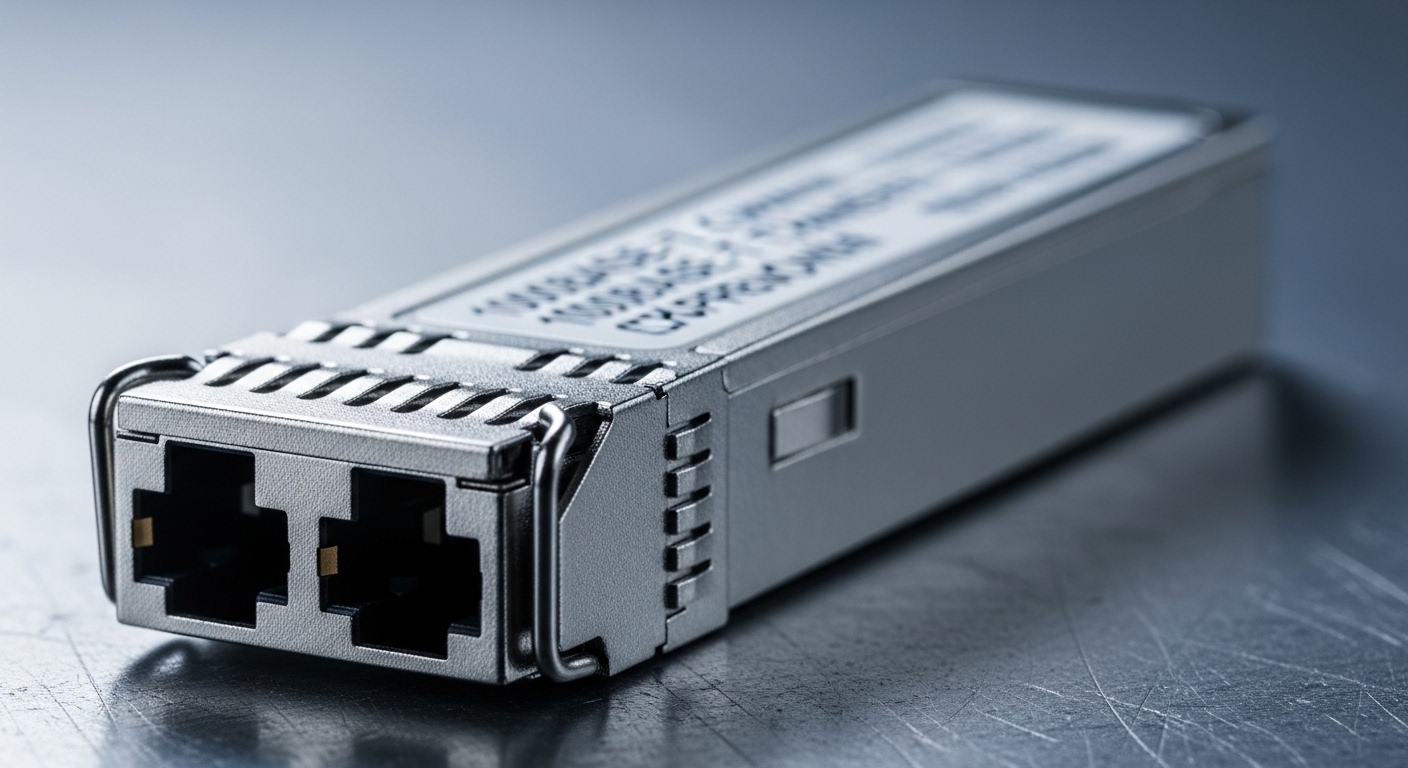
When a radio access network program misses its cost target, it is rarely the radio itself; it is the system around it, especially fronthaul optics, site power, and integration labor. This article helps network planners and field engineers estimate Open RAN return on investment using measurable drivers: link budget, transceiver power, temperature class, and interoperability risk. You will get a practical checklist, a comparison table, and troubleshooting patterns seen during deployments. If your goal is cost efficiency without sacrificing uptime, you are in the right place.
Open RAN interoperability
fronthaul latency
network power consumption
ROI model for Open RAN: the cost buckets that actually move
In real proposals, Open RAN ROI hinges on a few line items that swing the total cost of ownership. First is CAPEX: radios, distributed units, software licenses, and the transport components needed to meet timing. Second is OPEX: site power, maintenance contracts, truck rolls, and the engineering hours required for integration and testing. Third is risk cost: downtime during rollout, interoperability defects, and rework when vendors do not align on parameters.
Use a deployment math that engineering teams can audit
Start with a 3 to 5 year horizon and compute annualized cost per cell site. A field-deployable approach is to model per-site costs as: (annualized CAPEX + annual OPEX + risk reserve). For transport, include optics and switch ports for both fronthaul and midhaul, plus any additional patching and optical transceiver inventory safety stock. For example, if you plan 48 sites with 2 sectors per site and 2 radios per sector, a small per-port delta in power or replacement rate can dominate ROI.
Why transport power is an ROI lever in Open RAN
Open RAN often increases the number of links and tightens timing constraints, which pushes you toward higher-grade optical modules and more frequent link monitoring. Even if radios are efficient, the transport layer can quietly add watts at scale. When you multiply 2 to 4 optical transceivers per sector by 48 sites and add switch port power, you can end up with a power bill difference that is larger than expected. This is why ROI reviews that ignore optics power typically miss the mark.
IEEE standards and reference ecosystem
Fronthaul transceiver choices: specs that change both CAPEX and OPEX
Fronthaul in Open RAN is not just bandwidth; it is deterministic performance, optical budget discipline, and thermal reliability. Engineers typically choose between short-reach multimode and longer-reach single-mode optics depending on site layout and fiber availability. Your ROI improves when you pick modules that match the fiber plant, avoid over-specification, and reduce maintenance by operating within the vendor temperature and power envelopes.
Key technical parameters to map to ROI
At minimum, you should align the transceiver wavelength, reach, optical power, receiver sensitivity, and connector type to your fiber plant. Also record the module power draw (often a few watts), DOM support expectations for monitoring, and the operating temperature range for outdoor cabinets. For Open RAN, you also need to ensure your switch and optics ecosystem support the required monitoring and diagnostics so you can reduce mean time to repair.
Comparison table: typical optics families used around Open RAN transport
The table below compares common module families engineers evaluate during Open RAN rollouts. Values are representative of widely deployed 10G class modules; always confirm exact parameters on your selected vendor datasheets.
| Spec | 10G SR (MMF) | 10G LR (SMF) | 25G LR (SMF) | 40G QSFP+ SR4 |
|---|---|---|---|---|
| Typical wavelength | 850 nm | 1310 nm | 1310 nm | 850 nm |
| Typical reach | ~300 m (OM3/OM4 class) | ~10 km | ~10 km+ | ~100 m (MMF class) |
| Data rate | 10.3125 Gb/s | 10.3125 Gb/s | 25.781 Gb/s | 40.0 Gb/s aggregate |
| Connector | LC | LC | LC | LC (4-channel MT) |
| DOM / monitoring | Often supported | Often supported | Often supported | Often supported |
| Power draw (typ.) | ~1 to 2 W | ~2 W class | ~2 to 3 W class | ~3 to 5 W class |
| Operating temperature | Commercial or Industrial (check) | Commercial or Industrial (check) | Commercial or Industrial (check) | Commercial or Industrial (check) |
Concrete module examples engineers commonly test
In lab interoperability checks, teams often validate vendor-quoted optics such as Cisco SFP-10G-SR, Finisar FTLX8571D3BCL, or FS.com SFP-10GSR-85 for short-reach multimode scenarios. For longer reach, they validate corresponding LR or ER classes with verified optical budgets and DOM behavior. ROI improves when the chosen module family reduces truck rolls and avoids switch incompatibility that triggers costly re-spins.
Pro Tip: In Open RAN rollouts, the biggest “hidden cost” is not the transceiver price; it is the integration loop caused by DOM mismatch. Even when link LEDs show green, subtle telemetry differences can break your monitoring thresholds, delaying fault isolation and increasing mean time to repair. Validate DOM fields and alarm thresholds during acceptance testing, not after cutover.
ITU-T timing and transport references
Interoperability and vendor risk: the ROI multiplier most teams undercount
Open RAN is designed for disaggregation and interoperability, but in practice, you still manage compatibility across radios, O-DUs, transport gear, and optics. A cost-efficient plan includes an explicit interoperability test plan and a rollback strategy. If your ROI model does not include integration engineering hours, you may be budgeting for hardware while underfunding the system work that makes it stable.
What to validate before you buy in volume
Run a structured test matrix with representative hardware from each layer. Confirm link stability under temperature cycling, verify that optical DOM sensors report consistently, and check that your switch supports the module type without “soft” throttling or err-disable events. Document the exact optical budget assumptions and store them alongside acceptance results so you can reproduce the outcome across sites.
Decision checklist engineers use during selection
- Distance and fiber type: confirm MMF vs SMF, core size, and connector losses using measured OTDR results.
- Budget and optical margin: target a safety margin (commonly several dB) beyond computed loss to handle aging and cleaning variability.
- Switch compatibility: verify transceiver support lists and test with the exact switch models and firmware revisions.
- DOM and telemetry support: ensure your NMS can ingest DOM fields and alarms reliably for faster triage.
- Operating temperature and enclosure: match module temperature class to outdoor cabinet conditions and airflow limits.
- Vendor lock-in risk: assess whether third-party optics will be restricted, and estimate requalification effort if you change vendors later.
- Spare strategy: define stocking quantities based on historical failure rates and expected lead times.
optics DOM monitoring
Real-world deployment scenario: 3-tier data center to cell site aggregation
Consider a 3-tier topology in a regional network: leaf-spine aggregation in a data center, then aggregation to a cell site edge cabinet. The team deploys 48 sites, each with 3 sectors, using 10G transport per sector for fronthaul and midhaul grooming. They use multimode fiber for short cabinet runs up to 300 m, and single-mode for longer spans, with a total of roughly 288 to 360 transceiver ports across the rollout. During acceptance, they measure switch port error counters, DOM telemetry stability, and cleaning-related attenuation spikes, then tune monitoring thresholds.
In this scenario, the ROI shift comes from two choices: selecting modules with stable DOM behavior and choosing the correct temperature class for outdoor cabinets. When they initially used a lower-cost optics batch without matching DOM telemetry, alarms were delayed by several minutes, increasing truck-roll frequency during early life. After requalification with a compatible module family and firmware alignment, they reduced incident duration and improved uptime, which fed directly into the OPEX part of the ROI calculation.
Common mistakes and troubleshooting patterns that cost money
Open RAN ROI suffers most when teams fix problems late. Below are common failure modes with root causes and practical solutions, drawn from field-style validation workflows.
Link comes up, but monitoring never alarms correctly
Root cause: DOM fields differ across module vendors or your NMS mapping expects different sensor names and thresholds. Solution: during acceptance, ingest raw DOM telemetry for at least 24 hours, confirm sensor availability, and update NMS thresholds based on measured baselines rather than defaults.
Intermittent errors after cleaning or seasonal temperature swings
Root cause: connector contamination, insufficient return loss margin, or a fiber budget that barely clears at room temperature. Temperature changes can increase attenuation and trigger receive sensitivity failures. Solution: use a disciplined cleaning standard, confirm with optical power measurements, and ensure you have optical margin appropriate for worst-case conditions.
Switch rejects modules or flaps under load
Root cause: firmware or hardware compatibility issues with specific transceiver types, including nonconformant EEPROM layouts or unsupported diagnostic modes. Solution: validate against the switch model and firmware revision you will deploy, and keep a small pilot cohort that matches the production configuration.
Outdoor cabinet failures due to temperature class mismatch
Root cause: using commercial-temperature modules in hot cabinets without airflow, causing drift over time. Solution: select Industrial temperature class when required, verify cabinet thermal performance, and include thermal stress in your acceptance testing.
Cost and ROI note: realistic price ranges and TCO tradeoffs
In 2025 procurement cycles, OEM optics often cost more upfront than third-party equivalents, but they can reduce requalification time and lower integration risk. As a rough planning range, many 10G SR modules may land in the tens of dollars, while higher-grade single-mode or higher-speed variants can cost more depending on reach and temperature class; OEM pricing tends to be higher and may include better warranty handling. Total cost of ownership depends on failure rates, lead times, and the engineering hours required for compatibility testing.
For ROI, treat optics as a system component: include the cost of spares, acceptance testing labor, and the cost of monitoring downtime during early life. If a cheaper module family forces repeated truck rolls or delays in cutover, the savings can evaporate quickly. A conservative TCO plan often favors optics that are demonstrably compatible with your switch fleet and that provide consistent DOM telemetry.
network reliability testing
FAQ
How do I estimate Open RAN ROI without guessing?
Build a per-site cost model with annualized CAPEX plus measured OPEX drivers: power per port, maintenance labor, and integration hours. For optics and transport, use measured optical budgets and acceptance test results to set realistic failure and incident assumptions.
Does Open RAN require specific transceiver types?
It requires that the transport meets timing, bandwidth, and reliability requirements. In practice, the required optics depend on fronthaul distance, fiber type, and your switch compatibility; common choices include 10G SR for short MMF and 10G or 25G LR for longer SMF.
Are third-party optics safe for Open RAN deployments?
They can be safe, but ROI depends on compatibility verification and DOM telemetry consistency. Plan a pilot validation with your exact switch models and firmware versions, then lock the approved module list before scaling.
What monitoring data matters most for cost-efficient operations?
Track DOM telemetry like transmit power, receive power, and temperature along with switch interface error counters. The goal is faster fault isolation, so you reduce truck rolls and shorten incident duration.
How should temperature affect my optics procurement decision?
Outdoor cabinets and poorly ventilated enclosures can exceed commercial limits. Select the module temperature class that matches your site thermal profile and verify with acceptance testing that you remain within vendor specifications over time.
What is the fastest way to de-risk an Open RAN rollout?
Run an interoperability matrix early: radio, O-DU, switch, and optics under load with monitoring enabled. Then standardize the approved BOM so you avoid requalification for each site.
If you want to maximize Open RAN cost efficiency, start by treating transport optics, power, and monitoring as first-class ROI inputs, not afterthoughts. Next, map your fronthaul link plan to a repeatable acceptance test workflow using fronthaul latency so every site behaves predictably.
Author bio: I have led field acceptance and interoperability for disaggregated RAN transport, validating optics telemetry, switch firmware behavior, and operational alarms at scale. My work focuses on turning vendor specs into measurable deployment outcomes that hold up under real temperature and fiber conditions.


